
FIFA’s controversial World Cup plan has hit the ground hard, leaving many scratching their heads over its viability. The documents that were leaked not long ago reveal stark truths about the organization’s financial strategy. It’s clear that FIFA’s main argument hinged on the idea that football simply isn’t raking in enough cash relative to its massive fan base. They claimed that global football development was getting squeezed to a measly $52.80 per fan. But hold on a second, this reasoning seems a bit off…
The thing is, the World Cup isn’t some annual cash cow – it rolls around just once every four years. So, if we were to crunch the numbers based on revenue per match during the 2026 World Cup, FIFA stands to make several times the Premier League’s earnings, maybe even three times more! Let’s get real here, football is a worldwide game, and that means most of the revenue gets funneled back to local leagues like the Premier League or the Champions League. What FIFA really wants is a bigger slice of that overall football pie.
Now, the revenues that football brings in are mostly paid out as wages to players. It’s important to note that FIFA isn’t cutting checks to stars like Erling Haaland or Lionel Messi; instead, those profits would have painted a different picture than the revenue-focused chart they presented. According to the documents, a new entity named FIFA Forward Enterprise (FFE) was supposed to take charge of organizing competitions and optimizing media rights monetization. Sounds fancy, right? But it basically meant FIFA would be passing the buck on responsibility and accountability.
What’s even more eyebrow-raising is how FIFA compared its revenue per fan with that of the NFL, which raises some serious questions about the future of free-to-air World Cup games. In the UK and Europe, there are laws protecting these broadcasts, but digital rights are expected to shift dramatically in the coming years. This could also fuel the outrageous ticket prices we’re likely to see in 2026.
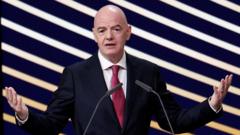
Is Gianni Infantino on shaky ground? Who could step into his shoes if he goes? FIFA executives are now joining forces with critics like Burnham to question Infantino’s leadership. They claim, “Nobody is selling football” and that their extraordinary distribution plan would have meant giving Montserrat a sum that’s just shy of half its entire economy – that’s around $10,000 per person! And let’s not forget Bangladesh, a rapidly growing market for global football development. Where on earth would the extra cash for FIFA’s annual license payments come from?
To add another layer to the drama, it turns out that Thrive, the investment firm associated with Jared Kushner, has been focused mainly on AI investments. They only kicked off their sports investment arm recently, investing in the San Francisco Giants baseball team, which is known for its dynamic ticket pricing. Kushner has claimed that this fund will zero in on live sports, based on the idea that certain types of entertainment, unlike music or films, can’t be replaced by AI and will become more valuable in the future.
So in the end, we were left with a baffling structure that seemed designed to push the 2026 experiment with high ticket prices, a wave of commercialization that could strain broadcast costs, and inevitably lead to more matches and more tournaments. A proposal that crumbled in mere days.
With Infantino courting controversy and cozying up to Trump, it’s clear that the economics behind this World Cup could very well make it the craziest one yet. What’s next for FIFA and the future of the World Cup?
Kaynak: Orijinal Haber