Is AI Facing a Major Financial Reckoning?

Recent sharp declines in the value of chip manufacturers have sparked significant concern among investors, suggesting that the optimism surrounding A

Recent sharp declines in the value of chip manufacturers have sparked significant concern among investors, suggesting that the optimism surrounding AI-related companies may be waning. Shares of South Korean chipmakers SK Hynix and Samsung have plummeted by 46% and 35% respectively over the past month. This worrying trend has led investors to question whether the recent surge in demand for the chips essential to powering AI technology is sustainable.

Now, the South Korean stock market is known for its volatility, but this anxiety is echoing through major US companies as well. Micron and Intel have also seen their shares drop by 28% and 35% since last month. “The AI bubble hasn’t burst, but it’s definitely letting out air,” said a spokesperson from Nvidia, the most valuable chipmaker in the world.

Interestingly, there is still a silver lining for those who invested in chipmakers a year ago. A representative from Nvidia stated optimistically, “I see the glass half full.” It seems that if you bought shares back then, you might be feeling pretty good about your investment right now. However, the largest chipmaker doesn’t rule out potential price increases as costs continue to rise.

In a surprising turn of events, shares of a Chinese chipmaker skyrocketed nearly 470% during its blockbuster stock market debut, illustrating that while some markets may be cooling off, others are still heating up. So, what does this mean for the future of AI investments? Will this financial reckoning reshape the landscape, or will the enthusiasm for AI reignite?

Bakalım, önümüzdeki günlerde neler olacak…

Kaynak: Orijinal Haber

EU Pushes for Quicker Access to Innovations from Research Labs

The European Union is on a mission to streamline the access that businesses have to innovations emerging from research laboratories. This initiative

The European Union is on a mission to streamline the access that businesses have to innovations emerging from research laboratories. This initiative aims to bridge the gap between groundbreaking research and practical applications in the market. The EU recognizes that many promising innovations often languish in labs due to bureaucratic hurdles and slow processes. As a result, they are actively seeking solutions to accelerate this transfer of technology, which could significantly boost economic growth and competitiveness across member states.

Officials are advocating for policies that would enhance collaboration between public research institutions and private enterprises. The goal is clear: to ensure that new technologies reach the market faster, benefiting both the economy and society at large. This push comes at a time when the need for rapid innovation has never been more critical, especially in sectors like healthcare, renewable energy, and digital technology.

The EU’s plan includes establishing more effective channels for sharing research results and intellectual property rights. By fostering an environment where businesses can quickly access and utilize new findings, the EU hopes to stimulate job creation and economic resilience. But will this initiative be enough to overcome the existing barriers? Many stakeholders in the industry are watching closely, eager to see how these changes will unfold.

Moreover, the emphasis on innovation is not just about economic growth; it’s also about addressing societal challenges. The EU aims to leverage research to tackle pressing issues such as climate change and public health crises. As businesses are encouraged to harness these innovations, the expectation is that they will contribute to a more sustainable and prosperous future.

In conclusion, the EU’s drive for quicker access to innovations could reshape the landscape of European business and research collaboration. How effective will these measures be in translating lab discoveries into market-ready products? Only time will tell, but the stakes are high, and the potential rewards are enormous.

Kaynak: Orijinal Haber

Brits Advised to Steer Clear of Hazardous Travel Adaptors This Summer!

Holidaymakers heading abroad this summer are being warned to be cautious of dangerous travel adaptors. An investigation has revealed that thousands

Holidaymakers heading abroad this summer are being warned to be cautious of dangerous travel adaptors. An investigation has revealed that thousands of these devices could be lurking online, putting users at risk. The consumer safety group Electrical Safety First (ESF) put 14 products from popular platforms like AliExpress, Amazon Marketplace, eBay, and TikTok Shop to the test, and shockingly, all failed to meet UK safety standards. This is no small matter; these faulty adaptors could expose users to serious electric shocks or even electrocution!

Giuseppe Capanna, a product safety engineer at ESF, is urging vacationers to buy travel adaptors only from trusted retailers. “You need to travel with confidence,” he warned, emphasizing the dangers posed by faulty internal parts, which can include missing fuses and oversized pin holes. The Office for Product Safety and Standards has also taken note of these alarming issues, recently recalling a product that lacked safety shutters and rejecting another for not meeting UK plug dimension requirements.

Online reviews have raised eyebrows about the extent to which these dangerous devices are being purchased and used. One Amazon Marketplace user reported that their adaptor “fell apart in their hands,” leaving them fearing they could have been electrocuted. Yahu, can you imagine that? Meanwhile, a review of a universal travel adaptor on AliExpress claimed it exploded while in use! An AliExpress spokesperson confirmed they had removed the flagged products and were reaching out to affected customers for a recall. They assured that they would restrict listings with such “unsafe characteristics.”

TikTok also stated they “robustly” enforce their safety policies, but ESF believes the government needs to step up and hold online sellers accountable. Capanna has called for online marketplaces to be made legally responsible for the products sold on their platforms, arguing that this move could better protect consumers from hazardous electrical goods. The consumer group Which? recently found phone chargers for sale online that posed similar risks, further highlighting the urgency of the situation. Sue Davies, head of consumer protection, voiced her concerns, asserting that the risks are widespread and alarming.

In a rather shocking revelation, an adaptor purchased from TikTok Shop failed safety tests because multiple sets of its pins could retract simultaneously. Capanna pointed out that a universal travel adaptor allowing multiple pins to extend at once is a glaring sign of danger, showing a lack of care in its production. As the summer travel season heats up, the importance of safety cannot be overstated. So, what’s next? How can you ensure you’re not putting yourself at risk this holiday season? Stay tuned as we dig deeper into this pressing issue!

Kaynak: Orijinal Haber

Claude AI Chatbots Exposed: Private Conversations Leak Online

Anthropic’s AI chatbot, Claude, has been caught in a significant privacy breach, with chats involving personal and professional details becoming publ

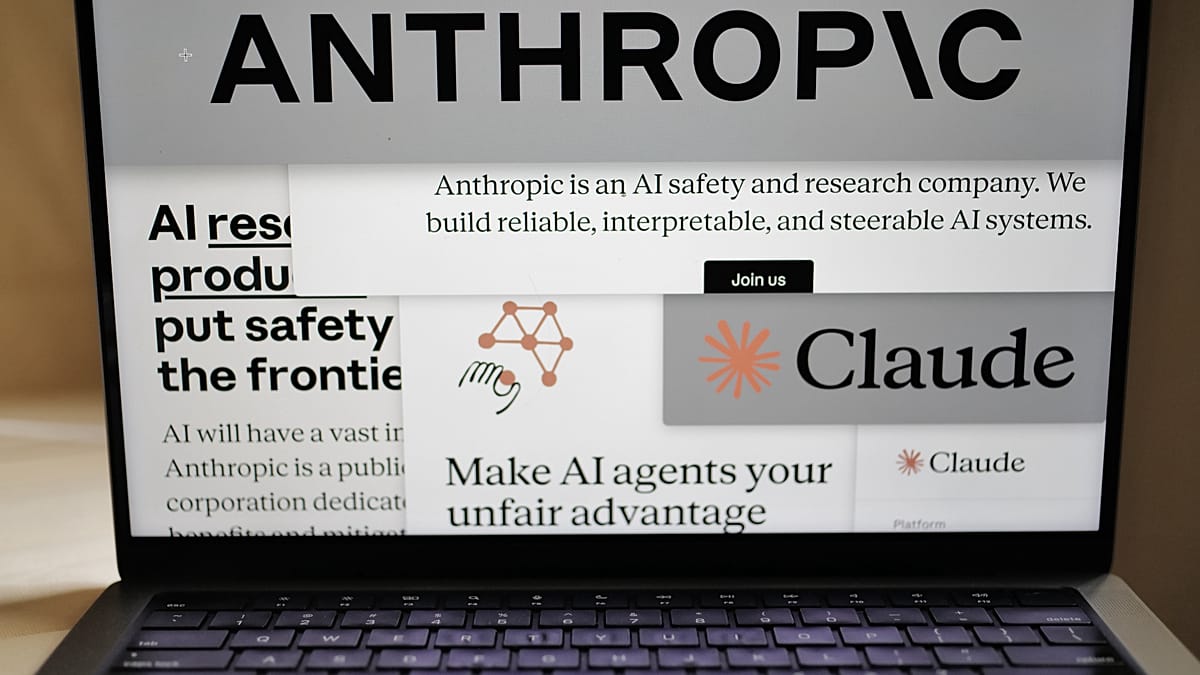
Anthropic’s AI chatbot, Claude, has been caught in a significant privacy breach, with chats involving personal and professional details becoming publicly accessible online. Users who typed specific search queries into engines like Google found links to these conversations, which were supposed to be private unless shared explicitly by the users themselves.

According to a spokesperson, these chats were not intended to be guessable or discoverable unless the individuals involved chose to share them. The share feature within Claude instructs users that anyone with the link can access the conversation. One curious interaction revealed a bizarre response from the chatbot, expressing a desire to help a user transform into a mythical Nine-tailed fox. It seems like the chatbot was trying to engage in creativity, but the implications of such a leak are anything but whimsical.

The bot’s responses raised eyebrows, especially with its cryptic mention of wanting to assist users in becoming “fully functional fox powers.” It also touched on the topic of web privacy, stating that site owners have the ability to control whether their pages can be indexed or crawled by search engines. However, the spokesperson noted that the process for blocking a link is straightforward but must be initiated by the website owner.

Surprisingly, other search engines, like Bing, Brave, and DuckDuckGo, also displayed Claude’s chat logs, prompting inquiries from those platforms about the situation. With personal data floating around the web, this incident has many questioning the security measures in place for AI interactions and the responsibility of developers in safeguarding user privacy.

As this story unfolds, the tech community and users alike are left wondering: How can we trust AI systems when our private conversations can be so easily exposed?

Kaynak: Orijinal Haber

Chip Firms Hit Hard: Investors Rattled by AI Stock Sell-Off

Shares in major chip firms have fallen sharply in the US and Asia as the sell-off in artificial intelligence-related stocks deepened. In South Korea,

Shares in major chip firms have fallen sharply in the US and Asia as the sell-off in artificial intelligence-related stocks deepened. In South Korea, the trading of the country’s most valuable listed company, which is valued even more than Apple, has experienced significant turmoil. The tech-heavy Kospi index, which saw a rise of more than double its value from the beginning of the year to mid-June, has now lost around a third of its worth. This dramatic slide has led to the Kospi being halted eight times this year under a stock market mechanism known as a circuit breaker, designed to calm any panic selling among investors.

You see, in recent months, stock market trading has been particularly volatile in South Korea, drawing in a large number of retail investors. It’s like a rollercoaster ride for them. On Monday, US-listed shares in SK Hynix, a major player in the chip industry, dropped by 7.5%, plummeting well below the $149 offer price when it made a record-breaking debut on Nasdaq just a few weeks ago, on July 9th. And if you think that’s bad, Japan’s most valuable company after the iPhone maker has seen a 25% rise this year, making the situation even more perplexing for investors.

As governments and companies worldwide spend hundreds of billions of dollars to develop AI capabilities, analysts are starting to raise an eyebrow. They’re questioning whether this technology can generate enough profit to recover such massive investments. It’s a bold move, but is it really worth the risk?

The sentiment in the market is shaky, with many investors feeling the heat. They’re left wondering whether to hold on or jump ship as they grapple with the uncertainty surrounding AI’s profitability. What’s next for the chip industry? Will the stocks bounce back, or are we in for a long and bumpy road ahead?

Kaynak: Orijinal Haber

Young Birdwatchers Embrace Shazam-like Apps for Identifying Birds

Megan Szostak, a 26-year-old passionate birdwatcher from San Francisco, has taken her love for ornithology to new heights with the help of modern tec

Megan Szostak, a 26-year-old passionate birdwatcher from San Francisco, has taken her love for ornithology to new heights with the help of modern technology. Ever since she was a child, Megan has been captivated by the beauty of birds, armed with binoculars and a field guide. However, in recent years, she’s added something new to her birding arsenal — the Merlin Bird ID app. “I had friends who probably wouldn’t have identified birds without it,” she shares, highlighting the app’s role in simplifying birdwatching for many.

Merlin Bird ID has become a go-to tool for millions around the globe, boasting a staggering 42 million downloads since its launch in the U.S. back in 2014. According to Jessie Barry, the app’s director at the Cornell Lab of Ornithology, it was downloaded 12 million times alone in 2026. Initially, Merlin could identify 285 common bird species from photos, but now, thanks to advancements in AI, it can recognize a whopping 11,000 species — nearly every bird on the planet!

It’s no surprise that the popularity of birdwatching is soaring, especially among younger generations. Gen Z birders, like Megan, are flocking to nature reserves, embracing this age-old pastime with a modern twist. “It’s been really fun to see younger folks jump in,” Barry says, noting how many newcomers refer to themselves as bird watchers in their thirties, as if it’s a badge of honor.

But it’s not all smooth sailing. Experts caution against relying solely on apps like Merlin for official bird sightings. While the app’s Sound ID tool has been used for over 4.4 billion identifications, some insist that traditional methods still hold merit. Megan, however, finds the app’s ease of use and accessibility to be fantastic, saying, “You don’t need to use all of your senses while you’re birding, which is really amazing.”

Meanwhile, the birding app landscape is evolving. Sam Lewis, a 32-year-old software engineer from Stockport, took inspiration from Merlin’s popularity to create his own app, Lifer. This unique app allows users to collect virtual cards for their bird sightings, with illustrations crafted by his partner Emily. Borrowing elements from gaming, the quality of the bird image or sound recording determines the card’s value, catering to those who love the thrill of collecting.

Sam has enjoyed seeing rare sightings like Nightjars, known for their unique calls, shared among users on Lifer. He believes that the app can make birdwatching even more engaging, much like the phenomenon of Pokémon Go, which continues to draw people outside to explore nature. Lifer also protects the sensitive locations of rare breeding birds during critical times, ensuring their safety while contributing sightings to the Global Biodiversity Information Facility.

As the future unfolds, Barry emphasizes Merlin’s commitment to keeping it simple. “We want to ensure that anyone can enjoy birdwatching, regardless of their experience level,” she says. With the growing interest in nature and technology merging, who knows what the future holds for bird enthusiasts?

Kaynak: Orijinal Haber

US-Russian Space Crew Touches Down After Epic Eight-Month ISS Mission

A US-Russian space crew has just made a triumphant return to Earth after an astonishing eight-month stint aboard the International Space Station (IS

A US-Russian space crew has just made a triumphant return to Earth after an astonishing eight-month stint aboard the International Space Station (ISS). The crew, featuring NASA astronaut Chris Williams and Russian cosmonauts Sergey Kud-Sverchkov and Sergei Mikaev, landed safely in their Soyuz MS-28 spacecraft in Kazakhstan at around 3:27 PM local time. This landing took place southeast of the city of Dzhezkazgan, and boy, what a journey it has been!

According to NASA, these brave astronauts spent a whopping 241 days in the vastness of space. During this time, they orbited our planet a staggering 3,856 times, racking up more than 102 million miles. Their mission wasn’t just a joyride; they engaged in critical scientific investigations aimed at improving life here on Earth. The agency pointed out that the work involved in this mission was vital, and it certainly wasn’t just about floating around in zero gravity!

Now, while our heroes have returned, there’s still a bustling crew aboard the ISS. Russian astronauts Jessica Meir and Jack Hathaway, along with European Space Agency’s Sophie Adenot and cosmonaut Andrey Fedyaev, are gearing up for Expedition 75, which kicks off today and is set to continue until spring 2027. This next phase promises to be just as exciting, with plans to explore and even “bioprint human tissue,” as mentioned by NASA. How wild is that?

As we reflect on the incredible achievements of the returning crew, it becomes clear that their time in space was about much more than just adventure. They gathered valuable data, conducted experiments, and contributed to our understanding of living and working in space. Their journey showcases the power of international collaboration in space exploration, reminding us that when nations unite, the sky isn’t the limit; it’s just the beginning.

So, what’s next for these space pioneers? Will they adapt back to life on Earth after such an extended absence? And how will Expedition 75 unfold over the next few years? Only time will tell, but one thing is for sure: the world will be watching!

Kaynak: Orijinal Haber

Say Goodbye to Slack and Teams: The Future of Work Chat with AI Co-Workers

Forget all that you know about workplace communication tools because a new player is about to shake things up! Block, led by Twitter co-founder Jack

Forget all that you know about workplace communication tools because a new player is about to shake things up! Block, led by Twitter co-founder Jack Dorsey, has unveiled a revolutionary chat platform called Buzz, designed to integrate AI co-workers seamlessly into the work environment. This isn’t just another chat app—it’s a bold step into the future where humans and AI collaborate side by side.

Bradley Axen, Block’s head of AI capabilities, emphasized that “Every company is going to need a place where humans and agents work together.” Talk about a game-changer! Buzz operates on Nostr, a decentralized protocol that gives every participant, whether human or AI, a cryptographic keypair that belongs solely to them. This innovative approach moves away from the traditional platform-centric model, allowing teams to manage their AI agents independently.

So how does this all work? Well, Buzz is model-agnostic, which means it can easily plug into various AI systems like Claude Code, Codex, or others developed by Block. That’s right—companies can mix and match their tools without being locked into one ecosystem. This flexibility is exactly what businesses need to tailor their AI setups for maximum efficiency.

And what’s more? Block has decided to open-source Buzz. This move aims to liberate companies from the constraints of existing AI tools that often tie them down to specific platforms and rules. Instead, Buzz allows businesses to customize their AI interactions to better fit their unique needs and workflows.

But wait, there’s a catch—or maybe not. While Block has yet to publish specific pricing details for managed hosting through buzz.xyz, the excitement around this platform is palpable. Imagine a workspace where your AI colleagues not only understand your tasks but also help streamline your processes. How cool is that?

As we stand on the brink of this new era in workplace communication, one can’t help but wonder: How will this change the dynamic between human workers and AI? Will we see a more efficient, collaborative environment, or will challenges arise as we adapt to these new technologies? Only time will tell, but one thing’s for sure—Buzz is set to completely transform how we work!

Kaynak: Orijinal Haber

Trump’s Bold Move: Investigating EU Fines on American Tech Giants!

US President Donald Trump has thrown down the gauntlet once again, this time targeting European regulators. In a recent announcement, he declared th

US President Donald Trump has thrown down the gauntlet once again, this time targeting European regulators. In a recent announcement, he declared that the United States would initiate an investigation into the European Union’s actions, particularly regarding hefty fines imposed on some of America’s largest tech companies. This move comes hot on the heels of the European Commission’s decision to slap Google with a staggering €890 million (around $1 billion) fine for practices that allegedly stifled competition.

In a post on Truth Social, Trump didn’t hold back, expressing that the EU would face a “very big price” for what he sees as unfair treatment. He emphatically stated, “The United States of America is not a ‘PIGGYBANK’ for Europe, nor will we allow it to be!” His comments reflect a growing frustration with what he perceives as a trend of European regulators targeting American companies. Trump further asserted that any fines imposed should be “entirely reversed” and hinted at a “substantial TARIFF” as a potential consequence.

To back up his claims, Trump announced that the US would “immediately initiate a 301 investigation” concerning the alleged practices of European regulators. This investigation would fall under Section 301 of the Trade Act of 1974, which empowers the Office of the United States Trade Representative to probe and respond to trade practices deemed unfair. It’s worth noting that the Trump administration has already launched several such investigations since last year.

Just a day before this announcement, Trump revealed new tariffs ranging from 10% to 12.5% on 60 trading partners, including the EU, UK, and China. The stakes seem to be rising as he also threatened a jaw-dropping 100% import tariff on any European nation that dares to introduce a digital services tax aimed at American tech giants—a move that many countries have already enacted over the years.

The tech industry is no stranger to this escalating tension. Major players like Google, Meta, Apple, and Amazon have reportedly contributed millions of dollars to funds associated with Trump and have been striving to comply with Europe’s Digital Markets Act. However, that hasn’t shielded them from hefty fines. In his post, Trump claimed that Apple faced EU fines totaling $15 billion, while Meta and Amazon were fined $3 billion and $2.5 billion, respectively. Yet, the origins of these figures remain unclear.

Interestingly, it’s noted that Amazon has faced scrutiny from the European Commission but managed to avoid significant fines. They reached an agreement in 2022 to alter some practices in Europe. However, a regulatory body in Luxembourg did impose a fine of over $800 million on Amazon for breaching General Data Protection Regulation rules, although that penalty was overturned last year.

As the situation unfolds, the significant fines against tech giants like Google—fined €890 million for favoring its services over competitors—have raised eyebrows, and Trump’s threats have certainly added fuel to the fire. The question remains, how will the EU respond to these accusations and potential tariffs? Will this lead to an all-out trade war, or could there be room for negotiation? Only time will tell…

Kaynak: Orijinal Haber

EU Capitals Struggle with Tech and Staffing While Brussels Accelerates

The discussion around the need for the EU to speed up its decision-making process is not a new one. Many EU capitals are falling behind Brussels when

The discussion around the need for the EU to speed up its decision-making process is not a new one. Many EU capitals are falling behind Brussels when it comes to staffing and technology. While EU institutions are diving headfirst into experimenting with AI tools to manage their workloads, many member states are still lagging behind, stuck in outdated practices. It’s a real concern, folks! There’s hardly any debate on whether these individual EU member states can keep up with the fast pace of EU legislation or effectively voice their national positions.

Now, the EU Commission is reportedly mulling over the idea of sending officials to member state capitals to enhance their local influence and awareness of policies. But guess what? Member states aren’t doing the same when it comes to their representation in Brussels. Size isn’t everything, they say. Some of the smaller EU member states manage to be quite effective despite their lean bureaucracies. However, most are grappling with a host of issues that stem from their outdated approaches to EU affairs.

We’re talking about a serious manpower shortage, folks! There’s difficulty in hiring and retaining talent, poor coordination between Permanent Representatives (PermReps) and their capitals, and a lack of a cohesive strategy for managing EU policies at the ministerial level. Plus, when budget constraints make increasing headcount impossible, there’s a failure to adopt new technological solutions. This leaves some member states merely observing and reacting instead of actively participating in the legislative process of the EU.

For these countries, being proactive in shaping their EU Permanent Representations in Brussels is notoriously difficult. A 2019 report by the Danish think tank Europa revealed that staffing levels can vary dramatically among member states, ranging from just 69 to 200 representatives. Western European countries like Germany, France, Belgium, and Austria are leading the pack with staffing numbers between 150 and 200 employees. Meanwhile, Romania, which chaired the Council of the EU at that time, along with other countries like the UK, Italy, Spain, and the Netherlands, had between 103 and 147 employees. And then we have the smaller or Eastern European member states such as Lithuania, Portugal, and Hungary, with only 89 to 69 employees—two or three times less than their Western counterparts!

While having a larger staff doesn’t automatically equate to better quality, those underrepresented countries often find it tough to make a meaningful impact on EU affairs. This manpower deficit becomes glaringly obvious during their Council of the EU Presidencies, when they struggle to hire external talent and their resources become overstretched. Policymakers’ agendas in democratic states are usually influenced by their voters, represented by industry representatives and experts. But in member states with limited ecosystems, the link between EU policy and various stakeholders is weak. This leads to policymakers rarely receiving timely and constructive feedback when they need it the most. Instead, they end up making decisions based on limited interactions or inter-institutional dialogue.

The European private sector recently called for feedback on the EU’s Digital Networks Act. Some might worry that the local public sector can’t manage diverging opinions, which could lead to chaos. But let’s be real—traditional public consultation methods like roundtables and ad hoc meetings just aren’t cutting it anymore. We need new frameworks that allow all interested parties to voice their perspectives on EU matters, no matter how polarized they may be. This would not only enhance transparency but also boost accountability and build trust in both local and EU institutions, driving greater engagement in EU affairs.

Now, the argument that bureaucracy is already too large is tough to counter, especially in countries that are all about austerity in government spending and public debt. But let’s be clear: EU affairs is not an area where governments should be cutting costs. Not now, especially as the EU moves toward a more integrated Single Market with harmonized rules and fewer Directives. The available data on staff numbers within EU institutions alone should be enough to convince ministries of finance and skeptics that EU lawmaking is vast and complex, requiring significant investment to participate constructively.

Just throwing more money at staffing issues or creating stakeholder consultation platforms won’t magically solve the problem. Other challenges like poor horizontal coordination between ministries and the inability to retain institutional memory are also at play. But hey, this is where technology can step in! Custom-made AI solutions present a fantastic opportunity for European tech to tackle these issues. By starting to work on these tools, gathering relevant data, and outlining administrative structures, countries can rethink their current modus operandi regarding EU affairs.

Finally, the EU Commission’s recent Communication on better regulation outlines plans to introduce new IT tools to enhance lawmaking. They want to become AI-ready, while the Estonian government is prioritizing the application of AI in the public sector at the highest political levels. Looks like both EU institutions and some member states are waking up to the fact that if AI can boost productivity and save time in the private sector, it can surely do the same in the public sector—whether at home or in Brussels.

Kaynak: Orijinal Haber