
Tragic Wrong-Way Collision Claims Lives of Two Police Officers and Five Others

Two police officers were among seven individuals who tragically lost their lives in a devastating wrong-way car crash on a dual carriageway. The inci

Two police officers were among seven individuals who tragically lost their lives in a devastating wrong-way car crash on a dual carriageway. The incident occurred around 3:39 AM BST on the A66 near Middlesbrough when a Volkswagen Passat, carrying five young occupants reportedly in their late teens, collided head-on with a marked Cleveland Police vehicle. Eyewitnesses reported a massive emergency response at the scene, with ambulances and police vehicles flooding the area.

The police vehicle was not actively pursuing the Volkswagen at the time of the crash; instead, it happened to be in the South Bank area when the accident unfolded. Unfortunately, all occupants of both vehicles were pronounced dead at the scene, a heartbreaking outcome for families and the community.

The officers who lost their lives have been identified as PC Matthew Blades, aged 37, and PC Tom Clough, aged 38. Chief Constable Victoria Fuller expressed her deep sorrow, stating it was an “incredibly sad day for Cleveland.” She highlighted the bravery of these officers, who were dedicated to protecting their communities. “These were brave officers serving our residents,” she added, a sentiment that resonates widely.

Prime Minister Andy Burnham expressed his devastation over the incident, acknowledging the “incredibly difficult circumstances” surrounding this tragic event. Meanwhile, Home Secretary Shabana Mahmood shared her condolences, emphasizing her thoughts are with all those affected, including the families and friends of the victims, as well as the emergency services who responded.

The Mayor of Tees Valley, Ben Houchen, called it a “horrible and tragic incident,” honoring the fallen police officers as “heroes.” The families of the victims have been informed and are currently receiving specialized support, as many grapple with this unimaginable loss.

As the community processes this tragedy, questions remain about the circumstances leading to the crash. The Independent Office for Police Conduct (IOPC) is expected to investigate the events that led up to the collision, further details of which are still unfolding.

The impact of such a loss reverberates throughout the community, reminding us all of the sacrifices made by those who serve to protect us. What will happen next? How will this affect community safety measures? We’ll be keeping a close eye on the developments surrounding this heartbreaking story.

Kaynak: Orijinal Haber

A Stunning Display: Robot Horse and Rider Captivate Audience at Chinese Conference

A robot horse and rider captured the attention of attendees at a recent conference in China, showcasing the impressive advancements in robotics and

A robot horse and rider captured the attention of attendees at a recent conference in China, showcasing the impressive advancements in robotics and technology. This extraordinary duo performed seamlessly, demonstrating agility and precision that left the crowd in awe. The event, which featured various technological innovations, was a perfect platform for such a remarkable display.

The robot horse trotted gracefully, mimicking the movements of a real horse, while its rider executed complex maneuvers, proving that the future of robotics is not just about functionality but also about artistry. Spectators were visibly excited, snapping photos and capturing videos of the mesmerizing performance. It was a moment where technology met creativity, and the excitement in the air was palpable.

As the performance unfolded, attendees couldn’t help but think about the implications of such technology. “Can you believe this? A horse that doesn’t need to be fed or trained?” one enthusiastic participant exclaimed. The audience was buzzing with discussions about the potential uses of robotic horses in various fields, from entertainment to agriculture.

This event is part of a broader trend where robotics is increasingly integrated into everyday life. Other highlights of the conference included robot athletes competing in the world’s first humanoid games, and humanoid robots stumbling through a football match, all showcasing the rapid advancements in artificial intelligence and machine learning.

The spectacle of the robot horse and rider, however, stood out as a symbol of what is possible when innovation meets imagination. People were left wondering: how far can we push the boundaries of robotics? What’s next on the horizon?

Görünüşe göre, bu etkinlik sadece bir başlangıç. Gelişmeleri takip ediyoruz…

Kaynak: Orijinal Haber

Man City on the Hunt: Searching for a New Rodri After Key Departure!

Manchester City is on a mission, folks! After the shocking news that their captain, Rodri, has left the club to join La Liga champions Barcelona earl

Manchester City is on a mission, folks! After the shocking news that their captain, Rodri, has left the club to join La Liga champions Barcelona earlier this week, manager Enzo Maresca has come out with a bold statement. He’s made it clear that the club will “try to find the new Rodri.” And let me tell you, this isn’t just any player they’re looking for; they’re after someone who can fill those big shoes left behind by the Spanish star.

Now, you might be wondering, why did Rodri make such a significant move? Well, the allure of playing for Barcelona is hard to resist, especially when they’re the reigning champions of La Liga. It’s a dream for many players, and Rodri seems to have seized that opportunity. City fans are still reeling from the loss; he was a pivotal figure in their midfield, orchestrating plays and defending like a wall. His departure leaves a hole that won’t be easy to fill.

Maresca, who is known for his candid approach, emphasized the urgency of finding a suitable replacement. “We need someone who can match Rodri’s skill and presence on the field,” he said, clearly aware of the challenge ahead. The search is on, and you can bet that City’s scouting team is working overtime to identify potential candidates. It’s not just about finding a player; it’s about ensuring the team remains competitive at the highest level.

The question on everyone’s mind now is—who will it be? There are rumors swirling about potential targets, but nothing concrete yet. Fans are left speculating, hoping for a signing that can bring that same energy and quality that Rodri brought to the pitch. It’s a crucial moment for the club, and every decision made in the coming weeks could shape their season.

As the days go by, the excitement builds. Will City find their new Rodri? Will they be able to maintain their dominance in the league without him? One thing’s for sure: this transfer saga is far from over, and we’ll be keeping a close eye on the developments.

Kaynak: Orijinal Haber

US Borrowing Costs Surge as Government Intervention Falls Flat

Long-term borrowing costs in the US have once again hit a rise, despite the government’s recent announcement aimed at easing these financial burde

Long-term borrowing costs in the US have once again hit a rise, despite the government’s recent announcement aimed at easing these financial burdens. Earlier this week, the Treasury Department made headlines by declaring it would buy back more debt in an effort to lower the rates that investors are charging on global bond markets. These markets are crucial as they provide the funds that both governments and major corporations rely on to finance their activities. Following this intervention, the rates—often referred to as yields—did see a brief dip, particularly for 30-year borrowing, but unfortunately, they have quickly bounced back up again. This fluctuation can have serious implications for everyday Americans, affecting mortgage rates and car loans.

Economists have weighed in, stating that the government’s surprise move has proven to be short-lived. The ongoing worries surrounding the country’s rising borrowing levels, especially with the national debt now surpassing a staggering $40 trillion, loom large. Just to give you an idea, on Friday, the interest rate on 30-year bonds climbed back up to approximately 5.27%. That’s a pretty hefty number, right?

Governments and corporations typically issue bonds—essentially an IOU—to raise cash for spending, and in return, they pay interest on those bonds. Speaking of interest rates, they’re commonly known as yields. Now, bond investors generally ask for higher returns—or yields—when inflation is high or when they have concerns that it might stay elevated in the future. Earlier this week, we saw yields drop to about 5.18%, down from an almost two-decade high of 5.34%. But following the Treasury’s announcement, which some experts deemed a “support intervention,” it was noted that the relief was “unsurprisingly short-lived.”

Traders are now focusing on the daunting challenges ahead. Economists at Capital Economics pointed out that this intervention is largely just a signaling mechanism. It shows that the Treasury is willing to step in when yields reach levels like the current ones. The BBC even reached out to the Treasury Department for comments regarding the market’s reaction, but no word back just yet.

Interestingly, some are pointing fingers at the Biden administration for the current economic situation. For instance, on Thursday, a financial analyst remarked that the US economy is sounding alarm bells. The national debt has more than doubled in just a decade, hitting that eye-watering $40 trillion mark, which has raised serious concerns.

What’s causing these rising borrowing costs? Well, global borrowing expenses have spiked recently, largely due to soaring oil prices spurred by the ongoing US-Iran conflict, which has disrupted supplies and triggered inflation fears. Moreover, tech companies are borrowing large sums to develop Artificial Intelligence (AI), but the timeline for returns is still a bit of a mystery. At the same time, tax revenues are being overshadowed by public spending, which has also led to higher yields.

As of Wednesday, data showed that the national debt in the US had skyrocketed to more than $40 trillion, a stark increase from just under $20 trillion back in 2016. This surge reflects a pattern of substantial spending under both the Trump and Biden administrations, coupled with rising interest payments that contribute to the overall total.

In the midst of this bond market volatility, the dollar has weakened. The dollar remains the world’s primary reserve currency, which means central banks across the globe hold it in significant quantities as part of their foreign exchange reserves. A dip in the dollar makes US exports cheaper, but it can also make imported goods pricier due to the weakening currency. Americans venturing abroad might find their dollars don’t stretch quite as far, while foreign tourists visiting the US might feel like they’re getting more bang for their buck.

In the midst of all this uncertainty, gold has seen a notable increase, climbing to its highest point in over three months. Investors are viewing gold as one of the safest havens to park their money during these turbulent times in the global economy.

Bakalım, bu durum nasıl evrilecek? Gelişmeleri takip ediyoruz…

Kaynak: Orijinal Haber

Canada Declares ‘Dollar for Dollar’ Tariff Match as US Trade Talks Collapse

Canada’s Prime Minister Mark Carney has announced a bold response to the breakdown in trade talks with the United States, stating that Canada will m

Canada’s Prime Minister Mark Carney has announced a bold response to the breakdown in trade talks with the United States, stating that Canada will match US tariffs “dollar for dollar.” This declaration comes after intense negotiations that have been ongoing since July, when President Donald Trump threatened a staggering 50% levy on nearly $20 billion (C$28 billion, £14 billion) worth of Canadian imports, with a deadline looming of August 19. Earlier this week, Trump had hinted at a possible pause on these tariffs, claiming that both sides were close to finalizing a trade deal that would be “very good.” However, after Carney’s remarks indicating that while “important progress” was made, it was still “not enough to meet our objectives for Canadians,” the situation took a sharp turn.

Following Carney’s statement, Canada decided not to finalize the trade agreement under the terms discussed earlier in the week. The collapse of these talks marks a significant shift in tone, especially when both US and Canadian officials had sounded hopeful that an agreement beneficial to both nations was within reach. Negotiators were reportedly working on a deal to reduce US tariffs on Canadian steel and aluminum from 50% to 25%, and on Canadian autos from 25% to 15%. In return, Carney had asked that Canadian provinces restore US alcohol to their shelves.

Now, with the talks in disarray, Canada faces the imminent threat of new tariffs, with Trump planning to impose a 50% duty on a variety of goods, which constitutes around 5% of Canadian exports. This list includes widely consumed items like wine, dairy, cement, clothing, and even hockey equipment. These new tariffs are just the latest in a series of tariffs already imposed by the US on Canadian steel, aluminum, autos, and lumber. It’s a situation that has had businesses and stakeholders on both sides of the border advocating for a resolution, underscoring the potential harm these tariffs could inflict on both economies.

In a striking statement, the Canadian Chamber of Commerce referred to the tariffs as “a body blow to North American competitiveness.” They emphasized that this is not just an abstract trade dispute; it’s about the tangible realities of business operations—reviewing orders, payroll, and employee impacts. The economic impact is predicted to shrink Canada’s GDP by 0.3% to 0.6%. Doug Ford, the premier of Ontario, Canada’s most populous province, expressed the gravity of the situation, noting that Ontario’s large manufacturing and auto sector has been particularly hard-hit. “Our politeness should never be mistaken for weakness,” he asserted, vowing that Canada would continue to fight for fair trade conditions.

As the Distilled Spirits Council of the United States lamented the situation, they noted that exports to Canada had plummeted more than 70% year-over-year since the retaliatory ban began in March. With many Canadians now boycotting US products, this situation has put Trump’s trade policies directly in the crosshairs of Canada’s powerful dairy sector, among other industries.

What lies ahead for US-Canada trade relations? The future seems uncertain, and the stakes couldn’t be higher. The dynamics of this economic partnership are shifting, and both nations will have to navigate these turbulent waters carefully.

Kaynak: Orijinal Haber

US Borrowing Costs Surge Again as Government Intervention Falls Flat

Long-term borrowing costs in the US have taken another hit, despite a government announcement aimed at bringing them down. Earlier this week, the Tre

Long-term borrowing costs in the US have taken another hit, despite a government announcement aimed at bringing them down. Earlier this week, the Treasury Department announced its plan to buy back more debt, hoping to ease the rates investors charge in the global bond markets—those crucial avenues that governments and big corporations depend on to secure funds. But guess what? The initial relief was short-lived. Rates, or yields as they’re known in the finance world, dropped for a bit after that intervention, only to bounce back up again. This rollercoaster ride doesn’t just affect big finance; it hits home too, influencing mortgage and car loan rates directly.

Economists are scratching their heads, saying that the government’s surprise move didn’t have the staying power they hoped for. With the national debt soaring past $40 trillion, concerns about our borrowing levels loom large. As of Friday, the interest rate on those all-important 30-year bonds was creeping back up to around 5.27%. When governments and corporations sell bonds—think of them as IOUs—they’re raising money for spending, and in return, they commit to paying interest. Those interest rates, or yields, are what investors keep a close eye on. Typically, if inflation is running high, or if there are fears that it might spike, bond investors demand higher returns.

Earlier this week, yields had dropped sharply from nearly two-decade highs, sliding down to 5.18% from 5.34%. But that didn’t last long. Economists noted that the Treasury’s intervention was “unsurprisingly short-lived,” and traders are now fixated on the daunting reality of the situation. One economist pointed out that the Treasury’s actions serve more as a signaling mechanism, showing it’s ready to step in, but with yields still hovering around current levels, it’s more of a band-aid than a solution.

Blame is now being tossed around, with some pointing fingers at the Biden administration for the current mess. Just this Thursday, media outlets were buzzing with quotes from experts discussing how the US economy is ringing alarm bells. The national debt’s staggering rise reflects years of unchecked spending across both the Trump and Biden administrations, and the numbers don’t lie—it’s more than doubled in just a decade, hitting that ominous $40 trillion mark. Back in 2016, we were looking at just under $20 trillion.

But hold on, it’s not just about government spending. Recent figures show that global borrowing costs are also on the rise, driven by soaring oil prices linked to the ongoing US-Iran war, which has disrupted supplies and sent inflation fears through the roof. On top of that, tech firms are borrowing huge sums to push forward with Artificial Intelligence developments, but the timeline and potential returns are still shrouded in uncertainty. Public spending is outpacing tax revenues, which is another nail in the coffin for yields.

In reaction to this volatility in the bond markets, the dollar has taken a hit. Since the dollar is the world’s primary reserve currency, its weakening means US goods become cheaper for export, but on the flip side, imported goods get pricier. Americans traveling abroad might find their dollars don’t stretch as far, while foreign tourists in the US could benefit as their currencies now buy more. Meanwhile, gold prices have soared to a three-month high, a go-to safe haven for investors in these shaky economic times.

So, where do we go from here? As the landscape keeps shifting, it’s anyone’s guess what the next move will be.

Kaynak: Orijinal Haber

Tottenham’s Transformation: How De Zerbi is Revamping the Team

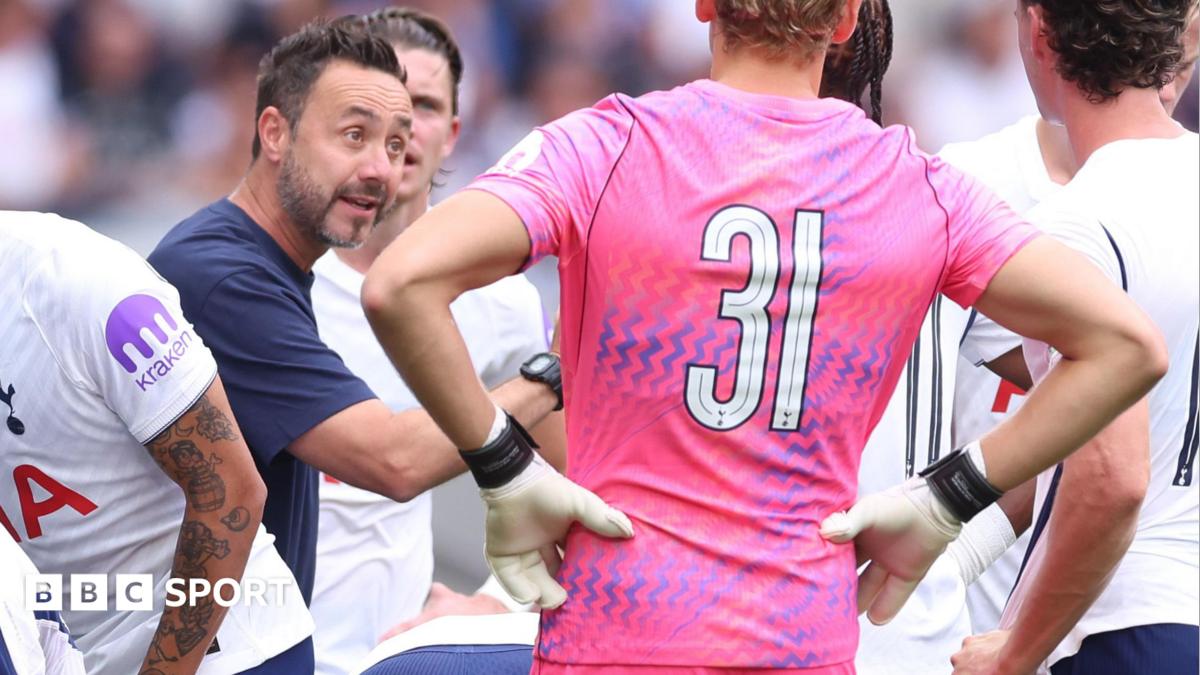
Roberto de Zerbi has been given the resources and time this summer to breathe new life into Tottenham Hotspur. So, how is this transformation taking

Roberto de Zerbi has been given the resources and time this summer to breathe new life into Tottenham Hotspur. So, how is this transformation taking shape? The excitement is palpable as fans eagerly await to see the new tactics and player dynamics on the pitch. With significant investments made in the squad, the stakes have never been higher for this London club.

De Zerbi, who has a reputation for attacking football, is expected to bring a fresh approach to Spurs. It’s not just about new signings; it’s about reshaping the club’s identity. The focus is on creating a squad that plays with flair and intensity, something that has been missing in recent seasons. The fans are hoping that these changes will translate into better performances and results on the field.

One of the key aspects of De Zerbi’s vision is to instill a sense of confidence in his players. From what we’ve seen during pre-season, there’s a renewed energy around the training ground. Players seem more motivated, and the team is starting to gel. De Zerbi’s philosophy encourages not only skillful play but also a strong work ethic. He’s been emphasizing the importance of teamwork, and it looks like the players are buying into his vision.

The tactical setup is also expected to evolve. While the specifics are still under wraps, we can anticipate a more fluid formation that allows for quick transitions and attacking play. This could mean more goals from open play, which is something Spurs fans have been craving. The addition of new signings has added depth to the squad, allowing for more rotation and competition for places.

Yet, it’s not all sunshine and roses. There are still questions about how quickly the team can adapt to these changes. The Premier League is unforgiving, and the pressure will be on De Zerbi to deliver results. The fans, while hopeful, are also cautious. They’ve seen promises before, and they’re eager to see tangible improvements on the pitch.

The upcoming fixtures will be crucial in assessing how well De Zerbi’s plans are taking shape. Will the new-look Spurs rise to the challenge, or will they falter under the weight of expectations? Only time will tell, but one thing is for sure: the Tottenham faithful are ready for an exciting new chapter in their club’s history.

Kaynak: Orijinal Haber

Canada-US Trade Negotiations at a Standstill: What’s Next?

Canada-US trade minister Dominic LeBlanc has spent two weeks in Washington, desperately trying to nail down a deal that seems to be slipping through

Canada-US trade minister Dominic LeBlanc has spent two weeks in Washington, desperately trying to nail down a deal that seems to be slipping through the cracks. “We have more work to do,” LeBlanc told reporters on Friday evening, emphasizing that “our job is not finished.” With the U.S. dairy sector flexing its muscles, the pressure is mounting on Canada to come to an agreement. LeBlanc confidently added, “We should be able to have a deal with Canada,” but the clock is ticking as the deadline looms.

Now, what’s on the table? Well, details have started leaking from various media outlets, hinting that the U.S. might lower tariffs on Canadian steel and aluminum from a hefty 50% to a more manageable 25%. Tariffs on Canadian automobiles could also drop from 25% to 15%. In addition to discussions about reinstating American alcohol sales, there are whispers that Canada might give U.S. dairy producers greater access to its market, along with removing retaliatory tariffs on American goods.

But it’s not all smooth sailing. Conservative opposition leader Pierre Poilievre is raising alarms, claiming that any agreement with “one-sided” tariffs on Canadian industry would be a “bad deal.” He’s not alone in his skepticism. The province of Ontario, one of Canada’s largest, has yet to publicly comment on the negotiations, leaving many wondering where they stand. Meanwhile, premiers from Nova Scotia and the Yukon territory seem ready to jump on board with restoring U.S. alcohol sales, showing a split in reactions across the country.

In Ontario, Mayor Matthew Shoemaker expressed his concerns, saying, “This wouldn’t be something to celebrate.” He’s worried about the implications of these negotiations. And let’s not forget the looming threat from Trump, who has hinted at imposing an additional 50% tariff on a range of Canadian goods—from hockey equipment to wine to cement. Economists are sounding the alarm, suggesting that Canada could face a loss of 90,000 jobs if these new tariffs come into play.

As the deadline approaches, the mixed reactions from various stakeholders are a clear indication of the challenges Prime Minister Carney faces. He campaigned on a tough stance against Trump, but now, reality is setting in. The pressure is mounting to finalize a deal that could either protect Canadian jobs or throw them into jeopardy.

So, what’s next? Will Canada bend to U.S. demands, or will they stand firm in their negotiations? The stakes are high, and all eyes are on the Canadian negotiators as they try to find common ground before time runs out…

Kaynak: Orijinal Haber

Tragic Loss: Six-Year-Old Girl Dies After Shoreham Sea Incident

A six-year-old girl has tragically passed away in the hospital following a heartbreaking incident in the sea off Shoreham in West Sussex. This devast

A six-year-old girl has tragically passed away in the hospital following a heartbreaking incident in the sea off Shoreham in West Sussex. This devastating event also claimed the lives of her father, mother, and older sister. The young girl, Saja El-Khawas, a British Palestinian from London, was rescued from the tumultuous waters by emergency crews on Tuesday, but sadly, it was too late to save her.

The family was reported to be in distress around 14:40 BST on Tuesday, prompting a massive emergency response. Despite the valiant efforts of paramedics at the scene, Saja’s father, Hassan El-Khawas, aged 55, mother Zeina Alayn, 37, and 14-year-old sister Sara, all succumbed to the dangers of the sea. It was a scene of chaos as emergency services rushed to the Shoreham Fort area, trying to pull the family to safety.

As investigations continue into this tragic incident, authorities have reviewed CCTV footage and gathered initial witness accounts. The current understanding points to this being a tragic accident, with no foul play suspected. This news is something that many in the community had feared after the initial reports came in—a heartbreaking confirmation that has sent shockwaves through the local area.

Residents and community members have expressed their sorrow, with many describing the event as a “shocking, heart-rending tragedy.” Those who knew the family or lived nearby have shared their condolences, highlighting the profound impact this loss has had on the community.

The local association where the family had lived for most of their lives emphasized the tragedy’s weight, calling for support and understanding as they navigate this overwhelming grief. “It’s a terrible family tragedy,” one community member stated, echoing the sentiments of many who have been touched by this loss.

As we reflect on this tragic event, it raises questions about safety in our waters and how we can prevent such heart-wrenching incidents from occurring in the future. The community is left to grieve, seeking comfort in shared memories and support for one another in these trying times.

Kaynak: Orijinal Haber

Canada and US Trade Talks: Pressure Mounts as Deadline Approaches

Canada’s trade minister, Dominic LeBlanc, has been in Washington for two weeks, trying to negotiate a deal that’s become increasingly crucial as th

Canada’s trade minister, Dominic LeBlanc, has been in Washington for two weeks, trying to negotiate a deal that’s become increasingly crucial as the deadline looms. Speaking to reporters on Friday evening, LeBlanc stated, “We have more work to do. Our job is not finished.” The urgency is palpable as both nations seek to find common ground amid mounting pressures.

The discussions are particularly sensitive due to the powerful dairy sector in Canada and the looming threat of tariffs from the US. LeBlanc hinted that progress is being made, stating, “We should be able to have a deal with Canada.” However, the full framework of the potential agreement has yet to be unveiled, leaving many details under wraps. Leaks to various media outlets suggest that the US may lower tariffs on Canadian steel and aluminum from 50% to 25%, and on Canadian automobiles from 25% to 15%.

In a bid to restore the sale of American alcohol, Canada is contemplating granting American dairy producers greater access to its market while also removing retaliatory tariffs on the US. Yet, the Conservative opposition leader, Pierre Poilievre, has voiced concerns, arguing that any deal perceived as “one-sided” against Canadian industry would be detrimental. “It’s a bad deal,” he remarked, emphasizing the need for a more balanced agreement.

As the largest province, Ontario has not yet publicly commented on the negotiations. Meanwhile, other provincial leaders, including those from Nova Scotia and the Yukon territory, have indicated their willingness to restore US alcohol sales. The mayor of an Ontario city expressed unease about the developments, stating, “I am worried with the news.”

Adding to the urgency, businesses and stakeholders are pushing for a resolution that would prevent the additional 50% tariff that US President Trump has threatened on a variety of Canadian goods, ranging from hockey equipment to wine and cement. An analysis by economist Trevor Tombe from Calgary estimates that Canada could lose 90,000 jobs if these new tariffs come into effect.

The mixed reactions from various stakeholders present a clear picture of the challenges ahead for Prime Minister Carney, who had campaigned on a hardline approach in trade talks with Trump. As these negotiations continue, the future of countless jobs and industries hangs in the balance. The question remains: will Canada and the US come to a mutually beneficial agreement before it’s too late?

Kaynak: Orijinal Haber