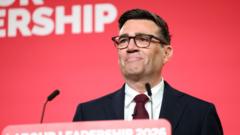

Andy Burnham’s Tough Task: Uniting a Divided Britain

The challenges facing Andy Burnham in his quest to unite Britain are daunting and complex. The backdrop? A country grappling with stark divisions tha

The challenges facing Andy Burnham in his quest to unite Britain are daunting and complex. The backdrop? A country grappling with stark divisions that echo the themes of Alex Garland’s 2024 film “Civil War,” which chillingly portrays a US in disarray. While the film’s conflicts are fictional, the underlying tensions resonate with real-life divides in Britain and beyond. These issues are so palpable that Garland himself expressed concerns about the state of both nations during an interview with the Guardian, emphasizing that there’s “a lot to be very concerned about.”

Burnham has been advocating for a united front that transcends party lines. He urges citizens to prioritize their local pride over political affiliations—”Place first, not party first” is his rallying cry. However, the social fabric that binds communities together is fraying. Civic participation and a sense of belonging are increasingly under threat, particularly among working-class communities. The division isn’t merely economic; it’s a stark generational and educational gap that manifests in political disagreements, especially around the concept of “wokeness” and cultural diversity.

During his travels across the UK, Burnham encountered a populace that is deeply split on these issues. For instance, a survey revealed that 53% of respondents preferred living in diverse communities, while 47% leaned towards a more homogenous environment. This polarization presents a significant challenge for Burnham as he navigates the complexities of local sentiments and national policies. With the Conservative government imposing policies that some deem too stringent, he faces pressure to strike a balance that appeals across the spectrum.

Take Jason, a 54-year-old window installer from Manchester, who has witnessed the transformation of his city. He has made friends from diverse backgrounds, including Hindu and Sikh communities. Yet, he also shares his frustrations, noting that some local Muslim families prefer to rely on their own networks for services. “They do stick to their own,” he reflects, highlighting the nuanced relationships that exist within diverse communities. His experiences are a reminder that while there are bridges to build, there are also walls that need dismantling.

The narrative isn’t just about demographics; it’s about identity and belonging. Fiona Hill, a former senior White House adviser and daughter of a coal miner, stresses that many communities feel “left behind.” The stark reality is that these areas often lie in the shadows of more prosperous cities, struggling to find their voice in a rapidly changing landscape. In a time when social interactions are dwindling, many individuals find themselves engaging in solitary activities, which only contributes to a vague sense of national identity.

Football matches might unite fans for a brief moment, but is that truly the extent of our national pride today? Even symbols like the national flag have become contentious, sparking debates about inclusion and representation. Playwright James Graham points out that a nation is often defined by the stories it tells about itself, but unfortunately, not everyone gets to play a leading role in that narrative.

As Burnham steps into the spotlight, he must contend not just with political opposition but with societal fragmentation. A significant portion of the population still expresses pride in their localities, with 70% of respondents in a recent survey rating their area as a “very good” or “somewhat good” place to live and work. This sense of place could potentially serve as a unifying force, but the path forward is riddled with challenges.

While Burnham might be more attuned to the needs of communities outside London than any previous prime minister, revitalizing regions like Manchester is only the tip of the iceberg. His mission to foster social cohesion amidst these challenges will be a defining aspect of his leadership.

Kaynak: Orijinal Haber

Who’s Who in Andy Burnham’s New Cabinet?

Prime Minister Andy Burnham is hitting the ground running as he assembles his new cabinet following the resignation of Sir Keir Starmer. This reshuff

Prime Minister Andy Burnham is hitting the ground running as he assembles his new cabinet following the resignation of Sir Keir Starmer. This reshuffle is crucial, and it’s buzzing with energy and anticipation. So, who are the key players? Let’s dive in!

First up, John Healey, the MP for Rawmarsh and Conisbrough, is back in the cabinet as the Chancellor of the Exchequer. Now, this guy’s no stranger to the political arena. Just two months ago, he stepped down as Defence Secretary, citing strong criticisms of the government’s handling of the Treasury. It was a bit of a shocker for many; there were whispers that the role would go to Ed Miliband or Shabana Mahmood instead. But here we are! Healey has a solid history, having been Gordon Brown’s parliamentary private secretary from ’99 to 2001 and has held various ministerial roles since then. He’s well-connected internationally, making him a significant asset for Burnham’s cabinet.

Then we have Louise Haigh, taking on the mantle of Chancellor of the Duchy of Lancaster, as well as being the first Secretary of State and Cabinet Office Minister. Haigh is one of Burnham’s closest allies and will be steering the Cabinet Office, which is key in coordinating government policies. Since her entry into Parliament as MP for Sheffield Heeley in 2015, she’s been recognized as a hard worker, even earning praise from former Speaker John Bercow for her relentless energy and focus. Talk about a powerhouse!

Ed Miliband, the new Foreign Secretary, is also making waves. He shifts from the energy and net zero brief, which he held since Labour’s return to power. There was chatter about whether he would take the Chancellor’s role, but opinions were mixed. Supporters highlighted his Treasury experience, while critics raised eyebrows at his energy policies. Since the election, Ed has been vocal against any plans to abandon the net zero ambitions, underscoring his commitment to sustainable policies.

Yvette Cooper remains in the cabinet as the Secretary of Health and Social Care. Previously serving as Foreign Secretary, Cooper’s journey has been nothing short of remarkable. After being sacked during a reshuffle under Starmer, she’s back with a bang! She has a deep personal connection to social care, having cared for her mother with mental health issues. Cooper’s story is one of resilience and dedication, making her a crucial figure in the cabinet.

And let’s not forget Angela Rayner, who’s been promoted to Chief Whip. She’s only been the MP for Knowsley since 2024, but her influence in the Labour movement has been significant for way longer. From working with both Starmer and Corbyn to rising through the ranks of the union Unison, her journey is inspiring. Rayner often speaks about how her family’s struggles shaped her political aspirations, emphasizing the importance of secure, well-paid jobs for working-class families.

So there you have it! Burnham’s cabinet is shaping up with a mix of experience, energy, and a commitment to tackle the pressing issues facing the country. Will they be able to deliver on their promises? Only time will tell.

Kaynak: Orijinal Haber

Andy Burnham’s Ambitious Plans: What Will the Financial Impact Be?

Up until this point, the new Prime Minister Andy Burnham has described his policy changes with a broad brush. But now, as he steps into the demanding

Up until this point, the new Prime Minister Andy Burnham has described his policy changes with a broad brush. But now, as he steps into the demanding role of high national office, he’s facing the hard realities and constraints of governing. Just this past Monday, Burnham pointed out that the 10-year borrowing rate for flexibility rose above 5% after a recent decline. This uptick isn’t seen in other European economies and, while not drastic, it underscores the sensitivity of the current economic climate, especially as Burnham reshuffles his cabinet.

Every decision he makes is being watched closely, both by the public and the markets. Burnham is taking this scrutiny to heart, especially as some major unions have rallied behind his plans, which could set the government back at least £4 billion, depending on inflation rates. There are discussions about unfreezing the tax thresholds in 2027—moving the current £12,570 basic rate to £13,000, and increasing the upper limit from £50,271 to £52,000. They’re even considering rolling it back to what it would have been had the freeze not occurred, and we’re talking about folks like nurses, midwives, paramedics, teachers, and engineers here.

However, insiders from Number 10 are raising eyebrows at this approach. It adds to a growing list of net spending policies and throws up questions about how much tax will need to rise or how much extra borrowing will be required to balance the budget. Burnham’s vision, which he refers to as “Manchesterism,” aims to show he can achieve what he calls “sustainable reform.” He’s looking to tackle the same manifesto and borrowing rule constraints as his predecessor, but it’s clear he wants to push for more.

Burnham believes that his plans to “rewire Britain” will spark economic growth. The catch? Many of these solutions are long-term and could take years to bear fruit. With the quick turnover of prime ministers and chancellors lately, even thinking a few years down the line feels like a luxury. Burnham is promising financial relief to the public, but the big questions loom: how will this affect jobs, borrowing, and taxes?

As Burnham navigates these choppy waters, we’re left wondering how all these ambitious plans will unfold. Will the public feel the impact in their wallets? Will he manage to deliver on his promises? Only time will tell…

Kaynak: Orijinal Haber

Andy Burnham Takes Office as the Fifth UK Prime Minister in Four Years!

By lunchtime today, the UK will have its fifth prime minister in four years. No other sentence can so pithily summarise the nature of British politic

By lunchtime today, the UK will have its fifth prime minister in four years. No other sentence can so pithily summarise the nature of British politics right now than that one. In the summer of 2022, Boris Johnson was on his way out, but still in office. Since then, we’ve seen Liz Truss, Rishi Sunak, and Sir Keir Starmer. It’s no wonder Andy Burnham will later say he’s “acutely conscious” of arriving in Downing Street, just as Sir Keir Starmer did 746 days ago on another sunny July day, just two years back. That trend of unstable governments is exactly what Burnham is trying to buck.

He’s determined to hit the ground running and, wherever possible, maintain the leadership style he adopted as the mayor of Greater Manchester. Now, let me tell you, the traditional rules of the House of Commons and meetings with the King will likely mean he’ll be wearing a suit more often than he has in recent years. But I hear he might ditch some other conventions intentionally. For instance, word on the street is he may not even bother with a lectern for his first speech as prime minister outside 10 Downing Street on Monday. How about that!

Also, he’s reportedly keen on holding question and answer sessions with voters across the nation, something he’s dubbed “People’s Question Time,” as one ally put it. Before Burnham’s big moment arrives, Sir Keir Starmer will have his country retreat in Buckinghamshire, where he’ll give a brief address—yes, with a lectern—before heading to see the King to officially stand down as prime minister. I expect he’ll want to highlight what he considers his achievements, both domestically and internationally. His team is particularly proud of reducing immigration and NHS waiting lists in England, lifting children out of poverty, and even introducing a social media ban for teenagers.

A modest gathering of staff and supporters will see him off, and of course, there will be some overlap between the supporters of the outgoing prime minister and those backing his successor. But, as you might expect, some folks will be there for one and not the other.

As the afternoon rolls in, we’re gonna hear news about the new cabinet appointments, including, rumor has it, a minister focused on artificial intelligence. Yeah, that’s right! All eyes will be on who lands the big gigs—chancellor, home secretary, and foreign secretary. Names like Shabana Mahmood, Wes Streeting, Ed Miliband, Angela Rayner, and Lucy Powell are being tossed around—what roles will they get, and what do these appointments say about how Burnham intends to run things? We’re about to find out!

In the coming hours, we’ll also start to get a glimpse of what Burnham’s new office in Manchester looks like. The turnover in prime ministers has made this situation no longer novel, but it’s still significant, given how frequently it’s happening. What we learn in the next few hours could heavily influence how the UK is governed in the weeks, months, and years to come.

What questions do you have about the new PM? Will Burnham promise “more breathing room” in his first speech as PM? Is he a ruthless plotter? A flip-flopper? A dad dancer? Insiders are spilling the beans on the real Andy Burnham. Is he ushering in a new era for North Sea oil and gas? Stay tuned!

Kaynak: Orijinal Haber

Andy Burnham’s Vision: Promising a Breath of Fresh Air as New PM

Andy Burnham, the newly appointed Prime Minister of the UK, is set to deliver a speech promising “more breathing room” for the British public. This m

Andy Burnham, the newly appointed Prime Minister of the UK, is set to deliver a speech promising “more breathing room” for the British public. This momentous occasion comes as he prepares to take the reins as the 59th prime minister—marking a significant milestone as the seventh leader in just a decade. Burnham was spotted jogging through central London on Sunday, the day before his premiership officially begins after meeting with King Charles III.

The anticipation surrounding Burnham’s speech is palpable, especially after Conservative leader Kemi Badenoch labeled him a “people pleaser” who can “take tough decisions” and face down Labour MPs. However, Labour’s deputy leader, Lucy Powell, insists that Burnham’s approach will be grounded in the promises made within the party’s manifesto. “He really understands the bigger, bolder measures that are needed,” she told the BBC, hinting at the ambitious agenda he plans to pursue.

In his first address, expected to take place on Monday morning, Burnham will outline his domestic priorities. As the former mayor of Greater Manchester and the current MP for Makerfield, he believes that political stability should translate into “tangible” improvements for citizens, all while giving folks a bit more breathing room. His team has hinted at several initiatives he will prioritize in his initial months. One of the first moves is likely to be scrapping the plans for a controversial government-issued digital ID for all British adults, a decision seen as a “reset of priorities.”

Burnham’s commitment to the party’s 2024 manifesto is also under scrutiny, especially regarding the controversial issue of North Sea drilling licenses. While specifics about his oil and gas plans remain unclear, it’s understood that he aims to uphold the commitment to only produce oil and gas at sites that already have licenses. Interestingly, this stance has garnered attention from across the pond, with former US President Donald Trump welcoming the move for more drilling in a recent social media post.

Preparations for Burnham’s speech were in full swing outside Number 10 on Sunday, even though his formal commencement in the role isn’t until Monday. Following his meeting at Buckingham Palace, he will head to Downing Street to share his vision with the public. During a speech made after officially becoming Labour leader, Burnham pledged to work collaboratively with other parties in what he termed a “distinctively Labour” approach to governance.

As Burnham steps into this pivotal role, questions linger on whether he can deliver on ambitious promises while navigating a complex political landscape. Is this the dawn of a new era for the UK under Burnham’s leadership? Only time will tell…

Kaynak: Orijinal Haber

Andy Burnham: Bolder Leadership Ahead While Staying True to Labour’s Promises

Andy Burnham is stepping into the role of Prime Minister, and there’s a buzz in the air! The current Deputy Leader of Labour has assured everyone tha

Andy Burnham is stepping into the role of Prime Minister, and there’s a buzz in the air! The current Deputy Leader of Labour has assured everyone that he will firmly stand by the manifesto promises made by the party. Speaking to the BBC, Burnham’s leadership is being framed as a pivotal moment, especially in the face of the cost of living crisis and economic challenges.

Starting Monday, after a formal meeting with King Charles III, Burnham will take over from Sir Keir Starmer. It’s been clear for some time that he was the frontrunner, but the official transition will happen in a few days. First, Starmer will resign, and then Burnham will be invited to form a new government. Expect him to make a statement outside the iconic No 10 Downing Street, followed by the urgent task of filling key ministerial positions.

Conservative leader Kemi Badenoch has already thrown some shade in the mix, labeling Burnham a “people pleaser” who must make tough calls and stand firm against Labour MPs. “It’s all airy-fairy stuff,” she claimed, pointing to doubts about Burnham’s leadership style. Meanwhile, Burnham is being described as a pragmatic figure who will take a strong stance on issues of public interest, especially concerning utilities and essential services that are often seen as failing the average citizen.

In the run-up to the 2024 general election, anticipation is rife about the specifics of Burnham’s manifesto. He aims to prioritize the needs of ordinary people, and there’s talk of scrapping the controversial Digital ID scheme as a sign of realigning priorities. This move is seen as a small but significant example of how his government might rethink spending, focusing on what really matters to the public.

As speculation swirls about who will fill crucial roles in his cabinet, names like Energy Secretary Ed Miliband and Home Secretary Shabana Mahmood are popping up as potential contenders for the chancellor position. The stakes are high, and the decisions made in these early days could shape the Labour Party’s future.

So, what’s next for Burnham as he prepares to take the reins? Will his bold approach resonate with the public, or will it fall flat under the weight of governmental pressures? Only time will tell, but one thing’s for sure—Burnham’s leadership is poised to make waves in British politics.

Kaynak: Orijinal Haber

Andy Burnham Set to Reveal Controversial North Sea Oil Drilling Plans

Incoming Prime Minister Andy Burnham is gearing up to announce plans for new oil and gas drilling in the North Sea, as confirmed by the BBC. This ann

Incoming Prime Minister Andy Burnham is gearing up to announce plans for new oil and gas drilling in the North Sea, as confirmed by the BBC. This announcement will be part of a series of policy measures aimed at providing “breathing space on the cost of living” for the citizens. On Monday, when Burnham takes his first steps as PM, he is expected to address these plans in his inaugural speech. However, it’s worth noting that the specifics of the drilling plans are likely to be revealed later, as no final decisions have been made just yet.

Sources close to Burnham have indicated that while he is keen to uphold the Labour Party’s manifesto commitments, any support for completely new licenses for drilling is not on the horizon. The North Sea has two notable sites—Rosebank and Jackdaw—that already have licenses for oil and gas exploration. The current focus is on whether to grant the green light for production at these sites. If approved, this wouldn’t contradict the manifesto’s stance on licenses. It’s a tricky situation, as ongoing legal processes surrounding Rosebank and Jackdaw will prevent Burnham from making explicit announcements regarding their approval in his first speech. Instead, that decision will likely fall to the yet-to-be-announced energy secretary.

There’s talk that Burnham could also promise to speed up existing plans to ramp up drilling in the North Sea, where many previously approved oil and gas licenses have remained largely untapped due to various factors. Former Labour leader Sir Keir Starmer had suggested that these fields could be explored further, but frustrations within the party have been mounting over the slow pace of development. The North Sea drilling debate has been a longstanding contention, with Starmer facing backlash for resisting new drilling licenses. He argued that issuing new licenses wouldn’t necessarily lead to cheaper energy bills for the public and emphasized the need to transition toward renewable energy sources for a more secure energy future.

On the other hand, pressure from the Conservatives and Reform UK has intensified, pushing the outgoing prime minister to approve more drilling, a move that has even drawn disdain from figures like former US President Donald Trump, who has criticized the UK’s energy policy direction. Some Labour MPs are advocating for a more liberal approach, warning that the shift away from oil and gas must prioritize job security and affordable energy bills. However, opinions within the party vary, with some labeling the licenses for Rosebank as “climate vandalism,” insisting that urgent action is needed in light of the climate emergency.

Earlier this week, ahead of the leadership nominations deadline, Burnham received a letter from the oil and gas industry and trade unions urging him—and all Labour MPs—to support North Sea oil and gas production, signaling the country’s commitment to maintaining its manufacturing base. This suggestion has already faced criticism from the Green Party, with MP Adrian Ramsay denouncing new drilling as “the wrong response” that wouldn’t help lower energy bills.

Burnham, who recently returned to Parliament after a by-election, is now the sole candidate for the Labour leadership, backed by 379 Labour MPs and all 11 affiliated trade unions. As he prepares to take over from Sir Keir, speculation about his cabinet choices is heating up, with names like Ed Miliband and Shabana Mahmood being floated to replace Rachel Reeves as chancellor. When questioned about the delay in announcing his top team, Burnham stated he is still finalizing his plans, promising to “bring back hope” with a policy agenda that includes new council housing, revitalized high streets, and educational improvements.

As he stands on the brink of leadership, the question looms: to drill or not to drill? Burnham’s choices could shape the future of the UK’s energy policy in significant ways, leaving many wondering what direction the country will take next…

Kaynak: Orijinal Haber

Andy Burnham’s Tough Road Ahead: Five Major Challenges as PM

When Andy Burnham steps into No 10 Downing Street, he’ll be strapping on his seatbelt for a bumpy ride. The new Prime Minister will inherit a slew

When Andy Burnham steps into No 10 Downing Street, he’ll be strapping on his seatbelt for a bumpy ride. The new Prime Minister will inherit a slew of complex issues that have left previous leaders scratching their heads and politicians from all sides scrambling for solutions. BBC Verify has taken a close look at five significant policy challenges that Burnham will need to tackle head-on as he embarks on his new role.

First up, let’s talk money—specifically, the spiraling costs associated with sickness and disability benefits for working-age individuals. Since the Covid pandemic hit, these costs have skyrocketed to a staggering £58 billion a year! Can you believe that? The government even tried to slash the Personal Independence Payment (PIP) bill by £5 billion annually by 2030, tightening eligibility, but whoops! They had to backtrack after a rebellion erupted among Labour MPs. A recent report from disability minister Sir Stephen Timms, created in collaboration with disability groups, has openly stated that PIP is now “not fit for purpose.” It’s a hot mess, and Burnham has to figure out how to clean it up.

Next, we have the defense budget. In June, the Defence Investment Plan stirred up quite the uproar when it proposed bumping defense spending to 2.7% of GDP by 2030. But that’s just the tip of the iceberg. Critics are pushing Burnham to increase that to 3%, which would mean an extra £9 billion a year compared to current plans. And if that’s not enough, NATO is eyeing a target of 3.5% by 2035, which would cost an additional £24 billion a year! Some have even suggested that special “war bonds” could finance this, but who knows if that’s a viable option?

Now, let’s shift gears to social care. Back in 2011, economist Andrew Dilnot proposed a government-funded cap on lifetime care costs at around £35,000, meaning no one would have to cough up more than that for their care. Sounds great, right? The principle was accepted by Conservative ministers, yet the system was never put into action. Theresa May tried to introduce a new plan in the 2017 Tory manifesto, but it went south fast when it suggested including the value of a person’s home in the calculations. Homeowners were up in arms, and the backlash was so intense that it was blamed for the Tories losing their majority in that election. It’s clear that Burnham will have to navigate these treacherous waters carefully.

Another pressing issue is the alarming rise in the NEET (Not in Education, Employment, or Training) rate. It jumped from the middle of the pack among EU countries in 2015 to the second highest by 2025, trailing only Romania. A significant factor in this surge appears to be the 20% drop in the number of 19- to 24-year-olds starting apprenticeship courses since the disastrous reforms of 2016. A recent report by former Labour cabinet minister Alan Milburn called the NEET rate an “urgent national crisis,” and he’s expected to propose some policy recommendations later this year.

Burnham has acknowledged that the school system overly favors the university route, and many previous governments have talked a big game about supporting non-graduates but still poured most resources into higher education. Will we finally see a shift toward vocational training? Only time will tell.

As Burnham gears up to tackle these challenges, the pressure is on. Each decision he makes could have far-reaching consequences for millions of Brits. So, what’s next for him? Can he rise to the occasion and bring about real change? We’ll just have to wait and see…

Kaynak: Orijinal Haber

Andy Burnham’ın Başbakanlık Dönemindeki Beş Büyük Zorluk

When Andy Burnham steps into No 10 Downing Street, he’s not just taking over a fancy office in London; he’s stepping into a real minefield of issue

When Andy Burnham steps into No 10 Downing Street, he’s not just taking over a fancy office in London; he’s stepping into a real minefield of issues that have puzzled past prime ministers. Seriously, it’s like a game of Whac-A-Mole with no end in sight! One of the biggest headaches he’ll face is the staggering cost of sickness and disability benefits. Since the Covid pandemic hit, this expense has shot up to around £58 billion a year, and the government had plans to trim it down by tightening eligibility for Personal Independence Payments (PIP), but after a rebellion from Labour MPs, they had to backtrack. A recent report by disability minister Sir Stephen Timms, created with input from disability groups, admits that PIP is “not fit for purpose.” Can you believe that?

Not stopping there, Burnham will also have to tackle defence spending, which is another hot potato. The government’s Defence Investment Plan led to quite a stir because it only proposed to hike defence spending to 2.7% of GDP by 2030. And guess what? That plan wasn’t even fully funded! This means other departments will have to cough up savings to cover the difference. There’s mounting pressure for Burnham to raise defence spending to 3% of GDP, a demand coming from former defence secretary John Healey, who famously resigned over this issue. This would cost an extra £9 billion a year, and if NATO’s new target of 3.5% by 2035 comes into play, that’s a whopping additional £24 billion a year on top of current plans. Some folks have even suggested issuing special “war bonds” to fund this—sounds fancy, right? But that plan was dropped after Labour lost the 2010 elections.

And if that wasn’t enough, there’s the ongoing mess surrounding social care. Back in 2011, economist Andrew Dilnot proposed a state-funded cap on lifetime care costs, suggesting a £35,000 limit. Now, this cap was accepted by Conservative ministers, but it never saw the light of day. Former Prime Minister Theresa May tried to revamp the system in her 2017 manifesto, which controversially included the value of a person’s home without mentioning a cap. This led to all sorts of chaos and was blamed for the Tories losing their majority. Labour’s manifesto for 2024 even promised a new “national care service,” aiming to build more council houses—the biggest program since the war!

On top of all this, Burnham will have to address the rising NEET (Not in Education, Employment, or Training) rate, which has spiked to the second highest in the EU, right behind Romania. The number of 19 to 24-year-olds starting apprenticeships has plummeted by a fifth since what many call a disastrous reform in 2016. A recent report by Alan Milburn labeled the NEET rate an “urgent national crisis,” and he’ll be proposing recommendations soon. The catch? Implementing these might require some upfront costs for more training and job placements. Burnham has pointed out that our school system is too focused on university pathways, but this has been a recurring theme for decades—lots of talk, but little action for vocational training.

So, what’s next for Burnham? Will he manage to juggle all these balls in the air? Can he bring real change to the table? The clock is ticking, and the pressure is on.

Kaynak: Orijinal Haber

Andy Burnham Set to Announce Cabinet as He Prepares for Prime Minister Role

Andy Burnham is in the final stages of assembling his cabinet as he gears up to take over from Sir Keir Starmer as the new Prime Minister this coming

Andy Burnham is in the final stages of assembling his cabinet as he gears up to take over from Sir Keir Starmer as the new Prime Minister this coming Monday. The incoming Labour leader has yet to reveal his top team, but he hinted that decisions are being made. When asked why he hasn’t announced his picks yet, Burnham expressed confidence, stating, “I am finalising those decisions and will come to conclusions very shortly, and then I’ll announce those on Monday.”

There’s already speculation about who could land key positions in Burnham’s government. Names like Ed Miliband and Shabana Mahmood are being tossed around as potential replacements for Rachel Reeves as Chancellor. This shake-up comes after Burnham, the former mayor of Greater Manchester, outlined his vision for a new government, with a focus on reforming the social care system. He emphasized the importance of representing “all parts of our party” and “all communities,” promising to bring hope back to the electorate.

Burnham firmly believes his government will deliver the most significant changes in decades, pushing back against what he termed “neoliberalism” that has defined much of Labour’s recent history. His approach, he insists, will be about “problem-solving rather than point-scoring,” with a strong emphasis on practical solutions. He shared a heartfelt personal story, mentioning his father’s battle with Alzheimer’s, highlighting the broken system that needs repair. “It’s not their fault, the system’s broken,” he told reporters, emphasizing the need for change.

In the political arena, Conservative Party chairman Kevin Hollinrake has suggested that Burnham should recall Parliament, which is currently in recess until September, to discuss his plans with MPs. “It’s crucial that he gets this right,” Hollinrake stated, urging Burnham to bring back the hope he has promised. Sir Keir Starmer’s resignation last month and the heavy Labour losses in local elections have set the stage for Burnham’s rapid rise to power, marking a pivotal moment for the party.

As Burnham prepares to take the reins, he faces multiple challenges that could define his premiership. Analysts and party members alike are keenly watching to see how he will navigate these early days in office and if he can indeed reverse the fortunes of the Labour party. Will Burnham’s leadership bring about the changes he promises? Only time will tell…

Kaynak: Orijinal Haber