
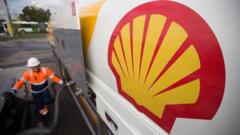
Shell’s profits for the April-to-June period have skyrocketed to an impressive $9.84 billion (£7.37 billion), a remarkable jump from just $4.26 billion during the same time last year. This surge comes on the heels of the ongoing US-Israel war with Iran, which has severely disrupted global oil supplies and liquid natural gas (LNG) that typically flow through the crucial Strait of Hormuz. Shell’s chief executive, Wael Sawan, has acknowledged this dramatic rise, highlighting that the company’s earlier profits of $6.92 billion for the first three months of the year contribute to an astonishing 70% increase in earnings for the first half of the year.
It’s not just Shell—other energy titans like BP and Norway’s Equinor are also reaping the benefits of this volatile market. Before the conflict ignited, Brent crude oil, which serves as the global benchmark, was priced around $73 a barrel. Fast forward to now, and we’ve seen prices spike above $120, only to later retract below the $100 mark. The constant speculation over the reopening of the Strait of Hormuz has been a rollercoaster for prices, with traders jumping on the opportunity to profit from these wild swings.
The fluctuations in oil prices are significant—not just for Shell, but for traders who can capitalize on the widening gap between buying and selling prices. As the prices keep shifting, it’s almost like a game of chess out there, with moves that could lead to big wins or losses.
So, what does this mean for the everyday person? Well, it’s a mixed bag. Higher oil prices can lead to increased fuel costs, which might trickle down to consumers in various forms. The question on everyone’s mind is, how long will these prices stay elevated? Will we see a return to normalcy or are we in for more surprises ahead?
Bakalım, bu durum nereye varacak? Gelişmeleri dikkatle takip ediyoruz…
Kaynak: Orijinal Haber