
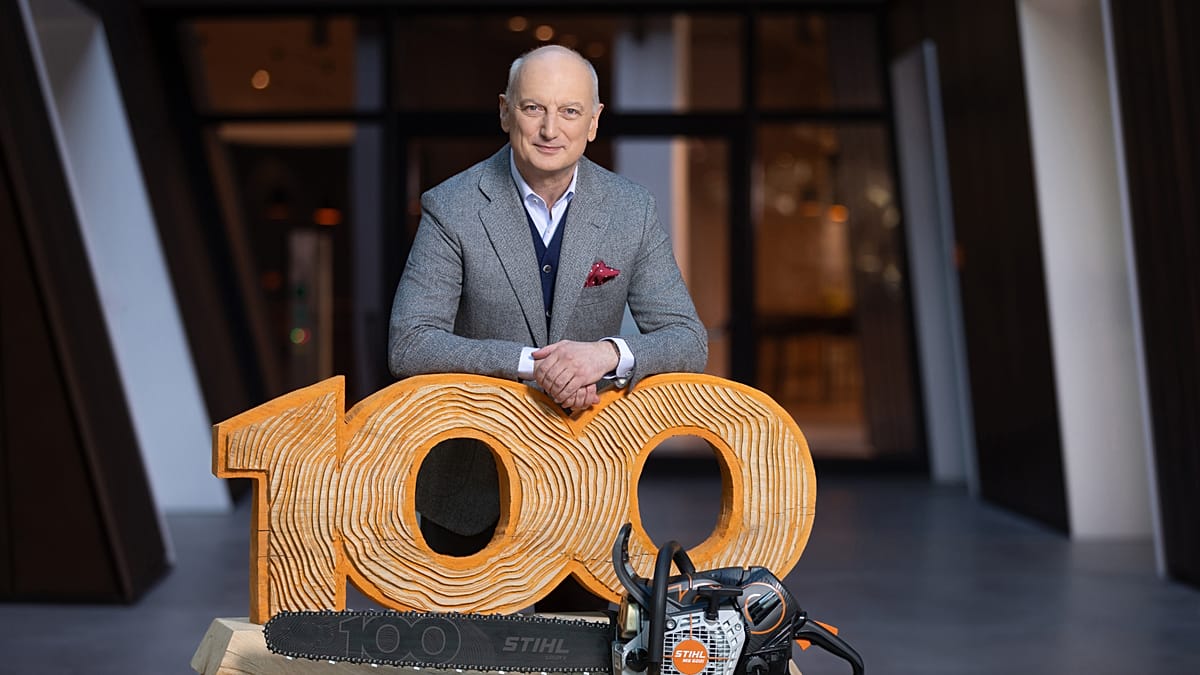
The family entrepreneur from Waiblingen, southern Germany, Nikolas Stihl, has made a striking statement regarding the state of the German economy. He’s not holding back, folks! He’s calling for longer working hours without any additional pay. In 2025, STIHL, known for being the best-selling chainsaw brand since 1971, raked in a whopping €5.48 billion in revenue and had a global workforce of 20,246 employees. The company, founded by Andreas Stihl back in 1926, is proudly celebrating its 100th anniversary this year.
Now, let’s get into the meat of the matter. Stihl emphasized that the situation in the German economy is serious—very serious. Over the past eight years, the country has seen a decline of around 15 percent in industrial output. Can you believe it? Every single month, Germany is losing about 15,000 industrial jobs. Stihl doesn’t shy away from addressing the elephant in the room: the impact of US tariffs and challenges from China. But he insists the root of the problem lies within—home-grown issues that are holding firms back.
He pointed out that the federal government’s planned reforms on health insurance, pensions, taxes, and the labor market are just not enough to lift Germany out of its structural crisis. “If these compromises were to be unpicked now, we need to muster all our strength for further reforms that will generate tangible investment and growth impulses,” he stated. Stihl believes that the governing coalition and social partners must shake off their hesitations and step up to their responsibilities towards Germany.
Stihl argues that if Germany wants to maintain its prosperity and keep social benefits high, the total volume of work in the economy must increase. A higher volume of work means more economic output, people! He frames the debate about working more hours as a necessity for preserving prosperity—not about employees being lazy.
“We don’t have the productivity advantage over our key competitors like we used to justify the high labor costs. That’s why I advocate for increasing weekly working hours to 40, without any pay compensation,” he declared. He acknowledges that it’s a lot to ask from employees, but insists he doesn’t want to take anything away from anyone. The goal? To stay competitive, keep production in Germany, and safeguard jobs.
STIHL operates production facilities in eight countries and boasts 40 sales and marketing subsidiaries along with over 50,000 specialist dealers worldwide. When discussing non-wage labor costs—like contributions to pensions, health, long-term care, and unemployment insurance—Stihl mentioned that a ceiling of 40% of gross wages is the maximum that should be accepted.
Moreover, he’s also calling for more attractive conditions for innovative companies, which includes regulatory breathing space, enhanced tax incentives, and broader access to venture capital. Future-focused sectors like artificial intelligence, robotics, biotechnology, medical technology, space travel, and quantum technologies should receive targeted support.
Stihl concluded with an urgent message, stating, “We must not waste any more time, because only a high-performance and competitive business location can secure prosperity and a strong welfare state.” He reminded us that Germany has proven time and again that it can reinvent itself. The time has come to act with determination. So, what’s next? Will the stakeholders heed his call?
Kaynak: Orijinal Haber