
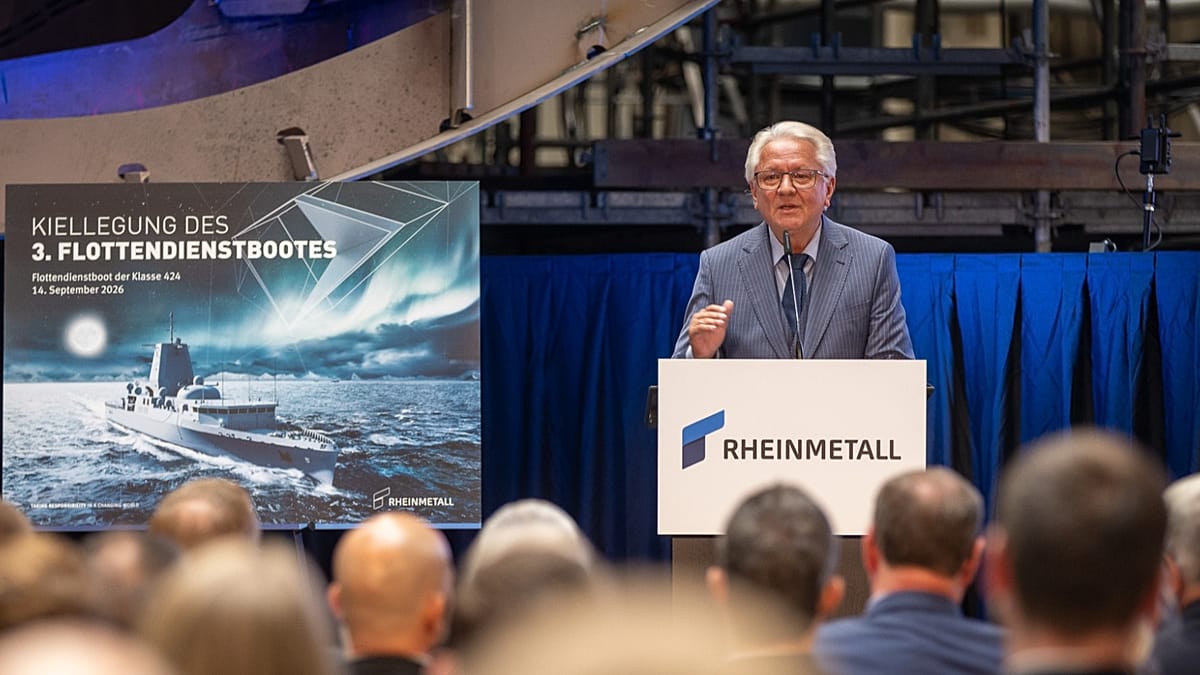
Germany is facing a pressing challenge regarding its defense capabilities, as Rheinmetall CEO Armin Papperger has pointed out that the nation’s missile stockpiles are “worryingly low”. During a recent keel-laying ceremony for the third fleet service boat of Type 424 in Wolgast, Papperger talked about the urgent need for Germany to strengthen its military. It’s not just about amassing more ammunition and missiles—there’s a growing emphasis on air defense, drones, and emerging technologies like humanoid robots and space-based systems. The landscape of threats is evolving, and the nation’s approach to defense must adapt accordingly.
“Isn’t it true that in two years, the threat will look completely different?” Papperger remarked, emphasizing the unpredictability of future challenges. He mentioned the Skyranger, a versatile system that offers multiple capabilities, highlighting that simpler interceptor solutions won’t suffice against more advanced threats, like jet-powered drones that are increasingly difficult to manage. “We also possess .50-calibre guns, which can take down light drones, but things get tricky with more advanced models,” he added, underlining the need for sustainable, long-term solutions.
When it comes to job creation, Rheinmetall plays a crucial role. Papperger stated that around 34,000 individuals are currently employed, and they are on track to increase their workforce by 10,000 annually, aiming for a total of 70,000 employees by 2030. This growth is supported by a supply chain that employs an additional 210,000 people. “That’s nearly 300,000 jobs,” he declared, showcasing the defense industry as a significant engine for employment in Germany.
But how quickly can arms and ammunition production ramp up? Papperger confidently stated, “We are already doing it.” For instance, Rheinmetall has increased medium-caliber ammunition output from under one million rounds to four million rounds. In artillery, they’ve boosted production from 70,000 rounds to a staggering 1.5 million. The production of tank ammunition has also surged, reaching 240,000 rounds from previous years’ figures of 40,000 to 60,000. “We’re doubling our trucks and logistics vehicles to meet demands,” he noted, but stressed that the current issue lies in the lack of orders to increase production even further.
With an impressive investment program worth 30 billion euros over the next six years, Papperger expressed optimism about the future. He emphasized the importance of sustainable capacity building, ensuring that it translates into job security for workers. “The minister’s presence today sends a strong, positive signal that the federal government is taking responsibility here,” he remarked.
As technology continues to evolve, Papperger highlighted that robots and drones are set to become integral components of the defense landscape. Rheinmetall is actively investing in humanoid robots at their research center in Bremen, though they have yet to produce any serial products. “We haven’t gone public with it yet because we’re still in the development phase,” he explained. Additionally, significant investments are being made in space technology, particularly in satellite construction and communications processing.
In terms of combined-arms warfare, Papperger stressed the need for a diverse mix of artillery, armored weapons, conventional ammunition, drones, and missiles. “The only question now is how much of each we will require,” he clarified, hinting at the changing dynamics in military needs. As threats evolve, so too will Germany’s strategic approach to defense.
Bakalım bundan sonra ne olacak? Gelişmeleri takip ediyoruz…
Kaynak: Orijinal Haber