
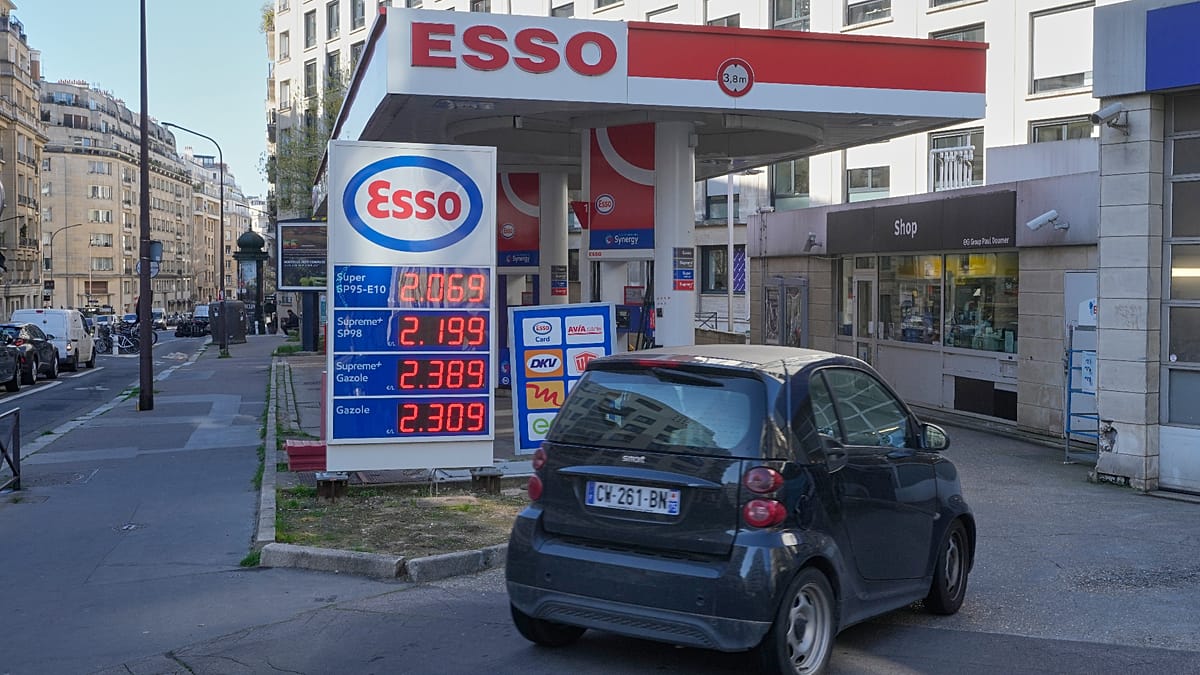
Filling up a car has never cost more on average across the European Union, with recent data revealing shocking figures. As of mid-September, it takes about €103 to fill a standard 50-litre petrol tank and a staggering €108 for diesel. Retail fuel prices have soared since the conflict in the Middle East began, intensifying inflationary pressures across the region. Eurozone energy inflation surged to 14.3% in August, compared to 10.3% in July, as reported by the European Central Bank.
On September 14, a litre of petrol was priced at a weighted EU average of €2.063, while diesel hit €2.159 per litre—marking the highest levels recorded since the European Commission began tracking prices in 2005. Yahu, can you believe it? The previous peak for petrol was in 2022, and diesel was last near this price in April this year. Prices are all over the place across the EU—cheapest in Malta at €1.34 per litre, while Denmark tops the list with a shocking €2.56. For diesel, Malta offers the lowest at €1.21, and Finland charges up to €2.51. These figures were documented in the European Commission’s latest Weekly Oil Bulletin, which was published on September 17 and reflects prices from September 14, taxes included.
Fuel prices have been on an upward trajectory since late February when the war with Iran disrupted energy flows through the critical Strait of Hormuz. International benchmark Brent crude prices climbed above $126 at the height of the conflict and were trading at over $104 per barrel for the following month on Friday. Before the war, Brent was around $72 per barrel!
European crude supplies are facing more hurdles after Saudi Aramco informed at least two European refiners that they would not receive oil under long-term contracts in October, following an attack on a key pipeline to the Red Sea. This information was reported by Bloomberg, citing sources familiar with the situation, and it seems this applies to all European buyers. But hang on, that’s not the whole story! It’s not just international crude prices pushing petrol and diesel rates up; refining costs and margins have also spiked, applying more pressure at the pump.
Refining margins reflect the gap between crude oil costs and the prices of refined products like petrol and diesel. While petrol margins seem to have peaked, experts from the ECB have noted that diesel margins are expected to hit their highest point in October. “Looking ahead,” they said, “the margin for diesel is anticipated to peak in October based on refined diesel futures from LSEG on September 16. Petrol margins, however, peaked in August.” Since the start of 2026, the average petrol price in the EU has surged by about 29%, and diesel has skyrocketed by nearly 40%.
Higher crude prices are also stoking energy inflation across the eurozone and the broader EU. A blog by the ECB published in July stated that increases in crude oil prices typically reflect fully in pre-tax pump prices within one or two months. Governments can buffer the impact temporarily with measures like cutting fuel duties. In the ECB’s July calculations, crude oil accounted for less than a quarter of the euro-area pump price. The rest includes refining and distribution costs, excise duties, and VAT, which helps to explain the significant price disparities between countries.
That same blog indicated that excise duties and VAT together represented around 44% of the euro-area diesel price and 52% of the petrol price in July. Those ECB experts also revealed that refining margins are significantly contributing to diesel prices now. “At the moment, we estimate that in the third week of September, refining margins contributed €0.41 (19% of the pump price) and €0.17 (8%) per litre to the retail diesel and petrol prices in the euro area, respectively.”
The ECB’s monetary policy statement from September 10 cautioned, “Renewed disruption of energy supplies could cause energy prices to rise further and for longer than currently expected.” Experts emphasized that the end of the Middle East conflict and the resumption of energy and refining flows would be crucial for bringing prices down. “For petrol and diesel prices to decline, we need the war in the Middle East to stop, a normalization of flows through the Strait of Hormuz, and a restoration of global refining activities to rebuild oil inventories,” they said.
Could this normalization happen soon and lead to lower crude oil and fuel prices? However, disruptions to Russian refining capacity might keep margins high, even if the Middle East conflict is resolved. Well, that’s the situation for now; let’s keep an eye on how this all unfolds…
Kaynak: Orijinal Haber