
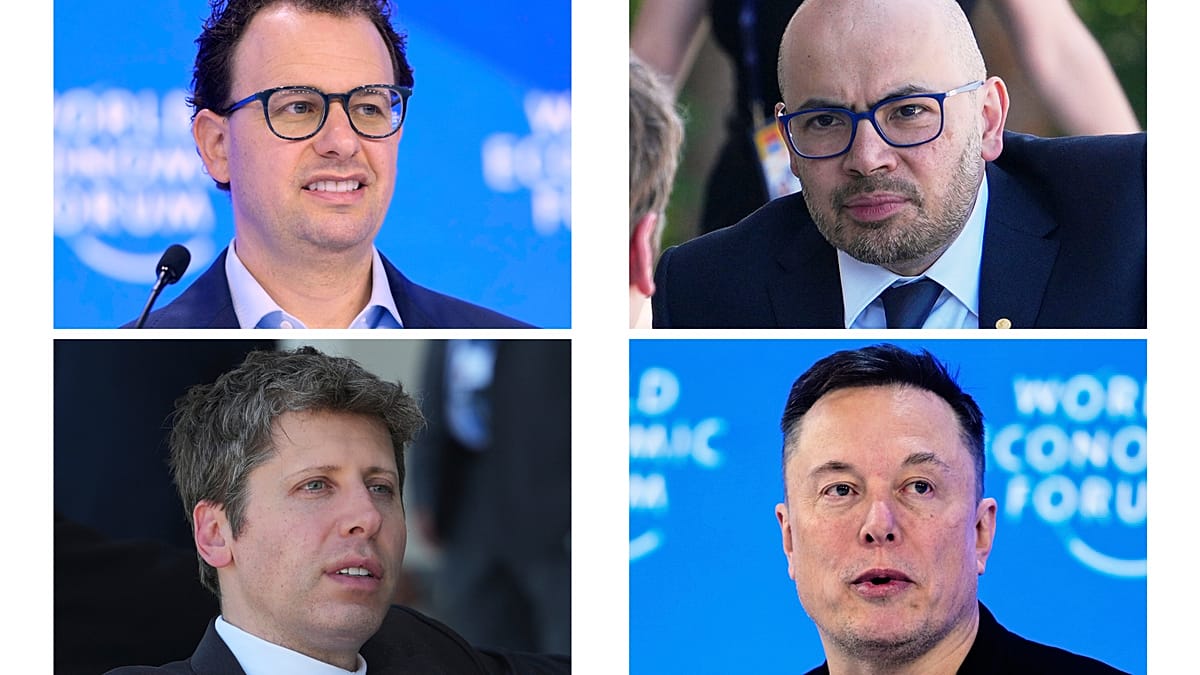
Executives from leading tech companies are facing a major legal challenge as they stand accused of colluding to slow down AI development under the guise of safety measures. The lawsuit, brought forth by a group of plaintiffs who subscribe to AI services like ChatGPT, Claude, Grok, and Gemini, argues that this agreement among powerful tech giants essentially amounts to price-fixing dressed up as safety concerns.
The plaintiffs assert that this agreement poses an anti-competitive effect on consumers, claiming that the heads of these companies—like Demis Hassabis, co-founder and chair of one of these firms—have publicly acknowledged the intense pressure not to unilaterally slow down AI development. They argue that by deciding collectively to hold back progress, these companies are shirking individual accountability, which antitrust laws are designed to prevent.
Lawyers representing the plaintiffs, who are advocating for a nationwide class of other paid subscribers, stress that they don’t oppose any individual company’s decision to slow its own AI advancements for safety reasons. Rather, they take issue with the idea that these companies could sidestep antitrust laws by agreeing to collectively restrain progress. “A competitive market allows for responsibility and genuine progress,” the lawsuit contends, emphasizing the need for accountability in the fast-evolving tech landscape.
Nick Rowley, the lead attorney for the plaintiffs, voiced grave concerns over the potential dangers of AI development. “AI will quickly spin out of human control and could kill us all if we allow AI safety and protocol to be controlled by private self-serving agreements between the world’s most powerful ‘for profit’ technology companies,” he stated. This stark warning paints a dire picture of the implications if these tech leaders are allowed to dictate the pace of AI advancement without regulatory oversight.
Interestingly, in an initial essay proposing this slowdown, one of the executives, Amodei, recognized potential antitrust challenges and suggested that the U.S. government should play a mediating role to facilitate discussions among various labs. He noted that while government participation might not be necessary, a “narrow waiver” for safety discussions would be beneficial. On the other hand, Altman from OpenAI has expressed openness to a federal framework that establishes consistent safety requirements, but he believes there’s no need to wait for antitrust exemptions to start ensuring safety in AI development.
As discussions about pacing AI development intensify, the lawsuit highlights a broader dialogue about safety standards in the tech industry. The plaintiffs are not against the AI companies seeking regulation from Congress or the White House, nor are they against asking for antitrust exemptions. However, navigating this collaboration with the federal government could prove difficult, especially considering the political landscape.
Former President Donald Trump previously dismissed calls for regulation of AI on social media, labeling any attempts to limit technology as part of a conspiracy. Meanwhile, the current U.S. president is set to visit Beijing for discussions on AI, aiming to establish clearer communication between the two leading global players in AI technology.
As these high-stakes discussions unfold, the question remains: will the tech giants find a way to balance safety with innovation, or will this legal battle reshape the future of AI development?
Kaynak: Orijinal Haber