
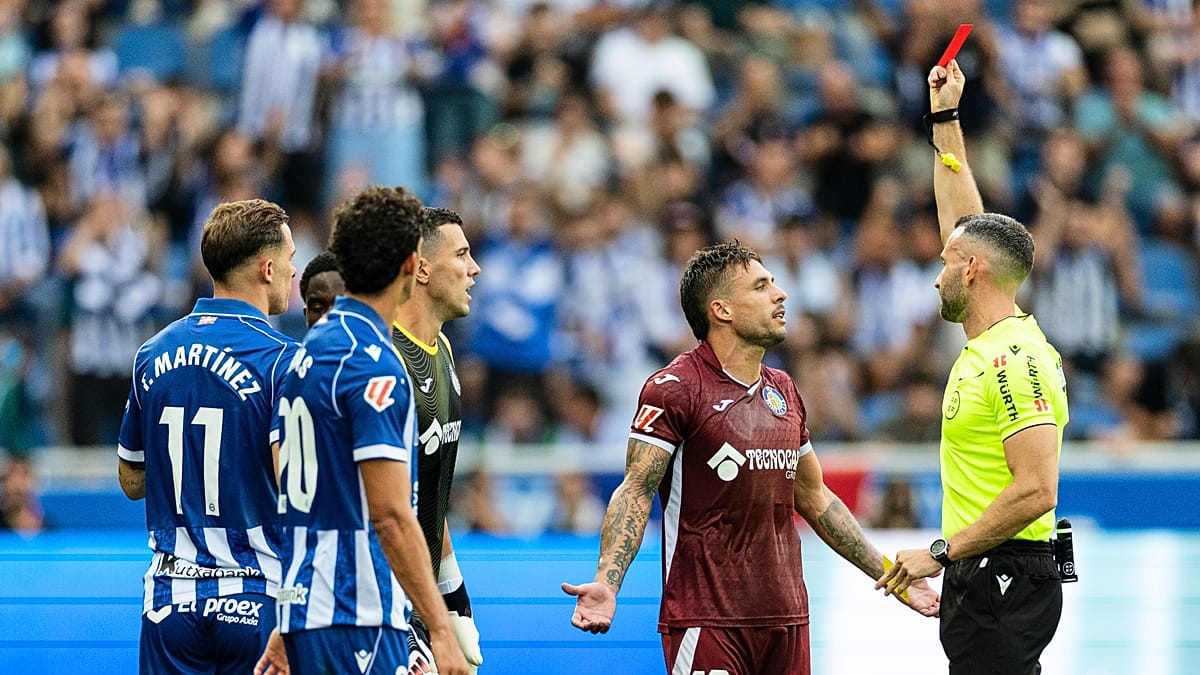
As the new football season kicks off in Spain, a familiar and aggressive digital crackdown resurfaces, leaving countless websites and online services in the dark. LaLiga, with the backing of court rulings, has the power to cut off internet access across entire cities, claiming that they’re fighting piracy. Javier Tebas, LaLiga’s president, even downplayed the situation, suggesting that the complaints came from just a handful of “geeks” whose websites were impacted. But here’s the kicker: a report by OONI revealed that over 554,000 legitimate domains were affected at some point—this isn’t just a few tech-savvy individuals crying over spilled milk.
Cloudflare took the brunt of the attack. Despite only accounting for 30% of the blocked IPs, it was responsible for a staggering 90% of the affected domains, impacting more than 501,000 sites. Among the notable victims, the Redsys payment gateway faced repeated outages during LaLiga matchdays, leaving retailers bewildered about the source of their online payment failures. And it’s not just them; WikiDex, the largest Spanish-language Pokémon encyclopedia, also faced access issues, particularly concerning its image servers.
In my own experience with DIGI’s fiber internet, I’ve noticed blocks during previous matches while trying to download open LLM models from my Hugging Face server, which is typically hosted on AWS. Can anyone explain how that connects to LaLiga’s piracy claims? It’s a mystery… The number of blocked sites surged after the kickoff of the Elche C. F. vs. Real Madrid match, with Cloudflare IPs being targeted by Spain’s IPTV signal. While Tebas insists the complaints are limited to a small group, this is hardly just a minor inconvenience. Major sites like linuxmint.com, the supermarket chain froiz.es, and the Centro de Investigación Biomédica en Red Networked Biomedical Research Centre found themselves suddenly inaccessible.
The verdict is in: this isn’t just a localized issue but a nationwide blockade imposed by internet providers. Take another example: on September 16, 2026, I attempted to download the Qwen 3.8 27b LLM model, but the requests failed because the TLS certificate couldn’t be delivered in time—again, during a matchday. And this AI model has nothing to do with football! The outages from the previous day began around 21:20 and stretched past midnight, resulting in nearly three hours of downtime. The following day, the block kicked in at 18:45 and lasted until just before midnight, totaling a staggering five to six hours of disruption. These were midweek days; on weekends, the downtime could be even longer.
Now, you’d think there are smarter ways to handle this than just taking down entire IPs. Targeting specific domains or URLs would be far more effective. The rule should be to block the infringing content, not the shared infrastructure, because the collateral damage is incalculable. Many services and users are left unable to access the internet and their apps during matches. Websites are already reporting significant losses due to LaLiga’s actions, with estimates exceeding 3.1 million euros.
The legal basis for these widespread blocks stems from a ruling by Commercial Court No. 6 of Barcelona on December 18, 2024. This ruling upheld a claim by LaLiga in collaboration with Telefónica Audiovisual Digital, allowing for the immediate suspension of access to identified IPs and enabling dynamic updates on a weekly basis—even during matches—without requiring a fresh court order. Major ISPs like Movistar, Vodafone, DIGI, and MásOrange didn’t challenge the ruling; they accepted the measures without hesitation.
In Congress, there’s been some movement, although it’s still not legally binding. On April 29, 2026, a non-binding motion to amend the Digital Services Act was approved, aimed at establishing proportionality requirements and limiting court rulings. If this reform goes through, it could change the game, ensuring that industry bodies don’t manage blocking lists unchecked. In response to these outages, some users have opted for VPNs to bypass restrictions, a move that European courts view as legitimate. LaLiga, however, argues that VPNs, as technological intermediaries, also share responsibility for the content they carry.
As the 2026/2027 season unfolds, this ruling will expire on June 20, 2027, coinciding with the conclusion of the Second Division. LaLiga and Telefónica are likely to seek an extension, but with the legal landscape shifting compared to two years ago, there’s genuine uncertainty about whether they’ll receive such extensive powers again.
Bakalım bundan sonra ne olacak?
Kaynak: Orijinal Haber
Vay be, LaLiga maçları gerçekten büyük etki yaratmış. İspanya’da binlerce web sitesi çökertilebiliyormuş. Bu gerçekten endişe verici.