
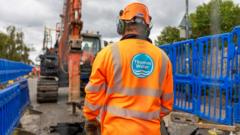
The government has officially objected to a proposed rescue deal for Thames Water, a move that could push the UK’s largest water company closer to nationalisation. Environment Secretary Emma Reynolds raised concerns over a £10 billion package put forth by the company’s lenders in a letter to the industry regulator on Monday. The alarm bells regarding the firm’s potential collapse first rang three years ago, marking the beginning of a challenging journey for Thames Water. Reynolds emphasized that the deal does not adequately protect consumers or the environment, while Thames’s creditors argued that their plan is the “fastest route” to improve the company’s operations.
Now, if Thames Water does indeed go under, households won’t be left without essential services like drinking water and sewerage. Serving a staggering 16 million customers across the UK, Thames Water has drawn significant criticism lately—think sewage discharges, pipe leaks, and a hefty £122.7 million fine handed down by the industry regulator Ofwat last May for failing to comply with sewage spill rules and shareholder payouts.
In a bid to stabilize the company, a group of existing lenders is willing to write off £9.4 billion of its nearly £20 billion debt while injecting billions more into the business, but they’re asking for leniency on future pollution fines in return. A consortium known as London & Valley Water (L&VW) has promised to pump around £3.35 billion in cash into Thames, alongside a new £6.55 billion debt facility, as part of a grand £10 billion business plan stretching until 2030. Reynolds made it clear on Tuesday that she doesn’t want Thames Water customers to “pick up the bill for the company’s failures,” indicating the government’s preparedness for all scenarios, including temporary nationalisation.
In her statements to the House of Commons, Reynolds expressed three main concerns: the unfair burden on customers, delays in crucial infrastructure investments, and setbacks in environmental improvements. “There’s an expectation in the proposal for customers to fund the investment in the company,” she pointed out, “and I’m not convinced about the proposal’s request to lower performance standards.” She also voiced worries that the long-term resilience of the water and wastewater systems might not be sufficiently safeguarded.
On the flip side, a spokesperson for L&VW confidently stated that their plan is the best way to enhance outcomes for customers and the environment—without relying on government funding or costing taxpayers a dime. They described the proposed deal as a “long-term solution that acknowledges the full extent of Thames Water’s issues,” arguing that all other options would yield worse results for both customers and the environment. Their proposals promise no increase in customer bills beyond what Ofwat has dictated.
As for the regulator Ofwat, they are currently reviewing the proposal, with a decision expected this summer. They reiterated that no decision has been made yet and are engaging with L&VW to assess whether their plans can effectively turn around Thames Water’s operations and financial stability for the betterment of customers and the environment.
Without an agreed-upon rescue deal, Thames Water is on the verge of running out of cash in just a few months, putting it at risk of bankruptcy. The company reaffirmed its belief on Tuesday that a market-led solution is the best path forward for customers and the environment. A spokesperson commented on the positive feedback from the Secretary of State to Ofwat regarding the L&VW plan, stating, “We will continue working with all parties to reach an agreement that supports long-term financial stability.”
The government has expressed a preference for a market-based solution but is prepared to intervene if necessary. The temporary nationalisation option, known as a special administration regime (SAR), would involve government-appointed managers ensuring that essential services continue running. Proponents of this approach argue that it could give Thames Water a fresh start, allowing it to write off some losses and be sold off without the burden of overwhelming debt.
As the situation unfolds, many remember the words of Thames Water’s CEO, Chris Weston, who last July said the company was “extremely stressed” and would need “at least a decade to turn around.” With all these developments, the clock is ticking, and one can’t help but wonder—what’s next for Thames Water and its millions of customers?
Kaynak: Orijinal Haber