
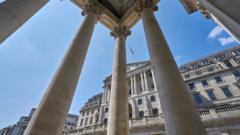
Policymakers at the Bank of England are expected to keep interest rates unchanged this week, even as prices are on the rise, driven by the ongoing conflict in the Middle East. The Monetary Policy Committee (MPC), consisting of nine members, has been convening against a backdrop of soaring global energy prices and increasing interest rates worldwide. Economists are forecasting that the MPC will maintain the benchmark Bank rate at 3.75% for the sixth consecutive meeting. However, there’s a split among analysts on whether an increase is necessary before the year wraps up.
This Bank rate isn’t just a number; it’s pivotal for banks and lenders as they set interest rates for individuals and businesses looking to borrow or save money. The latest decision regarding interest rates is set to be announced by the Bank at 12:00 BST on Thursday. Back in July, after their previous meeting, the MPC hinted that they might raise the Bank rate if the situation in Iran worsens. Bank of England governor Andrew Bailey was quoted by the BBC, highlighting that oil prices had surged past the $100 mark on September 9th and have remained there ever since, with little hope for a lasting peace in the region.
The Bank uses interest rates as a tool to control inflation, aiming to keep it at a target rate of 2%. However, recent official figures revealed that the Consumer Prices Index (CPI) measure of inflation rose to 3.1% in August, up from 2.9% in July, marking its highest level in six months. This uptick was fueled by soaring petrol, diesel, and airfare costs. Economists are concerned that the ongoing rise in global energy prices will trickle down to food and fuel expenses for consumers, suggesting that the inflation rate might not have hit its peak yet.
The MPC is acutely aware of these challenges, citing the Middle East conflict while warning that inflation is “set to remain well above reasonable levels.” The economic landscape isn’t entirely bleak, though; the unemployment rate remains steady and economic growth is reportedly “quite a bit better than it has been.” Households are feeling the pinch from a rising Bank rate, which translates to higher borrowing costs. On the flip side, savers might find some relief with more favorable savings rates.
Given the broader global context and the market’s expectations for a higher Bank rate, several major lenders have already upped the costs for new fixed-rate mortgages in recent days. Andrew Montlake, the chief executive of mortgage broker Coreco, pointed out that the latest data indicates “the inflation dragon has not been fully slain.” If inflation persists, lenders might have to adjust their strategies accordingly.
Currently, the average two-year fixed residential mortgage rate is at its highest since May 11th, standing at 5.77%, while the average five-year rate is also peaking, recorded at 5.83%. On the savings front, while some banks are promising better returns, the rising cost of living could potentially erode the purchasing power of those savings. It’s crucial for savers to regularly check that their accounts are yielding competitive returns, striking a balance between easy access to their funds and the money they can afford to set aside for longer periods.
So, what’s next for UK interest rates, and what implications will this have for mortgages? Only time will tell as we await further developments in this ongoing saga…
Kaynak: Orijinal Haber