News Outlets Demand Sanctions Against OpenAI in Copyright Dispute

Media organisations including the New York Times and the Daily News are ramping up their legal battle against OpenAI, requesting a federal judge to i

Media organisations including the New York Times and the Daily News are ramping up their legal battle against OpenAI, requesting a federal judge to impose sanctions on the AI giant. This escalating conflict over artificial intelligence and copyright could significantly impact an already struggling news industry. The newspapers claim that OpenAI, the maker of ChatGPT, is hiding crucial evidence that could be pivotal in what might turn out to be a landmark copyright infringement trial. This trial centers around how OpenAI, along with its partner Microsoft, developed their AI systems by utilizing millions of news articles. The core issue at stake is whether AI chatbots are unfairly competing for audience attention, siphoning off web traffic without engaging in the actual journalistic labor needed to gather news.

On Thursday, a filing in a Manhattan federal court alleged that OpenAI “chose obstruction” and engaged in “discovery misconduct,” according to attorney Steven Lieberman from the New York Daily News. The motion emphasizes that OpenAI has made misrepresentations and urges the court to penalize the company for concealing and destroying evidence that illustrates how ChatGPT was trained on journalism that was allegedly taken without permission. The debut of such AI technologies has already sparked a commercial boom and is altering how individuals search for information online.

The urgency of the situation intensified in 2024 when Google began displaying AI-generated summaries at the top of search results, effectively cutting off the advertising revenue that news publications earn when readers click through to original sources. The Times has since found allies in this legal fight, with other media organisations such as the Daily News, Chicago Tribune’s parent MediaNews Group, digital publisher Ziff Davis, and the nonprofit Center for Investigative Reporting joining the cause.

OpenAI and other tech companies contend that their practice of training AI systems on digitized books, online articles, and other web content falls under “fair use.” However, the arguments they present diverge significantly from those made by authors of literary works. The original lawsuit and an amended complaint filed last month focus on the unfair competition that arises when companies profit from journalism without obtaining permission or offering compensation for the creation of rival products.

As it stands, the New York Times has reportedly spent over $28 million fighting legal battles against AI companies, including a separate lawsuit against the AI company Perplexity last year. Among the sanctions being sought in this latest motion are attorney fees to cover the costs associated with securing what the newspapers deem “improperly withheld” evidence. This ongoing legal saga unfolds as a growing number of media organisations have begun to sign licensing deals with OpenAI and other AI firms, including Google and Meta, which involve payments to news outlets in exchange for access to their news feeds or archives for training AI systems.

As the legal fees mount and the stakes rise, one must wonder how this battle will shape the future landscape of journalism. Will news outlets find a way to protect their intellectual property, or will AI continue to disrupt traditional reporting practices? The question lingers in the air as developments unfold…

Kaynak: Orijinal Haber

Adult Site Hit With £630,000 Fine for Age Verification Failures

Ofcom has hit the operator of a pornography site with a hefty £630,000 fine, and the reason is as serious as it gets: they failed to adequately chec

Ofcom has hit the operator of a pornography site with a hefty £630,000 fine, and the reason is as serious as it gets: they failed to adequately check the ages of their users. In the UK, sites that serve adult content, including porn, are now required to implement “highly effective” age checks. This isn’t just a suggestion anymore; it’s the law aimed at keeping children away from content that’s not meant for them. Providers are on notice—if they don’t comply, they can expect to face penalties like this one.

The site in question, now blocking UK visitors, has been under the regulator’s watchful eye. Ofcom’s decision to impose this fine is part of a broader crackdown on age verification failures that’s been ramping up recently. Back in May, YoungTek Solutions, another porn company, faced a slap on the wrist with a £600,000 fine for not ensuring its UK visitors were over the age of 18. Just look at that—£600,000 for one, and now £630,000 for another…

But wait, there’s more! Prior to these penalties, Ofcom had already imposed a staggering £1.35 million fine on yet another adult site operator that completely dropped the ball on age checks. It’s becoming clear that Ofcom is serious about enforcing these rules, but the agency itself has been under fire for how effectively it’s carrying out its responsibilities. People are starting to ask: is Ofcom doing enough?

Things are getting spicy on the regulatory front as well. Ofcom is currently locked in a tug-of-war with the online message board 4chan over its refusal to pay a £520,000 fine. A lawyer for 4chan has made a mockery of Ofcom’s efforts, questioning if their enforcement is as “technically accurate, robust, reliable and fair” as they claim. Quite the drama, right?

As for the state of things, the Online Safety Act is designed to protect children online, and age checks are a vital part of that framework. It’s all about keeping the young ones safe and sound in an increasingly tricky digital landscape. But the questions linger—how many more fines will be handed down? Will these measures actually make a difference in protecting children? One thing’s for certain, the scrutiny on these adult sites and their compliance is far from over…

Kaynak: Orijinal Haber

AI for Good Summit in Geneva: A Global Conversation on Artificial Intelligence Governance

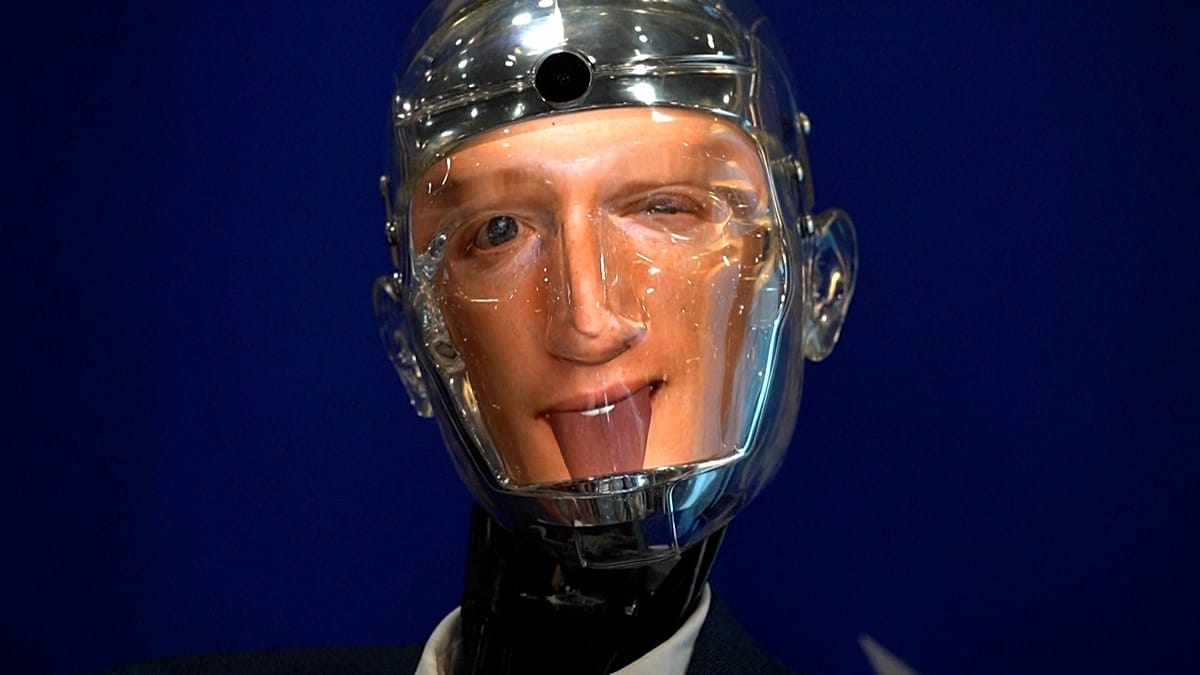
In Geneva, a robot sporting Mark Zuckerberg’s face has the crowd buzzing as it winks, only to morph into the visage of Barack Obama moments later. Th

In Geneva, a robot sporting Mark Zuckerberg’s face has the crowd buzzing as it winks, only to morph into the visage of Barack Obama moments later. This is just one of the many eye-catching displays at this year’s AI for Good summit, drawing over 12,000 participants from 170 countries. Launched in 2017, this summit has set a new visitor record, highlighting the increasing urgency surrounding artificial intelligence (AI) as governments and industries scramble to keep up with a technology that’s advancing at breakneck speed—much faster than regulations can adapt.

Meanwhile, Geneva is also hosting a broader United Nations dialogue on AI governance, where delegates from 193 nations are gathered to engage in discussions about the first UN Global Dialogue on AI Governance. It’s a hot topic, and the atmosphere is electric, with humanoid robots, robotic prosthetics, and other AI technologies on display, offering a vivid glimpse into the future of the field.

One of the standout exhibits is Robert, a robot developed by Geneva-based RB Labs. Just a few meters away, there’s Ling Xi, a mobile phone-controlled robotic guide dog created by China Mobile, aimed at enhancing the independence of visually impaired individuals. Each unit comes with a price tag of $4,000—approximately €3,506. The organizers are thrilled by the growing interest in the summit, as participants grapple with what rapid advancements in large language models and autonomous systems could mean for society.

A voice from the summit, Werner, commented on the pace of AI development, saying, “In terms of AI years, this is an eternity, right? Because AI is moving so fast, I think we’re actually acting on our behalf, autonomously.” He emphasized the transition from software to the physical world, showcasing advanced robotics, autonomous mobility, brain-computer interfaces, and even space computing across the exhibition floor.

Swiss company Ability Neurotech is also making waves with its innovative brain-computer interface, claiming it can restore the “capacity to communicate, to speak, or to move.” They operate at a staggering 140 words per minute in real time for patients who can’t do that today. “We use AI to customize and optimize the control algorithms, especially for people with gait disabilities,” said a spokesperson from the company. They are adamant about protecting user data, opting to keep it off the cloud.

In the youth zone, excitement is palpable as teams gear up for the Robotics for Good Youth Challenge, with around 250 kids participating this year. Young students, some as young as ten, have crafted robots from scratch using local materials, all in a bid to tackle this year’s pressing theme: food security. A Lithuanian team has caught the judges’ eyes with its creation, standing alongside 50 national teams vying for the top prize, which will be handed out by American musician Will.i.am during the closing ceremony.

As the summit continues, it leaves us wondering: what future will these advancements in AI shape for our world? The dialogue is just beginning, and it’s clear that the conversation around AI governance is only going to intensify.

Kaynak: Orijinal Haber

The Fake Erling Haaland: AI’s Unexpected Star of the World Cup

Erling Haaland, the Norwegian footballer, has been on fire during the 2026 World Cup, showcasing his talent for scoring goals and creating engaging c

Erling Haaland, the Norwegian footballer, has been on fire during the 2026 World Cup, showcasing his talent for scoring goals and creating engaging content. This guy is a meme machine! From his nostril-angle selfies that humorously liken him to Shrek, to his goofy Q&As and comedic skits, Haaland’s online presence is hard to ignore. But here’s the kicker — a lot of what you see floating around the internet isn’t even his work; it’s mostly generated by AI.

Just last week, a video featuring Haaland chowing down in a restaurant went viral, racking up over 31 million views on X in just a few days. Fans were buzzing, but fact-checkers quickly pointed out that the footage actually originated from a comedic skit by a Chinese duo, Jin Long and Qiu Qiu, which was posted on TikTok way back on June 15. As Haaland’s fans dialed up the creativity, they started editing videos, putting his face on characters from movies like Marlon Wayans’s role in “The Vikings Are Coming.” The edits quickly blurred the lines between reality and fiction, as fans flooded social media with AI-generated images of Haaland dressed as a Viking warrior, axe in hand, ready for battle.

And it doesn’t stop there! Right-wing and far-right accounts have latched onto Haaland as a symbol of a strong, blonde, blue-eyed man, sharing Viking-themed content that often paints him in a mythical light. This AI content has roots in China, where Haaland has become somewhat of a folk hero. Since he joined platforms like Weibo and Douyin, fans have dubbed him things like “Nordic Cyborg” or “Robot Striker,” set to the catchy tune of Moskau — a song that was released decades before Haaland was even born.

It’s fascinating to think about how an athlete can transcend the sport and become a digital icon, isn’t it? The lines between the real and the imagined are becoming increasingly blurred, and while Haaland is busy scoring goals on the pitch, his AI-generated persona is winning hearts online.

What’s next for Haaland as he continues to navigate this wild mix of fame and technology?

Kaynak: Orijinal Haber

Public Outcry as Meta Launches Controversial AI Image Tool Using Instagram Profiles

Meta is under fire for its new AI tool, Muse Image, which allows users to generate images using public Instagram profile pictures. The backlash comes

Meta is under fire for its new AI tool, Muse Image, which allows users to generate images using public Instagram profile pictures. The backlash comes as many view this feature as a blatant invasion of privacy. Critics argue that the potential for misuse is enormous, essentially treating people’s images and personal data as raw material to be exploited. As regulators and campaigners voice their concerns, the tool becomes a focal point for discussions about the ethical implications of AI-generated content.

Meta claims that users can opt out of this feature, even if their accounts are public. To do so, they need to navigate to Instagram’s settings, select “Sharing and Reuse,” and turn off the option for posts and reels. However, this setting will only appear for users with public accounts. If your account is private, it’s already protected from being shared. This raises questions: how many users will actually take the time to adjust these settings? Will they even be aware of them?

The introduction of Muse Image is seen as Meta entering a crowded market filled with other AI tools that generate images from text. But using Instagram’s vast database of public images makes it unique—and potentially more dangerous. One user on social media expressed their disbelief, stating that this tool is “an obvious recipe for disaster.”

To see how it works, I personally asked Muse AI to create an image of me driving a car. The result was surprisingly realistic, seamlessly blending various images together. It’s impressive, no doubt, but it also illustrates the power that such technology wields. People can now create high-quality images of themselves in any scenario they wish, but at what cost?

The implications of this technology extend beyond mere personal use. The ongoing scrutiny from regulators, such as Ofcom, suggests that this issue isn’t going away anytime soon. The potential for AI to invade personal privacy is significant, and as we’ve seen with other tech scandals, the public’s trust in these companies is fragile.

With the rise of AI-generated images, we must consider how this impacts our view of identity and authenticity in the digital age. Are we ready for a world where anyone can manipulate their online image with just a few clicks?

Bakalım bundan sonra ne olacak? Gelişmeleri takip ediyoruz…

Kaynak: Orijinal Haber

Meta Faces Pressure from French Watchdog to Resume Copyright Payment Talks

France’s competition authority has ordered Meta to jump back into negotiations with French press groups over copyright payments, citing a lackadais

France’s competition authority has ordered Meta to jump back into negotiations with French press groups over copyright payments, citing a lackadaisical approach from the tech giant that has weakened protections for news content. This directive comes hot on the heels of complaints lodged by two organizations representing French news publishers, who argue that Meta has dropped the ball in reaching new agreements. The Société des Droits Voisins de la Presse (DVP), which manages rights for publishers and news agencies, along with l’Alliance de la Presse d’Information Générale (APIG), which represents around 300 publications, are at the forefront of this dispute.

Their beef centers around what’s known as neighboring rights or related rights—a form of copyright protection that allows press publishers and news agencies to demand payment when online platforms like Meta reuse or display parts of their content. These rules, rooted in the European Union’s 2019 Copyright Directive, have become crucial in France’s push to make major U.S. tech firms cut a deal with publishers when their news content is showcased on their platforms.

Now, back in 2021 and 2022, tech companies like Meta and Google signed agreements with French press outlets to comply with these neighboring rights rules. But here’s the kicker—Meta’s contracts with DVP and APIG expired in December 2024 for DVP members and January 2025 for APIG members. No new agreements were reached, which means APIG and DVP members are no longer cashing in on their materials being reused or displayed on Meta’s platforms, even as their content continues to flow through services like Facebook.

The French authority, known as Autorité de la concurrence, has also demanded that Meta cough up the necessary information to evaluate payments within a tight 15-day window. They’ve flagged that the company’s practices could potentially amount to “an abuse of a dominant position.” Ouch! To add to the drama, the regulator slammed Meta for excluding most of its services—think Instagram and Threads—from negotiations, only considering press content shared by users on Facebook. This could seriously undermine France’s neighboring rights rules.

This whole saga unfolds against a backdrop where news outlets argue that major platforms are reaping benefits from broadcasting original journalistic content, ultimately leading to big bucks from ads for companies like Meta. Interestingly, France’s competition watchdog had Google in its crosshairs not too long ago, slapping them with a €250 million fine in 2024 for not adhering to commitments related to neighboring rights negotiations. This included failing to fulfill transparency obligations and using press content to train AI tools without keeping publishers in the loop.

Now, the order against Meta is just a temporary measure, meaning it doesn’t finalize how much the company might have to shell out. It’s more of a nudge, pushing Meta back to the negotiating table while the authority keeps looking into the broader case. So, folks, the question remains: how will Meta respond, and what’s next in this ongoing battle for fair compensation?

Kaynak: Orijinal Haber

Are Microplastics Hiding in Your Skincare Products?

The beauty industry is in full swing, and whether you’re a man or a woman, chances are you’ve noticed the explosion of skincare products, make-up

The beauty industry is in full swing, and whether you’re a man or a woman, chances are you’ve noticed the explosion of skincare products, make-up, and anti-ageing serums flooding social media and retail shelves. Recent reports predict that the global beauty market is set to skyrocket to a staggering $590 billion (€516 billion) by 2030. However, lurking in some of these products might be microplastics—tiny bits of plastic that are part of the environmental pollution crisis and whose effects on human health are currently under scrutiny. So, how do these microplastics find their way into our beauty routines? And what’s the European Union’s stance on regulating them?

Euronews Tech Talks recently had a chat with Iseult Lynch, an environmental chemist and professor at the University of Birmingham, and Hélène Duguy, an environmental lawyer from the NGO ClientEarth, to shed some light on these pressing questions. Microplastics aren’t just limited to rinse-off products like facial scrubs; they can also be found in leave-on products like moisturisers and lipsticks. Now, don’t get it twisted—plastic itself isn’t the big bad here. “The challenge with plastics is the additives in them largely, so things that are added to those plastics to make them mouldable, usable,” Lynch pointed out.

What’s even more concerning is that these plastics can contain plasticisers, colorants, and toxic chemicals such as per- and polyfluoroalkyl substances (PFAS), which can wreak havoc on human health. Microplastics are often included in beauty items for reasons like creating smooth textures and adding that shimmering glitter effect. But fear not, there are alternatives! Lynch highlighted that bio-based polymers, derived from non-edible plant components, can step in to replace these pesky microplastics. For example, rice husks can be transformed into biodegradable particles, offering a green alternative.

Now, let’s talk regulations. Microplastics in beauty products are governed by the Commission Regulation EU 2023-2055, which was rolled out by the European Commission in 2023. This legislation isn’t just about cosmetics; it takes a broader approach, covering a variety of intentionally added microplastics found in fertilizers and detergents as well. “It’s the broadest restriction that we’ve had in Europe on chemicals because it targets a huge group of polymers, which is a first,” Duguy mentioned.

But here’s the kicker: despite these regulations, you might still find microplastics hiding in your skincare and make-up products at home. “The restriction puts forward several transition periods, depending on the cosmetics wet work to deal polymer by polymer,” Duguy explained.

So, what’s next? Will we see a future free from microplastics in our beauty products, or is this just the beginning of a long battle against plastic in our everyday lives?

Kaynak: Orijinal Haber

GlobalEye: NATO’nun Yeni Gözleri Gökyüzünde!

Swedish defense company Saab has just made a big announcement that has caught the attention of NATO members. As discussions about future defense capa

Swedish defense company Saab has just made a big announcement that has caught the attention of NATO members. As discussions about future defense capabilities unfolded in Ankara, Saab revealed that its GlobalEye aircraft will be the alliance’s new “eyes in the sky.” This is huge, folks! We’re talking about a game-changer in aerial surveillance and reconnaissance.

So, what exactly is GlobalEye? This advanced aircraft combines the capabilities of surveillance, reconnaissance, and early warning. It’s designed to provide real-time intelligence to NATO forces, which is essential in today’s rapidly changing security environment. Imagine having a bird’s-eye view of everything happening on the ground – that’s what GlobalEye promises.

Now, while Saab’s announcement was met with excitement, it also raises questions. How will this aircraft enhance NATO’s operational capabilities? What does this mean for defense strategies in the region? And importantly, how quickly can GlobalEye be deployed to respond to emerging threats?

The timing of this announcement is also notable. With NATO members meeting in Ankara, the focus on collaboration and joint defense efforts has never been more crucial. The GlobalEye aircraft seems to fit right into this narrative, aiming to bolster NATO’s collective security and interoperability among member states.

This is not just about technology; it’s about strategy, about keeping peace, and about being prepared for any situation that might arise. The advent of GlobalEye could potentially revolutionize how NATO conducts its operations. So, will this be the turning point for NATO’s aerial capabilities? Only time will tell.

Kaynak: Orijinal Haber

Microsoft’s Major Restructuring: 4,800 Job Cuts and Xbox Downsizing

Microsoft has announced a significant restructuring, cutting around 4,800 jobs, which is roughly 2.1% of its entire workforce. This decision is set t

Microsoft has announced a significant restructuring, cutting around 4,800 jobs, which is roughly 2.1% of its entire workforce. This decision is set to heavily impact the Xbox division, with a notable number of layoffs being concentrated there. Amy Coleman, the executive vice president at Microsoft, shared in a memo that the tech giant must pivot its focus toward areas capable of delivering value to customers in a rapidly evolving industry. The company plans to spin off four Xbox game development studios—Compulsion Games, Double Fine Productions, Ninja Theory, and Undead Labs—as part of this shake-up. To add to the changes, another 1,600 roles will be eliminated from Xbox.

Amid these transitions, Asha Sharma, a key figure at Xbox, mentioned that there was a “painful reset” needed within the division. He emphasized that the challenge isn’t merely about slashing costs; it’s about redefining what Xbox represents in a landscape where gaming is increasingly integrated across consoles, PCs, cloud services, and subscription platforms. The memo pointed out that while the company has made these cuts, it will not replace these positions with AI, a move that many employees might have anticipated.

This announcement comes at a time when the gaming industry is already grappling with its own challenges. Many studios are still recovering from severe layoffs that have affected them over the past few years. Just last year, Xbox laid off over 2,000 employees and closed four studios, which had been acquired before Microsoft’s major purchase of Activision-Blizzard, known for its blockbuster Call of Duty franchise. To add salt to the wound, Microsoft had previously stated plans to cut up to 9,000 jobs as it aims to ramp up its investment in AI technologies.

Coleman highlighted a shift in customer needs, explaining that companies must adapt to stay relevant. “Companies don’t survive without adapting,” she said. The restructuring is, in many ways, a response to shifting expectations from gamers and a need for Microsoft to stay competitive. In a note shared on X, Sharma expressed gratitude to the Xbox team for their contributions over the years, stating that preserving the history and culture of Xbox was crucial as they navigate these changes.

As for the future of Xbox, there’s a lot of uncertainty. With the gaming landscape constantly evolving, this significant shift raises the question—what will Xbox look like in the next few years? The company’s immediate priority will be to support its team through this challenging transition, but the real question remains: will Xbox be able to redefine itself successfully in this new era of gaming?

Kaynak: Orijinal Haber

Renting Robots: The Future of Robotics Service is Here!

In hospitals across the United States, a friendly, four-foot-tall white robot named Moxi has become a familiar sight. This one-armed marvel, designe

In hospitals across the United States, a friendly, four-foot-tall white robot named Moxi has become a familiar sight. This one-armed marvel, designed by Diligent Robotics, is often met with cheerful greetings from nurses who say “good morning” as it shuttles medical supplies around. Patients and staff alike have expressed that Moxi feels like a valuable member of their team, helping to streamline operations in busy healthcare environments.

But what if you don’t want to fork out cash for a robot like Moxi? Well, here’s the scoop: you don’t have to buy it outright. Robotics companies are rolling out options for renting robots or subscribing to their services. This approach, known as robotics-as-a-service, bundles the robot itself with maintenance, services, and upgrades, making it an attractive option for many businesses. Imagine having a human engineer ready to take over controls if necessary, all while you enjoy the benefits of robotic assistance without the hefty initial cost. Diligent Robotics’ Brugger noted that clients appreciate not having to pay the full price upfront and highlighted that technology is evolving rapidly…

Robot rentals are popping up for all sorts of purposes, from a single day to multiple years. For instance, you can hire a dancer to perform, film it, and train a robot to dance just like them! But don’t worry, an engineer often accompanies the robot to ensure smooth operations, especially when the environment is tricky. Many customers prefer the subscription model for robots like NEO, as it significantly reduces the upfront cost, making it accessible for a broader audience.

Every year, robotics companies are unveiling new models and iterations of their hardware. If you own a robot, you might find yourself stuck with outdated tech if you buy it outright. With rentals, you can sidestep the need for deep technical expertise. As Qi pointed out, if you encounter issues, you can just take them back to the rental platform or manufacturer…

It’s not just humanoid robots driving this rental demand. For instance, Formic, a Chicago-based company, boasts a fleet of over 250 industrial robots available on a robot-as-a-service basis. They cover everything—if a robot arm burns out, it’s on them to replace it. This flat monthly payment model is leveling the playing field for smaller companies that traditionally might not afford such technology. But the technology itself is still catching up; Agibot reports its humanoid robots are available for rent in 17 countries, including the UK. However, in places like China, outright purchases may still dominate due to government incentives. Some companies prefer owning robots for the prestige, to learn from the tech, or simply for their bottom line.

As robots get smarter and the market continues to expand, could the convenience and affordability of renting robots be the answer for many? It’s certainly something to think about as we head into a future where robotics could play an even bigger part in our everyday lives. What’s next for this evolving tech? Only time will tell…

Kaynak: Orijinal Haber