
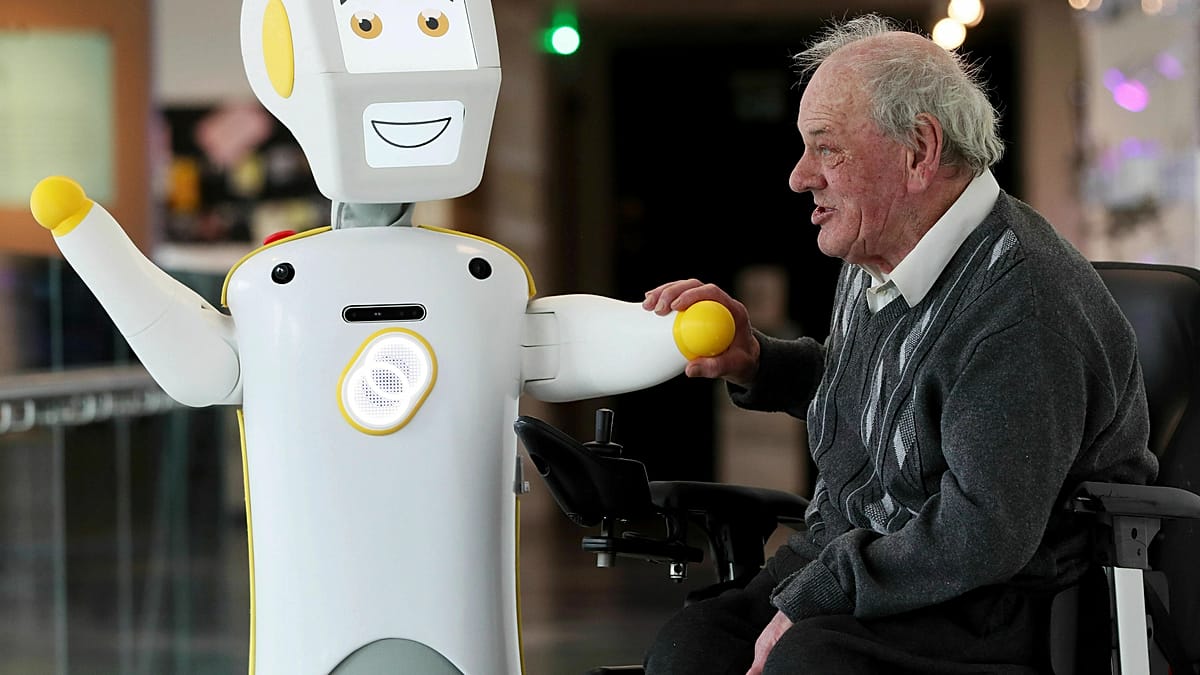
At Paris’ Broca Hospital, elderly patients are participating in groundbreaking experiments with a variety of robots aimed at improving their quality of life. The NAO robot, for instance, engages patients in conversation through familiar proverbs. “I’m going to give you the beginning of a proverb, and you can try to tell me how it ends,” the friendly robot prompts. It’s all about sparking conversation and providing cognitive stimulation to those who need it most. Meanwhile, another device called Paro, a robotic seal, is specifically designed to offer therapeutic comfort. With sensors that respond to patients’ actions, it acts as a companion, providing solace to those who might feel isolated or anxious.
But not everyone is on board with this tech revolution. Some patients, as noted by a researcher, “clearly reject the technology and the robots.” This highlights an important aspect of the experiments: researchers are keen to discover if these machines can genuinely assist patients in engaging with therapies that might help their condition. Maribel Pino, a cognitive psychology researcher at the Broca Living Lab, emphasizes the role of these robots. “The robot can act as a facilitator that helps engage patients in therapy sessions,” she explains. Imagine that! The potential applications stretch far and wide, covering cognitive stimulation, speech and language therapy, physiotherapy, and even psychomotor rehabilitation.
Down south in France, at La Septfontoise in Tarn-et-Garonne, another innovative experiment is underway. Staff there are testing Livana, an AI system created to support residents when they become agitated. This technology operates through a phone, crafting personalized conversations based on the residents’ interests and life stories. Before the trial kicked off, staff gathered information with the consent of families, ensuring the system could speak in a way that resonates with each individual. “The voice can have elements that help soothe the resident,” says psychologist Elodie Jammes. It’s a non-drug approach that aims to improve the wellbeing of those living with Alzheimer’s or other neurodegenerative conditions.
Ghislaine Verines, the director of La Septfontoise, sees technology like this as a vital support system for both residents and care staff. “The aim of the trial is to explore non-drug approaches that can improve residents’ wellbeing, while also providing additional support for care staff,” she states. The experiments are part of a broader search for new methods to assist people grappling with cognitive disorders. But hold on—Pino insists that while robotics are evolving, their role should be clearly defined. “I don’t think robotics should be thought of as a replacement tool,” she warns. “They are still tools, however sophisticated their conversational abilities or presence may become.” And let’s face it, there’s something irreplaceable about human relationships. “They will never replace the essential human relationships people need,” she adds.
These French experiments illustrate the diverse ways AI and robotics are being leveraged in dementia care. While some technologies are designed to stimulate conversation, others focus on providing comfort, therapy, or personalized support. The key takeaway? They’re not out to replace caregivers; instead, the goal is to see how technology can enhance care while keeping the human connection at the forefront.
Bakalım bundan sonra ne olacak? Gelişmeleri takip ediyoruz…
Kaynak: Orijinal Haber