
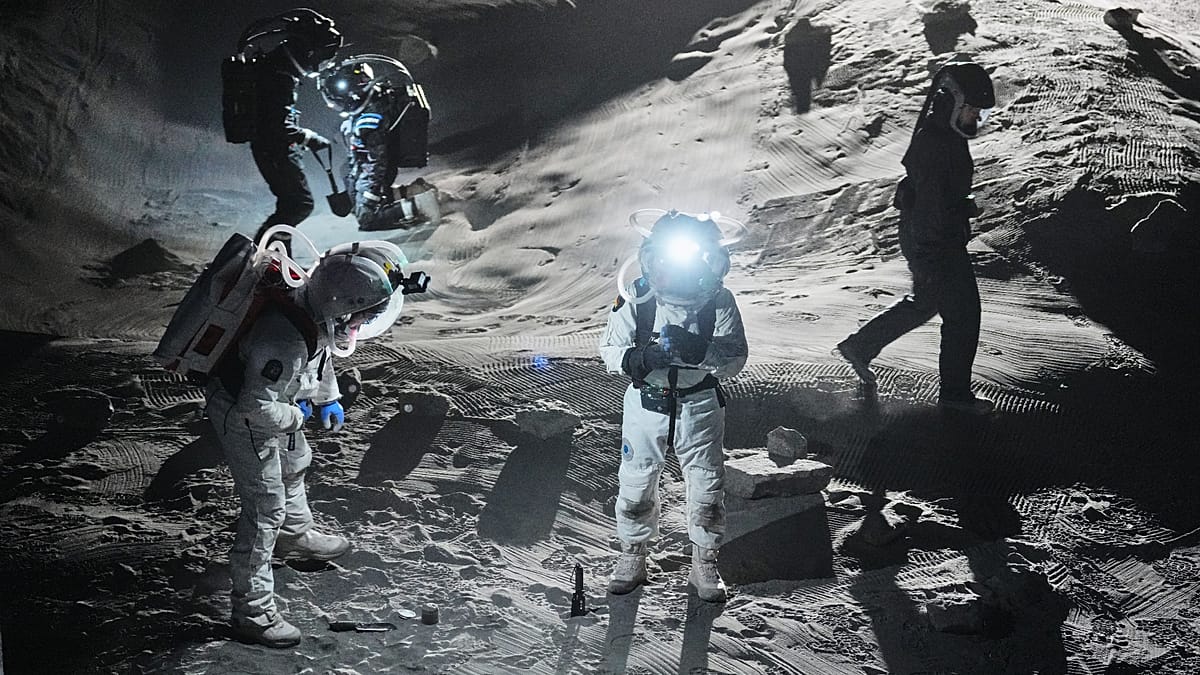
A new study just released by the Harvard–Smithsonian Center for Astrophysics is giving us a reality check on the dream of building cities on the Moon. You might have seen the flashy depictions in science fiction, but the research reveals that our lunar ambitions are hitting a major snag. The biggest hurdle? The Moon’s existing ice reserves are simply not enough to sustain a thriving city, let alone one filled with a million people.
The study, aptly titled “There Are No Cities on the Moon,” dives deep into the numbers, examining how much power and water a large population would need on our celestial neighbor. Conducted after several lunar exploration missions, the findings are published in the journal Frontiers in Space Technology. Scientists have been aware of water deposits on the Moon for some time, but recent analyses pinpoint that these crucial resources are primarily found in shadowed craters—those dark and cold pits that never see sunlight.
Now, get this: the temperatures in these craters can plummet to a chilling minus 246 degrees Celsius. Can you even imagine? In such conditions, only about a millimeter of ice is lost every billion years. That’s how frozen things are up there! Martin Elvis, a senior astrophysicist leading the study, put it bluntly: a “city” is defined as a settlement housing a million people, each using an estimated 500 tonnes of water. If we do the math, a city of this magnitude could run dry in just a few years unless radical recycling efforts are implemented—and even that wouldn’t fully resolve the issue.
Take the International Space Station, for instance. It recycles about 98% of its water. Elvis speculates that if we could achieve similar efficiency with one billion tonnes of lunar water, a million-strong lunar city could last about 100 years. Imagine that—100 years of a bustling moon metropolis, but here’s the kicker: to keep it going longer, the population would need to be capped at around 1,000 people. So, we’re looking at more of a moon village than a city, folks.
Now, what if we could recycle 99.9% of the water? In theory, that might allow a million-person city to survive stably for about 2,000 years! But how do we achieve such high efficiency? Well, maybe through vertical farming or by importing water from Earth, which sounds like a logistical nightmare if you ask me.
On the flip side, energy isn’t going to be the issue for a lunar settlement. The Moon’s south pole has regions where the Sun never fully sets—perfect spots for solar energy harvesting, right? According to the study, if we build one-kilometer tall towers topped with solar panels on the rims of these craters, each could generate around 3 gigawatts of power. That’s enough to not only power homes but also industries. Plus, silicon, a key ingredient for solar cells, makes up about 20% of the Moon’s surface. How about that for local manufacturing?
Japanese construction company Shimizu Corporation is already making waves with plans to install solar panels along the lunar equator to generate a staggering 13,000 terawatts of power, which is more than all of Earth’s electricity consumption combined! The Moon’s thin atmosphere ensures that solar power generation remains consistent, unaffected by weather changes.
So, while we might not be ready for a sprawling lunar city just yet, the dream of colonization isn’t entirely out of reach. With technology advancing and exploration missions revealing more about the Moon’s depths, who knows what future discoveries might come to light? Elvis hopes that this study will prompt all involved in lunar exploration to seriously consider the sustainability of the Moon, especially regarding long-term water resource management.
What’s next for humanity’s lunar ambitions? Only time will tell…
Kaynak: Orijinal Haber