
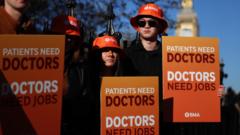
Resident doctors in England have officially canceled their planned strikes that were set to kick off on Monday. The British Medical Association (BMA) revealed that the government had “made a new offer” just hours before the strike was supposed to start, which will now be presented to its members for a vote. This walkout was slated to last from 07:00 BST on Monday, June 15, until 06:59 on Friday, June 19, marking the 16th strike in a prolonged dispute over pay.
Health Secretary James Murray touted the new offer as a “chance to draw a line under the damaging disputes of recent years.” Meanwhile, the BMA emphasized that they had fulfilled their “end of the bargain” as the government finally shifted its stance. Talks had been in progress for days, with discussions even taking place on Saturday, only hours before the strike was called off. Unfortunately, this came too late to prevent some disruptions for patients in the upcoming week. NHS England reported that while 95% of operations and appointments are expected to proceed, thousands have already been postponed, making it a daunting task for hospitals to reinstate them on the original schedule.
But there’s a sigh of relief on both sides. Government sources indicated that no additional funds would be available this year, but the proposed offer includes accelerated pay increases next year. Additionally, it promises to create 4,500 new training positions for newly qualified doctors and covers their exam fees. Previously referred to as junior doctors, these resident doctors have seen their salaries increase by 33% over the last four years, including a 3.5% rise this year. Their starting salaries now hover just over £40,000, while the most senior resident doctors can earn up to £76,500 in basic pay. They can also rake in thousands more annually for working unsociable hours and taking on extra shifts. However, the BMA argues that after accounting for inflation, these doctors are still earning about a fifth less than they did back in 2008.
Health Secretary Murray remarked, “It is a positive and welcome development – especially for patients – that the BMA have called off these unnecessary strikes.” He added, “The country simply cannot afford to increase the pay offer for this year. I am pleased that the BMA have recognized this, which has allowed us to make progress in other areas, such as training places and working conditions.”
Dr. Jack Fletcher, the chairman of the BMA’s resident doctors committee, stated, “We have always been clear that no strikes needed to go ahead if we received an offer appropriate to put to our members.” He expressed that such negotiations should not have been left until the last minute, but they are committed to holding up their end of the bargain when the government makes concessions. Sir Ciarán Devane, chief executive of the NHS Alliance, called the suspension of the strike a “vital chance to reset the conversation,” urging both parties to reach a “fair, sustainable agreement.”
Initially, the strike was called after Murray indicated in a May meeting that he was unwilling to negotiate on pay, labeling the union’s demands as “unrealistic and unaffordable.” The BMA criticized him for showing “the same unwillingness to move” as his predecessor, former health secretary Wes Streeting. The union has organized a series of strikes since 2023 over pay and working conditions, with the most recent being a six-day walkout in April, after the BMA turned down an offer that included more training jobs and faster career progression, as well as covering expenses like exam fees.
Bakalım bundan sonra ne olacak? Gelişmeleri yakından takip ediyoruz…
Kaynak: Orijinal Haber