
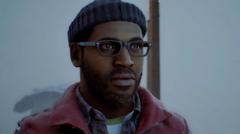
As I wander through the dense fog of Silent Hill: Townfall, it’s clear that one of the biggest horror franchises, originally birthed in Japan yet typically set in the US, has made its way to the UK, landing on a fictional Scottish island. This game, released just last Thursday, thrusts players into a chilling narrative as they control an American man named Simon Ordell, who finds himself washed ashore on St. Amelia, sporting a red hospital ID band and an IV drip still attached to his arm. The eerie atmosphere is palpable, and I couldn’t help but feel a sense of dread as I navigated the haunted streets of this unsettling locale.
Jon McKellan, the director at the Glaswegian development studio Screen Burn, shared that taking on such a monumental brand was “absolutely terrifying.” He humorously noted that there was no option to simply duck into The Mariner for a cold pint while waiting for the horrors to subside. The game’s setting draws inspiration from the quaint fishing village of St. Monans in Fife, and McKellan was keen to ensure it felt “authentic and natural,” steering clear of any clichéd Scottish stereotypes.
As I explored Townfall, I passed lifelike recreations of red pillar boxes, 20 mph speed limit signs, and charity collection boxes shaped like guide dogs. It struck me how, not since 2006—when I stormed through Manchester Cathedral in Resistance: Fall of Man—have I felt such an oddly patriotic connection to virtual environments. Saving my game often required stepping into looming grey buildings to use a payphone, which felt like a nod to simpler times.
Now, you might wonder why the main character is American rather than Scottish, especially in this setting. McKellan explained that there are narrative reasons for Simon’s outsider status, which unfold gradually through cutscenes and in-game documents. The story, akin to previous installments in the series, sensitively tackles themes of trauma and guilt. This edition also delves into the impact of large corporations on smaller communities, making the isolated seaside town setting all the more relevant.
Even the everyday objects I encountered, like electricity meters, morphed into grotesque monsters—twisted, fleshy beings with axe-like heads and mangled faces. The mannequins throughout St. Amelia provided sudden shocks, and their speed was enough to make me want to bolt at a moment’s notice. When I picked up weapons like a plank of wood or a trusty steel pipe, fear lingered: the sense of power was fleeting, knowing these items would degrade over time. Eventually, I did find a gun, but ammo was scarce, forcing me to sneak around instead of confronting threats head-on.
The game opts for psychological horror over cheap jump scares, employing rich sound design that heightens tension. The music swells intensely as hideous creatures stumble closer, making each encounter feel more imminent. Composer Pilotpriest, a.k.a. Anthony Scott Burns, deserves a shout-out for crafting a hauntingly bleak soundtrack that lingers long after gameplay ends. I found myself closing every door I opened, naively hoping this would deter any monsters from pursuing me—even when there was no immediate danger.
In a clever twist, Simon soon acquires a handheld CRT device, an updated version of the classic crackling radio from previous Silent Hill games. This retro tech—a small portable TV—provides a fuzzy image of nearby enemies, allowing players to avoid them, although it can get a bit tricky when multiple foes are lurking around. The later sections of the game ramp up the tension further by forcing players to rely on even cruder technology to spot enemies, which slows down gameplay but keeps the suspense alive.
Reviews have praised the game’s atmosphere, with IGN’s Tristan Ogilvie describing it as “oppressively ominous” and “deeply frustrating,” leading to moments where the experience came to a grinding halt. As we look ahead to the future of the franchise, Konami’s lead producer Motoi Okamoto mentioned they’re exploring new locations for potential games—from “other parts of Europe” to “Latin America.” However, some die-hard Silent Hill fans remain skeptical about whether these newer installments truly capture the essence of the series.
After my playthrough, it became clear why Konami is allowing other studios to breathe new life into the franchise. Townfall is a brutal, grim journey—uneven at times, yet clever—packed with immense tension and innovative game design, essential for revitalizing a nearly 30-year-old franchise. Okamoto has even expressed a desire to release a Silent Hill game every year, whether through remasters, remakes, or original content, which could lead to exciting developments for fans.
What lies ahead for Silent Hill? Can new studios maintain the fresh feel that Townfall has established? We’re keeping our eyes peeled for the next chapter in this iconic horror saga…
Kaynak: Orijinal Haber