Spain to Witness Spectacular Partial Lunar Eclipse on 28 August

On 28 August, Spain will once again turn its eyes skyward for a stunning astronomical event, just 16 days after the remarkable total solar eclipse of

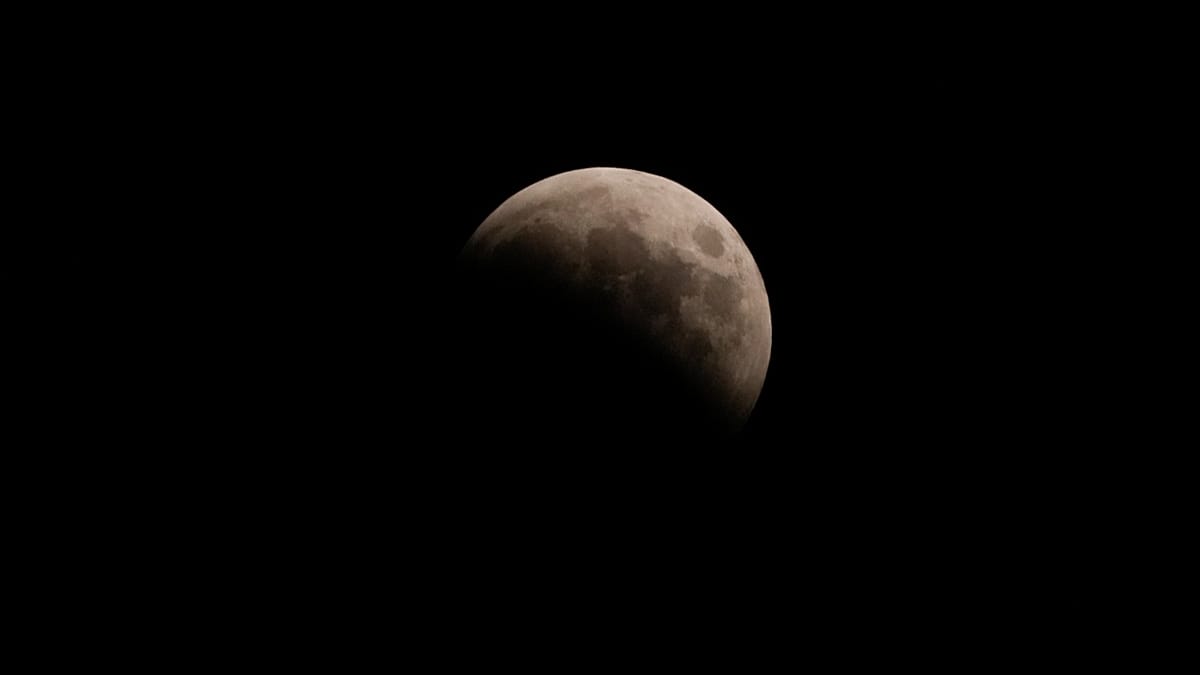
On 28 August, Spain will once again turn its eyes skyward for a stunning astronomical event, just 16 days after the remarkable total solar eclipse of 12 August. This time, it’s a partial lunar eclipse, boasting a significant magnitude of 0.93. Yep, you heard that right! While folks were dazzled by the solar spectacle, now they can enjoy watching the Moon almost completely covered, as nearly 93% of its diameter will be engulfed by the Earth’s shadow.

Now, here’s the cool part: unlike the solar eclipse, there’s no need to scramble for special glasses or protective gear. The National Geographic Institute (IGN) has assured us that this lunar event can be safely viewed with the naked eye. It’s a fantastic opportunity for everyone to step outside and take a gander at the celestial show without worrying about eye safety.

So, what exactly is a lunar eclipse? Well, it happens when the Earth slips right in between the Sun and the Moon, casting a shadow on our lunar companion. And when only part of the Moon wanders into the Earth’s darkest shadow, which we call the umbra, we label it as a partial eclipse. That’s what we’ll see on the 28th, folks!

Now, for all you stargazers out there, the eclipse will be visible in various stages from Europe, Africa, the Americas, and western Asia. In Spain, the entire country will have the chance to experience the partial phase before the Moon sets. However, there are some important differences depending on your location. If you’re in the central or eastern parts of the Iberian Peninsula, or in the Balearic Islands and Melilla, the Moon will dip below the horizon before the partial phase wraps up. But for those in the western regions, like the Canary Islands and Ceuta, you’ll be able to see the Moon until after the partial phase concludes.

This means it’s crucial to scout out a viewing spot with a clear line of sight towards the horizon where the Moon will set. And let’s not forget about the weather! Clear skies will make all the difference, so keep your fingers crossed for good conditions.

So mark your calendars, folks! This partial lunar eclipse promises to be a memorable experience. Will you be among the lucky ones to see it?

Kaynak: Orijinal Haber
A Once-in-a-Generation Solar Eclipse Stuns Millions Across the UK and Europe

A breathtaking solar eclipse unfolded over the UK and Europe, captivating millions as the Moon gracefully obscured the Sun. As the minutes passed, t

A breathtaking solar eclipse unfolded over the UK and Europe, captivating millions as the Moon gracefully obscured the Sun. As the minutes passed, the celestial dance turned surreal, with the Moon acting like a dimmer switch, gradually hiding more of the Sun’s brilliant light. For most of the UK, viewers experienced a partial eclipse, with the Moon covering about 90% of the Sun, creating an awe-inspiring spectacle that left people cheering and sharing their excitement. You could feel the energy in the air, as folks gathered together, their eyes glued to the sky, no words could truly capture the collective wonder of the moment.

The highlight of the eclipse was the totality, where the Sun’s corona became visible—superheated jets of gas shooting thousands of miles into space, a sight that had many gasping in amazement. For those who looked closely, pink loops of gas known as prominences could be seen, swirling along the Sun’s turbulent magnetic field. This was no ordinary day; it felt like we were part of something cosmic, something truly special. The surface of the Sun during totality in Bergos, Spain, showcased the beauty of our universe, reminding us how small we are in this vast expanse of space.

Then, just as suddenly as it began, the Moon started to reveal the Sun it had hidden from our view. The total eclipse, though lasting less than two minutes, etched an unforgettable memory into the minds of those who witnessed it. It’s incredible to think that experiencing a total eclipse is such a rare cosmic coincidence. The Sun, sitting 150 million kilometers (or 93 million miles) away from Earth, is 400 times further away than the Moon. Yet, the Moon, being 400 times smaller in diameter than the Sun, allows us to have these breathtaking moments… It’s like our universe has a funny way of aligning just right.

As the spectacle began to fade, the Moon continued on its celestial journey, leaving stargazers in Europe yearning for the next big event. Mark your calendars! The next total solar eclipse visible from the UK will occur in 2090, and the next chance for many will be in 2081, when up to 99% of the Sun will be obscured. What a time to be alive, huh?

Kaynak: Orijinal Haber

Astronomers Unveil ‘Super-Puff’ Planets: Bigger than Jupiter Yet Lighter than Cotton Candy!

Astronomers have made a jaw-dropping discovery: a pair of giant planets that are not only bigger than Jupiter but also astonishingly lighter than cot

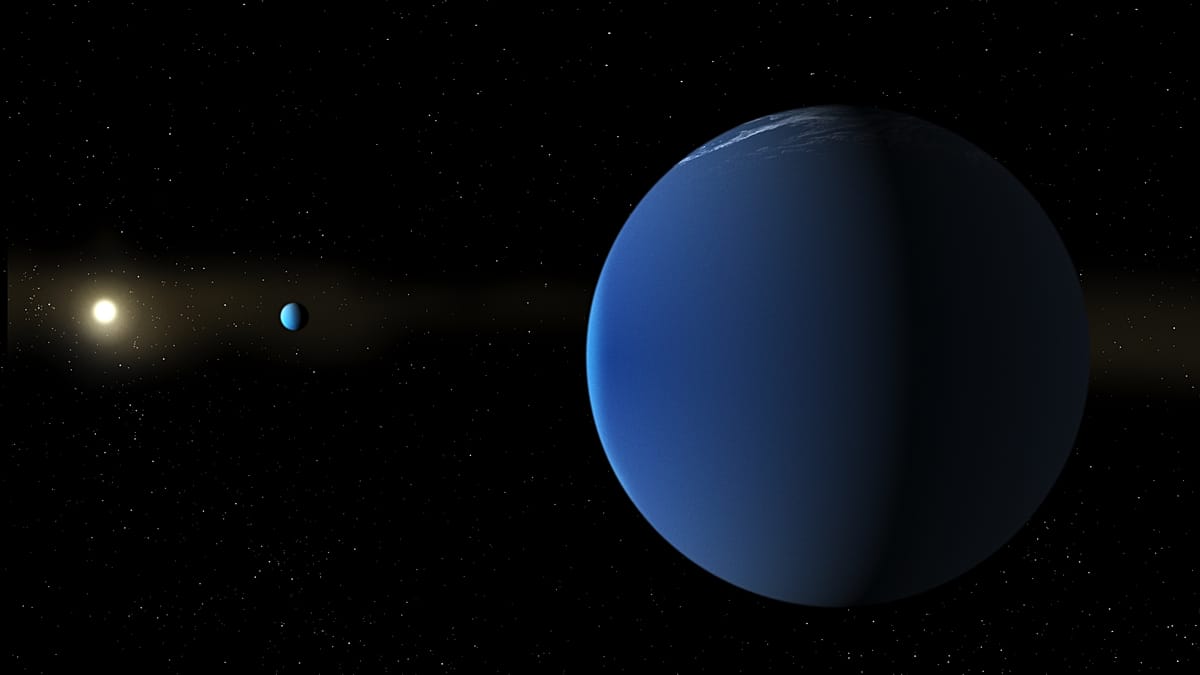
Astronomers have made a jaw-dropping discovery: a pair of giant planets that are not only bigger than Jupiter but also astonishingly lighter than cotton candy! Dubbed “super-puffs,” these alien worlds boast densities that could make you think of a fluffy blob of shaving foam freshly squeezed from the can. How wild is that, right?

These super-puff planets were detected by NASA, and their unique densities have scientists scratching their heads in awe. To put things into perspective, these planets are so light that they challenge our traditional understanding of planetary formation. The details are still a bit fuzzy, but the James Webb Space Telescope is expected to play a significant role in unraveling their chemical makeup. Can you imagine what secrets they might reveal about the universe?

Dransfield, an expert in the field, has shared that studying such exotic planetary systems adds more pieces to the puzzle of how planets form. It’s like we’re slowly piecing together a cosmic jigsaw puzzle that helps us understand our own place in the vast universe.

Now, picture this: two massive planets floating in the vastness of space, their fluffy atmospheres swirling gently, almost weightlessly. It’s a reminder of just how diverse and mysterious our cosmos can be. Who would have thought that planets could be this light?

So, what does this mean for our understanding of planet formation? Well, it opens up a whole new realm of possibilities and questions. Are there more super-puffs out there waiting to be discovered? What can they tell us about the conditions under which planets form?

As we continue to explore the universe, one thing is for sure: the more we learn, the more questions arise. This discovery is just the tip of the iceberg, and the scientific community is buzzing with excitement. Stay tuned, folks, because we’re in for a thrilling ride through the cosmos!

Kaynak: Orijinal Haber