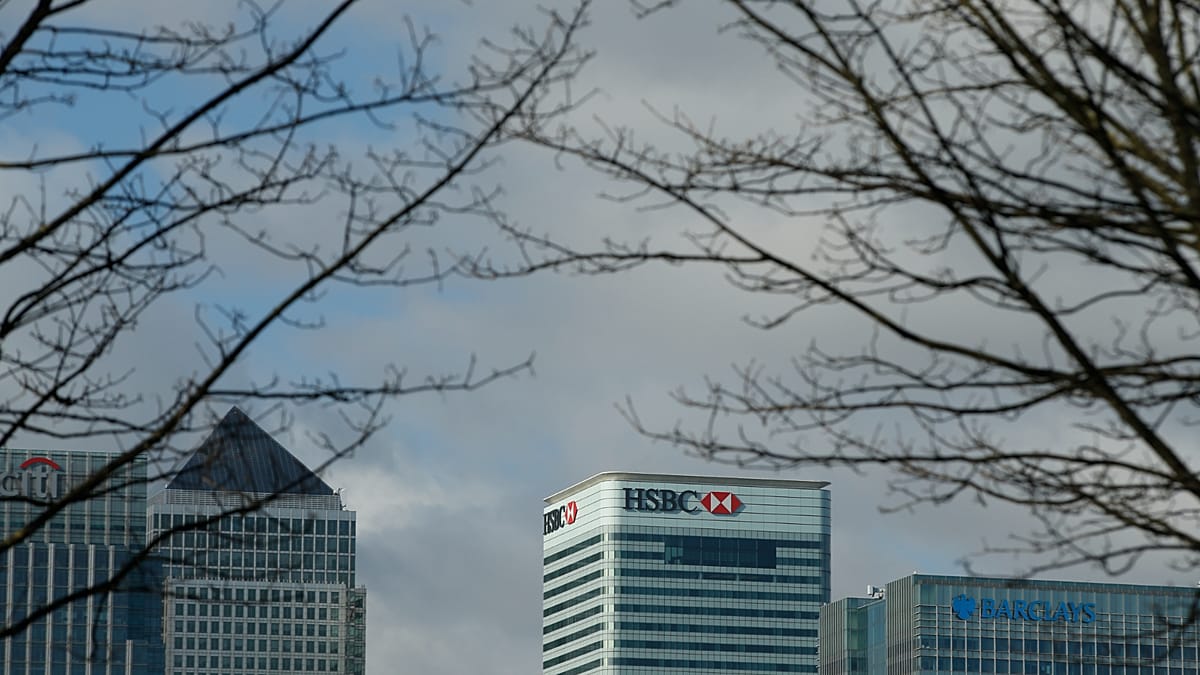
HSBC’s Profits Soar with Bold Share Buyback Announcement!

HSBC has just unveiled some impressive numbers that are turning heads in the banking world. The bank reported a whopping 27% increase in profits, am

HSBC has just unveiled some impressive numbers that are turning heads in the banking world. The bank reported a whopping 27% increase in profits, amounting to $14.6 billion for the first half of the year, compared to $11.5 billion last year. This surge in profitability is thanks to a boost in banking net interest income and growth in fee and other income, as highlighted in their latest earnings report. CEO Georges Elhedery didn’t hold back in expressing confidence, stating that pre-tax profit jumped 23% to $19.5 billion, with the April to June quarter showing a staggering 60% year-on-year increase to $10.1 billion. That’s no small feat!

In a move that clearly indicates their strong position, HSBC announced a share buyback plan of up to $1 billion, following the board’s approval for a second interim dividend of $0.10 per share. It’s been a while since the bank paused its buybacks for three quarters, primarily to rebuild capital after the privatisation of Hang Seng Bank. But now, with these robust results, it seems like they’re ready to get back into the game. However, not everything is rosy; the bank did face some bumps along the way, incurring expected credit losses of $2.4 billion, which is $400 million more than the previous year. This included $400 million linked to a fraud involving a British official sponsor and another $200 million related to Allianz in Hong Kong. Wow, right?

Oh, and they made headlines again by announcing the sale of their retail banking business in Egypt, which is set to free up some capital for restructuring. This includes winding down a significant portion of their investment banking operations across the U.S., Britain, and Europe. This isn’t just a random decision; it’s part of a larger strategy to streamline their operations. AJ Bell investment director Russ Mould pointed out that HSBC’s second-quarter results mirror what we’re seeing across other major banks in the UK, US, and EU—higher-than-expected profits, increased full-year guidance, and generous cash returns from dividends and buybacks. It seems the banking sector is buzzing!

So, what’s next for HSBC? Are they poised to continue this upward trajectory, or will there be more surprises around the corner? Only time will tell, but one thing’s for sure: the financial world will be watching closely…

Kaynak: Orijinal Haber

Five Smart Money Management Tips from the UK’s Biggest Bank CEO

Managing your money effectively is no small feat, especially when it comes to navigating the complexities of modern banking. The CEO of Lloyds Bankin

Managing your money effectively is no small feat, especially when it comes to navigating the complexities of modern banking. The CEO of Lloyds Banking Group, which provides one in four current accounts in the UK, has shared valuable insights on how to better manage your finances. Here’s the lowdown on five practical strategies that can help anyone—regardless of their banking experience—get a grip on their finances.

First off, setting up a standing order from your current account to a savings account can work wonders. This means you can automate your savings, ensuring that a portion of your income goes straight into savings before you even get the chance to spend it. It’s like paying yourself first! Nunn emphasizes the importance of “saving little, saving early, and saving regularly.” This isn’t just a tip; it’s a mantra that can pave the way for future financial stability.

Now, let’s talk about organizing your cash. You might think it’s old-school, but using envelopes to categorize your cash for different expenses can be a game-changer. It’s a hands-on approach that keeps your spending in check and helps you avoid splurging on unnecessary items. Believe me, there’s something satisfying about knowing exactly how much you have for groceries, entertainment, or even that little weekend getaway you’ve been eyeing.

Another piece of advice from Nunn is to be prudent with budgeting. He candidly admits he “hates budgeting” but recognizes its necessity. The key takeaway here? Do it as soon as you can. Set aside your salary for essential expenses and stick to it. Remember, budgeting isn’t about restricting yourself; it’s about understanding your financial landscape. It helps you make informed decisions, whether you’re eyeing that new gadget or planning a family holiday.

Speaking of family, Nunn also weighs in on how to teach kids about money. While he laughs off taking advice from his own children, he emphasizes the importance of giving them pocket money. This not only helps them learn to budget but also instills the value of living within their means. Kids learn best through experience, so giving them a little cash to manage can be a great lesson in financial responsibility.

Lastly, with the rise of online transactions, it’s crucial to stay vigilant against fraud. Nunn highlights the dangers lurking on social media and online marketplaces. He advises you to pause and think before sending money. Can you trust the person on the other end? Lloyds has even launched a tool that allows you to upload pictures of items, like tickets, to verify their authenticity. This is a fantastic way to protect yourself from scams.

In conclusion, managing your money doesn’t have to be a daunting task. With these five strategies—automating savings, organizing cash, budgeting wisely, teaching kids about finances, and staying alert against fraud—you can take charge of your finances like a pro. So, have you managed to save up for something recently? Share your tips on how you did it; you never know who might benefit from your experience!

Kaynak: Orijinal Haber

UK Banks Under Fire for Neglecting Vulnerable Customers

Recent investigations have raised serious concerns about UK banks and their treatment of the most vulnerable customers. A mystery shopping exercise c

Recent investigations have raised serious concerns about UK banks and their treatment of the most vulnerable customers. A mystery shopping exercise conducted by the Financial Conduct Authority (FCA) revealed that a staggering one-third of experiences with basic bank accounts were rated as poor or very poor. This exercise spanned 298 interactions across various bank branches and telephone services, and the results were eye-opening. A mere 28% of cases were deemed good or very good, while 38% were fair, 20% poor, and an alarming 14% very poor.

What’s more troubling? Many banks failed to offer basic accounts to individuals who truly needed them, particularly those without a fixed address. Some customers, especially those in vulnerable situations, were nudged toward online applications that were not suitable for their specific needs. Emad Aladhal, the director of retail banking at the FCA, stated, “Banks have agreed to provide the right account for customers the first time and to make it straightforward for customers without standard ID or a fixed address to open an account.” He also mentioned that alternatives to online applications will be made available for vulnerable individuals.

Adding to the discourse, Peter Tyler, the director of personal banking at UK Finance, highlighted an initiative called “Breaking the Cycle.” This external scheme involves banks collaborating with the housing charity Shelter to ensure that people without a fixed address can access banking services. So, what’s the takeaway here? Banks are being called out for not stepping up and ensuring that everyone, regardless of their living situation, has access to essential banking services.

The urgency of this situation cannot be overstated. With many people relying on basic banking services to manage their finances, the shortcomings of these banks put vulnerable individuals at an even greater disadvantage. As these discussions unfold, one has to wonder: will banks truly follow through on their commitments, or is this just another round of promises with no real change?

Kaynak: Orijinal Haber

Gulf Banks Embrace AI: Can They Safeguard Customer Data?

Gulf banks are diving headfirst into artificial intelligence, but there’s a catch: can they really keep control of their customers’ data? This que

Gulf banks are diving headfirst into artificial intelligence, but there’s a catch: can they really keep control of their customers’ data? This question looms large as financial institutions across the region increasingly adopt AI technologies, hoping to improve efficiency and customer service. But with great power comes great responsibility, and the stakes are high. Yahu, what’s at risk here? Well, everything from sensitive financial information to personal details about customers is on the line as banks ramp up their digital transformations.

The push for AI comes as Gulf banks aim to streamline operations and better understand customer behavior. They’re looking at AI for everything—from automating routine tasks to enhancing customer interactions. Sounds great, right? But hold on a minute. As banks integrate these advanced systems, they also need to ensure that customer data remains secure and private. The reality is that hackers and data breaches are real threats. So, how are banks planning to tackle this?

Experts say that while AI can provide significant benefits, it also introduces new vulnerabilities. For instance, when banks use AI for risk assessments or loan approvals, the algorithms must be trained on vast amounts of data. If that data isn’t properly managed or protected, it could fall into the wrong hands. “İşin aslı şu,” says one cybersecurity expert, “if banks want to harness AI’s potential, they must prioritize data governance and security measures.”

Let’s not forget the regulations. With new data protection laws popping up, banks must navigate a complex landscape of compliance. The GDPR in Europe, for example, has set a precedent that many Gulf nations are looking to emulate. This means banks need to be transparent about how they collect, use, and store customer data. “Hadi canım, bu işin altından kalkmak hiç de kolay değil,” comments a local banker, expressing the challenges ahead.

Despite the hurdles, many banks are optimistic. They believe that with the right safeguards in place, AI can revolutionize the banking experience for customers. Imagine chatting with a virtual assistant that knows your banking habits or getting instant loan approvals with just a few clicks. But, will customers trust banks with their data in this new AI-driven world? That’s the million-dollar question. “İnanır mısınız, bazı insanlar hâlâ bankalarına güvenmiyor,” says a customer at a local branch, reflecting a common sentiment.

As Gulf banks continue to explore the vast possibilities AI offers, the balance between innovation and data security will be crucial. Will they succeed in keeping their customers’ trust while embracing technological advancements? Only time will tell, but one thing’s for sure: the landscape of banking is changing, and all eyes are on how they handle this transition.

Kaynak: Orijinal Haber