EU’s Emergency Meeting: Migrant Crisis at Ceuta Sparks Urgent Discussions

Spain is in a tizzy as an estimated 60,000 migrants have stormed its external borders, particularly in the enclave of Ceuta, which sits at the gatewa

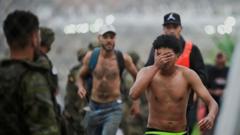
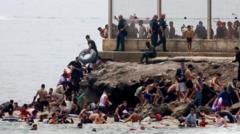
Spain is in a tizzy as an estimated 60,000 migrants have stormed its external borders, particularly in the enclave of Ceuta, which sits at the gateway to Europe. This surge has prompted the European Union to call for an emergency meeting to tackle the fallout from this unprecedented influx. On July 30, migrants made their way across the waters from Morocco, with many returning now, but tragically, at least 67 lives have been lost in the chaos.

The situation has escalated to a point where Spain’s government has publicly condemned the “selfish, polarising and unlawful” Schengen border-free arrangement that many EU countries, including Finland and Denmark, have supported. Officials report that nearly all those who reached Ceuta have now gone back, but the damage is done. In a letter signed by leaders from the Netherlands, Finland, and Belgium among others, serious concerns have been raised over the unauthorized movements towards continental Europe, all addressed to EU President Antonio Costa and European Commission head Ursula von der Leyen.

Pedro Sánchez, the Spanish Prime Minister, has expressed his serious worries about the rapid and unauthorized movements of migrants across borders. He highlighted that the situation, while seemingly under control now, poses ongoing risks. The Interior Minister, Fernando Grande-Marlaska, stated during a news conference that normalcy is returning and that businesses in affected areas are reopening. However, he also mentioned that they are working on inflatable barriers to keep illegal migration via the water at bay.

Look, the influx of migrants to Ceuta is more than just numbers; it’s a diplomatic nightmare for Spain and the EU. The Schengen Area, which has long been a symbol of free movement for over 450 million people across 29 countries, is being scrutinized like never before. Italian Prime Minister Giorgia Meloni has even suggested looking into all options, including potentially suspending Schengen cooperation altogether.

Von der Leyen herself described the scenes from Ceuta as “unacceptable,” echoing the sentiments of many who are grappling with the humanitarian and logistical implications of this crisis. German Chancellor Friedrich Merz has also weighed in, demanding that Morocco take back these illegal migrants immediately. These migrants often arrive by swimming several kilometers, a dangerous journey that highlights the desperation many are feeling.

The situation is nothing new for Ceuta, which has historically been a focal point for migrants trying to reach Europe. During the summer months, organized efforts over social media often lead to significant numbers attempting the perilous crossing. Just back in 2021, around 8,000 people managed to enter Ceuta within a few days, intensifying the scrutiny on Spain’s handling of such crises.

So, where does this leave us? The journey of migrants seeking a better life continues to be fraught with peril and political ramifications. As we watch this unfold, one can’t help but wonder what steps will be taken next to address these pressing issues. Will the EU find a sustainable solution, or are we just seeing the tip of the iceberg?

Kaynak: Orijinal Haber
Tensions Rise: Moroccan Police Clash with Migrants at Ceuta Border

Tens of thousands of migrants have surged into Spain recently, leading to a chaotic situation at the border with Morocco, specifically in Ceuta. The

Tens of thousands of migrants have surged into Spain recently, leading to a chaotic situation at the border with Morocco, specifically in Ceuta. The local leader, Juan Jesús Vivas, has voiced grave concerns, stating that the influx of migrants has overwhelmed the region’s resources. His urgent call for intervention from the Spanish government highlights the seriousness of the matter. Prime Minister Pedro Sánchez has described the ongoing situation as an “attack” that needs to be addressed as soon as possible.

Did you catch that? We’re talking about a massive wave of human movement, folks! Ceuta, a tiny Spanish enclave right on the northern coast of Africa, has become the frontline of this overwhelming crisis. The sheer number of people arriving has raised alarms across the board. Just imagine—tens of thousands flooding in, seeking safety and a better life, but bringing with them a scramble for limited resources.

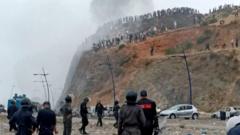
In the midst of this, Moroccan police have clashed with many of these migrants, creating a tense atmosphere at the border. It’s a desperate scene. People have been seen trying to push through barriers, and police have responded with force, adding to the chaos. The clash underscores the dire circumstances that both the migrants and local authorities are facing. The urgency is palpable, and the stakes are high.

Amidst the turmoil, video footage has surfaced showing the stark reality of this ongoing situation. You can see the panic, the struggle, and the determination of those who are risking everything to cross into Spain. The migrants are not just numbers; they’re individuals with stories, dreams, and hopes for a better future. But with each passing day, the overcrowding becomes more acute, and the resources dwindle.

As the Spanish government grapples with this crisis, the question remains: what will happen next? Will they find a way to manage the influx effectively, or will the situation escalate further? The eyes of the world are watching as Ceuta becomes a symbol of both hope and desperation.

Kaynak: Orijinal Haber

Ceuta’da Tarihi Göç: 49,000 Mülteci 24 Saatte İspanyol Topraklarına Girdi!

About 49,000 migrants have crossed into Spanish territory in a shocking turn of events that has left authorities scrambling. This dramatic surge com

About 49,000 migrants have crossed into Spanish territory in a shocking turn of events that has left authorities scrambling. This dramatic surge comes after Spain’s Supreme Court ruled that migrants intercepted at sea while trying to reach Ceuta or Melilla—two Spanish exclaves—cannot be sent back to Morocco without due process. Prime Minister Pedro Sánchez didn’t hold back, calling the situation an “attack” on Spain, underscoring the urgency of the crisis.

This chaotic scene unfolded as local officials in Ceuta, which is separated from mainland Spain by the Strait of Gibraltar, requested assistance from Madrid following a spike in attempted crossings. Just this past Thursday, border control measures appeared to collapse, leading to thousands of people swimming and scrambling into the city. Footage from the scene captured the overwhelming number of individuals, many of whom were young men, but also included women, children, and even babies. Can you believe that local media reported that this influx of migrants could be more than half the city’s population of around 83,600? It’s staggering…

With this wave of arrivals, Spain has deployed its armed forces to enhance security in Ceuta and its sister city Melilla, where between 300 to 400 crossings were also reported overnight. Prime Minister Sánchez, when visiting Ceuta, condemned these crossings, labeling it a direct challenge to Spain’s legal framework regarding migration. He also mentioned that misleading information about the situation had spread rapidly, creating panic among residents. “People are scared. Nobody is going out on the street,” a local resident shared, illustrating the fear gripping the community.

What’s particularly alarming is the number of minors among the newcomers—officials estimate that at least 7,000 of those who crossed illegally in the last 24 hours are children. Normally, migrants attempt to swim several kilometers from distant parts of the coast, but this time they seemed to get alarmingly close to the border fence with little resistance. Some even managed to walk along the rocks, while the majority took to the water, navigating their way to the beaches on the other side. The sentiment is clear: “It’s not good at all, and it’s not fun either,” as one migrant expressed, urging others, “Don’t come yet, don’t do it.”

The response from neighboring countries has also been swift and critical. Italy’s right-wing Prime Minister Giorgia Meloni described the scenes in Ceuta as “shocking,” expressing her concern over what she called “uncontrolled immigration.” She even summoned the Italian ambassador in Madrid to discuss the implications of this crisis. EU chief Ursula von der Leyen echoed this sentiment, labeling the images emerging from Ceuta as “unacceptable” and demanding that this situation must “stop immediately.”

As the situation continues to develop, many are left wondering what this means for the future of migration policies in Europe and how countries will respond to the increasing pressures at their borders. The question lingers: will we see a coordinated effort to tackle this humanitarian crisis, or will the divisions among nations deepen?

Kaynak: Orijinal Haber