Andy Burnham’s Vision: A Game-Changer for the UK Economy?

Andy Burnham, the departing Greater Manchester mayor, recently delivered a compelling speech that could reshape how we think about the UK’s economy

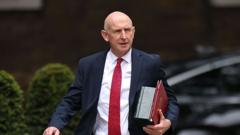
Andy Burnham, the departing Greater Manchester mayor, recently delivered a compelling speech that could reshape how we think about the UK’s economy. Drawing on personal experiences from his time in cabinet and as a city leader, Burnham painted a vivid picture of the struggles facing the nation, highlighting a British state that often seems more interested in internal disputes than making meaningful changes. He believes the key to revitalizing the economy lies in decentralizing power, shifting it from the UK government to regions and cities, much like other advanced nations do.

Burnham’s reflections hark back to his time as chief secretary to the Treasury nearly two decades ago. He yearned for northern cities to achieve employment outcomes comparable to London. This ambition isn’t just nostalgic; it’s part of a broader five-part strategy he’s been developing. Devolution and an industrial policy make up two crucial components of this plan, with a third focusing on providing quicker assistance to those grappling with the rising cost of living. The promise of a new No 10 North plan aims to rebalance power dynamics in Britain, something Burnham assures is on the horizon.

Now, here’s where things get a bit tricky. How does Burnham’s ambitious agenda align with the 2024 manifesto, which vows not to raise major taxes and adhere to strict fiscal rules? Some of his proposals will undoubtedly necessitate additional funding. Is it possible that the devolution of decision-making might also mean redirecting capital investments from the southeast to enhance northern infrastructure, like the powerhouse rail? In Europe, this usually translates to regions gaining more borrowing capacity to invest in what they need. But can this approach coexist with existing borrowing limits?

There are pressing questions on the table. For instance, is Burnham fully prepared to tackle the potentially harsh policy decisions regarding welfare spending that could emerge from the upcoming Milburn report? And what does the “Makerfield Test” imply for future Brexit negotiations about access to the single market? We’re still in the dark about who will take on the role of Chancellor, with that announcement hanging in the balance for another three weeks. Interestingly, the markets appear to be at ease, much to the relief of some of Burnham’s advisors, suggesting that a sense of direction and confidence can go a long way.

Yet, even with all the Mancunian swagger, one has to wonder: will this vision translate into real change, or is it just another set of lofty ideas without a solid foundation? The coming weeks will be crucial in determining whether Burnham’s plans can gain traction or if they’ll fizzle out amidst the complexities of UK politics.

Kaynak: Orijinal Haber

UK’s Public Finances in Crisis: Borrowing Hits Record Highs!

The UK government has borrowed a staggering £23.3 billion in May, according to official figures that have just been released. This represents almost

The UK government has borrowed a staggering £23.3 billion in May, according to official figures that have just been released. This represents almost a third increase compared to the same month last year. Now, that’s a hefty sum, and it’s crucial to grasp what this really means. May’s borrowing figure—the gap between what the government spends and what it collects in taxes—was £5.6 billion higher than what the Office for Budget Responsibility (OBR), the independent fiscal watchdog, had predicted. “The big picture is that the public finances are fragile,” warns Ruth Gregory, deputy chief UK economist at Capital Economics. She added that whoever is Prime Minister will face significant constraints moving forward.

In a twist, Greater Manchester’s mayor, Andy Burnham, recently snagged a seat as MP for Makerfield in a by-election. This victory might just set the stage for him to challenge the Prime Minister’s leadership. “Spending on debt interest, public services, investment, and benefits all saw increases in May 2026 compared to last May,” said ONS statistician Tom Davies. He pointed out that these rising costs outweighed the increase in tax receipts. The OBR’s forecasts, made back in March, didn’t account for the ongoing conflict in the Middle East, which has now added pressure on the economy.

The Office for National Statistics (ONS) has reported that the interest payable on government debt skyrocketed to £11.7 billion—marking the highest amount ever recorded for any May. Danni Hewson, who heads financial analysis at AJ Bell, claims that much of this borrowing spike is linked to soaring inflation. Inflation surged when the Iran conflict erupted and is expected to climb even more due to the ripple effects of rising oil prices. “We need to keep an eye on long-term borrowing costs, especially with a potential Labour leadership contest on the horizon,” Hewson added.

Burnham is not playing around; he has roped in economic heavyweights to bolster his credentials and has committed to adhering to existing fiscal rules, which include not borrowing for day-to-day expenses. Susannah Streeter, chief investment strategist at Wealth Club, noted that investors seem to anticipate a Labour leadership challenge. “For now, Burnham’s promise to reign in spending while sticking to fiscal rules is seen as a cautious approach,” she said. His commitment to slashing large welfare costs to fund increased defense spending signals that he’s trying to position himself closer to the political center—a move that might provide some reassurance in these turbulent times.

In a recent meeting, the Bank of England decided to keep interest rates steady. This decision aims to balance a sluggish job market against the widespread expectation that inflation will continue to rise in the coming months. Chief Secretary to the Treasury, Lucy Rigby, commented, “The war in the Middle East has clearly impacted economies globally. We have a solid economic plan to tackle these challenges—protecting families and businesses from escalating costs while reducing borrowing faster than any other G7 nation.”

On the flip side, Shadow Chancellor Mel Stride didn’t hold back, stating, “Borrowing is out of control.” He believes the Conservatives are the only party with a clear plan to achieve a balanced budget by controlling spending, especially regarding welfare. Meanwhile, separate official figures revealed that retail spending actually climbed by 1.2% in May, benefiting from unusually pleasant weather. Retailers reported a boost in sales of outdoor furniture and fans, thanks to these favorable conditions and ongoing promotions.

As we watch fuel and gas prices dip in recent days, it’s time to ponder how the conclusion of hostilities might play out—let’s break it down in five charts. Cash transfers remain a crucial welfare tool but they come with a hefty price tag, raising questions about their long-term effectiveness. According to the ONS, while higher petrol prices were somewhat offset by slower price hikes in meat, dairy, and vegetables, the ongoing conflict in Iran is set to push UK inflation even higher than the Bank of England’s 2% target.

Görünüşe göre, Bank of Japan da 2024’ten bu yana faiz oranlarını artırmaya başladı. İşte durumun ciddiyeti, arkadaşlar. Gelişmeleri takip ediyoruz, bakalım bizleri neler bekliyor?

Kaynak: Orijinal Haber

Eurozone Economy Faces Setback: 0.2% Contraction in Q1 2026

The eurozone economy took a hit in the first quarter of 2026, contracting by 0.2%, as revealed in a final estimate published by Eurostat on Friday. M

The eurozone economy took a hit in the first quarter of 2026, contracting by 0.2%, as revealed in a final estimate published by Eurostat on Friday. Meanwhile, the overall EU economy grew by just 0.3% during this period, a significant decline from the 1.2% growth seen last year. This slowdown can largely be attributed to the ongoing Iran war, which has wreaked havoc on European energy supplies and shaken both business and consumer confidence.

One of the most eye-catching figures from the Eurostat report is that Ireland’s GDP appears to be heavily influenced by the activities of large multinational corporations, particularly in the pharmaceutical sector. This makes Ireland’s economic performance seem less dire compared to other countries in the eurozone. But when we look at Germany, which is the largest economy in the bloc, the story is quite different. The biggest drag on growth for Germany came from net trade, which sliced off 0.3 percentage points from its economic output. Additionally, weaker investments contributed to a further decline of 0.1 percentage points.

Now, let’s not forget about the Iran war, which kicked off back in February 2026 after a series of joint strikes by the US and Israel. This conflict has been pivotal in driving the eurozone’s economy down a slippery slope. According to the European Central Bank’s (ECB) central risk scenario, consumer price inflation in the eurozone surged from 1.9% in February to 2.5% in March, and then hit 3% in April. The primary culprit? You guessed it—energy costs.

In response, the ECB opted to keep interest rates steady during its April meeting but made it clear that they’re closely watching these inflationary pressures. Looking ahead, the next policy decision is set for June 11, and market trackers are predicting a near-certain 25 basis point rate hike to 2.25%. A Bloomberg survey of economists released in May suggested that we could see two rate hikes this year, one in June and another in September. However, this newly released contraction data complicates that outlook.

On the employment side, things are looking a bit mixed. The number of workers in the euro area saw a slight increase of 0.1% in the first quarter, but the total hours worked dipped by 0.2%. This paints a picture where the unemployment rate rose to 6.3% in April, up from 6.2% in March. It’s a small change, but it hints at a softening demand for labor, suggesting that while the market is holding up for now, it’s beginning to show signs of strain.

So, what does all this mean for the future? Will the eurozone manage to rebound from this economic slump or will the pressures continue to mount? Only time will tell…

Kaynak: Orijinal Haber