
UK Teens Face Midnight Social Media Curfew: What You Need to Know

Older teenagers in the UK are about to face some new restrictions when it comes to their social media usage. The government has announced that a curf

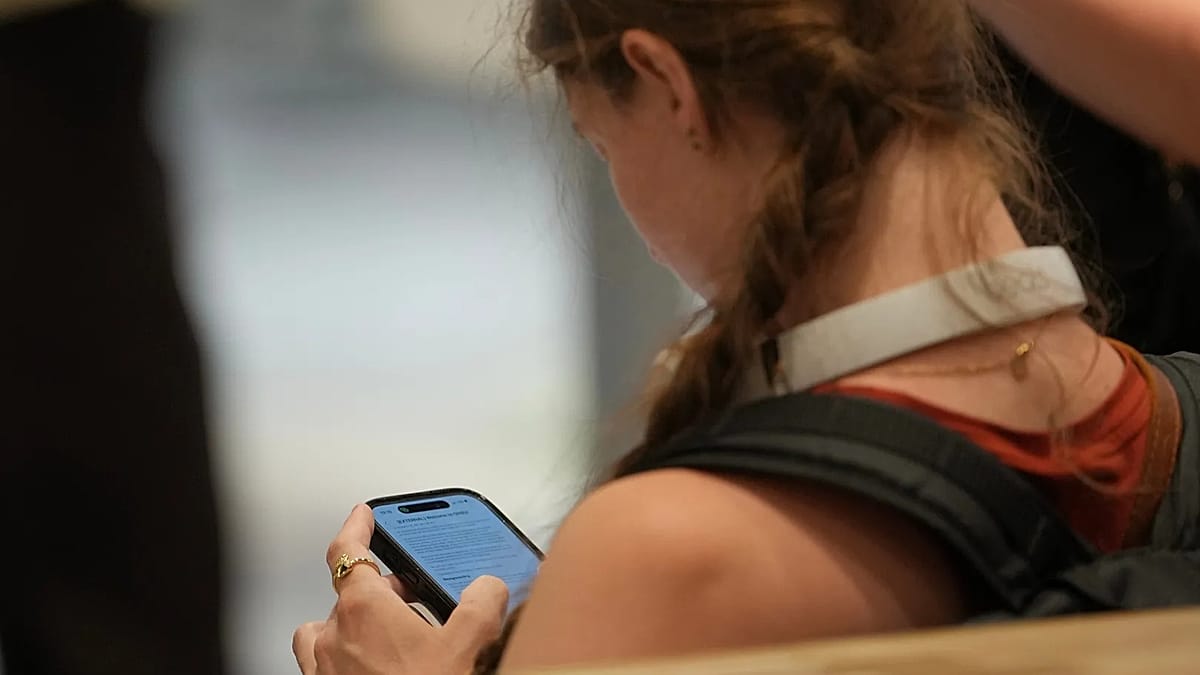
Older teenagers in the UK are about to face some new restrictions when it comes to their social media usage. The government has announced that a curfew will be imposed, meaning that apps like Instagram, TikTok, and YouTube will automatically become unavailable for 16 and 17-year-olds from midnight until 06:00. Now, hold on—there’s a catch! These teens can simply opt out of this curfew by changing their account settings. Sounds a bit too easy, right?

The government is pushing this initiative, aiming to tackle issues like addictive focus, sleep quality, and family time. But not everyone is on board with this plan. Ellen Roome, a campaigner who tragically lost her 14-year-old son, Jools Sweeney, in a 2022 online challenge gone wrong, feels this move doesn’t go far enough. She compared the government’s approach to offering a 17-year-old a bottle of alcohol and then just moving it a little out of reach. “They can just drag it back in,” she said on BBC Radio 4. Her frustration echoes a sentiment that many parents share; they want stronger, more effective measures.

Lorna Woods, a professor of internet law at Essex University, weighed in on the matter too. According to her, this measure seems to be more about easing parental fears than creating real, impactful solutions for teen safety online. Meta, the company behind Facebook, Instagram, and WhatsApp, has previously suggested that age verification should be the responsibility of device manufacturers, not just the platforms themselves. Apple has even started to implement such measures.

Online safety minister Kanishka Narayan defended the government’s actions, stating that Britain is set to become the most robust country in the world for online safety regulations. The goal? To help young people get the sleep they need, focus better in school, and spend quality time with family—essential components for a happy adult life. But critics argue that simply allowing teens to switch off the curfew isn’t enough. “While we welcome these measures for older teens, this latest move is yet another piecemeal set of announcements,” they say, pointing out the lack of a comprehensive safety plan.

Prof. Sonia Livingstone, an expert in children’s online behavior, emphasized the importance of listening to young people. “We have to take their voices into account,” she insisted. Meanwhile, social media analyst Matt Navarra commented that what the government is calling a ‘curfew’ isn’t really one at all. He pointed out that the UK’s approach lacks any VPN restrictions, making it easy for teens to bypass these measures. After all, VPNs can mask a user’s location, and the government has decided not to take action against them for now, stating they are useful for whistle-blowers and minority groups.

In a recent report, the government shared that it had trialed various options with 300 teens, and found that an overnight curfew did show some positive sleep benefits. But caution is warranted; Pete Etchells, a professor of science communication at Bath Spa University, warned that these findings are just one piece of a much larger puzzle.

So what does all this mean for the future of social media regulations in the UK? The debate is far from over, and as parents and experts alike continue to voice their opinions, one thing is clear: the landscape of online safety is still evolving. Who knows what’s next on the horizon?

Kaynak: Orijinal Haber
UK Proposes Voluntary Social Media Curfew for Teens: A Step Towards Healthier Online Habits

The British government has rolled out plans for a voluntary overnight social media curfew aimed specifically at 16- and 17-year-olds. This initiativ

The British government has rolled out plans for a voluntary overnight social media curfew aimed specifically at 16- and 17-year-olds. This initiative comes as part of their ongoing efforts to combat online harm affecting young people. The curfew, announced on Wednesday, is designed to curb excessive screen time and promote healthier online practices among older teenagers. Alongside this, features that inadvertently keep users glued to their screens, like autoplaying videos, will be disabled by default for this age group.

Now, let’s break that down a bit. You see, the measures are among the final steps from Prime Minister Keir Starmer’s administration, who is leading a push for better protections for children online. But here’s the catch: experts are saying that while these proposals may improve the online experience for young users, they’re not a silver bullet. Chris Sherwood, the CEO of NSPCC, emphasized that unless these initiatives are backed up with stronger regulations, they risk being mere “sticking plasters.” He pointed out that the addictive design features of many platforms are still going to be there, driving up screen time and hurting kids’ well-being.

Rachel de Souza, the Children’s Commissioner for England, chimed in, calling the curfew a “positive step.” She recognizes that many young people genuinely want to cut down on their social media usage but often find it challenging to do so. “I want to know more about how the policies, such as a curfew, will be delivered and will be watching closely to make sure they are effective,” she stated, highlighting the need for tangible actions that accompany these policies.

So, what’s the bottom line here? The UK government is trying to tackle a growing concern among parents and educators about the impact of social media on youth. But will this curfew really make a difference? Are teens going to stick to it, or will it just be another rule that gets ignored? As we watch these developments unfold, the conversation around social media and its effects on mental health continues to heat up. Let’s keep our eyes peeled for what’s next in this ongoing saga…

Kaynak: Orijinal Haber

UK Teens Face Midnight Social Media Curfew – Will They Opt Out?

Older teenagers in the UK, specifically those aged 16 and 17, are about to face a new overnight social media curfew, as announced by the government.

Older teenagers in the UK, specifically those aged 16 and 17, are about to face a new overnight social media curfew, as announced by the government. This means that popular apps like Instagram, TikTok, and YouTube will be automatically restricted from midnight until 6 AM unless the teens decide to change their account settings to opt out. It’s a significant move aimed at improving focus, sleep quality, and family life among the youth.

But hold on a second – is this really going to work? Campaigners like Ellen Roome, who tragically lost her 14-year-old son, Jools Sweeney, during a hazardous online challenge in 2022, believe the plan doesn’t go nearly far enough. She argues that allowing teens to simply switch the setting off is akin to placing a bottle of alcohol just out of reach for a 17-year-old. “They can just drag it back in,” she told BBC Radio 4, expressing her frustration over the lack of stricter measures. She wishes the government would take a bolder stance on this issue.

Meta, the parent company of Facebook, Instagram, and WhatsApp, previously suggested that age verification should be the responsibility of device manufacturers, not just social media platforms. Apple has even rolled out a “device levels approach” to facilitate this. However, as the online safety minister Kanishka Narayan stated, it’s not about banning children from technology altogether. Instead, he emphasized that these measures are crucial for helping young people get the sleep they need, stay focused on school, and enhance their quality time with family and friends.

Yet critics are quick to point out that curfews which can be easily switched off won’t achieve the intended outcomes. There’s a sense that while these steps are welcome, they represent just another set of piecemeal announcements rather than a comprehensive strategy for ensuring children’s safety online. It’s like the government is leaving office after announcing a social media ban without a solid plan in place. Professor Sonia Livingstone, an expert in children’s online safety, echoed this sentiment, indicating that while some restrictions may be beneficial, they might not be enough in the face of potential harm.

Dame Rachel de Souza, England’s children’s commissioner, emphasized the importance of listening to young people’s perspectives. “We have to hear what they are saying,” she added. Meanwhile, the report released by the government highlighted that after trials with 300 teens, implementing an overnight curfew appeared to yield some sleep benefits. However, Professor Pete Etchells from Bath Spa University cautioned that this is merely one aspect of a much larger puzzle regarding tech use among teens.

So, what does all this mean for the future of social media use among young people in the UK? Will these curfews genuinely lead to healthier habits, or will teens find ways around them? The conversation is just getting started, and we’ll be keeping a close eye on how this develops.

Kaynak: Orijinal Haber

Navigating Life Back Home After University: Natasha’s Journey

24-year-old Natasha Suman has moved back in with her parents, Rita and Pawan, after finishing her university studies, and she’s still there, saving u

24-year-old Natasha Suman has moved back in with her parents, Rita and Pawan, after finishing her university studies, and she’s still there, saving up for a deposit on her first home. Now, as a marketing coordinator, she contributes to household bills but admits that living at home comes with its own set of challenges, particularly around freedom and spontaneity. “When I left home for university, I was a very different person, and by the time I came back, I had essentially become an adult,” Natasha shares, reflecting on how her time away shaped her into a more independent individual.

The trend of young adults moving back in with their parents has surged in the last thirty years, driven by skyrocketing housing prices and rent. This situation has led many to take this step for practical reasons, like saving money or coping with job losses or relationship breakdowns. However, this arrangement often brings its own frustrations, particularly the feeling of being scrutinized or controlled by parents. Natasha explains, “It has been an adjustment for all of us. Problems have been avoided by having conversations early on,” indicating that clear expectations were set to navigate this new living situation.

Spending more time in her room has become a new norm for Natasha, where she can relax and unwind. Initially, her parents struggled to understand this need for space, but open dialogues have fostered a better understanding within the family. It’s a balancing act of relationships, where they are not just parent and child but also adult housemates sharing the same living space, which can sometimes feel a bit odd…

Caroline Bentham, 37, has been living with her mother Mary in Yorkshire for nearly seven years. She reached out to voice her own experience, which she describes as overwhelmingly positive despite never expecting to be living with her mother in her thirties. “We had lots of arguments as we worked out how to be around each other,” she admits. The emotional support they provide each other has proven invaluable, although Caroline confesses that the arrangement can sometimes take a toll on her self-esteem. “There is definitely a stigma about living with parents,” she notes, reflecting on how societal expectations can weigh heavily on individuals in her situation.

Christodoulidi points out that one overlooked advantage of living with a parent as an adult is the opportunity to understand each other in new, more mature ways. She argues that society needs to ditch the stereotype that adult children still living at home have “failed to launch.” Instead, this living arrangement can be a “temporary” situation that leads to better outcomes in the future, as she puts it. “I’m the lucky one,” she adds, expressing gratitude for the time she gets to spend with her parents, even if the novelty of living with them has long since worn off.

As young adults navigate this complex landscape of living arrangements, the question remains: Is this a temporary solution or a new norm for many? The conversation about living at home continues to evolve, reflecting the changing dynamics of family life and financial realities today.

Kaynak: Orijinal Haber

Navigating Life Back Home: How Natasha Makes It Work at 24

24-year-old Natasha Suman has moved back in with her parents, Rita and Pawan, as she saves for a deposit on her first home. After leaving for univers

24-year-old Natasha Suman has moved back in with her parents, Rita and Pawan, as she saves for a deposit on her first home. After leaving for university, Natasha returned home and found herself in a new kind of relationship with her parents—no longer just as their child, but as an adult housemate. She contributes to the household bills, but admits that living at home also means less freedom to be spontaneous. “When I left home for university, I was a very different person, and by the time I came back, I had essentially become an adult,” she shares.

The trend of young adults living with their parents has surged in the last three decades. With soaring house prices and rents, many in their 20s and 30s are finding the practical side of living with family to save money or navigate through tough times—be it job loss or relationship breakdowns. However, this arrangement comes with its own set of frustrations. Natasha feels the pressure of being scrutinized about her lifestyle and relationships, which can lead to feelings of being controlled. In her case, open communication has been key. “We had conversations early on to set clear expectations,” she explains.

Spending more time in her room has become a way for Natasha to unwind, and her parents, initially confused by this behavior, have grown more understanding over time. It’s not just Natasha dealing with the challenges of living at home; Caroline Bentham, 37, has been living with her mother, Mary, in Yorkshire for nearly seven years. She reached out to BBC Your Voice to share her experience. Caroline describes it as a positive arrangement, even though she never imagined herself in this situation during her 30s. The two have navigated their differences, avoiding the “lots of arguments” that come with learning how to coexist peacefully.

One of the biggest perks for Caroline is the emotional support they provide each other. However, it’s not all rosy. She admits that the living situation can negatively impact her self-esteem and acknowledges the stigma surrounding adults living with their parents. “People still assume the old family roles apply: what worked when you were 16 is unlikely to work when you’re 36,” she says.

Yet, experts like Christodoulidi argue that living with parents as an adult can provide a unique opportunity to understand each other in a new light. Society needs to shake off the stereotype that adult children who live at home have “failed to launch.” Instead, she suggests it can be a “temporary situation” leading to better outcomes down the line. Caroline reflects on this sentiment, saying, “I feel like I’m lucky to have this time with them,” even if the novelty of living at home has worn off.

As young adults like Natasha and Caroline navigate the complexities of living at home, they are not just saving money; they are learning to coexist in new ways. It raises the question: how will these experiences shape their futures and relationships?

Kaynak: Orijinal Haber

Alarming Rise in Obesity Among Young Adults: What’s Behind the Spike?

New cases of obesity are surging among younger adults in England, and the numbers are nothing short of alarming. A recent study published in The Lanc

New cases of obesity are surging among younger adults in England, and the numbers are nothing short of alarming. A recent study published in The Lancet reveals that the rates of new diagnoses for people in their 30s have skyrocketed nearly 20% from 2019-20 to 2024-25. For those in their 20s, the increase is just as staggering, with new cases jumping by 16%. Now, while it’s true that the 40s and 50s are still the most common ages for obesity diagnosis, the rapid rise among younger age groups is raising eyebrows and concerns among experts.

It’s pretty clear that this trend towards an earlier diagnosis isn’t a good sign. Obesity is linked to a slew of health problems, including diabetes, heart disease, and even cancer. So, when researchers looked deeper into the numbers, they discovered that earlier onset of obesity was more prevalent among non-white populations and in areas with high levels of deprivation. The patterns in obesity are well-known, but the acceleration in new cases among younger adults has taken many by surprise.

Lead researcher Robert Fletcher shared that while the study didn’t delve into the specific causes behind this rise, he suspects three main factors. First off, adults in their 20s and 30s grew up during a time when unhealthy food options were booming. You can’t ignore the pandemic either, which, followed by the cost of living crisis, has likely hit younger people harder than their older counterparts. It’s a tough time for many, and Sarah Perman from the Association of Directors of Public Health chimed in, mentioning how unhealthy options are currently dominating the market. It’s just so much cheaper and easier for folks to grab foods and drinks loaded with fat, sugar, and salt rather than healthier alternatives, which is really concerning…

Experts are now calling for decisive action on this issue. They’re advocating for new restrictions on junk food advertising and setting targets for healthy food sales. The findings raise a critical question: how long before we see significant changes in policy to address this growing crisis?

This situation is one we need to keep a close eye on. The implications of these rising obesity rates could affect not just individual health, but public health policies for years to come. What’s next in the fight against obesity in Britain? We’ll be following this story closely…

Kaynak: Orijinal Haber

How These Job Seekers Finally Landed Their First Positions Against All Odds

Trying to find your first job right now can be a struggle. There is a lack of opportunities to gain experience and the huge number of AI applications

Trying to find your first job right now can be a struggle. There is a lack of opportunities to gain experience and the huge number of AI applications can mean neither you nor the employer can find what you’re looking for. Yet plenty of people are finding ways to stand out and get their feet on the career ladder. Four individuals, who had been stuck in the cycle of sending hundreds of applications and rarely hearing back, have shared the one thing they did differently to secure their first jobs.

Take Theresa Blair, for instance. The 24-year-old from Birmingham graduated from Aston University in 2025 with a pharmacy master’s degree. After a project management placement, she realized she wanted to pursue a career in that field. For eight grueling months, she sent off hundreds of job applications, often left in silence. “I realised I was sending very generic CVs to recruiters and that was making it harder to stand out from other applicants,” she reflects. So, she switched gears. Instead of the one-size-fits-all approach, she began tailoring her CV for each job, diving deep into each company’s values and weaving them into her applications. “I’ve learnt that you should state the skills you’ve gained because of doing certain roles and explain how that makes you a suitable candidate,” she advises. The result? She applied for fewer jobs but spent more time on each application, leading her to a full-time position at a bank’s customer service call center. Now, she’s commuting to London three days a week as a project manager. “It’s two to three hour commute which can be difficult but I’m gaining valuable experience at a reputable company, so I’m incredibly happy,” she adds. Her mantra for others still looking? “As hard as it is, keep applying. The job market isn’t easy right now but believe the work you’ve put in will be seen by employers.”

Then there’s Callum Stevens, a 24-year-old from Curry Rivel in Somerset. He studied computer science at the University of the West of England (UWE) but developed a keen interest in transport. Rather than just waiting for opportunities, he took initiative and reached out on LinkedIn to someone doing a transport planning internship at Bristol City Council. When the internship opened up again, he pounced on it and was successful. “I had no previous experience in transport planning but I believe I got the role because I demonstrated I was interested and passionate to learn,” he says. Though the internship is full-time and pays minimum wage, ending in August, Callum views it as invaluable experience, equating it to the power of his university degree. His advice for others? Don’t underestimate the importance of internships, even if they’re temporary.

Joshua Hopkins, at 26, is another one to note. He started a business and marketing degree in Belgium but later switched to an apprenticeship at a law firm. Halfway through a three-year Chartered Institute of Management Accountants course, he’s gearing up to qualify as a chartered accountant. In between jobs, Joshua took on a role on a housing association board, which he believes showcases how young people can offer fresh perspectives. “Young people can bring a fresh perspective, ask the questions others overlook and add real value even without a mountain of experience,” he explains. His key takeaway? Seize any opportunity that helps you shine. “You should reach out to people you admire, get involved in a cause you care about or build skills through short courses. A lot of progress comes from simply being proactive.”

Clover Nelson, just 20 years old from Leeds, found his way back into the job market after three years of unemployment. “I was on job sites and doing what I could to find work, and nine times out of ten, I didn’t get a reply back,” he admits. So, he decided to change his strategy, opting to speak to managers in person rather than just sending online applications. That approach landed him a job in retail. “Start looking for things in shop windows; there is no human element when applying online and it can make all the difference,” he says.

Katherine Leopold, Faculty Employability Lead Tutor at Greenwich Business School, has shared her own tips on how to navigate the job application maze. Meanwhile, Jess McGhee has expressed her delight at securing work after sharpening her skills at a youth employment hub, even as the charity behind it faces “an exceptionally challenging trading environment.”

Looking ahead, could personalized early intervention help prevent under-16s from falling into the Not in Education, Employment, or Training (NEET) trap? It’s a burning question as more and more young people strive to find their footing in a challenging job market.

Kaynak: Orijinal Haber

Lost Generation”: How Young People Are Battling Job Scarcity

More than one million young people under 24 are currently caught in a jobless limbo, and the experts are calling them a “lost generation.” The job ma

More than one million young people under 24 are currently caught in a jobless limbo, and the experts are calling them a “lost generation.” The job market is tough, and the stories of five young individuals navigating this challenging landscape shed light on their struggles and resilience.

Take Zaynah, for instance. At just 24, she’s applied for over 200 jobs since leaving college a year ago, but guess what? Not a single employer has reached out to her. Yup, you heard it right. She’s now part of a six-week charity scheme called Spear, which is helping her regain her confidence. Zaynah had a health condition, eczema, that kept her from pursuing her passion for nail art. She’s always dreamed of working in makeup and has been applying to retail positions in that field. “I never worked before… I wasn’t very confident at all,” she shares. But now, she feels a significant shift. “I can hold conversations better now,” she adds, reflecting on how her experiences have shaped her. Yet, she acknowledges the barrier of experience. “Some people our age don’t know what they want to do, that’s what is holding them back,” she says.

Then we have Luke, 23, who studied product design at Central St Martin’s University. He’s sent out more than 400 applications but hasn’t landed a job yet. “The application process is quite vile,” Luke expresses, detailing how redundantly he has to enter the same information multiple times. It’s disheartening when you enter the job market, thinking your degree will open doors, only to find out that jobs are scarce. “The amount of rejections definitely make you depressed,” Luke confesses, sharing how he started claiming Universal Credit last March. “Entering into the job centres is really depressing,” he admits, feeling a deep sense of rejection. It’s a harsh reality; he’s overqualified for basic jobs like stacking shelves but underqualified for the ones he wants. “I’ve been rejected for cleaning roles, barista jobs, and even waitstaff positions,” he laments.

Tarun, an 18-year-old, faced a setback when he had to travel to India after his grandmother passed away, interrupting his studies. “I started doing plumbing level two… but I had to go to India so they kicked me out,” he recounts. Since returning, he’s been stuck in a loop, applying for various roles but continually facing the experience barrier. “I felt trapped… I just felt lost,” he admits. Motivating himself, he turned to rapping to cope. “I wrote songs, I started rapping to entertain myself. That really helped me,” he says, reflecting on how creativity provided him with solace during tough times.

Eloise, 24, has a first-class degree in English and a master’s in creative writing, yet she finds herself in hospitality, a far cry from her aspirations. Despite her extensive volunteering and work experience, she’s had only four interviews. “Two jobs ghosted me, and only one offered feedback, saying I needed more experience,” she explains. Applying in Stirling and Edinburgh, she’s even used her brother’s address to broaden her chances but to no avail. With the year drawing to a close, Eloise fears being forced to move back to her village and live a minimum-wage life, feeling trapped. “The only person from my masters who has a relevant job went back home to America for it,” she sadly shares.

Lastly, there’s Clover, 20, who spent three years following all the right advice in search of work. “I got lucky,” he says, recalling how a friend vouched for him at a retail job. Even though he’s on a zero-hours contract, he feels grateful. “It’s something and it’s better than what most people have,” he acknowledges. However, he wants more. “I hear older people say younger people don’t want to work, but it’s because they are getting paid nothing for jobs they don’t want to be in,” he reflects. Despite the support from colleges and universities, it often feels like it’s never enough.

A recent report indicates that the education, health, and welfare systems are no longer fit for purpose when it comes to preparing young people for the adult world. It suggests that the education system is failing to produce young people ready for work, as each graduate role now attracts around 140 applications.

These stories highlight a grim reality where young individuals are left feeling disillusioned in a job market that seems to have turned its back on them. Will things change soon? Or will the “lost generation” continue to struggle in silence?

Kaynak: Orijinal Haber

Young People in Job Crisis: Over 400 Applications and No Response!

The reality for many young job seekers is grim, and it’s not just a few unlucky souls. Experts are highlighting a “lost generation,” with over a mill

The reality for many young job seekers is grim, and it’s not just a few unlucky souls. Experts are highlighting a “lost generation,” with over a million individuals under 24 caught in a frustrating limbo, lacking both jobs and training opportunities that could lead them there. Take Zaynah, a 24-year-old who, since leaving college a year ago, has thrown her hat into the ring for more than 200 jobs, yet not a single employer has reached out to her. She’s currently participating in a six-week charity scheme named Spear, which is helping her rebuild her confidence. “I had eczema, which really held me back from pursuing my passion for nail art. I’ve always wanted to work in makeup,” she shares. She’s now applying for makeup roles in retail, but her journey hasn’t been easy. “I’ve never worked before and I was quite shy. Now, I can hold conversations better, but I feel like my lack of experience is really holding me back. Some people my age, they just don’t know what they want to do, and that’s what’s keeping them stuck,” she adds.

Then there’s Luke, a 23-year-old who graduated from Central St Martin’s University with a degree in product design. He’s been on a relentless hunt, applying for over 400 positions. “The application process is pretty vile,” he explains. “You fill out your details online, and then they want the same information again in a different format. You end up redoing everything from scratch.” Luke emphasizes that anyone graduating would naturally think they are ready for entry-level jobs, only to find out that many companies are either financially strapped or have replaced roles with AI. The constant rejections have taken a toll on his mental health. “I started claiming Universal Credit last March. Walking into job centers is a real downer. It feels like all my efforts mean nothing. You want to enter your field but don’t have enough experience for the job,” he says, adding that he’s often deemed overskilled for basic roles like stacking shelves, a task he’s done before. “I even got rejected for cleaning jobs and typical café roles. I had one interview for a janitorial position – they said they’d get back to me, but I never heard anything.”

Tarun, at just 18, experienced a family tragedy when his grandmother passed away, prompting a trip to India that interrupted his studies. “I was doing plumbing level two, but I had to leave. When I came back, I was lost,” he admits. “I’ve been looking for work and education for a year, but I kept hitting dead ends. They all asked for experience I didn’t have. I felt trapped in a loop.” Yet, he found a way to cope by channeling his energy into writing and rapping. “It helped me entertain myself during that tough time,” he reflects.

Eloise, 24, is another frustrated job seeker, despite holding a first-class degree in English and creative writing, along with a master’s. “I’ve done tons of volunteering and work experience, but still, I’ve only had four interviews,” she laments. “I took a temp job at a pub, but it’s not what I want to do. Two jobs ghosted me, and only one gave feedback saying I needed more experience.” She’s been applying in both Stirling and Edinburgh, even using her brother’s address to increase her chances, but nothing has panned out. “I’m really worried. If I don’t find work by the end of this year, I might have to move back to my village and live a minimum-wage life. The only person from my master’s program who has a relevant job moved back to America for it,” she shares.

Clover, only 20, spent three years following advice on job hunting, and now has a retail job with no guaranteed hours. “I got lucky because a friend vouched for me,” he explains. “It’s a zero-hours contract, and while it’s something, it’s not where I want to be. I hear older folks say we don’t want to work, but it’s just that we’re being offered peanuts for jobs we don’t want.” He notes how often he applied to postings, only to hear back 1 out of 10 times. Colleges and universities offer support for crafting CVs and applying effectively, but the reality is that even with all that help and extensive volunteering, it just never seems to be enough.

John Boumphrey argues that the education system isn’t adequately preparing young people for the workforce. Recruiters are noting that each graduate role now receives around 140 applications, making the competition fierce. Meanwhile, a water firm is working with the government to allocate 25 roles each year to those who have been in care, marking an important initiative. As Stella Black echoes the sentiment of many, she’s applied for hundreds of jobs only to receive a handful of responses.

So, what’s next for this generation of hopefuls? The struggles continue as they navigate an increasingly competitive job market, balancing dreams with harsh realities.

Kaynak: Orijinal Haber

Social Media: A Threat to Youth Health Comparable to Smoking, Say Top Doctors

Social media use ranks with smoking as a threat to the health of young people, according to the UK’s most senior doctors. In a recent government cons

Social media use ranks with smoking as a threat to the health of young people, according to the UK’s most senior doctors. In a recent government consultation regarding social media for under-16s, the Academy of Medical Royal Colleges is urging doctors to routinely check on screen time and social media habits when they see younger patients. This revelation has sparked a heated debate, with no consensus in the scientific community about the overall harm of screen time for children.

Meanwhile, Technology Secretary Liz Kendall has announced that new measures targeting social media use for under-16s will roll out by the end of the year, as the consultation period wraps up. One option on the table is banning social media for children, similar to actions taken in Australia. “The question isn’t whether we’re going to act – we will,” Kendall emphasized in an interview with the BBC. She mentioned that the government is exploring a broad range of issues and features that affect youth, which might lead to a closer examination of platforms not covered by Australia’s restrictions, such as Roblox and Discord.

The consultation has garnered significant attention, with 70,000 submissions from charities, campaign groups, and the public sharing their views on potential bans or other measures. The Academy of Medical Royal Colleges has highlighted the physical and mental health issues linked to exposure to extreme violence online. They recommend that doctors receive guidance on identifying unhealthy social media use and suggested recording the potential harms to fill in the data gaps regarding this pressing issue.

There’s a variety of opinions on how to tackle the problem. Some groups have voiced strong support for an outright ban, including police leaders who argue that any platform failing to eliminate certain features should be restricted for under-16s. A heart-wrenching example comes from Ellen Roome, whose son Jools tragically died at 14 in 2022. Ellen, along with other bereaved families, plans to meet Prime Minister Sir Keir Starmer to push for raising the access age for harmful social media platforms to 16. “Social media is a product, and like any faulty product causing the deaths of children, it should be restricted until it is proven safe,” Ellen declared.

Conversely, some campaigners argue that simply stopping access to social media would be counterproductive for children. Reports from Australia indicate children have found ways to access sites that were supposed to be blocked for under-16s, raising concerns about the effectiveness of such laws. Ian Russell, the chair of the online safety charity the Molly Rose Foundation, believes that existing laws should be enforced instead of implementing sweeping bans. An open letter from child safety charities advocates for tech companies to align with the British Board of Film Classification, which sets age ratings for films, to ensure teens are protected under similar standards.

As for the tech companies, it remains unclear how they have responded to the government’s consultation or the proposals for banning social media for under-16s in the UK. However, Meta, the parent company of Facebook, Instagram, and WhatsApp, has suggested that age verification should occur on a device level to prevent underage children from downloading certain apps. Kendall has assured that she will move forward with action, even if major tech companies resist. “No one’s going to stop me from doing what I think is right for this country,” she stated confidently.

The conversation around social media is complex and evolving. Some teenagers claim they need it “to survive,” yet others, including educators, warn that it may be a “disaster” for their wellbeing. The World Happiness Report indicates a direct correlation between time spent on social media and declining mental health. As young people’s views are included in the government consultation, the question remains: how will the government balance the need for online safety with the reality of social media’s role in young people’s lives?

Kaynak: Orijinal Haber