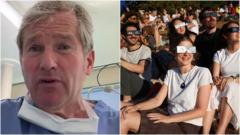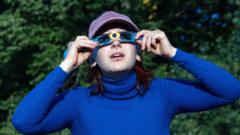
If you’ve been gazing up at the sky during a solar eclipse, listen up! There are some serious risks involved that you might not be aware of. The symptoms of eye damage can sneak up on you, including blurred vision, central blind or dark spots, and increased sensitivity to light. A stark reminder of this danger comes from the total solar eclipse that graced the skies of the UK in 1999, leaving around 70 people with damaged sight. Believe it or not, many of these folks had spent less than a minute soaking in the sights, completely unaware they were putting their eyes in jeopardy.
The real kicker here is that staring at an eclipse without proper eye protection can wreak havoc on your retina, which is the sensitive tissue at the back of your eye. This is especially true for the cells responsible for your sharp central vision. Yahu, even when the sun is partially obscured by the moon, it’s still incredibly bright! Normally, our instinct is to wince and look away when we stare at it, but during an eclipse, that instinct can vanish, leaving our eyes vulnerable to damage.
Let’s break it down a bit more. The bright light and ultraviolet radiation from the sun can lead to a condition called “solar retinopathy.” This is where it gets tricky—people often don’t notice the damage right away. Instead, symptoms may not show up until several hours later. Leading up to the eclipse, experts were shouting from the rooftops about the need for real, specially-designed solar eclipse glasses. Ordinary sunglasses just won’t cut it when it comes to protecting your precious eyesight.
Alexander Ionides, a consultant eye surgeon at Moorfields Eye Hospital in London, points out that if you suspect you’ve damaged your eyes, symptoms will usually start appearing within a few hours. “It doesn’t hurt at first,” he explains, but other symptoms can include vision changes that you definitely don’t want to ignore. If you think you might have hurt your eyes, you should seek urgent medical attention. “We’re very well equipped now,” he added, noting that hospitals can refer you to local eye units if needed.
Back in ’99, the switchboard and casualty departments were absolutely flooded with people worried about their vision after that previous eclipse. It was chaos, with many rushing in to get checked out. So far, with the recent eclipse, we haven’t seen a repeat of that, but it’s worth keeping an eye on (pun intended).
So, what can we take away from all this? If you’re planning to watch an eclipse, make sure you’re doing it safely. You don’t want to be one of those people left with vision problems just because you didn’t have the right glasses on.
Bakalım, gelecekte başka hangi göz sağlığı uyarıları çıkacak?
Kaynak: Orijinal Haber