
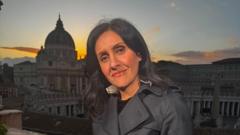
Maryam Moshiri, one of the most recognized faces of BBC News, has bravely revealed that she is living with blood cancer. In a heartfelt announcement, the 49-year-old anchor shared that she was diagnosed with polycythaemia vera (PV) back in November 2024. This rare but treatable form of blood cancer has been a significant part of her life for the past two years. “It’s been two years since my diagnosis and I’ve felt that I’ve got a handle on it to a degree now, so I felt it was really important to raise awareness,” she expressed, shedding light on her journey.
Now, to break it down for you, polycythaemia vera is a condition where the body produces too many red blood cells, making the blood thicker than normal. This thickened blood can lead to serious complications like blood clots, which increase the risk of strokes, heart attacks, or deep vein thrombosis (DVT). Moshiri candidly shared, “Mostly I had no symptoms and that’s one of the problems with this disease.” It’s a silent battle that many may not even notice until it’s serious.
During her initial treatment phase, Moshiri went through several “debilitating” procedures. “In about a space of five months, I had venesection seven or eight times. So you can imagine my iron levels hit the floor and I felt even more exhausted,” she recalled. But she didn’t let it stop her; she later transitioned to an immunotherapy treatment called interferon, which she received through the NHS. After making some necessary adjustments, she’s in a much better place now. “It’s been really good. The last couple of months have been better than the last two years,” she said with a sense of hope.
Despite the fatigue, which she describes as a unique exhaustion that isn’t just about being tired, Moshiri has kept on moving. She’s been traveling the world, covering major stories for the BBC. From anchoring in Qatar during the US-Israel war with Iran to reporting on events from the Vatican and even visiting Greenland, she’s been a trooper. “I think it’s manageable with the right treatment and you can lead a relatively healthy life,” she noted, showing her resilience.
However, Moshiri acknowledges that she’s “not the person I was two years ago.” She’s had to adjust her life and how she interacts with her family. “It took me a long time to be able to tell them about this illness,” she mentioned, reflecting on the challenge of explaining her condition to her loved ones, especially when, as a mother, she sometimes feels too tired to play with her kids.
Blood cancer, as Rowntree pointed out, is the fifth most common cancer and the third biggest cancer killer. It’s a silent threat that demands attention. There’s a pressing need for public and government support to develop kinder and more effective treatments with fewer side effects, allowing those affected to live better lives. “I believe there will be some sort of advancement that will help even more than these medications I’ve been given,” Moshiri added, clinging to hope for better days ahead.
So, as we follow Moshiri’s journey, it’s clear that her story is not just about battling cancer, but also about raising awareness for those who might be facing similar challenges. How many more stories like hers are out there, waiting to be told? We’ll be keeping a close eye on this.
Kaynak: Orijinal Haber