
Meet Freddo: The Robot Revolutionizing Virtual Training for Real-World Tasks

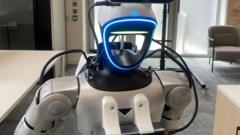
Freddo the robot is strutting his stuff at Vsim, a British start-up nestled in the heart of Cambridge. This isn’t just any run-of-the-mill robot; he

Freddo the robot is strutting his stuff at Vsim, a British start-up nestled in the heart of Cambridge. This isn’t just any run-of-the-mill robot; he recently broke Usain Bolt’s 100m sprint record! Imagine that! As Freddo walks across the office, confidently grabbing a plastic bottle from a staff member, it’s clear that the future of robot training is not just bright, it’s thriving.

The brains behind this exciting venture are founders Michelle Lu and Kier Storey. They’re on a mission to develop software that will empower robots to navigate our homes and workplaces seamlessly. Storey notes, “The underlying algorithms we’ve been using for robotic simulations date back to the 70s and 80s, but they don’t really mesh well with modern GPUs.” After a year and a half, they’ve crafted a high-performance simulator that can predict about a second ahead, analyzing an impressive 20,000 potential outcomes… outside of the robot’s immediate actions!

Vsim isn’t alone in this race. Nvidia, the tech giant, is at the forefront of AI and robotics, boasting hundreds of engineers dedicated to creating software that allows organizations to train and control robots. Their suite includes virtual simulation systems and a world model known as Cosmos, which equips robots with an understanding of real-world physics and the dynamics of their changing environment. But let’s be real, even with Nvidia’s muscle, it only provides a basic grasp of reality. Storey emphasizes, “When it comes to manipulation—like grabbing a bottle and pouring it out—progress is definitely being made.”

In a twist of innovation, Nvidia has started deploying AI agents to help design these virtual training environments, which has effectively expanded their workforce. “We’re just throwing agents at it,” says Lu, who highlights the user-friendliness of their system, making it accessible for research groups and smaller start-ups. “If your simulator is fast, you can mimic hundreds of millions of scenarios in the brief moments your robot is deciding how to move.”

Now, let’s not forget the challenges. Some tasks—like manipulating highly deformable objects or cutting—are still tricky to simulate accurately. But this isn’t stopping their momentum. Vsim is gearing up to introduce a second robot, Nacho, which will aid in refining their technology and ensuring compatibility across various machines. And who can blame Freddo for wanting some company?

So, what’s next for these pioneers in robotics? Will they be able to conquer the complexities of real-world tasks? Only time will tell, but one thing is for sure: the robot revolution is just getting started…

Kaynak: Orijinal Haber
Polish Protest Highlights Urgent Need for AI Regulations Amid Robot Revolution

In a bold display of unity and concern, demonstrators took to the streets in Poland, waving flags and chanting for stricter regulations on artificia

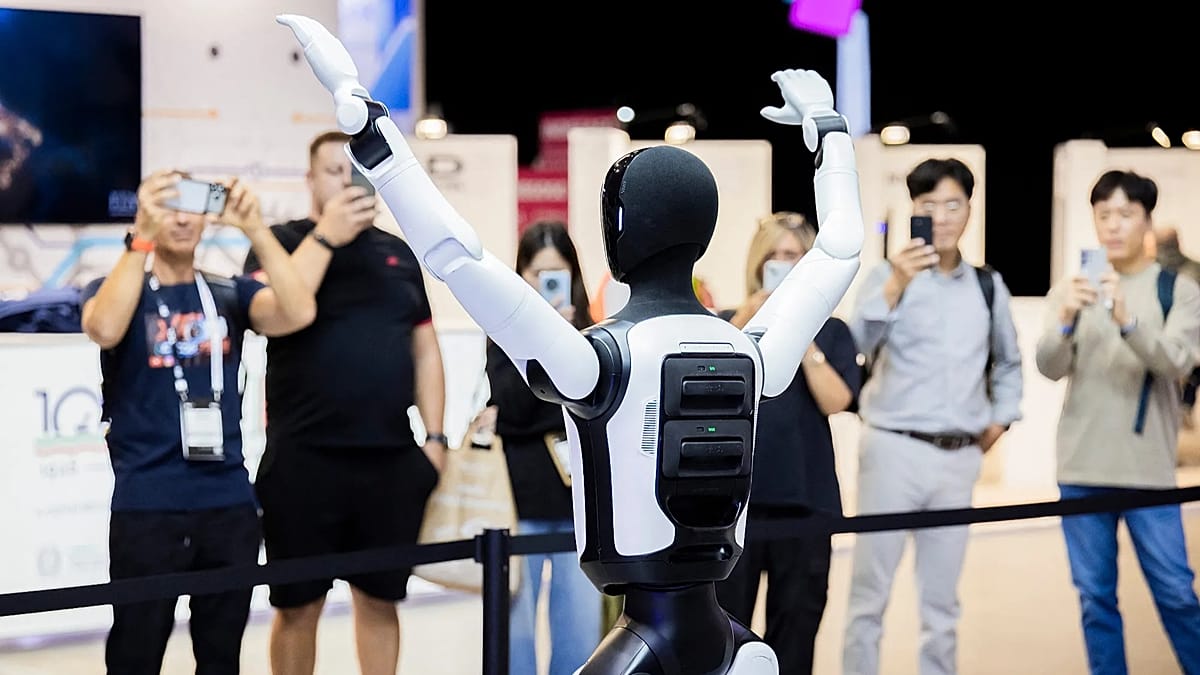
In a bold display of unity and concern, demonstrators took to the streets in Poland, waving flags and chanting for stricter regulations on artificial intelligence (AI) and robotics. This protest was spearheaded by an initiative known as Democratism, which seeks to ignite a conversation on the implications of AI and robotisation on the job market. The atmosphere was electric as one of the robots present, Agibot A3, engaged directly with journalists, making a statement that underscored the very issues being raised. The crowd echoed with chants such as “Defend workplaces,” “Time for rules,” and “Don’t wait, regulate!”

Grzegorz Kuliś, the human organizer behind the event, emphasized the pressing concern over the potential replacement of individuals by humanoid robots and AI in cognitive roles. “If we don’t react now, we may soon have a problem,” he cautioned, highlighting the urgent need for regulation. The demonstration wasn’t just about raising awareness; it also served as a showcase of the robots’ capabilities, illustrating their readiness to take on roles that could threaten human employment. “These robots can already move around freely; they’re already ‘protesting,'” Kuliś remarked, pointing out the implications of their presence.

Krzysztof Gawkowski, Poland’s Digital Affairs Minister, addressed the crowd, reinforcing the significance of the protest. He noted that Poland is leading the EU in implementing oversight of the AI market, announcing plans to establish a Commission for the Development and Security of Artificial Intelligence. This includes creating regulatory sandboxes that would allow companies to test AI solutions before they are rolled out more broadly.

Local reports from Opolska360 revealed that the very robots warning about job losses were crafted by the industry sounding the alarm. Kuliś, who has a rich background in labor policy and currently serves as an executive in both a robotics company and an employment agency, expressed hope that Democratism would evolve into an international movement, aiming to foster a global dialogue on the consequences of AI and how to mitigate its negative effects.

In July, Poland enacted its AI Act, creating a national authority that can enforce existing EU regulations, which had already been formally introduced. This proactive approach positions Poland as a trailblazer in the European landscape when it comes to managing the complex and rapidly evolving world of AI technology.

As the demonstration concluded, the questions lingered: How will these regulations shape the future of work? Will we see more protests like this as AI technology continues to advance? The urgency of the matter remains clear, and the world will be watching Poland’s next steps closely.

Kaynak: Orijinal Haber