UK Faces Salmonella Crisis as Cases Soar to Nearly 500!

Close to 500 people have fallen ill with salmonella linked to imported eggs, according to UK authorities who have reported two new clusters of this c

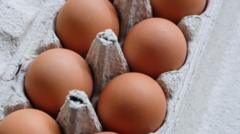
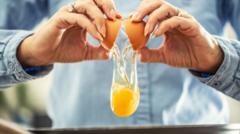
Close to 500 people have fallen ill with salmonella linked to imported eggs, according to UK authorities who have reported two new clusters of this concerning infection. The UK Health Security Agency initially reported 207 cases last week, but that number has now ballooned to 259. With these two new clusters identified, the total has surged to 474 cases overall. Tragically, there have been two deaths recorded in connection with these infections. Some of these cases date back as far as a year, but all involve bacteria that appear to be almost genetically identical, pointing to a common food source.

Investigations are still ongoing, but experts suggest that many people have contracted the illness after dining out rather than cooking eggs at home. It’s a serious situation, as salmonella cases are also being reported in several other European countries—Austria has reported 2 cases, Belgium 15, Denmark 1, France 4, Germany 6, and the Netherlands a staggering 106 cases. Investigations in the Netherlands hint at a possible link with chicken meat rather than eggs, which adds a layer of complexity to the ongoing inquiry.

Salmonella can lurk in various food sources, especially raw or undercooked poultry, meat, and eggs. More than a third of those affected in the UK—ranging from babies to individuals as old as 92—have required hospital care. While many people recover without treatment, the statistics are alarming. The current outbreak in the UK is characterized by a few specific genetic clusters identified as t5.9411, t0.24068, and t5.9765. Specifically, there are 259 cases and one death linked to t5.9411, 38 cases and one death linked to t5.9765, and 177 cases linked to t0.24068.

Most of these cases have been reported in recent weeks and months, but investigations trace back to instances as early as August 2025. The majority of cases are concentrated in England, particularly in London and the Yorkshire and Humber region, with a handful in Scotland, Wales, and Northern Ireland.

Experts emphasize that simple precautions like thoroughly preparing and cooking food can help prevent infections. It’s crucial to wash your hands after using the bathroom and before handling food. If you’re wondering about egg safety, it’s recommended to buy eggs that carry the British Lion mark or come from the Laid in Britain egg assurance scheme. Suppliers of British Lion mark eggs must adhere to strict guidelines, including testing and vaccinating hens against salmonella.

Professor Ian Young from the Food Standards Agency stated, “The exact causes of these outbreaks have not yet been identified, but investigations so far have identified links to imported eggs. There is no evidence that UK-produced eggs are affected.” As for symptoms, the UKHSA warns that they typically include stomach cramps, diarrhea, vomiting, or fever, which usually develop within 12 to 72 hours post-infection. Anyone concerned should reach out to their GP or out-of-hours service for advice.

While most individuals recover without needing further assistance, older adults, babies, and those with weakened immune systems are at the highest risk for severe disease. The salmonella outbreak is a serious situation, and as the investigations continue, the public is left wondering: what more will be uncovered in this ongoing saga?

Kaynak: Orijinal Haber

Salmonella Outbreak in the UK: What We Know and What’s Next?

A national outbreak of salmonella food poisoning has been declared by the UK Health Security Agency (UKHSA) after a tragic incident where one person

A national outbreak of salmonella food poisoning has been declared by the UK Health Security Agency (UKHSA) after a tragic incident where one person lost their life and hundreds more fell seriously ill. The situation is alarming, and although the exact source isn’t confirmed yet, there are strong suspicions surrounding imported eggs or products containing them. As it stands, the evidence points to the possibility that many individuals contracted this bug while dining out, rather than from their own kitchens. Restaurants and cafes could very well be playing a crucial role in this outbreak, but there’s still a long way to go before we uncover all the details.

Salmonella, you see, is a family of bacteria that typically hang out harmlessly in the digestive tracts of animals like cattle, pigs, and chickens. That’s why eggs and poultry often get the blame when it comes to infections. The bacteria are usually found in animal waste, and folks can get infected by eating contaminated food that hasn’t been cooked properly, or even by coming into contact with infected animals. Cross-contamination is a real risk too, especially when raw and cooked foods mingle in the kitchen.

So, what are the signs to watch for? Well, if you start experiencing stomach cramps, diarrhea, vomiting, or fever, you might want to take it seriously. These symptoms typically kick in between 12 and 72 hours after infection. Most people recover without needing much help, but the vulnerable—like older adults, babies, and those with weakened immune systems—are at greater risk of severe illness. For these cases, hospital care with fluids or antibiotics can make a big difference. Anyone who’s feeling uneasy about their health should definitely reach out to their GP or an out-of-hours service.

Now, let’s talk prevention. Cooking eggs and other foods thoroughly can indeed help keep infections at bay. Washing your hands before preparing food, after using the bathroom, and after touching animals are also smart moves. As for the recent outbreak, a staggering 199 of the 207 reported cases have been in England alone, with hotspots including 47 cases in London and 38 in Yorkshire and Humber. There have been six cases in Scotland, one in Wales, and another in Northern Ireland. That’s quite a spread!

What’s intriguing, however, is that scientists have utilized a method called whole-genome sequencing to dig deeper into this outbreak. This comprehensive genetic fingerprinting shows that the bacteria involved are all closely related. Only a handful of differences in their DNA sequences suggest that these infections are part of the same outbreak, likely stemming from a common source. Genetic testing indicates similarities with a previous outbreak linked to imported eggs.

Experts from UKHSA have interviewed 114 individuals associated with this outbreak, and their responses suggest that eggs provide the “strongest signal” as the potential source. However, it’s critical to note that, at this point, there’s no identified link to eggs or poultry produced in the UK. Dr. Charlotte Hammer from the University of Cambridge emphasized that this situation presents a significant public health challenge.

To combat the issue, the British Lion Scheme, established in 1998, is in place. Suppliers of eggs that bear the British Lion mark must adhere to a strict code of practices, which includes vaccinating hens and a passport system for traceability. Mark Williams, chairman of the British Egg Industry Council, pointed out that food businesses importing eggs should double-check their supply lines for vaccination information and ensure all food safety checks are in order.

Health experts are still working diligently to confirm whether eggs are indeed the source of this outbreak. They need to trace the origins of the eggs or egg products involved to take further steps to limit any additional infections. However, one major hurdle is that when businesses import large quantities of eggs, they often come from mixed sources, making tracking quite tricky.

The UKHSA has reached out to other countries regarding this outbreak, urging them to check for any genetically similar infections. While salmonella infections are not uncommon in the UK, outbreaks linked to a single food source that lead to hundreds of illnesses are relatively rare. Scientists are keen to explore the factors that contributed to this alarming situation.

Bakalım bundan sonra ne olacak? Gelişmeleri takip ediyoruz…

Kaynak: Orijinal Haber

Salmonella Outbreak in the UK Claims One Life and Sickens Hundreds

A person has tragically died, and hundreds more have fallen ill due to a salmonella food poisoning outbreak in the UK, which experts believe is linke

A person has tragically died, and hundreds more have fallen ill due to a salmonella food poisoning outbreak in the UK, which experts believe is linked to imported eggs. The UK Health Security Agency (UKHSA) has been closely monitoring this alarming situation, launching an investigation into the 207 reported cases over the past year, with a significant spike in numbers seen just in recent weeks. More than a third of those affected—ranging from tiny babies to individuals as old as 90—have required hospital care, and two patients have developed serious blood poisoning.

Most of the time, people recover without needing treatment, but this particular outbreak is concerning because it involves a specific strain of salmonella. Symptoms, folks, can hit you like a freight train—stomach cramps, diarrhoea, vomiting, and fever usually show up between 12 and 72 hours after infection. If you’re worried about your health, the UKHSA advises contacting your GP or out-of-hours service right away.

To break down the numbers further, of the 207 cases, 199 have been reported in England, including 47 right in London and 38 in Yorkshire and Humber. Scotland has seen six cases, Wales has one, and Northern Ireland has reported another. Hannah Charles, the lead epidemiologist for gastrointestinal infections at the UKHSA, explained that salmonella can be found in various food items, especially raw or undercooked poultry and eggs. This means that preparing food thoroughly is crucial, and don’t forget to wash those hands after using the loo and before cooking!

Now, it’s not every day we see an outbreak like this tied to a single strain of bacteria sickening so many people at once. Experts are cautious, suggesting that there could be more cases yet to surface, as some individuals may have fallen ill but didn’t bother to report it. The UKHSA has stated that, at present, there’s no identified connection to UK-produced eggs or poultry. They recommend that infants, young children, pregnant individuals, and older adults should only consume runny or raw eggs if they carry the British Lion mark or are produced under the Laid in Britain egg assurance scheme.

Nick Allen, the chief executive of the British Egg Industry Council, pointed out that hens in the UK are required to have salmonella vaccinations. However, he noted that the increasing volumes of imports, produced under “less stringent regulations,” continue to flood the market in Britain.

As the situation unfolds, one can’t help but wonder: will there be more developments? Will we see additional cases pop up? It’s imperative to stay vigilant.

Kaynak: Orijinal Haber