Parents Advised Against Sharing Kids’ Photos Due to AI Abuse Risks

Parents are being urged not to share images of their children online, and it’s a serious warning from the National Crime Agency (NCA). With the rise

Parents are being urged not to share images of their children online, and it’s a serious warning from the National Crime Agency (NCA). With the rise of AI-generated abuse imagery, this caution is more important than ever. The NCA, in collaboration with the Internet Watch Foundation (IWF), has highlighted a growing threat facing children. You might think it’s just harmless sharing among friends, but the risks are escalating. The guidance from these agencies states, “AI is becoming a part of everyday life,” and this isn’t just a passing trend—it’s a real concern.

Hold on to your hats, folks, because the numbers are staggering. In 2024, the IWF reported 13 AI-generated videos of child sexual abuse. Fast forward to 2025, and that number skyrocketed to 3,440! This kind of imagery is classified as Child Sexual Abuse Material (CSAM) in the UK. The government is stepping in to combat these AI abuse threats, particularly focusing on young girls, and has even banned so-called “nudification.” It’s a tough message for parents and caregivers to digest, but remember, you’re not alone in this.

So, what can you do to keep your kids safe? The guidance points to three essential steps. First up, review your privacy settings. Many social apps have features under “Settings” that allow you to limit post visibility or even switch to a private account. Second, it’s crucial to check your social media accounts. Go through the content you’ve already shared to ensure no identifying details—like your child’s face or school uniform—are visible. If you spot something risky, don’t hesitate to delete it. And last but not least, revisit image consent. Have conversations with friends, family, and even institutions your child interacts with, like schools or clubs, about how their images are being used.

Involving your children in these discussions might sound a bit daunting, but it’s key to making them feel comfortable about saying “no” when it comes to sharing their image. It’s been a long road of warnings from child safety experts about the perils of “sharenting,” where parents share too much personal information online. Now, with the additional concern of AI abuse, the stakes feel even higher. “We don’t want to say don’t share your children,” said IWF chief Kerry Smith, emphasizing the importance of being cautious.

As parents, it’s vital to navigate these waters carefully. Who knows what the future holds in this rapidly changing digital landscape? With AI weaving its way into our daily lives, vigilance is more essential than ever. So, what’s your next move? How will you ensure your child’s safety online?

Kaynak: Orijinal Haber

Australia Raises Social Media Fines: A Bold Move Against Underage Accounts

Australia is on the verge of doubling the fines for social media platforms that fail to prevent children from creating accounts, a response driven by

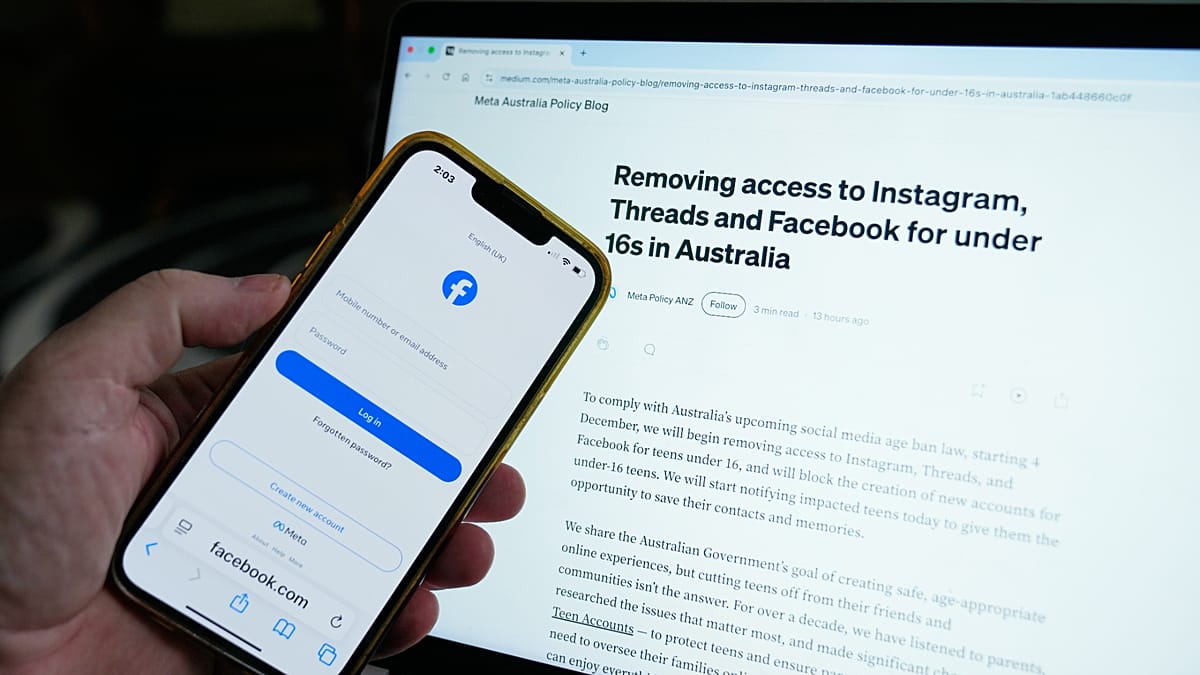
Australia is on the verge of doubling the fines for social media platforms that fail to prevent children from creating accounts, a response driven by alarming statistics. According to recent reports, a staggering seven out of ten kids have managed to stay on restricted platforms three months after a groundbreaking ban on under-16s came into effect. This ban, which became law on December 10, targets major players like Facebook, Instagram, Snapchat, and TikTok.

The government’s announcement came on a Sunday, with Communications Minister Anika Wells stepping up to take the platforms to task. Speaking to the Australian Broadcasting Corp, she didn’t hold back: “We’re not seeing improvements.” This clear message indicates that the initial legislation might have been too lenient. The eSafety Commissioner echoed these sentiments, suggesting that the legislation was poorly constructed from the start.

Parliament had passed this initial ban with overwhelming support back in 2024, giving the targeted platforms over a year to prepare for compliance. Yet, here we are, and the situation hasn’t changed much. Wells also revealed that since March, she has been receiving monthly updates from the online safety regulator, which highlighted the lack of progress on the platforms’ end.

Countries around the globe that are contemplating similar restrictions are keeping a close eye on Australia’s moves, curious about how these fines will play out. Will the new legislation be the wake-up call needed for these social media giants? Or will they continue to skirt the rules, leaving kids at risk?

As the government prepares to introduce draft legislation this week that could see fines soar to a whopping 99 million Australian dollars (around €63 million), one can’t help but wonder how platforms will react to avoid these hefty penalties. Will they finally take the steps necessary to protect our youth from the dangers lurking online?

Kaynak: Orijinal Haber

YouTube Settles Major Social Media Addiction Case with Teenager

Google has reached an agreement in a significant social media addiction lawsuit involving a teenage user. The matter has been settled amicably, and t

Google has reached an agreement in a significant social media addiction lawsuit involving a teenage user. The matter has been settled amicably, and the tech giant’s focus now shifts towards enhancing age-appropriate products and parental controls that ensure safer online experiences. This case is part of a broader series being managed by Los Angeles Superior Court Judge Carolyn Kuhl, aimed at addressing over 1,000 similar lawsuits across California.

Earlier this year, the first trial in this series saw K.G.M., a 20-year-old California woman, accuse Meta and YouTube of deliberately creating addictive features on their platforms. She also sued Snap and TikTok, both of which settled prior to going to trial for undisclosed amounts. In a landmark decision, a jury awarded K.G.M. $6 million, marking a historic moment as it was the first time a court held Meta and YouTube accountable for the claims made against them.

Now, another plaintiff, R.K.C., has come forward with allegations mirroring those of K.G.M. According to court documents, R.K.C. claims that features like infinite scroll and autoplay, which continuously feed users new content, led him to compulsive usage that evolved into an addiction. This obsession, he claims, has resulted in significant anxiety, sleep deprivation, and various other issues.

Amid all this, Google emphasizes its commitment to working with families to create a safer and more beneficial online environment for young users. It’s clear that this issue of social media addiction is igniting widespread concern among parents and advocates, as more cases are brought to light. The question lingering now is, how will these tech giants adapt their platforms to address these pressing issues?

Kaynak: Orijinal Haber

Social Media Ban: A Game Changer for UK Internet Usage?

The UK government is planning a social media ban for children under 16, and the impact is already being felt in classrooms across the nation. My 12-y

The UK government is planning a social media ban for children under 16, and the impact is already being felt in classrooms across the nation. My 12-year-old son summed it up perfectly: “Everyone’s really upset mum – loads of them have got their own YouTube channels.” Just think about that for a second—how did so many kids under 13 end up creating channels when the age restriction is supposed to be there? It’s clear the government is attempting a major cultural shift, but is it really the answer to keeping kids safe online?

In Preston, a school girl named Isabella went viral after she was asked what she would do with the nine hours of screentime she had accumulated over the weekend. Her nonchalant response? “Stare at the wall.” The logistics of this ban are still being ironed out, but it could lead to a significant overhaul in how everyone—kids and adults alike—uses the internet. Millions might soon be required to present official ID with their date of birth just to access various platforms starting next spring.

While many campaigners, including bereaved parents who have lost children to social media-related harms, welcome this ban, not everyone shares that sentiment. Critics argue it’s more than just a push for children to spend less time on screens; it fundamentally alters how young people are expected to gather knowledge and how the rest of us navigate the online world. “YouTube is where we all go to learn,” says Dr. Tom Crawford, known as Tom Rocks Maths, who shares his math skills with 250,000 subscribers on YouTube—a platform set to be included in the ban.

So, is this really the “profound shift” some are claiming? And if it is, how will it change our relationship with the online universe? Concerns about civil liberties and government overreach abound, but there are also practical implications to consider. “Every young person I have spoken to has told me the same thing: they will find a way around it,” says Paddy Crump, campaigns director at Flippgen, a youth-led nonprofit that helps young people develop healthier online habits. This isn’t just talk; reports from Australia indicate that 70% of children under 16 still maintain some access to social media even after a similar ban was implemented.

Crump argues that this ban offers “false hope dressed up as protection” and will merely push young people’s online behavior to smaller, less regulated platforms. “Some pretty dangerous places for children make Instagram look like Disneyland,” warns Ari Lightman, a professor at Carnegie Mellon University. The unintended consequences are worrisome. Crump fears that the ban could discourage kids from seeking help for online harms and isolate them from vital communities and information.

One teenager even reached out to me, insisting that without social media, they wouldn’t still be here. Online friendships had provided them with reasons to continue living. For some parents of SEND (Special Educational Needs and Disabilities) children, social media and videos are the primary means of interacting with the world. An online petition urging the government to reconsider this ban has already garnered over 100,000 signatures, citing social media as a crucial communication tool for many young people.

Crawford brought up a critical point: “I learned to tie a bow tie by watching a tutorial on YouTube.” What about an 11-year-old who needs to wear a tie for the first time? Or a teen anxious about their GCSE exams who wants to learn how to tackle a specific question? A YouTube ban takes away those learning opportunities.

Older generations might argue they thrived without the internet, but that misses how integral platforms like YouTube and TikTok have become as research tools for today’s youth. SEO expert Mehwish Malik points out that younger Gen Zers often use TikTok as a search engine, their go-to for information and trusted brands.

The government claims that it’s up to tech companies to figure out a solution. “If YouTube wants to come up with something that allows young people to watch educational content without exposing them to short reels, that’s a different proposition,” said education secretary Bridget Phillipson. But industry insiders argue that creating such a system isn’t as straightforward as it sounds.

Parents could theoretically sit down with their children and watch content on their accounts. YouTube states that half of its UK users watch videos on TV at home, allowing for multiple sign-ins. But Crawford insists, “YouTube isn’t social media; it’s the 2026 version of television.”

With additional measures targeting 16 and 17-year-olds under consideration, social media might end up losing its appeal entirely for young people, even when they reach the appropriate age. Asa Raskin, who created the concept of infinite scrolling, warns, “If you’re drinking a glass of wine that keeps refilling, you will just keep drinking.”

The absence of younger users could shift the social media landscape for everyone. MrBeast, one of the world’s most successful YouTubers, built his empire studying algorithms and capitalizing on “watch time.” Would he have had the same success if he started today?

Professor Amy Orben from Cambridge University, who has advised the government on screen time, acknowledges that any ban will be “imperfect.” But she also argues that the government cannot do nothing in the face of complex social media-related harms. While tragic cases exist, the broader evidence links social media use to only a slight decrease in mental health for large populations.

Tech companies could lend a hand by sharing more insights from their massive user bases. “Social media companies have offered exceptionally little data on their internal research,” Orben adds. As for age verification, it seems the tech giants will shoulder that responsibility, using established methods like identity document scanning and facial age estimation.

However, this raises red flags for those concerned about the invasive reach of Big Tech. Some view this as an attempt by the government to regulate online access, which privacy advocates find troubling. For supporters, the ban is a necessary trade-off to safeguard children online. Elon Musk chimed in, suggesting the real goal is to enable the UK government to track everyone.

An international campaign called Stop Killing the Internet has also emerged, led by groups like Index on Censorship and Big Brother Watch, who argue that such surveillance limits freedom of expression for all. “We want children to be safe online, but these policies create new risks for safety and privacy,” stated Silke Carlo, Director of Big Brother Watch.

As the conversation unfolds, the potential for sensitive data to be compromised looms large. Professor Alan Woodward from Surrey University warns that initial safety measures can lead to broader regulatory overreach. “A walled garden is only a refuge if those inside chose the wall,” he cautions.

I can’t help but think my 12-year-old and his friends will be busy searching for ways to escape the confines of this “walled garden” meant to protect them. If the ban takes effect as planned in 2027, today’s under-16s might not be spending their time staring at walls after all. The absence of kids from digital spaces will also change the social media experience for adults. We may be on the brink of a new era—one less intense, giving us more time to read books, explore the outdoors, or even chat with AI on our phones.

Kaynak: Orijinal Haber
W: Europe’s Bold New Social Media Platform Challenges Big Tech

The European Commission has announced its entry into the tech arena with a brand new social media platform called “W.” This platform, which was first

The European Commission has announced its entry into the tech arena with a brand new social media platform called “W.” This platform, which was first revealed at the World Economic Forum back in January, is designed on principles of verified human users, transparency, privacy, and free speech. Based in Sweden, W is the brainchild of entrepreneurs from media, technology, and artificial intelligence sectors, as highlighted on their official website. Just this week, the beta version of the platform has launched, but there’s a catch—users must apply and pass a vetting process conducted by the “W” team before they can start posting.

What’s even more interesting? Top European officials are already on board, including EU Commission President Ursula von der Leyen and Antonio Costa, the President of the European Council. But before they can dive in, users need to verify their identity. They can do this either by submitting their real names or opting for the anonymous route via W Identity, a separate app that scans official documents like passports or national IDs directly on their devices. It’s a whole new level of security, folks!

W’s CEO, Anna Zeiter, recently shared with Euronews that the platform aims to host its data on European servers owned by European companies. This is a strategic move to limit investors to those within the continent itself. Zeiter mentioned plans to utilize Proton, a Swiss encrypted email service, and UpCloud, a Finnish cloud computing provider, ensuring compliance with stringent EU privacy regulations.

This launch is not just a standalone event; it coincides with a wider movement in Europe aiming for tech and AI sovereignty, distancing itself from Big Tech giants in the United States. Countries like France, Germany, and the Netherlands have expressed their concerns about the risks associated with relying on these major corporations, particularly regarding national security and data privacy issues.

W isn’t flying solo in this endeavor either. It joins a growing list of alternative social media platforms emerging in Europe, such as Bulle, Eurosky, Monnett, and eYou. Last week, several of these platforms even signed a declaration pledging to create Europe’s “social stack.” They claim this initiative will establish a “diverse and resilient infrastructure” to help the continent move away from large, monopolistic platforms that govern authoritatively.

However, experts warn that maintaining an audience on these alternative platforms is no easy feat. As previously discussed with Euronews Next, the challenge lies in competing with the convenience and engagement levels of established sites that aim to keep users glued to their screens.

So, what does this all mean for the average user? Well, it’s still early days, and the success of W and similar platforms remains to be seen. Can they truly attract and retain a loyal user base while offering something different from the behemoths of social media? Only time will tell…

Kaynak: Orijinal Haber

Study Reveals: Social Media Surpasses Traditional News Outlets in Popularity

A recent study has shown a significant shift in how people consume news, indicating that more individuals now turn to social media platforms rather t

A recent study has shown a significant shift in how people consume news, indicating that more individuals now turn to social media platforms rather than traditional news outlets for their information. It’s a game-changer in the media landscape, folks! This new trend reflects a growing reliance on digital platforms, which many find more accessible and immediate compared to newspapers or television.

According to the findings, nearly 60% of respondents reported they get their news primarily from social media. That’s right, you heard it! Six out of ten people are scrolling through their feeds for the latest updates instead of picking up a newspaper or tuning into the evening news. The study highlights how platforms like Twitter, Facebook, and Instagram have become go-to sources for breaking news, trends, and even opinions on current events.

What’s even more interesting is the demographic breakdown. Younger audiences, particularly those aged 18 to 29, are leading this charge. They prefer the fast-paced environment of social media, where news travels at lightning speed. You know how it goes – one minute, you’re watching cat videos, and the next, you’re reading about a major political event! It’s all about that instant gratification.

But, let’s not forget the flip side of this coin. While social media provides quick access to a plethora of information, it also raises questions about the reliability of the news. Misinformation spreads like wildfire online, and sometimes it’s hard to discern what’s accurate. People are left to navigate through a sea of opinions and unverified claims. Yani, dikkat etmekte fayda var!

So, what does this mean for traditional media? Well, it’s a wake-up call. News outlets are being pushed to adapt to this new reality. Many are now focusing on improving their online presence, engaging audiences through social media, and offering real-time updates. The competition is fierce, and if they don’t keep up, they risk becoming obsolete. Bakalım, geleneksel medya bu duruma nasıl yanıt verecek?

As we see this shift unfold, one has to wonder: Will social media remain the primary source of news for the masses, or will traditional outlets find a way to reclaim their audience? The future of news certainly looks intriguing…

Kaynak: Orijinal Haber

UK’s Under-16s Social Media Ban: Key Questions Unanswered!

A social media ban for under-16s in the UK is on the way, following the government’s announcement on Monday. But hold on, folks, there are still a to

A social media ban for under-16s in the UK is on the way, following the government’s announcement on Monday. But hold on, folks, there are still a ton of questions hanging in the air! What apps are actually included in this ban? We know Snapchat, TikTok, YouTube, Instagram, Facebook, and X are on the chopping block, but what about popular gaming sites like Roblox? That’s where things get murky. The government has been tight-lipped about how these measures will stretch to gaming platforms, which leaves many parents and kids scratching their heads.

Roblox, for instance, is a big hit among the younger crowd in the UK, but it has faced criticism for not doing enough to keep kids safe. Allegations have surfaced that it allowed adults to prey on children. Hello? Roblox claims they’ve made some changes, like better age verification tools, but the real question is… will they be swept up in this ban? According to Lorna Woods, a professor of internet law at Essex University, if the UK sticks to the Australian model, gaming sites might just be safe for now. But that could change, you know?

And then there’s YouTube. It’s in the ban, but YouTube Kids is reportedly safe. But here’s the kicker: what if kids try to access regular YouTube without an account? The platform is a vital educational resource for many, with 95% of UK teens saying it helps them with school work. The government is promising a list of exemptions to keep educational content accessible, but how will that play out? Inquiring minds want to know!

Now, what’s the deal with messaging apps? WhatsApp, used by about half of 8-17 year-olds, is expected to dodge the ban. But platforms like Discord and Pinterest? Well, they’re not off the hook yet, as the government is still mulling over which platforms will be included in these restrictions. This leaves a lot of room for speculation, and it seems like the government isn’t rushing to clarify.

But the real burning question is: how will this ban actually be enforced? The government says they’ll use “highly effective age assurance” methods to verify ages. This could mean everything from facial recognition to ID checks, but, hey, there are hurdles! Ofcom has pointed out that accurately checking if someone is 16 or younger isn’t straightforward. You know, fewer methods exist to verify ages compared to those for people over 18. It’s a bit of a mess, to be honest.

And let’s not forget the surge in VPN usage! Some kids might just use VPNs to sidestep these social media restrictions. The government hasn’t laid out plans to regulate VPNs yet, but discussions are on the table. Children’s Minister Josh MacAlister hinted that age-gating for VPN use could be a possibility. But will that actually happen?

The timeline for implementing these bans is also in the air. While the government is pushing for swift action, challenges from tech companies could slow things down. So, we’re left wondering… what’s next in this unfolding saga?

Kaynak: Orijinal Haber

UK Announces Social Media Ban for Under-16s Set for 2027!

A social media ban for children under 16 has been officially announced by the UK government, slated to kick in by early 2027. The Prime Minister, Sir

A social media ban for children under 16 has been officially announced by the UK government, slated to kick in by early 2027. The Prime Minister, Sir Keir Starmer, emphasized that keeping kids off social media is the best way to ensure their safety online. Major platforms affected by this ban include Snapchat, TikTok, Instagram, Facebook, and X, with YouTube also being prohibited for those under 16. However, YouTube Kids, a safer version of the platform for younger audiences, will remain accessible.

The government hasn’t released a comprehensive list of all platforms that will be affected, but they indicated it would cover any service designed for social interaction and user-generated content. Starmer mentioned the UK would “go further” than other nations, implementing stricter measures, such as limiting livestreaming and communication with strangers on a wider array of online services, including gaming sites.

Even though Roblox, a popular gaming site among children aged 8 to 12, won’t be banned outright, certain features like its chat function will face restrictions. Interestingly, messaging services like WhatsApp and Signal will not fall under this social media ban. Most of these platforms already have age restrictions, requiring users to be over 13 to create accounts.

Now, regarding features considered “high risk,” such as livestreaming and chatting with strangers, the government plans to have restrictions in place by default for users under 17. They’re also looking into overnight curfews and breaks in infinite scrolling for users under 18. Expect more details on these measures to be shared in July.

The government’s move follows a public consultation that received over 116,000 responses, including voices from bereaved parents. For instance, Mariano Janin, whose daughter Mia tragically died at 14 due to cyberbullying, expressed his relief at the announcement, stating, “I think it’s a change in the right direction.” On the flip side, some parents feel the ban should have been implemented sooner, as voiced by Lisa Kenevan, whose son Issac passed away at 13 after participating in a harmful viral trend.

But it’s not just parents who have opinions. Many teenagers are worried about how this ban will affect their social lives and self-expression. For example, 14-year-old George pointed out that kids his age should have the freedom to make their own choices, while 15-year-old Lilly shared her thoughts on how platforms like TikTok help her express herself through performing and sharing videos.

Companies like YouTube and Snapchat, along with Meta (the parent company of Facebook and Instagram), argue that the ban won’t effectively protect teens. They warn it might push them towards “less safe” platforms. Meta even suggested that any restrictions should be backed by a robust age verification system to prevent users from sharing personal IDs with various services.

Looking at international examples, Australia has already introduced a similar ban for kids, enforcing strict measures that prevent children from setting up new accounts on popular platforms. And while the UK is looking to follow this model, challenges remain. Reports indicate that in Australia, many kids still navigate around these restrictions, with a significant number of parents claiming their children continue to use social media platforms.

As discussions about social media regulations continue across various countries, it’s clear that this is a hot-button issue. The UK government aims to finalize these regulations by Christmas this year, paving the way for the ban’s rollout in spring 2027. Will this bold step truly make children happier and safer online? Only time will tell as we keep our eyes peeled on the developments ahead.

Kaynak: Orijinal Haber

Social Media on Trial: Four Key Cases That Could Change Everything

Social media platforms are facing a tidal wave of legal challenges as the companies behind them—like Meta, Google, and TikTok—find themselves in

Social media platforms are facing a tidal wave of legal challenges as the companies behind them—like Meta, Google, and TikTok—find themselves in courtrooms across the United States. What started as a revolutionary way to connect people and share information has turned into a battleground over user safety, particularly for children. From allegations of addiction to claims of misleading advertising, these lawsuits could reshape the future of social media. Legal experts, including Eric Talley from Columbia Law School, emphasize that the unfolding trials are not just a matter of legal scrutiny; they’re also shifting public perception in a way that could influence political landscapes for years to come.

In California, where most of these tech giants are headquartered, a significant multidistrict litigation (MDL) has emerged, involving over 1,000 school districts. The schools accuse platforms like Instagram, YouTube, Snapchat, and TikTok of being purposely designed to be addictive, leading to mental and emotional harm among children. As the trial for certain claims is set to kick off in February, the implications are vast. If the courts find in favor of the schools, it could redefine how social media engages with its young users.

Remember that case from earlier this year? Meta and YouTube were ordered to pay $6 million in damages after a young woman testified about her childhood addiction to social media and its toll on her mental health. Both companies are appealing the verdict, but this is just the tip of the iceberg. A bigger case from New Mexico has also put Meta in hot water, with accusations of misleading the public regarding the safety of its platforms for kids. If these verdicts keep going against them, we might see a complete overhaul in user engagement strategies.

Meanwhile, a lawsuit led by a group of 29 states against Meta and Instagram is gearing up for trial in August. This lawsuit focuses on violations of the Children’s Online Privacy Protection Act, aimed at protecting kids under 13 from online exploitation. If successful, the states are pushing for stricter controls to prevent underage users from accessing these platforms, which could significantly alter how Meta operates its advertising and data collection practices.

Now, let’s not forget the chilling case involving Roblox and Discord. A 13-year-old boy claims he was groomed by a sexual predator through these platforms, which he argues were poorly designed and inadequately marketed for safety. The case is currently on hold while the companies appeal a decision to take it to court, but it could lead to crucial changes in how these platforms handle interactions between young users and strangers online.

And it’s not all about protecting kids. Dr. Andrew Forrest, an Australian billionaire, has taken Meta to court for allegedly failing to combat scam advertisements that use his name to trick people into fake investments. His case could potentially challenge the longstanding protections granted to tech companies under Section 230 of the Communications Decency Act, which has shielded them from liability for user-generated content. If the court sides with Forrest, we could be looking at a major shift in how online platforms are held accountable for what happens on their sites.

So, the question remains—how will these trials unfold, and what kind of impact will they have on social media in the years to come? As the legal battles heat up, we’re all left wondering what the future holds for these platforms that have become such a big part of our everyday lives.

Kaynak: Orijinal Haber

Is Social Media Safety Just a Dream? Let’s Dive In!

In 2021, a bombshell dropped when Frances Haugen, a former employee of Meta Platforms, which you might know better as Facebook, leaked internal docu

In 2021, a bombshell dropped when Frances Haugen, a former employee of Meta Platforms, which you might know better as Facebook, leaked internal documents revealing shocking truths about the company. They knew, folks. They knew that their platform was wreaking havoc on users’ mental health. For example, they had data showing that Instagram was making body image issues worse among teenagers, yet they chose to downplay it publicly. Can you believe that? They prioritized profits over the wellbeing of their users. This revelation set off a global conversation about what digital platforms ought to be doing to protect their users.

González Fuster, a key voice in this discussion, sheds light on digital rights—an informal term we toss around to describe our rights while navigating the online world. Just like in the real world, some folks are more at risk than others when it comes to having their rights violated on these platforms. Semenzin told Euronews that sometimes, the violations are blatant, such as in the case of the Italian Facebook group, Mia Moglie, which boasted 32,000 members. These guys shared intimate images of their wives without any consent for six long years! It’s outrageous! And there are subtler forms of discrimination too, like when certain minority groups seem to vanish from your feed…

Now, how can these digital platforms step up their game? Content moderation is one way, but here’s the kicker—social media companies are not exactly transparent about their processes. Semenzin pointed out that moderation on big platforms usually involves a mix of human oversight and automated tools. But let’s be real, we need way more transparency in how this all works. Imagine if users knew their rights better; there should be authorities monitoring compliance with the law, ensuring that the platforms do what they’re supposed to do.

We’ve been applying the General Data Protection Regulation (GDPR) for a while now, but González Fuster mentions that we’ve been hearing for years, “Just wait, it will work eventually.” The truth is, the GDPR is evolving, thanks to discussions within EU institutions that could delay its effects even further. The EU AI Act, which is going into effect in 2024, has already made changes to the GDPR, and they’re considering even more alterations with the digital Omnibus currently under debate in Brussels. However, González Fuster warns that these changes carry risks.

But it’s not all doom and gloom. Social media users can take steps to protect their rights. Questions like “What information do you have about me?” and “What do you think I am?” should not be the burden of everyday folks. It shouldn’t be that regular people have to constantly defend themselves online. Thankfully, there are NGOs out there working to make litigation more straightforward, using collective complaints to hold Big Tech accountable. So, there’s hope yet!

Görünen o ki, sosyal medya platformlarının güvenliği konusunda atılacak daha çok adım var. Peki, bundan sonra ne olacak? Gelişmeleri takip ediyoruz…

Kaynak: Orijinal Haber