
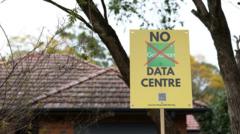
Residents of Lane Cove, a suburb in Sydney, are raising alarms over the impending construction of four massive data centres. Folks in the area can’t help but notice the sheer size and relentless noise of these facilities. Some locals describe the sound as akin to a jet plane ready for takeoff, while others are bothered by a persistent high-pitched whine. Take Lucy*, for example. When she settles her child into bed, a constant humming fills her ears. “I hear it and think, ‘What is that? What is going on?’,” she shares, her voice tinged with frustration. And let’s not forget, another four centres are queued up for development in a local industrial park.
Australia has quickly caught the attention of global investors, rapidly emerging as a hotspot for data centres. Sam Altman, CEO of OpenAI, has even suggested that Australia could claim the title of the world’s data centre capital if it so desired. Big tech has already set its sights on building the largest data centres in western Sydney. These facilities are expected to require a staggering one gigawatt of power. “If we think about it in reverse, what happens if we don’t build infrastructure here?” questions Dennett, a local expert. The land availability, political stability, and the Five Eyes security alliance are just a few reasons that make Australia an attractive market for foreign investments.
Jon Whittle mentions that the government has no choice but to embrace the data centre trend. Leading business experts and economists echo this sentiment. Australia’s national science agency, CSIRO, has become a leading voice in the AI and business sector, advocating for the development. But hang on a second; what about the impact on locals? The residents of Sydney are anxious about the growth of renewable energy alongside this data centre boom.
Just a short drive from the investment frenzy, the renewable energy sector is also thriving. “We don’t see the two as unrelated,” Mookhey insists. The influx of private investments is expected to bolster renewable energy initiatives, which is crucial given the growing demand.
But here’s where it gets tricky: these data centres are notorious for guzzling water—up to 40 million litres a day! That’s about the daily water usage of 80,000 households. In a country that frequently battles drought, this is a serious concern. Sydney is on track to need an increased drinking water supply within the next five to ten years to accommodate its expanding population, according to the Water Services Association of Australia (WSAA). If this precious water gets diverted to data centres, guess who’s going to bear the cost? You guessed it—households that might have to resort to expensive desalination options instead of traditional water sources.
In July, Prime Minister Anthony Albanese laid out a new legal obligation for “large-scale” data centres. Lane Cove’s deputy mayor, Rochelle Flood, expressed concern outside the proposed data centre site on Mars Road. During a rainy town hall meeting led by Greenpeace Australia Pacific at the local library, residents voiced their frustrations about not being consulted on their area becoming a data centre hub. One of these proposed centres is shockingly just 16 meters from the nearest home and a mere 160 meters from a local primary school. Flood warns that if these four data centres get the green light, up to 50% of existing businesses in the industrial park will be forced to relocate, taking jobs with them.
Felipe Tanaka, a 40-year-old manager in the industrial park, has already been told he must relocate for a data centre. “While a large data centre can create over a thousand jobs during construction, research indicates that number dwindles to about 100 once it’s up and running,” he explains. “Most of our 300 to 400 workers here are locals,” Tanaka adds, clearly distressed about the future of his team.
NSW Treasurer Mookhey suggests the jobs brought in by data centres will mainly benefit external users rather than direct employment. “It’s pleasing to see they are committed to providing some of their more skilled operations and locating them here,” he says, though the specifics remain vague.
So, what’s next for the residents of Lane Cove? Are they ready to embrace the data centre boom, or will their voices be heard? Only time will tell…
Kaynak: Orijinal Haber
