
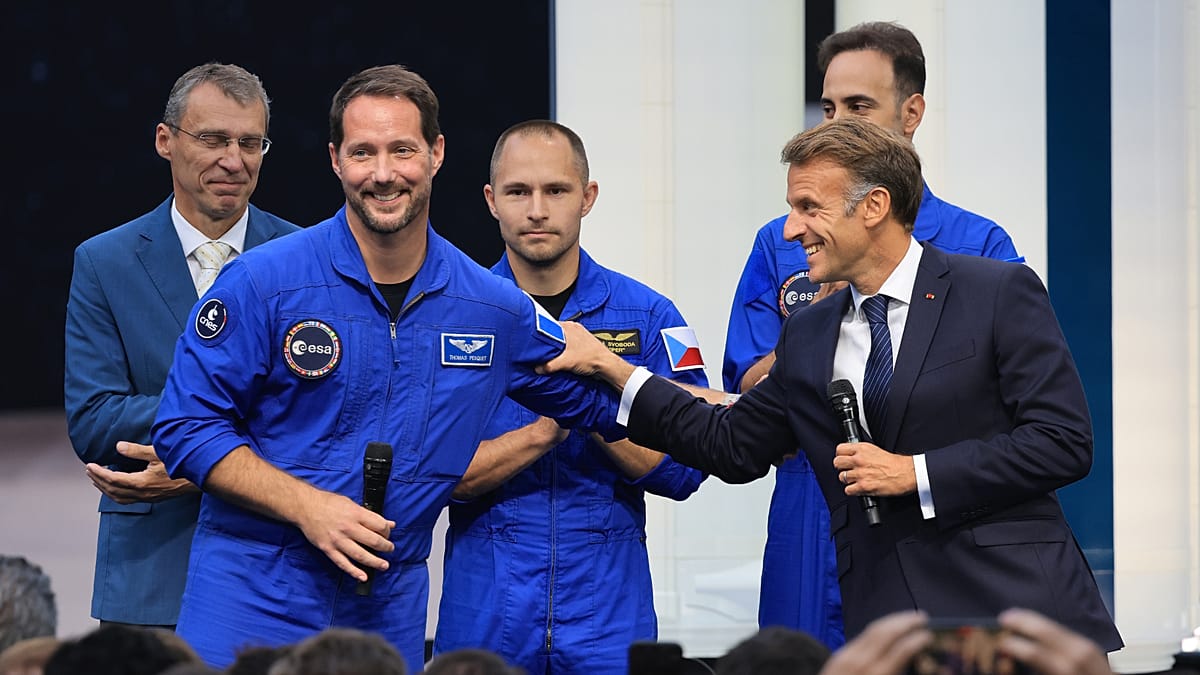
French astronaut Thomas Pesquet has a critical message for Europe: it’s time to “maximise the scientific return” from the International Space Station (ISS) before it’s too late. With the ISS scheduled to retire and be deorbited by 2030 due to aging hardware and maintenance challenges, the clock is ticking. Pesquet emphasized the urgency of this matter during an interview with Euronews, stating that Europe, and particularly France, must act swiftly.
The backdrop of this conversation is the International Space Summit, co-hosted by France and Germany, where leaders from the space industry, state officials, and astronauts gathered to advocate for greater European sovereignty in space. Currently, the European Space Agency (ESA) lacks its own operational crewed spacecraft or launcher, which puts them at a disadvantage on the global stage. Pesquet believes that pushing for greater autonomy in space is a positive step, especially as international partnerships have become increasingly difficult.
The ongoing war in Ukraine and a conscious decision to reduce reliance on the US in space exploration add layers of complexity to this situation. Pesquet pointed out that, looking ahead, the future might see a shift from large stations like the ISS to smaller, localized stations, potentially including European, American, Indian, and Chinese stations. “We’re preparing for a rapidly evolving world,” he noted, hinting at a new era of space exploration.
Moreover, ESA has significantly increased its funding with a historic €22.3 billion budget approved for 2026-2028, which includes a whopping €35 billion earmarked for security and defense in space. Géraldine Naja, ESA’s director of space transportation, highlighted that Europe has finally recognized the need to step up its game, stating, “If you compare GNP and the number of people, we are spending six times less than the US.”
In this environment, companies like Isar Aerospace are also making strides, developing rockets with the help of ESA programs aimed at supporting new ventures. The stakes are high, and as Pesquet points out, the time for action is now. With the ISS’s retirement looming, the European space community must rally together to ensure that they extract the maximum scientific benefits from this invaluable platform.
So, what does the future hold for European space endeavors? Will they capitalize on the remaining time with the ISS, or will they fall behind as the world moves forward? Only time will tell…
Kaynak: Orijinal Haber