Thomas Pesquet: Europe Must Seize Scientific Opportunities Before ISS Ends!

French astronaut Thomas Pesquet has a critical message for Europe: it’s time to “maximise the scientific return” from the International Space Station

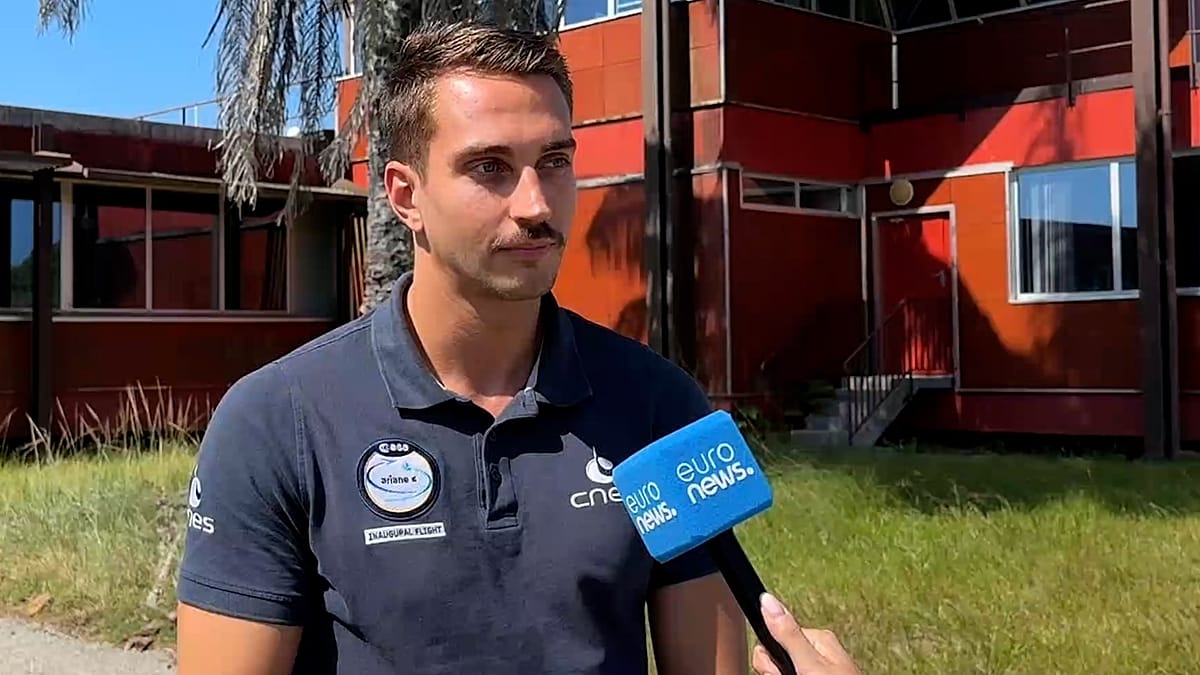
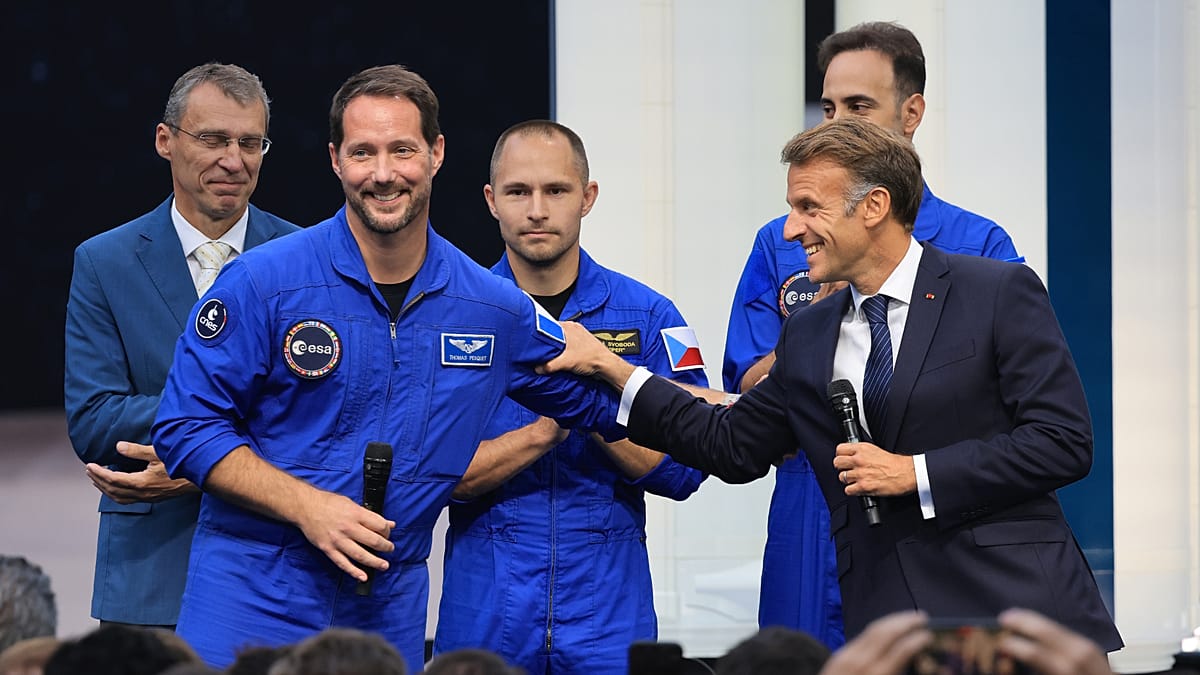
French astronaut Thomas Pesquet has a critical message for Europe: it’s time to “maximise the scientific return” from the International Space Station (ISS) before it’s too late. With the ISS scheduled to retire and be deorbited by 2030 due to aging hardware and maintenance challenges, the clock is ticking. Pesquet emphasized the urgency of this matter during an interview with Euronews, stating that Europe, and particularly France, must act swiftly.

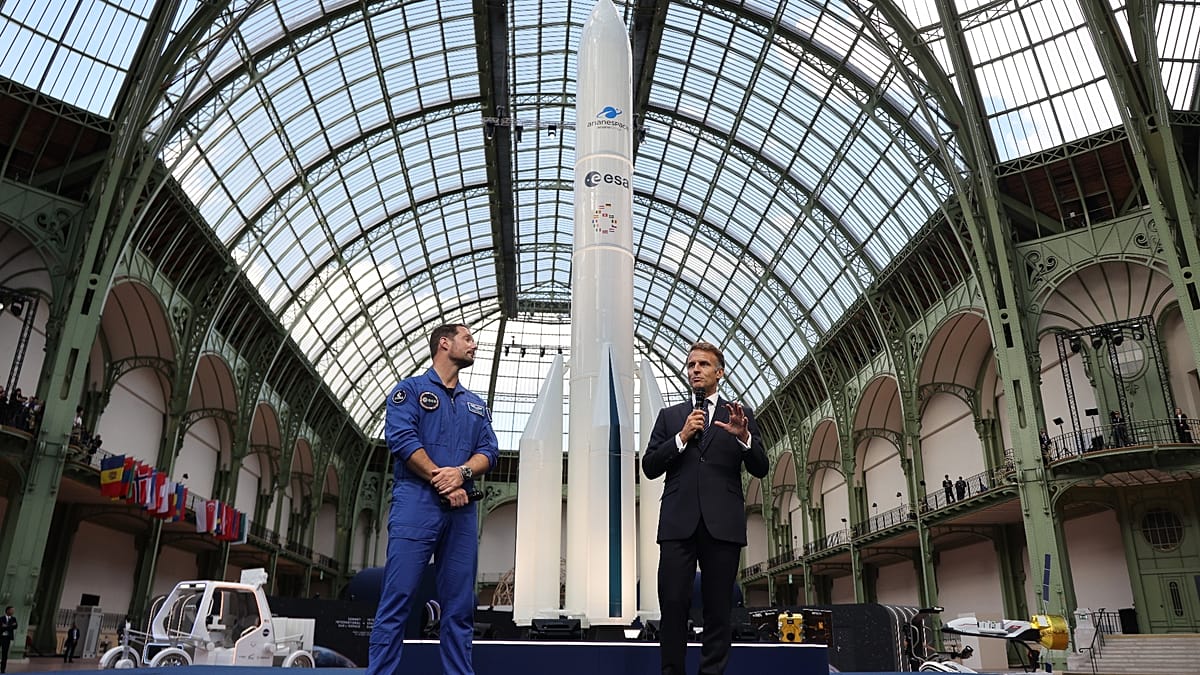
The backdrop of this conversation is the International Space Summit, co-hosted by France and Germany, where leaders from the space industry, state officials, and astronauts gathered to advocate for greater European sovereignty in space. Currently, the European Space Agency (ESA) lacks its own operational crewed spacecraft or launcher, which puts them at a disadvantage on the global stage. Pesquet believes that pushing for greater autonomy in space is a positive step, especially as international partnerships have become increasingly difficult.

The ongoing war in Ukraine and a conscious decision to reduce reliance on the US in space exploration add layers of complexity to this situation. Pesquet pointed out that, looking ahead, the future might see a shift from large stations like the ISS to smaller, localized stations, potentially including European, American, Indian, and Chinese stations. “We’re preparing for a rapidly evolving world,” he noted, hinting at a new era of space exploration.

Moreover, ESA has significantly increased its funding with a historic €22.3 billion budget approved for 2026-2028, which includes a whopping €35 billion earmarked for security and defense in space. Géraldine Naja, ESA’s director of space transportation, highlighted that Europe has finally recognized the need to step up its game, stating, “If you compare GNP and the number of people, we are spending six times less than the US.”

In this environment, companies like Isar Aerospace are also making strides, developing rockets with the help of ESA programs aimed at supporting new ventures. The stakes are high, and as Pesquet points out, the time for action is now. With the ISS’s retirement looming, the European space community must rally together to ensure that they extract the maximum scientific benefits from this invaluable platform.

So, what does the future hold for European space endeavors? Will they capitalize on the remaining time with the ISS, or will they fall behind as the world moves forward? Only time will tell…

Kaynak: Orijinal Haber
Macron and von der Leyen Urge Stronger European Space Industry Amid Security Threats

French President Emmanuel Macron and European Commission President Ursula von der Leyen have made a strong call for Europe to ramp up its space indus

French President Emmanuel Macron and European Commission President Ursula von der Leyen have made a strong call for Europe to ramp up its space industry during the ongoing international space summit, held at the Grand Palais in Paris, co-hosted by France and Germany. On the second day of the summit, Macron didn’t hold back, labeling Europe’s space sector as “fragile” and stressing the urgent need to strengthen its capabilities. He highlighted that “outer space remains the only major global commons that is not subject to regulations that match the stakes,” emphasizing that “shared governance is necessary to address these challenges.”

As the summit progresses, Macron announced that over 51 deals are expected to be signed, with investments reaching a staggering €20 billion. He laid out ambitious plans for the future, saying, “In two years’ time, the first European lunar lander, Argonaut, will land on the Moon’s surface.” This bold statement underscores Europe’s intentions to assert its presence in space, particularly against the backdrop of ongoing geopolitical tensions, including the war in Ukraine. He pointed out that Europe is working to reduce its historical dependence on the US in the space sector.

Interestingly, before the summit kicked off, reports surfaced that several US companies had pulled out of the event, allegedly due to pressure from Washington regarding support for “EU policy positions.” A spokesperson for France noted that it’s hard not to link this withdrawal to the rumors circulating in the press. This is a clear indication of the shifting dynamics in international space cooperation, as Europe seeks to carve out its own path in the cosmos.

Historically, Europe has invested only 0.07% of its GDP into space programs, while the US has poured in 0.24%. However, 2025 is set to be a transformative year, as the European Space Agency (ESA) has approved a record-breaking €22.3 billion budget for its three-year funding cycle from 2026 to 2028, including €35 billion earmarked for security and defense in space, as von der Leyen pointed out. She also highlighted the importance of the IRIS² project, which aims to deploy over 350 satellites to bolster Europe’s capabilities in space.

During the summit, Macron, along with Joseph Aschbacher, the Director of the European Space Agency, connected live with astronaut Sophie Adenot, who is currently on a nine-month mission aboard the International Space Station (ISS) as part of the εpsilon mission. This connection showcased the human element of space exploration and the collaborative spirit of Europe’s aspirations in this frontier.

So, as we look ahead, the question remains: can Europe truly unite and build a robust space industry capable of standing on its own? Or will old dependencies and geopolitical pressures continue to shape its journey? The developments at this summit will undoubtedly be pivotal in answering these questions.

Kaynak: Orijinal Haber

France and Germany Lead Space Summit Amid US Firms’ Withdrawals

Astronauts, heads of state, and key players from the space industry gathered in Paris on Wednesday for a significant international space summit. Co-

Astronauts, heads of state, and key players from the space industry gathered in Paris on Wednesday for a significant international space summit. Co-hosted by France and Germany, the event took place at the iconic Grand Palais. During the afternoon, French President Emmanuel Macron made a bold statement, revealing that over 50 projects are anticipated to be signed during this two-day gathering. He emphasized the critical need to “strengthen European space research” and foster a unified ambition among European nations, aiming to carve out a “shared vision of Europe’s place among global space powers by 2035.”

However, not everything went smoothly. Just ahead of the summit, multiple US companies reportedly pulled out, allegedly due to pressure from Washington regarding support for “EU policy positions.” This move raised eyebrows among attendees, with some insiders linking it to the growing rumors of pressure from the US government. Adding to the drama, German Chancellor Friedrich Merz announced on Friday that he wouldn’t be attending because of domestic commitments, leaving Defense Minister Boris Pistorius and Space Minister Dorothee Bär to represent Germany instead.

Behind the curtains, tensions lingered between France and Germany regarding various space and defense projects. The Future Combat Air System (FCAS) project, for instance, was abandoned back in June 2026 after years of disagreements. Macron has consistently highlighted the importance of Europe securing independent access to space, a sentiment echoed by Merz, who described the summit’s launch as “the beginning of a new era.”

Meanwhile, the absence of major US firms was palpable. A White House official reportedly warned these companies that their presence could be seen as an endorsement of EU policies, leading to their withdrawal, as reported by Politico. Hermann Ludwig Moeller, Director of the European Space Policy Institute, spoke to Euronews about France’s role as a “driving force” in the European space sector, providing “strong political support” and highlighting the increasing relevance of space. He noted that space technologies, such as satellite navigation, play crucial roles in both civilian and military contexts.

The ongoing conflict in Ukraine has further underscored the strategic importance of space services. Kyiv’s reliance on Elon Musk’s Starlink for resilient internet connectivity during the war has made this clear—demonstrating how vital satellite networks can be when ground infrastructure is compromised. This situation has accelerated Europe’s efforts to develop its own independent satellite networks, including the secure internet constellation known as IRIS².

As the summit progresses, all eyes will be on the agreements that emerge and how they may reshape both European collaboration in space and the continent’s standing as a global power in the coming years. Will these discussions lead to meaningful advancements, or will the rift between the US and Europe continue to widen? Only time will tell.

Kaynak: Orijinal Haber

Germany’s Spectrum Rocket Achieves Historic First Launch from Continental Europe!

The Spectrum launcher, developed by the German company Isar Aerospace, has made history by successfully lifting off from the Andøya spaceport in No

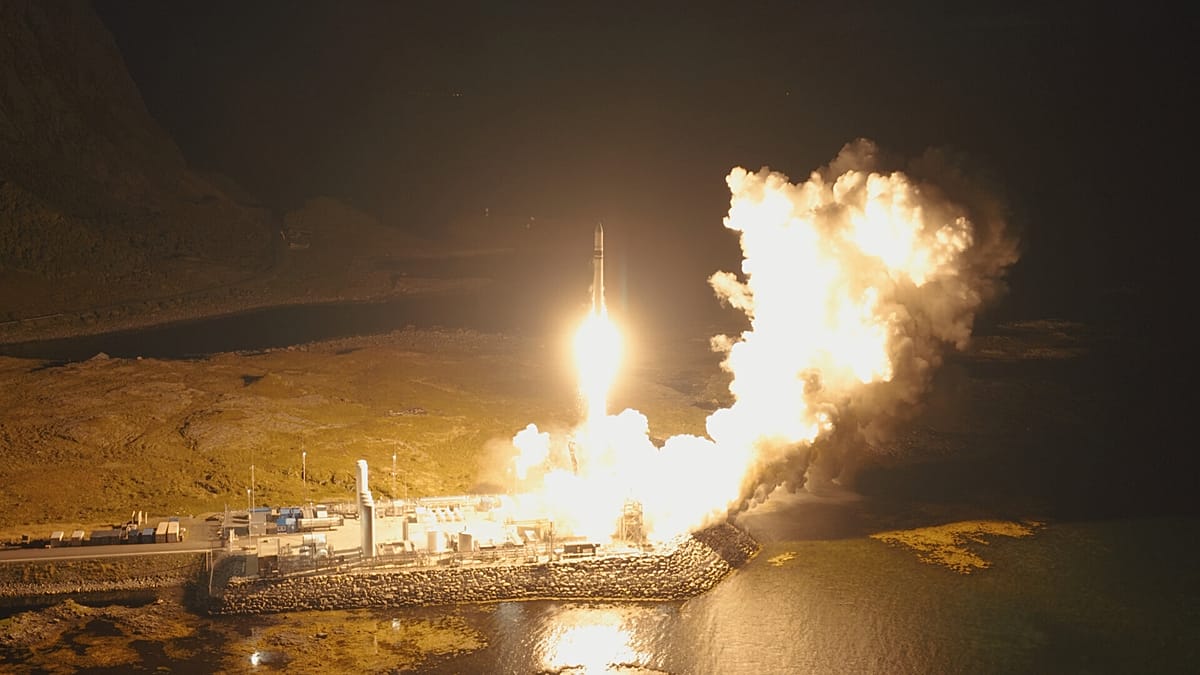
The Spectrum launcher, developed by the German company Isar Aerospace, has made history by successfully lifting off from the Andøya spaceport in Norway and placing its payload into low Earth orbit. This significant achievement marks the rocket’s second flight, with the first attempt in 2025 ending in disappointment as it only cleared the launch pad for a mere 30 seconds before crashing into the sea. Now, the Spectrum stands tall at 28 meters and measures 2 meters in diameter, powered by a total of ten engines—nine on the first stage and one on the second. It’s designed to carry payloads of up to 1,000 kilograms to low Earth orbit (LEO).

Unlike the first flight that carried no passengers, this mission—aptly named “Onward and Upward”—included six commercial and educational payloads. Among these were several CubeSats and an experiment aimed at testing new technologies in space, providing European students with practical, hands-on experience. The Director General of the European Space Agency, Josef Aschbacher, hailed the launch as historic, noting that it is the first time a European competitor in the launcher sector has successfully reached orbit. He emphasized that Isar Aerospace, founded just eight years ago, has taken a significant step towards fostering a more diverse and autonomous European space sector.

This mission was backed by ESA’s Boost! programme, which finances commercial space transport initiatives. Isar Aerospace had previously received support through the agency’s Business Incubation Centre and came out on top in the first Microlauncher Competition organized by the German Space Agency (DLR), a contest that helped determine the selection of the payloads for this flight. In 2025, Isar Aerospace was chosen, alongside other companies, to participate in the European Launcher Challenge, a program that requires providers to achieve an orbital launch before 2027. With this successful flight, the company has become the first to hit that crucial milestone of the program.

Géraldine Naja, ESA’s Director of Space Transportation, highlighted that this is the first European company to reach orbit with its own launch vehicle. She congratulated the teams involved and hinted at the expectation of seeing more launches from Andøya in the near future. Isar Aerospace’s success comes at a time when Europe’s microlauncher ecosystem is gaining strong momentum, with companies like Spain’s PLD Space also beginning to secure contracts under the same European Launcher Challenge.

In a significant move to bolster this momentum, at the end of August, ESA signed a contract worth 158.9 million euros with the Alicante-based company to increase the launch rate of its MIURA 5 rocket. This initiative aims to reduce Europe’s reliance on foreign launchers for putting satellites into orbit. It’s an exciting time for the European space industry, and many are left wondering: what’s next on the horizon for these ambitious projects?

Kaynak: Orijinal Haber

The Unsung Heroes of Space Launches: Inside the Flight Safety Division

At Europe’s Spaceport in French Guiana, beneath the thunderous roar of rocket engines and the breathtaking visuals of liftoffs, a crucial yet often o

At Europe’s Spaceport in French Guiana, beneath the thunderous roar of rocket engines and the breathtaking visuals of liftoffs, a crucial yet often overlooked team is hard at work: the Flight Safety Division. This dedicated group operates quietly in the background, ensuring that every launch remains safe. Unless something goes awry, their efforts largely go unnoticed. But make no mistake, when the telemetry signals that the Ariane 6 has veered off its designated path and breached the safety corridor, there’s no hesitation—an automatic neutralisation command is issued.

This command initiates the rocket’s self-destruct mechanisms, ensuring a controlled disintegration over uninhabited ocean areas before it can become a danger. In the flight control room, there’s absolutely no room for uncertainty or improvisation. Just a few seconds of error can mean the difference between a successful mission abort and a catastrophic accident. The stakes couldn’t be higher. That’s precisely why the safety team participates in rigorous training, undergoing demanding weekly simulations that mirror real launcher failures in real time.

These simulations serve a dual purpose: they test the coordination of the personnel involved and ensure that operational certifications remain current. Each drill is a high-pressure scenario designed to cultivate automatic, precise, and coordinated responses to any emergency. It’s a tough job, but someone’s gotta do it, right?

You can bet these folks are on their toes, constantly honing their skills to maintain the highest safety standards. Every single detail counts, and the margin for error is razor-thin. They recreate critical launcher failures to prepare for the unexpected, making sure they can respond effectively when it matters most. It’s a life-and-death situation, and the team knows it.

As we get closer to launch day, the tension builds. Each exercise is more than just a drill; it’s a chance to save lives and protect the integrity of the mission. With each simulation, they inch closer to perfection, knowing that their work is vital to the future of space exploration.

So, as you watch that rocket soar into the sky, remember that behind the spectacle lies a dedicated group of professionals, working tirelessly to ensure safety. The next time you see a launch, think about the invisible hands guiding it, ready to act at a moment’s notice. Who knows what the future holds for these remarkable missions?

Kaynak: Orijinal Haber

Europe’s MTG-I2 Satellite Launch: A Game Changer for Weather Forecasting

The European Space Agency ESA has just hit a major milestone in the realm of Earth observation and meteorological science, and it couldn’t come at

The European Space Agency ESA has just hit a major milestone in the realm of Earth observation and meteorological science, and it couldn’t come at a better time given the climate crisis and increasing weather disasters. The recent launch of the MTG-I2, also known as the Meteosat Third Generation Imager-2, is set to revolutionize weather tracking and forecasting across Europe. This satellite is equipped with the Flexible Combined Imager, an advanced tool that will provide rapid-scan services, delivering high-resolution observations every 2.5 minutes. This quick refresh rate marks a significant shift in how we approach nowcasting, which is crucial for improving short-term weather forecasts and monitoring disasters like floods and wildfires more effectively.

But wait, it gets even better! This new tech allows for real-time tracking of atmospheric fronts, helping to anticipate severe storms or DANA events. And, it’s particularly focused on the Mediterranean region and North Africa—areas that are often hit hard by extreme weather. Plus, there’s the Lightning Imager onboard, a sensor that detects individual lightning strikes both day and night. Imagine being able to visualize lightning, winds, cloud dynamics, and greenhouse gases in a “weather cube”—a 3D representation that brings meteorological data to life!

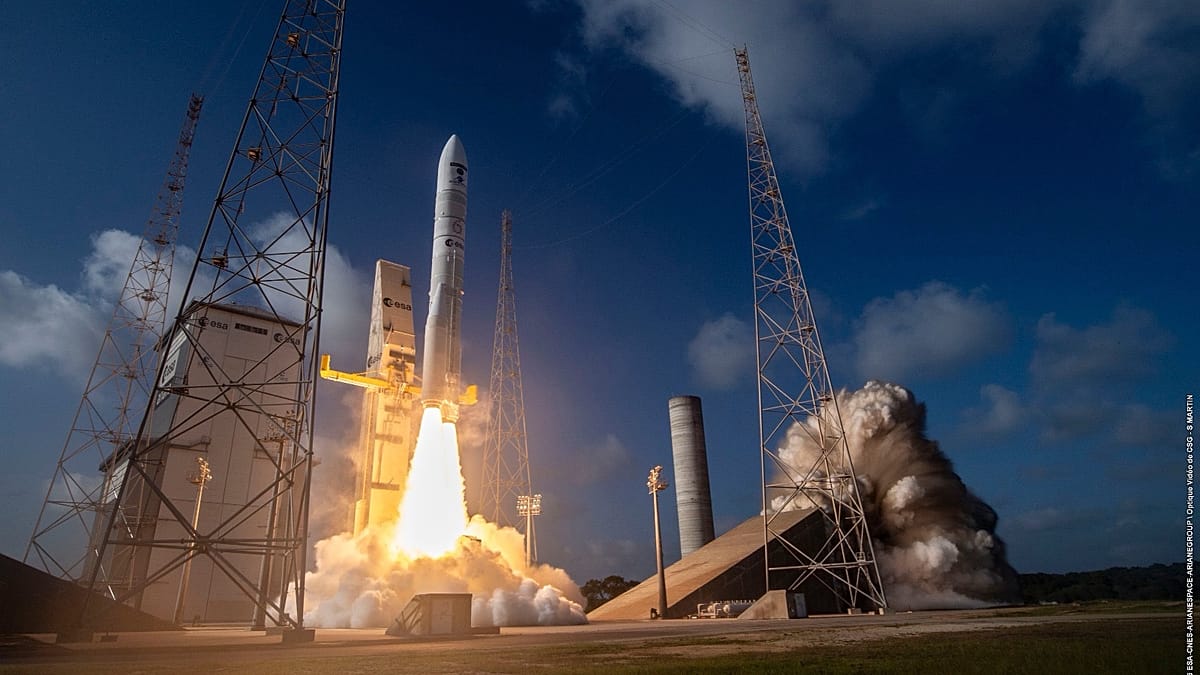
Now, let’s talk about the launch itself. This was the ninth mission for the Ariane 6 rocket, and it’s significant because it’s the first time this European heavy-lift rocket has successfully carried a satellite to a Geostationary Transfer Orbit (GTO). The rocket reached impressive heights using a setup that included two P120C solid-fuel boosters. After the satellite separated, communication with the spacecraft was established smoothly, and ground teams are now busy overseeing the deployment of solar panels and initiating the propulsion system to adjust its orbit. In fact, they’re fine-tuning its trajectory to reach the final geostationary orbit.

Once it’s aimed correctly towards Earth, the Launch and Early Orbit Phase (LEOP) will come to an end, paving the way for scientific calibration to kick off. The development of the MTG family was spearheaded by ESA in collaboration with a European industrial consortium led by Thales Alenia Space, with additional support from OHB System and Leonardo. Once the calibration phase wraps up, the responsibility for operating the satellites and distributing data to the international scientific community will shift to Eumetsat. This new fleet ensures that the observations started by the Meteosat Second Generation series, which operated between 2002 and 2015, will continue seamlessly.

Looking ahead, from 2033, we can expect to see a second family of MTG satellites launched in stages, ensuring that this critical service continues beyond 2040. So, what does this mean for the future of weather forecasting? Will we finally get the accurate predictions we need to prepare for Mother Nature’s surprises?

Kaynak: Orijinal Haber

Mission Accomplished: Sophie Adenot Successfully Installs ISS Antenna!

At 12:27 GMT, the mission kicked off, and just twenty minutes later, Sophie Adenot from the European Space Agency was back in the void of space surr

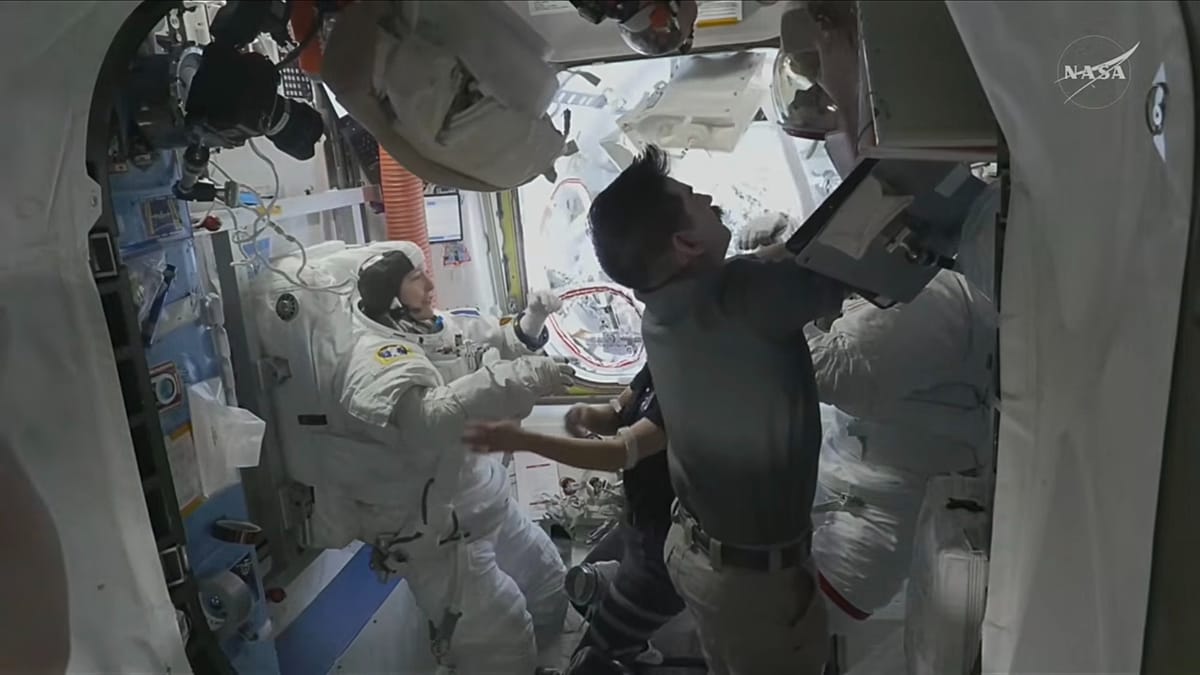
At 12:27 GMT, the mission kicked off, and just twenty minutes later, Sophie Adenot from the European Space Agency was back in the void of space surrounding the International Space Station (ISS). This time, she was not alone; NASA astronaut Anil Menon joined her, both astronauts secured on the base of the Canadarm2 robotic arm. They had already spent over six hours outside the ISS previously, just managing to detach the troublesome Space-to-Ground antenna, affectionately dubbed SGANT by NASA engineers. That day, they wrestled with some stubborn bolts and connectors and ran out of time to swap SGANT for a new antenna. So, this second spacewalk was all about finishing what they started.

This second outing lasted a solid 6 hours and 30 minutes. The duo successfully installed and connected the replacement antenna, which is crucial for communications between the ISS and NASA’s control center in Houston, especially for transmitting high-bandwidth data. This operation was a significant milestone, marking the 98th US spacewalk and the 283rd overall dedicated to the assembly, maintenance, or modernization of the ISS.

And let’s not forget, back in February, Sophie made headlines as the second French woman to journey into space aboard the US SpaceX Crew Dragon capsule. She followed in the footsteps of Claudie Haigneré, who flew in 1996 and again in 2001 on Soyuz rockets. Isn’t that something?

So, after all that hard work, the astronauts managed to tackle every challenge thrown their way. They fought bolts that didn’t want to budge and connectors that seemed to have a mind of their own, but they got it done! Talk about perseverance. The new antenna is now in place, ready to ensure that communication flows smoothly from the ISS back to Earth.

What’s next for these brave astronauts? Will there be more missions in the future? Keep your eyes peeled for updates because space exploration is always full of surprises…

Kaynak: Orijinal Haber

African Nations Surge into Space Race: Aiming for Independence from the West

African nations are stepping up their game in the global space race, and it’s not just a minor effort. Countries across the continent are launching

African nations are stepping up their game in the global space race, and it’s not just a minor effort. Countries across the continent are launching ambitious space programs, all while trying to break free from the usual dependencies on Western powers. The geopolitical rivalry between the US and China is heating things up, pushing these nations to carve out their own paths in the cosmos.

The Africa-EU Space Partnership Programme, a hefty initiative worth €100 million, is one of the key players in this transformation. It’s all about sharing infrastructure and data, and it’s expected to yield significant collaborations in areas like climate monitoring and agriculture. This is a game-changer, folks! European firms are eyeing opportunities in Africa’s burgeoning space ambitions, which is also a wake-up call for Europe to strengthen its diplomatic and geopolitical ties on the continent. As China and Russia ramp up their own partnerships, the need for Europe to engage more deeply is becoming increasingly evident.

But let’s not sugarcoat it; there are still some serious hurdles to jump over. Public budgets for space development in many African countries are way lower compared to the West. This means many of these programs depend heavily on external loans and funds tied to donor packages. It’s a tough spot for local startups too, struggling to find venture capital while juggling high operational costs. It’s like they’re running a marathon with weights on their backs, trying to keep up with the rest of the world.

A significant number of rockets still launch from foreign soil because there’s a shortage of local spaceports. On top of that, limited ground stations make it difficult to download and process real-time satellite data. And despite increasing investments in local talent, the brain drain issue and skills gaps are still persistent problems that could take years to resolve.

Just think about it: these nations are trying to build their space futures while dealing with all these challenges. It’s not easy, but the ambition is there, and the potential is enormous. Will these efforts pay off in the long run? Only time will tell, but one thing’s for sure – the countdown to an independent African space presence has begun…

Kaynak: Orijinal Haber

China’s Orbital Data Centres: A Wake-Up Call for Europe!

China is sounding the alarm—if the technological gap continues to widen, Europe could be left in the dust when it comes to computing its own space

China is sounding the alarm—if the technological gap continues to widen, Europe could be left in the dust when it comes to computing its own space data. We’re talking about crucial orbital information that could slip through Europe’s fingers, forcing the continent to rely on third-party services. Right now, European efforts are on the table but they’re limited in scale. The EU-funded project ASCEND, which kicked off under Horizon Europe in 2023, highlights the potential of orbital data centres to bolster European digital sovereignty. However, is that enough?

The European Space Agency (ESA) is doing its part, collaborating with UK firm Open Cosmos on the Φ-sat-2 satellite that’s equipped with AI for Earth observation. Meanwhile, French startup ALATYR has ambitious plans to manufacture robotically assembled orbital data centres. But let’s be real—the pace of development in Europe is starting to lag behind the rapid strides being made in China and the US.

China isn’t just dabbling in space-based computing; it’s treating it as a national strategic priority. This has led to a flurry of state-backed initiatives and policies aimed at making it happen. The state-owned China Aerospace Science and Technology Corporation (CASC) is at the forefront of this effort, formalizing orbital data centres as part of a new strategy alongside the Beijing Municipal Government and the Zhongguancun Science Park. They’ve created a framework that combines top-down policy creation with private and state-owned industry adaptation, and they’ve thrown in municipal and provincial government incentives as well. That’s a recipe for success if I’ve ever seen one!

High-profile prototypes are already making waves. The Three-Body Constellation launched by ADAspace in May 2025 is the first operational example of space-based computing, and it’s just the tip of the iceberg. In partnership with Shanghai Jiao Tong University, ADAspace is pushing the boundaries further. The municipal government is even getting involved, issuing calls for project proposals for orbital data centres as recently as June 2026. They’re also bringing rival companies, like GalaxySpace and Landspace, together to form a space computing innovation center. Talk about collaboration!

Despite the excitement, there’s a bit of a cloud hanging over all this. Reports from state broadcaster CGTN suggest plans for building gigawatt-level space digital infrastructure that combines cloud, edge, and terminal technologies, but the official policy documents are nowhere to be found. Euronews couldn’t verify these claims independently, which leaves us all wondering what’s really going on behind the scenes.

The brief suggests that the European Union needs to step up its game. Coordinated political guidance, investment support, and a solid regulatory framework for orbital data centre development are crucial to keeping pace. A flagship initiative is recommended to be integrated into the Horizon Europe Moonshot Projects for the 2028-2034 Multiannual Financial Framework. Plus, it seems like a good idea for European space actors to start convening with their international counterparts to discuss standards and data sovereignty.

So, what does the future hold for Europe? Will it rise to the challenge, or will it continue to watch from the sidelines as China accelerates ahead? Only time will tell…

Kaynak: Orijinal Haber
Revolutionary Spanish Coating Shields Satellites from Catastrophic Failures!

The multipactor effect has been a long-standing concern for the European Space Agency (ESA) for over 40 years. This phenomenon, an avalanche of elect

The multipactor effect has been a long-standing concern for the European Space Agency (ESA) for over 40 years. This phenomenon, an avalanche of electrons occurring in a vacuum inside components like antennas or waveguides, can lead to irreversible damage to satellite equipment. Historically, the go-to solution has been to coat these components with Alodine, a chromium-based compound that, while effective, poses health risks for handlers and is harmful to the environment. European authorities have been pushing for a ban on this substance, but no alternative has matched its technical performance—until now.

Lidia Martínez, a researcher at the Institute of Materials Science of Madrid (ICMM), highlights the need for a substitute that emits fewer secondary electrons, which are the culprits that trigger the chain reaction leading to multipactor failures. Past attempts have primarily focused on micrometric surface modifications, but they fell short of meeting the rigorous demands of the space industry. So, the ICMM team decided to change the game entirely. Instead of sticking to micrometric structures, they developed a rough surface on the nanometric scale—think billionths of a meter!

Using an ultra-high-vacuum technique called gas aggregation source, they produced gold and silver nanoparticles, each measuring between four and eight nanometers. The outcome? Porous, metallic, and chemically clean films that, according to ESA-accredited laboratory tests, reduce secondary electron emissions by approximately 30% compared to Alodine. Remarkably, the so-called cut-off energy threshold—the point at which the material begins to generate more electrons than it receives—improved by up to 300% in some configurations.

But wait, there’s more! The coatings underwent six-month aging tests and thermal treatments at 150°C, mimicking the conditions a satellite faces when basking in the Sun. While the performance did decline slightly over time, it still outperformed freshly applied Alodine. This groundbreaking technology is already covered by a joint European patent application filed with the European Patent Office in July 2025. A spin-off called Ostine, created by CSIC, is set to commercialize this coating, targeting the aerospace sector as its main clientele.

Despite the promising results, Martínez remains cautious about the timeline. Bringing a new coating into actual use in space typically demands around a decade of rigorous testing and validation. The ESA has expressed satisfaction with the proposed solution, but there are still several hurdles to clear before these revolutionary materials can soar alongside satellites.

Bakalım bundan sonra ne olacak? Gelişmeleri takip ediyoruz!

Kaynak: Orijinal Haber