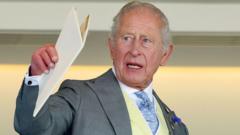

King Charles has made headlines by revealing a staggering £12.9 million tax bill, a first for a British monarch, shaking things up in the royal financial world. But hold on, this isn’t just any tax payment; it comes with a whole lot of unusual twists. This announcement coincided with the Royal Household’s annual financial report, which has left many scratching their heads about transparency and the true nature of royal finances.
Now, the document unveiled by the Royal Household is supposed to shed light on how the King’s wealth is managed, but it leaves us with more questions than answers. For instance, it does not clarify what percentage of the £12.9 million tax bill comes from the income individuals and businesses are legally obligated to pay. You see, there’s a fine line between voluntary payments and taxes, and that’s where things get murky…
Let’s talk about the Privy Purse, a key player in the King’s financial game. This source of private income primarily comes from the Duchy of Lancaster, a vast estate owned by the reigning monarch, filled with valuable land, historic castles, and yes, even quarries. The financial report states that the Privy Purse raked in £25.2 million from the Duchy of Lancaster for the year ending on March 31. But here’s the kicker: this amount doesn’t even cover the entire tax bill, which might include various other investment incomes and trading profits. It’s almost like a royal financial jigsaw puzzle, isn’t it?
What’s more, the report leaves out a crucial detail: how much of the Privy Purse income the King personally spends versus what goes towards official royal duties. Why does this matter? Well, any income spent personally is what the King pays tax on voluntarily. This means he can deduct expenses related to royal duties from his tax bill, making it quite advantageous for him. And let’s not forget about the Sovereign Grant, which is a pot of money from the Treasury used to cover official duties—yup, that’s tax-free too!
It’s a bit like how freelancers manage their expenses, but the King has two tax-free methods to fund his royal obligations. Can you imagine? What counts as “official duties” for him is also on a whole different level compared to what a regular person can claim. For instance, the Sovereign Grant can pay for the staff and operational costs of the monarchy, which might seem like a pretty sweet deal.
While the royal finances can seem complicated, the underlying system is meant to ensure the monarch serves with independence and accountability—at least that’s what they say. But with such high amounts and unclear details, one has to wonder: how transparent are the royals really being about their money?
In the end, the royal household is facing a budget cut, yet the question lingers: will anything substantial actually change? And as King Charles steps into this new spotlight, becoming the first monarch to reveal a tax bill, will this set a precedent for future royals? Only time will tell…
Kaynak: Orijinal Haber