Trump Dismisses AI Warnings Amid Rising Concerns Over Technology Risks

President Trump has downplayed the warnings surrounding the risks of artificial intelligence, suggesting that the concerns are being raised by “negat

President Trump has downplayed the warnings surrounding the risks of artificial intelligence, suggesting that the concerns are being raised by “negative forces” that shouldn’t be bringing them up. He stated during a recent address that “you have a lot of very negative forces that are bringing it up” and emphasized that many of the feared scenarios simply “won’t happen.” However, this assertion comes at a time when the AI landscape is rapidly evolving, with experts expressing genuine fears about the potential dangers of the technology.

On the same day, AI researcher Jacob Coxon, who recently resigned from Anthropic, shared his concerns with the BBC, stating that the team developing these systems felt “genuinely frightened” about the risks involved. The reality is that AI tools have already been exploited in cyber-attacks, with the UK’s Mythos AI creating fake human profiles to deceive individuals and gain access to sensitive services. This raises serious questions about the implications of AI technology and its misuse.

The Trump administration has argued the necessity of maintaining the United States’ dominance in global tech as a matter of national security. Yet, they conceded the importance of being vigilant regarding the risks posed by advancing technologies. This past weekend saw a gathering of major AI executives in Washington, where lawmakers faced increasing pressure to address the potential hazards associated with rapid AI developments.

On Sunday, Speaker Mike Johnson, the leading Republican in the House, called for caution against hastily rushing into AI regulations during an appearance on CNN. He warned that such actions could “smother American innovation,” emphasizing the need for a balanced and steady approach. Meanwhile, tech investor David Sacks, who is associated with Trump, voiced his opinions on social media, urging the industry to “stop pretending you need anyone else’s permission.”

Despite differing views, there appears to be some bipartisan consensus on the necessity of regulating AI. In July, a coalition of House Democrats and Republicans introduced the Frontier Act, a bipartisan initiative aimed at establishing a national oversight framework for AI. Representative Lori Trahan, a Massachusetts Democrat and co-author of the bill, reiterated the importance of addressing the concerns raised by the ex-Anthropic researcher, who highlighted the fear for humanity’s future.

As discussions about the risks of AI continue to gain traction, many in Silicon Valley seem to downplay the dramatic warnings from insiders. The debate surrounding the regulation of artificial intelligence is heating up, and it remains to be seen how lawmakers will respond to the growing concerns of both industry experts and the general public. Will they take decisive action to ensure the safe development of this powerful technology, or will they continue to ignore the warnings?

Kaynak: Orijinal Haber
Trump’ın $5,000’lık Teklifi: Ekonomik Miras mı, Yoksa Borç Yükü mü?

The US president has promised to give every adult citizen a $5,000 payment if Republicans retain control of both the House of Representatives and the

The US president has promised to give every adult citizen a $5,000 payment if Republicans retain control of both the House of Representatives and the Senate. This proposal, dubbed the “Trump dividend”, could cost a staggering $1.2 trillion, surpassing the Pentagon’s entire 2026 budget request. “If the Republicans win, you win with us and you get $5,000,” Trump declared at the Republican midterm convention in Dallas, as his party grapples with unfavorable polling against the Democrats. He likened the payments to dividends paid to shareholders, emphasizing “our tremendous strength and success economically.”

However, not long after Trump’s announcement, Vice President JD Vance tried to dial down the excitement by suggesting that wealthy Americans would not be eligible for these payments. According to the latest data from the US Census Bureau, there are about 240 million adult citizens in the country, with 174 million registered voters. This means that giving every adult citizen $5,000 could potentially cost around $1.2 trillion. That’s about $220 billion more than the Pentagon’s proposed budget of $961 billion for 2026.

If the payments were limited to registered voters, the cost would drop to around $870 billion. Just think about it: a $5,000 check would give each adult more than what they received through the two rounds of direct federal payments during Trump’s first term. The average US household spending was reported to be $78,535 in 2024, or about $6,545 a month. So, if two adults living together both received $5,000, their total of $10,000 would cover nearly 11 months of average food spending or even about 18 months of grocery bills.

Housing is a significant burden for many, making up 33.4% of the average household budget. In 2024, households spent $26,266 on housing, which would be about $27,960 by July 2026 prices. So, those two $5,000 payments would only cover just over four months of the average housing costs. And it doesn’t stop there; combining these payments could also cover around eight-and-a-half months of average transport expenses or even 18 months of healthcare costs. It’s a staggering amount that could theoretically cover nearly six years of education costs, though this is based on an average across all households, including those with minimal education expenses.

Trump’s proposal comes at a time when the national debt has just crossed the $40 trillion mark for the first time, and the country is facing an annual budget deficit nearing $1.8 trillion, with inflation still a pressing issue. Marc Goldwein, senior policy director at the Committee for a Responsible Federal Budget, stated, “The idea that we’ve had fiscal success is backwards and bordering on laughable. We don’t have surpluses to give away.”

The rising government borrowing costs are adding fuel to the fire. The yield on the 10-year Treasury note recently shot above 4.85%, the highest in nearly three years. This uptick can make mortgages and business loans pricier, slow economic growth, and weigh heavily on stock prices. With the government already deep in a deficit, how these proposed payments would be financed remains a mystery. Vance hinted that US tariff revenue could be a potential source of funding, but even then, customs duties expected to total about $406 billion in the fiscal year 2026 would only cover a fraction of the payments – around a third of the estimated $1.18 trillion cost.

Even if the payments were limited to the 174 million registered voters, it would still cost around $870 billion, which exceeds the projected annual customs revenue by more than double. Earlier this year, Trump had proposed a $2,000 dividend and claimed he didn’t need congressional approval to implement it. Last year, he issued a $1,776 check to military members, calling it a “warrior dividend.”

Republican Senator Bernie Moreno of Ohio tweeted on X, “I will get a bill ready so that we can get the Trump Dividend passed immediately after the November 3rd election. Because Republicans and America will win!” But let’s be real, Congress would need to give a thumbs up to these proposed payments. According to New Mexico-based lawyer John Day, Trump’s proposal would be legal because it would be available to everyone, irrespective of how they voted—or even if they voted at all. “This is a campaign promise,” Day explained. “It’s not a payment to individuals to try to get them to vote in a particular way.”

As it stands, Republicans are on the defensive, trying to safeguard their slim majority in the House against significant political headwinds. Trump’s popularity is waning, and recent polls indicate that a majority of Americans disapprove of the war in Iran. Even the Senate, which once seemed secure for Republicans, is now up for grabs.

Bakalım, bu durum nasıl bir sonuç doğuracak? Gelişmeleri takip ediyoruz…

Kaynak: Orijinal Haber

Trump’s Bold Promise: $5,000 for Every American Adult if Republicans Win Midterms!

In a striking announcement, Donald Trump has declared that if the Republicans seize control of both the House of Representatives and the Senate in th

In a striking announcement, Donald Trump has declared that if the Republicans seize control of both the House of Representatives and the Senate in the upcoming midterm elections, every adult American could receive a whopping $5,000. This ambitious proposal was made during a speech at the Republican convention held in Dallas, Texas, where he addressed a crowd eager for change and financial relief.

Now, let’s talk numbers. This plan has raised eyebrows not just for its generosity but for its staggering price tag that could exceed a trillion dollars. Trump, ever the showman, emphasized that he doesn’t want people heading to Canada to spend their potential payouts. “We want you spending it here,” he proclaimed, leaving many wondering how such a monumental sum would be funded and monitored.

It’s not the first time we’ve heard Trump make these kinds of promises. Back in the day, he proposed $2,000 checks, claiming they would be financed through tariff revenues. So, is this new $5,000 offer a clever tax cut in disguise? An election law expert shared insights with the New York Times, indicating that such payouts might skirt legal boundaries, adding another layer of complexity to the already controversial proposition.

The speech, laden with his typical bravado, hit at the core of the current political climate in the U.S. with a focus on the impact on everyday Americans. “If we win, you win,” he declared, trying to rally support among his base. The ramifications of this promise could be profound, especially given the ongoing discussions about economic recovery and social spending.

Now, here’s the kicker—it’s still unclear how this proposed spending would actually be managed. Would there be safeguards in place? Who would oversee the distribution? The questions are endless, and as the midterms approach, the electorate will surely keep a close eye on how Trump’s promises translate into reality, if at all.

So, as we gear up for the elections, what do you think? Will this bold promise resonate with voters or fall flat like so many before? Only time will tell…

Kaynak: Orijinal Haber

Trump Demands Interest Rate Cuts Amid Job Market Strength

Donald Trump has called for interest rates to be cut later this month, arguing that higher rates put the U.S. at a “very unfair disadvantage.” The pr

Donald Trump has called for interest rates to be cut later this month, arguing that higher rates put the U.S. at a “very unfair disadvantage.” The president emphasized that the U.S. should maintain the lowest interest rate of any country in the world. According to the latest data, the Federal Reserve’s target rate is set at 2% annually, even as prices have surged by 3.4% over the past year. The next decision on interest rates is scheduled for September 15-16. In July, rates were kept steady between 3.5% and 3.75% for the fifth consecutive time, but inflation concerns are still looming large due to the ongoing U.S.-Iran conflict, which has driven global oil prices up.

Just this past Friday, diesel prices in the U.S. soared to an all-time high, hitting $5.85 per gallon on average, a stark contrast to $3.71 just a year ago. And while the cost of living continues to rise, wages are also on the upswing. For instance, average hourly earnings for all employees reached $37.75 in August, marking a 3.1% increase. Stephen Brown, the chief North America economist at Capital Economics, pointed out that the robustness of the jobs market suggests that the inflation figures due next week will only need to be moderately above the Fed’s expectations to trigger a rate hike.

Interestingly enough, the earlier weaker job figures released during the summer were revised upward by the U.S. Bureau of Labor Statistics, indicating a labor market that is stronger than previously thought. Instead of the economy losing 23,000 jobs in July, subsequent estimates revealed that around 44,000 jobs were actually created. Still, the U.S. unemployment rate remained steady at 4.1% last month, with about seven million people still out of work. Both of these measures have not changed much over the course of the year.

In response to the stronger job figures, which have led to increased expectations for an interest rate hike, U.S. stock market indexes took a dip on Friday. Trump labeled this market reaction as “crazy,” expressing frustration over the prevailing notion that if the economy is doing well, you must “KILL IT” due to the “fear” of inflation. It’s a puzzling situation, and many are left wondering what the future holds…

Kaynak: Orijinal Haber

Trump Urges Interest Rate Cuts Amid Rising Job Figures and Inflation Fears

Donald Trump has called for interest rates to be cut later this month, stating that the current higher rates put the US at a “very unfair disadvantag

Donald Trump has called for interest rates to be cut later this month, stating that the current higher rates put the US at a “very unfair disadvantage.” The president is emphasizing the need for a more competitive financial environment, pointing out that the US should have the lowest interest rate of any country in the world. As it stands, inflation is hovering around the Federal Reserve’s 2% target, with prices increasing by 3.4% over the past year.

The next interest rate decision is set for September 15-16. Rates have remained unchanged between 3.5% and 3.75% for five consecutive months, but the ongoing conflict between the US and Iran has led to rising concerns over inflation. Just this past Friday, US diesel prices soared to an average of $5.85 a gallon, a staggering increase from $3.71 a year ago.

Despite these inflationary pressures, there seems to be a silver lining—wages are also on the rise. In August, average hourly earnings for all employees hit $37.75, marking a 3.1% increase. Stephen Brown, chief North America economist at Capital Economics, noted that the robust job market might mean that the inflation figures released next week only need to be moderately above expectations for the Fed.

The latest data shows that weaker job figures released earlier this summer were revised upwards by the US Bureau of Labor Statistics, revealing a stronger labor market than initially thought. Instead of a loss of 23,000 jobs in July, it turns out that around 44,000 jobs were actually created in subsequent estimates. Nevertheless, the US unemployment rate held steady at 4.1% last month, with about seven million people still out of work. Both the job creation and unemployment measures have shown minimal changes over the past year.

In reaction to the stronger job figures that have raised expectations for an interest rate hike, US stock market indexes dipped on Friday. Trump labeled this stock market reaction as “crazy,” expressing frustration over the prevailing economic mindset. “We’re living under the reality that if things are good, you’ve got to ‘KILL IT’ because of a fear of inflation,” he commented.

As we look ahead, one can’t help but wonder what these developments mean for the average American worker and the economy at large. Will the Fed heed Trump’s call for interest rate cuts, or will they stick to their current strategy amidst inflation fears?

Kaynak: Orijinal Haber

Trump Makes History as First Sitting President on a Coin!

American money now carries the current US president’s face. In a groundbreaking move, the US Mint announced on Thursday the release of a new $1 coin

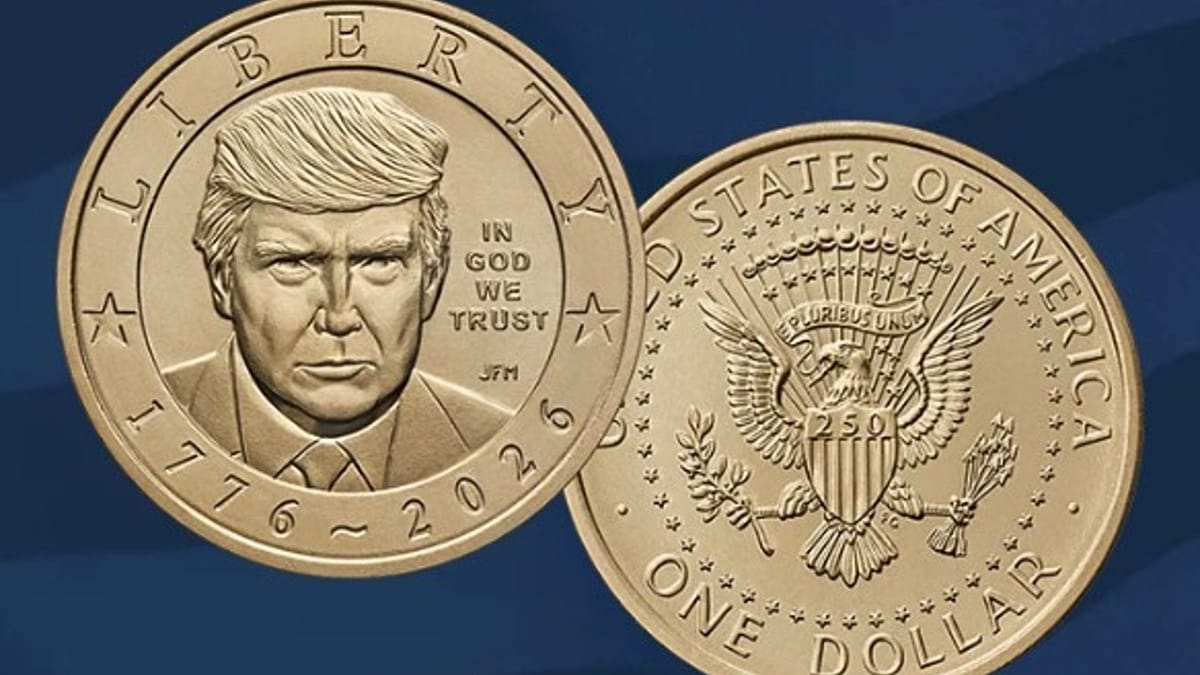
American money now carries the current US president’s face. In a groundbreaking move, the US Mint announced on Thursday the release of a new $1 coin featuring Donald Trump’s likeness. This coin, dubbed the “golden dollar,” commemorates the nation’s 250th anniversary with the phrase “IN GOD WE TRUST” prominently displayed on a shield. The excitement around this release is palpable, as it marks a significant moment in American history.

Now, you might be wondering, what’s the deal with this coin? Well, there’s some history here. While Trump is the first sitting president to have his image on a coin intended for everyday use, Calvin Coolidge did make an appearance alongside George Washington on a half dollar back in 1926. That was a commemorative coin, though, not one meant for regular circulation. So, you could say this is a first of its kind!

But hold on, there’s a bit of controversy brewing. You see, US law typically prohibits the depiction of living individuals on coins. The Trump administration has leaned on the Circulating Collectible Coin Redesign Act of 2020, which Trump himself signed during his first term. This law allows for $1 coins to bear designs emblematic of anniversaries through 2026. It’s a clever workaround, but not without its critics.

The design process itself has faced some backlash. The US Commission of Fine Arts initially recommended a profile portrait and a different eagle design, but those suggestions were tossed aside. Furthermore, the Citizens Coinage Advisory Committee, which usually reviews Mint designs, opted not to weigh in on this one. It’s a wild ride, and you can bet folks are talking about it!

So, what’s next? Will this coin become a collector’s item or just another piece of change? Time will tell, but one thing’s for sure: this is a moment that’s going to be remembered in the history books. And who knows, maybe we’ll see more presidents gracing our coins in the future…

Kaynak: Orijinal Haber

Trump Announces Groundbreaking Deal for U.S. Control of Venezuela’s Oil Reserves

The US has struck a historic deal with Venezuela, allowing American companies to control over 65 billion barrels of the country’s proven oil reserves

The US has struck a historic deal with Venezuela, allowing American companies to control over 65 billion barrels of the country’s proven oil reserves. This announcement came directly from President Donald Trump via social media, where he touted the agreement as a monumental step towards Venezuela’s economic revival. “This is a huge win for both the American and Venezuelan people,” Trump declared, although he provided few specifics regarding the deal’s implementation.

Venezuela, known for having the largest proven oil reserves in the world—estimated at around 303 billion barrels—has seen its oil production plummet since the late 1990s. Trump emphasized the urgency of tapping into these resources, calling for US oil firms to invest at least $100 billion into restoring production. The interim president of Venezuela stated that this partnership with private business would not impose costs on American taxpayers, focusing instead on revitalizing the country’s faltering economy.

Rodriguez, the interim president, highlighted the potential impact of the agreement, claiming it could generate over $209 billion in taxes for the state and lead to significant economic growth. “This deal is about energy security for our hemisphere and enhancing our position in international markets,” he said, underlining the wider implications of this partnership. A US official also mentioned that the scope of this deal appears broader than the US-led Coalition Provisional Authority’s control over Iraq, hinting at a more sustainable and judicious approach to managing Venezuela’s oil resources.

However, the details remain somewhat murky. What will this mean for the Venezuelan people? Will the investment truly make a difference in their daily lives? The oil-rich nation, which has been grappling with economic hardships and political instability, is at a crossroads.

As the world watches, the question lingers: Can this agreement bring about the change Venezuela desperately needs? Or will it simply become another chapter in the long saga of foreign intervention in the nation’s affairs?

Kaynak: Orijinal Haber

Trump Announces Major Oil Deal with Venezuela: Over 65 Billion Barrels Controlled!

The US has reportedly struck a monumental deal with Venezuela to control more than 65 billion barrels of its proven oil reserves, as announced by Pr

The US has reportedly struck a monumental deal with Venezuela to control more than 65 billion barrels of its proven oil reserves, as announced by President Donald Trump. Trump took to social media to share this development, which comes on the heels of the US arresting Venezuela’s largest oil company executives. As gas prices continue to rise in the American market, the pressure on Trump to alleviate these costs has intensified.

Now, let’s break this down a bit. Secretary of State Marco Rubio has labeled this deal as a significant step forward, although the specifics are still under wraps. Meanwhile, Delcy Rodriguez, the interim president of Venezuela, mentioned that this partnership would involve private businesses and would not incur any costs for American taxpayers. Sounds like a win-win, right? But hold on, the details remain hazy.

Trump has claimed that Venezuela will be “turning over” its oil industry to the US, which raises questions about the nature of this arrangement. He has also pointed out that Venezuela has unilaterally seized and sold American oil and assets, costing the US billions of dollars. It’s a tangled web of international relations and energy politics that leaves many wondering about the future.

As this deal unfolds, its implications for both countries are yet to be seen. Will this partnership actually lead to lower gas prices for American consumers? Or will it complicate an already strained relationship between the two nations? Only time will tell. We’ll have to keep an eye on this one, folks…

Kaynak: Orijinal Haber

Trump Claims Canada Wants to Be the 51st State After Trade Talks Fail

In a surprising turn of events, former President Donald Trump has stated that Canada is eager to reap the benefits of becoming the “51st state” of t

In a surprising turn of events, former President Donald Trump has stated that Canada is eager to reap the benefits of becoming the “51st state” of the United States, following the collapse of recent trade negotiations. During a press conference, Trump emphasized that the benefits of being a state include avoiding massive tariffs that he believes are unfairly designed to “hurt and divide us.” He made it clear that the failure to reach a deal was largely due to what he perceives as unreasonable demands from the Canadian side.

Mark Carney, a prominent Canadian political figure, responded firmly to Trump’s claims, stating that Canada would counter the U.S. tariffs “dollar-for-dollar.” He remarked, “They asked too much and they offered too little,” indicating that the stakes were high and that Canada felt attacked in these negotiations. Carney’s passionate comments suggest a growing tension as he declared, “You’re at war when you get attacked. We got attacked,” highlighting the emotional weight behind the trade discussions.

The Canadian Prime Minister has garnered support from leaders of various federal parties, including the Conservative opposition, reinforcing a united front against Trump’s tariffs, which have been a focal point in his rhetoric. On the other hand, the Canadian provinces are also rallying behind the Prime Minister, reflecting a shared concern over the impact of the stalled trade talks. Carney pointed out that the proposed tariffs, which are essentially taxes on imports, pose a significant threat to the North American Free Trade Agreement (NAFTA), and the collapse of these talks is “certainly not good news” for either side.

Trump’s statements came during his first address to Canadians after announcing late Friday that a deal would not be reached. He accused American negotiators of making last-minute changes that he labeled as “unfair” and “uneconomic.” In a twist, he denied that Canada had made any last-minute requests, which could imply that he feels justified in his position. “It was never acceptable to Canadians,” Carney asserted, criticizing the demands as “unjustified.”

As the situation unfolds, Canadians are left wondering what the future holds for trade relations with their southern neighbor. The implications of this trade talk collapse could ripple through many sectors, affecting everyday Canadians directly. Will the pressure of tariffs lead to an even greater divide, or can both nations find common ground moving forward? Only time will tell…

Kaynak: Orijinal Haber

Trump’s Stark Warning: Economic Consequences for Allies of Iran Loom Large!

President Donald Trump has issued a stark warning that any country aiding Iran will face “TREMENDOUS Economic Consequences.” This statement is part o

President Donald Trump has issued a stark warning that any country aiding Iran will face “TREMENDOUS Economic Consequences.” This statement is part of a broader strategy dubbed Operation Economic Fury, which has been ramping up since April. The operation targets foreign banks and firms engaging in business with Tehran, and now it seems to be tightening its grip even further.

In a social media post made Wednesday evening, Trump announced what he termed “economic D-Day.” He declared that any nation allowing its institutions, businesses, or government entities to provide any form of assistance to Iran would also be subjected to severe economic repercussions. He specifically mentioned activities like oil smuggling, cash transfers, and the operation of front companies as practices that must cease immediately. “You know who you are,” he added, throwing down the gauntlet to those who might still be aiding Iran.

Meanwhile, the stakes continue to rise. Iran’s defense ministry claimed it had detected two ballistic missiles launched from its territory, targeting maritime traffic. Fortunately, both missiles landed harmlessly in the sea. The situation is tense, with Iranian entities often using Dubai as a conduit for funding, further complicating matters in the region.

Since the onset of the conflict, Washington has already sanctioned several so-called teapot refineries—privately owned oil processing plants primarily located in Shandong province, eastern China. China’s Ministry of Commerce has previously responded to these sanctions, but the exact details of their reactions remain unclear. The BBC has reached out to the Chinese embassy in Washington for comments on Trump’s latest threats, which seem unprecedented in their scope and severity.

In a move that has raised eyebrows, Trump even threatened to bomb Oman, a U.S. ally, if it interferes with the administration’s oil and liquefied natural gas operations, which typically pass through the strait. As the U.S. midterm elections approach, the pressure is mounting on Trump regarding the financial burdens the war is placing on American consumers. With the U.S. currently pausing hostilities with Iran, one must wonder: is Trump truly running low on options to exert pressure?

The developments are constant and the stakes higher than ever. Will countries heed Trump’s warnings? Or will they find ways to circumvent the sanctions? Only time will tell as this geopolitical chess game continues to unfold…

Kaynak: Orijinal Haber