UK Economy Shrinks as Iran War Affects Business Landscape

The UK’s economy took a slight downturn in April, contracting by 0.1% as the ramifications of the Iran war started to hit local businesses, according

The UK’s economy took a slight downturn in April, contracting by 0.1% as the ramifications of the Iran war started to hit local businesses, according to official data from the Office for National Statistics (ONS). It’s noteworthy that this was the first monthly decline since August of the previous year, a drop that economists had anticipated following a surprisingly strong performance in March. Analysts are buzzing about the potential slowdown in the economy in the upcoming months, with expectations that the Bank of England will likely maintain interest rates at their current levels during its meeting next week.

In the three-month period leading up to April, which tends to offer a more stable view of economic health, the economy actually grew by 0.7% when compared to the previous three months. However, the outbreak of war in Iran has had severe implications, effectively closing the Strait of Hormuz – a crucial route for oil tankers. This disruption has caused crude oil prices to skyrocket, directly impacting the prices of petrol and diesel in the UK. Households are bracing for even higher energy bills in the coming months, particularly with the energy price cap set to rise in July. The ripple effect of soaring oil prices is felt across various goods and services, raising concerns among consumers and businesses alike.

Yael Selfin, the chief economist at KPMG UK, pointed out that while the economy showed growth over the last three months, “the contraction in April is more indicative of growth prospects for the economy going forward.” She emphasized that this monthly figure “points to renewed fragility in the UK economy, with pressure on both consumers and businesses likely to persist over the coming months.” Consumers are already signaling a need to tighten their belts, preparing for a sharp increase in energy bills. They’re planning to cut back on discretionary purchases and bolster their savings, which could weigh heavily on economic activity.

On the other hand, businesses are grappling with rising costs too. The subdued domestic demand is hampering their ability to pass on these increased expenses to consumers, which is likely to squeeze profit margins. In response to these unsettling figures, Chancellor of the Exchequer Rachel Reeves commented that the war “will have an impact at home.” She noted that before the Middle East conflict emerged, growth was outpacing expectations and inflation was easing. Reeves stated, “The choices I have made as Chancellor mean our economy is in a stronger position to deal with the costs of the war.”

Shadow Chancellor Mel Stride weighed in, asserting that “putting Benefits Street first leaves the economy weaker,” claiming only the Conservatives have a plan to rejuvenate Britain’s economy. Liberal Democrat Treasury spokesperson Daisy Cooper criticized the government, saying the GDP figures indicate they were “asleep at the wheel.” She remarked, “Our economy was already firmly stuck in reverse after Labour’s two anti-growth Budgets, and now it’s clear how vulnerable this has left us in the face of Trumpflation and geopolitical turmoil.”

Reform’s Treasury spokesperson Robert Jenrick blamed the economy’s contraction on the decisions made by Reeves, stating, “Reform would cut the waste and use the money to cut bills and get the economy going.” The ONS identified the services sector, which makes up about three-quarters of the UK economy, as the primary driver of the contraction, noting a 0.2% decline. Areas particularly hard hit included arts, entertainment, and sports activities, with many events canceled due to the conflict in the Middle East impacting UK businesses.

Ruth Gregory, Deputy Chief UK Economist at Capital Economics, suggested that while the Bank of England might consider raising interest rates later in the year, “the weakness in economic activity will probably mean rates stay on hold this year.” The consensus is that the Bank will likely keep rates unchanged in their upcoming meeting. Before the Iran war broke out, analysts were predicting a rate cut later this year. Gregory highlighted that the contraction observed in April signifies that the strong start to the year is faltering, predicting that the economy may come to a standstill this quarter and the next as households face the brunt of rising energy prices.

As the UK government borrows to fund both day-to-day expenses and long-term infrastructure projects, the war in Iran is projected to push UK inflation even further above the Bank of England’s 2% target. In a recent forecast, growth expectations for 2026 have been revised upwards from 0.8% to 1%. The rate of economic growth in the UK has significant implications for pay increases and tax revenues. Surprisingly, the economy grew by 0.3% in the month, defying analysts’ predictions of a small contraction.

Kaynak: Orijinal Haber

Is Anthropic’s Fable 5 Really Worth the Price Tag?

Anthropic has recently launched its Fable 5 AI model, stirring up a mix of excitement and skepticism in the tech community. Released on June 9, 2026,

Anthropic has recently launched its Fable 5 AI model, stirring up a mix of excitement and skepticism in the tech community. Released on June 9, 2026, this new model is being referred to as “Mythos Lite” and is initially available to users within the Claude subscription until June 22. After that, the full price kicks in, and many users are already expressing concerns about affordability. One Reddit user lamented, “A few tests just to get a feel for it consumed 5% of my monthly allowance… I have no reason to use this without a trust fund.”

Fable 5 is said to offer general users access to what Anthropic describes as “Mythos-level” capabilities. However, there’s a catch: it comes with a built-in safety trigger that reverts to the older Claude Opus 4.8 model when users inquire about high-risk subjects like cybersecurity, biology, chemistry, or distillation. In a previous announcement back in April, Anthropic stated that its Mythos model was deemed too powerful for public release due to its ability to identify severe vulnerabilities in major operating systems and web browsers.

Now, let’s talk numbers. The pricing for Fable 5 is set at $10 or about €9 per million input tokens and $50 per million output tokens. Just to put that into perspective, this is double the cost of the company’s previous flagship model, Claude Opus 4.8. Tokens are units of data that AI processes, and they can represent words, punctuation, and even blank spaces. On average, one token is about four characters, or roughly 75% of a word—meaning 1,000 tokens equate to around 750 words. Fable 5 requires more computational resources and tokens to handle its complex tasks, which Anthropic claims is one of its standout features. The model can run multiple AI agents and operate autonomously for extended periods.

According to Anthropic, Fable 5 has achieved the highest performance score of any model, showing significant improvements in document-based reasoning, interpreting charts and tables, and problem-solving. It can even pull exact figures from intricate scientific data and tackle complex vision-related tasks, like reconstructing a web app’s source code from screenshots. However, the debate about whether these capabilities justify the steep price tag is ongoing, especially as companies are becoming more cost-conscious about AI technologies.

Now, when we look at competitors, Fable 5 is pricier than OpenAI’s GPT-5.5 model, which sits at $5 per million input tokens and $30 for output tokens. Yet, it is still cheaper than OpenAI’s pro version of the same model. The competition in the AI landscape is heating up, and reports suggest that OpenAI is even considering slashing prices for access to its AI models, as revealed by the Wall Street Journal this past Wednesday. The race isn’t just about features and capabilities; it’s also about the companies’ valuations. OpenAI recently filed for an initial public offering with the U.S. Securities and Exchange Commission, just a week after Anthropic made a similar move.

So, what does all this mean for the everyday user or companies looking to adopt this technology? As the landscape shifts, will we see prices drop further, or will consumers have to brace for higher costs? The conversation is far from over, and we’ll be keeping an eye on how these developments unfold in the coming weeks.

Kaynak: Orijinal Haber

Mexico Triumphs in Thrilling World Cup Opener Against South Africa!

In a heart-pounding match, Mexico secured a stunning 2-0 victory over South Africa in the opening game of the World Cup. The atmosphere was electric

In a heart-pounding match, Mexico secured a stunning 2-0 victory over South Africa in the opening game of the World Cup. The atmosphere was electric, with fans buzzing in the stands at the stadium, bringing a vibrant spirit to the event. It was a clash of titans, and Mexico showed its prowess on the global stage right from the start.

The match kicked off with both teams displaying their skills, but it was Mexico that struck first. A brilliant goal from the Mexican forward in the 32nd minute sent the crowd into a frenzy. The cheers echoed throughout the stadium as fans waved their flags, celebrating this early breakthrough. Mexico was determined to make its mark, and they did just that!

South Africa fought back valiantly, trying to equalize, but Mexico’s defense held strong. The South African players showed great tenacity, pushing forward and creating chances, but every attempt was thwarted by Mexico’s disciplined backline. The tension in the air was palpable, with each missed opportunity sending waves of frustration through the South African supporters. Yahu, you could feel the pressure mounting!

As the second half unfolded, Mexico doubled its lead with a spectacular goal in the 78th minute. The ball sailed into the net after a beautiful setup, sealing the fate of the match. Fans erupted in jubilation, chanting and dancing, reminding everyone why football is such a beloved sport. The players celebrated passionately, soaking in the adoration from the stands. It was a moment of pure joy, a testament to their hard work and determination.

As the final whistle blew, relief and excitement washed over the Mexican players. They had secured a crucial win in the tournament, setting the tone for the games to come. But wait, what’s next for these teams? Can South Africa bounce back in their next match? Or will Mexico continue its winning streak? Only time will tell, but one thing’s for sure – this opening match was one for the books!

Kaynak: Orijinal Haber

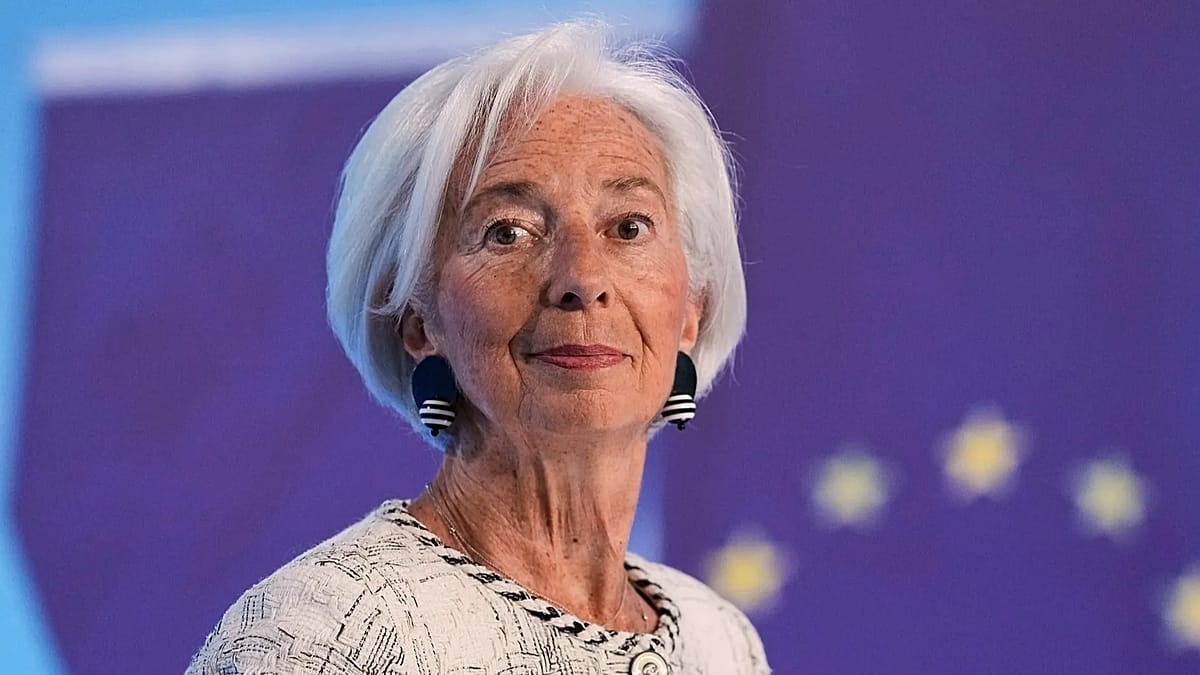
Lagarde Defends ECB Rate Hike Amidst Rising Inflation Pressures

European Central Bank (ECB) President Christine Lagarde has stepped up to defend the recent decision to increase interest rates. This marks the ECB’s

European Central Bank (ECB) President Christine Lagarde has stepped up to defend the recent decision to increase interest rates. This marks the ECB’s first rate hike since 2023, a move initially spurred by skyrocketing energy prices following Russia’s full-scale invasion of Ukraine. During a briefing with journalists on Thursday, Lagarde emphasized that the decision is “robust across three different scenarios.”

The ongoing conflict in the Middle East, which reignited in February, has sent shockwaves throughout Europe. The unpredictable closure of the Strait of Hormuz has driven oil and gas prices to dizzying heights, leaving European importers feeling the pinch. Lagarde pointed out that the ECB’s strategy will continue to evolve throughout much of 2025, especially as Eurozone inflation climbed to 3.2 percent in May, the highest figure seen since September 2023, fueled by a staggering 10.9 percent spike in energy costs.

Looking ahead, the European Union forecasts a slowdown in GDP growth, dropping from 1.1 percent in 2026 to 1.4 percent in 2027, while inflation is expected to rise from 3.1 percent in 2026 to 2.4 percent in 2027. Lagarde was clear that the ECB isn’t locked into a specific rate path. Despite all the uncertainties in the air, she shared that the bank has projected three potential short-term scenarios for June 2026: mild, adverse, and severe.

In the milder scenario, oil prices stabilize, which would see GDP growth rise from 0.8 percent in 2026 to 1.4 percent in 2027, while inflation would drop from 2.9 percent in 2026 to 1.8 percent in 2027. On the flip side, the adverse scenario assumes continued surges in energy prices, creating high uncertainty alongside international spillovers. Here, real GDP growth would sit at 0.7 percent in 2026, creeping up to 0.9 percent in 2027, while inflation could hit 3.3 percent in 2026 and 3.0 percent in 2027.

Now, if we talk about the severe scenario, it’s pretty grim. The EU would be grappling with a stronger and more persistent energy price shock, causing real GDP growth to slow down to 0.5 percent over 2026-2027 before experiencing a slight rebound in 2028. Lagarde reiterated that the ECB’s top priority remains controlling inflation.

Critics, however, are voicing concerns, arguing that such decisions are hitting the most productive and innovative sectors the hardest. “Such a decision will not bring down energy prices,” they argue. “It will, however, make clean energy investments pricier, which is the only solution for long-term stability.”

There’s a lot at stake here, folks. The rise in borrowing costs could jeopardize Europe’s competitiveness, as the higher expenses could deter investments in cleaner industries. Lagarde pointed out the urgency for reforms that enhance the euro area’s growth potential and accelerate the transition away from fossil fuels. “This is more vital than ever,” she stated, emphasizing the need for action.

Bakalım, bundan sonra ne olacak? Gelişmeleri takip ediyoruz…

Kaynak: Orijinal Haber

Mexico’s President Sheinbaum joins fans as World Cup gets underway

{{baslik}} – Explore the Benefits of {urun} in {{il}}If you are looking to enhance your space in {{il}}, then {urun} is the perfect addition. Known

{{baslik}} – Explore the Benefits of {urun} in {{il}}

If you are looking to enhance your space in {{il}}, then {urun} is the perfect addition. Known for its versatility and functionality, {urun} has become a popular choice for many homeowners and businesses alike. In this article, we will delve into the various benefits, features, and applications of {urun} to help you make an informed decision.

Benefits of urun

One of the most significant advantages of {urun} is its ability to improve aesthetics while providing practical solutions. {urun} is designed to be both stylish and functional, making it an excellent choice for a variety of settings. Whether you are looking to enhance your home décor or improve energy efficiency, {urun} has it all. Additionally, it is often made from sustainable materials, which is a plus for environmentally-conscious consumers. The durability of {urun} ensures that it will withstand the test of time, providing long-term value to your investment.

Features of urun

When considering {urun}, it’s essential to understand its standout features. {urun} typically boasts a unique design that combines elegance with practicality. Many variants of {urun} offer features such as UV protection, which helps in reducing glare and fading of interior furnishings. The installation process is often straightforward, making it accessible for DIY enthusiasts. Furthermore, it comes in various textures, colors, and patterns, allowing you to customize your space to reflect your personal style. This adaptability makes {urun} a fantastic choice for various design themes and preferences.

Applications of urun

The versatility of {urun} means it can be utilized in multiple environments. Common applications include residential homes, offices, and commercial spaces. In residential settings, {urun} can elevate the look of living rooms, bedrooms, and even outdoor areas like patios. In offices, it can create a more inviting atmosphere while also serving functional purposes. The ability to seamlessly blend with different styles and settings makes {urun} a go-to solution for many. Its presence in various locations not only enhances the ambiance but also serves practical needs, such as privacy and light control.

In conclusion, {urun} is an exceptional product that brings numerous benefits, features, and applications to your space in {{il}}. Whether you are looking to revamp your home or improve your office environment, {urun} is a must-consider option.

GÖRSEL_PROMPT: Professional photograph of {urun} installed in a modern living room interior, angled view showcasing its unique texture and design, natural daylight illuminating the space, soft shadows adding depth, blurred background of minimalist furniture, 8k quality, clean composition, emphasizing the product’s aesthetic and functional attributes.

Kaynak: Orijinal Haber

Defence Minister Al Carns Resigns Amid Funding Dispute with Keir Starmer

Al Carns, the armed forces minister, has resigned from the government, following in the footsteps of former Defence Secretary John Healey. This dram

Al Carns, the armed forces minister, has resigned from the government, following in the footsteps of former Defence Secretary John Healey. This dramatic departure stems from a bitter dispute over military funding with Prime Minister Sir Keir Starmer. Carns submitted his resignation on Thursday evening, expressing his deep concerns about the government’s Defence Investment Plan (DIP), which he described as “neither transformative enough nor sufficiently funded.” His resignation follows Healey’s scathing letter, which criticized the proposed military spending as being severely inadequate for the nation’s defense needs.

Just hours before his resignation, Carns had indicated he was prepared to wait for the DIP to be finalized before making any decisions about his role. However, after candid interviews with Sky News and the BBC, he quickly changed course, stating he could no longer defend “a level of investment I know to be inadequate to the task.” The government is now left grappling with the fallout from these high-profile resignations, which further erodes Sir Keir’s authority, already in question due to recent poor election results across England, Scotland, and Wales.

In the midst of this upheaval, Dan Jarvis, a former British Army officer, was promptly appointed as the new defence secretary. Jarvis faces a daunting task: helping Sir Keir finalize a defence investment plan that has already been deemed insufficient by his predecessor. Sir Keir has yet to publicly address Carns’ resignation. In a previous response to Healey’s exit, he defended the government’s record on funding, asserting that the defence funding plan will provide the necessary resources to ensure safety for the military and citizens alike.

Labour MP Pamela Nash has also stepped down from her role as Healey’s parliamentary assistant at the Ministry of Defence. In her resignation letter, she highlighted how “delays and difficulties securing the necessary funding” have damaged public trust in the government. The ministerial shake-up comes just a week before a crucial by-election, where Labour candidate Andy Burnham aims to return to Westminster and challenge Sir Keir for leadership. This resignation is particularly significant as Healey was among the Prime Minister’s most loyal allies in the cabinet.

The government has been under pressure regarding its defence budget, with reports indicating they are considering a £13.5 billion funding increase for the Ministry of Defence over the next four years—far less than the £28 billion initially requested. In his resignation letter, Healey raised concerns about the financial settlement of the DIP, claiming it is backloaded and fails to meet immediate operational demands. He accused the Prime Minister of being “unable” and the Treasury “unwilling” to commit the essential resources required to defend the country in the face of rising global threats.

Amidst these resignations, Sir Keir remains adamant that the DIP will deliver the necessary clarity and resources for the military. He’s stated that the planned increases in spending will be sustainable and fair, emphasizing the need for significant reallocations of funding across various government departments. However, critics argue that these cuts could jeopardize other vital services. The government has committed to spending 3.5% of the GDP on defence by 2035, yet it has yet to clearly outline how this will be financed.

As the government grapples with these resignations and funding disputes, the political landscape is shifting rapidly. Sir Keir’s leadership is increasingly scrutinized, with calls for his resignation growing louder within his own party. The resignation of both the defence secretary and armed forces minister adds further pressure to a Prime Minister who is already navigating a politically weakened position. The upcoming NATO summit in Turkey puts even more urgency on finalizing the defence investment plan, as time ticks away to meet public expectations and national security needs.

What will happen next in this unfolding saga? Will Sir Keir Starmer weather the storm, or will these resignations mark the beginning of a deeper crisis for his leadership? Only time will tell…

Kaynak: Orijinal Haber

The Economic Rollercoaster of the 2026 World Cup: A Global Affair Like No Other

Football World Cups are rarely completely free from political tension, but this year’s tournament is taking the cake for the most chaotic backdrop ye

Football World Cups are rarely completely free from political tension, but this year’s tournament is taking the cake for the most chaotic backdrop yet. Picture this: the main host, the United States, is entangled in a trade war with its neighbors Canada and Mexico, who are also co-hosting the event. And to spice things up, the U.S. is at war with a participant nation, Iran, whose team will be commuting in on match days from elsewhere. Talk about a geopolitical high-wire act!

As the world tunes in for the opening ceremony at the Estadio Azteca, the three co-hosts will be in the midst of renegotiating the USMCA, the North American free trade agreement. You can bet Donald Trump is glued to every moment of the tournament, especially after his return to the White House last year. He even joked about how his loss to Joe Biden in the 2020 election inadvertently set him up for this World Cup and the 2028 Los Angeles Olympics. Amid renewed tensions with Iran, Trump has been vocal about wanting to end hostilities, hinting at the possibility of a ceasefire during the tournament. But with Trump, you never know how quickly things can flip!

Gianni Infantino, FIFA’s big boss, has previously called for ceasefires during World Cups, and it’s worth wondering if this tournament could actually help ease some global tensions. But make no mistake, it’s not just the politics that’s on everyone’s minds; the economic implications are massive. The tournament is a clear illustration of the K-shaped economy phenomenon—where some are thriving while others are struggling, highlighted by wildly differing financial outcomes among different societal groups.

Now, let’s talk tickets. Fans at this year’s World Cup are expected to shell out jaw-dropping amounts, with some paying for what might turn out to be meaningless games. For example, a ticket on the New Jersey Transit train, usually priced at $12.90 for a round trip, has skyrocketed to $100 just for the tournament. It’s like the fans are getting squeezed from all sides! This tournament is different; it’s being held largely in borrowed American football stadiums, and the economics of football are being shaken to their core.

This World Cup could very well be the most economically impactful ever—not because it will boost local economies, but because it’s a bold experiment in how ticket pricing works. We’re seeing a dynamic pricing model that adjusts according to demand, similar to what’s done in concert ticket sales but never on this scale in football. The NFL’s pricing strategies are creeping into the World Cup, where maximizing revenue takes precedence over simply filling stadiums.

And let’s not forget that the sheer scale of this tournament is unprecedented. The biggest stadiums, the largest number of matches—48 teams this time—and the most extensive geographic spread from Vancouver to Mexico City. The winning team could travel a distance equivalent to the diameter of Earth. But that brings us back to those ticket prices. We’re talking five-figure sums for the final, and even typical group game tickets are around $1,000. For what’s supposed to be a celebration of the beautiful game, the cost is astronomical!

FIFA is banking on ticket revenues, with projections suggesting they could soar from $929 million at the 2022 Qatar World Cup to over $3 billion this time around. Experts estimate that total ticket and hospitality revenue could even top $7 billion! But here’s the catch: unlike in 1994, host cities won’t see a dime of those soaring ticket revenues, which are fixed. Cities are left to foot the bill for security and transportation costs. The price of transit tickets has gone up tenfold in some cases.

This is a stark contrast to past tournaments, where local fans enjoyed free transport and warm welcomes. Now, there’s a trend of trying to incorporate the secondary ticket market within FIFA’s own system, allowing fans to resell tickets at whatever price they want, with FIFA taking a cut. It’s a bold move that could backfire; will fans tolerate these prices, or will they push back?

The backlash is already evident, with resale prices plummeting for games that lack demand. Authorities are even investigating the ticketing strategies, citing confusion and absurdly high prices. The question remains: has FIFA pushed this pricing experiment too far? And as we look ahead to future tournaments in Spain, Portugal, and Morocco, it’s hard to imagine fans will be okay with similar pricing tactics.

In a world where economic disparities are becoming more pronounced, this World Cup is not just about football; it’s an economic experiment that could change the game forever. Will this extreme commercialization lead to packed stadiums filled with passionate fans, or will we witness empty seats and slashed prices just to fill them? The landscape of football may never be the same…

Kaynak: Orijinal Haber

India’s Agave Boom: The Rise of ‘Blue Gold’ in the Beverage Industry

Masapalli Venkatesh’s life took a dramatic turn thanks to a desert plant. His 10-acre farm in Kandukur, located on the Deccan Plateau—a region that

Masapalli Venkatesh’s life took a dramatic turn thanks to a desert plant. His 10-acre farm in Kandukur, located on the Deccan Plateau—a region that spans a large part of southern and central India—has traditionally been a patch for growing tomatoes, peanuts, and corn. But in 2010, everything changed when traders came knocking, seeking a completely different crop: the agave americana cactus. Initially, Venkatesh and his fellow farmers dismissed agave as a “stubborn, valueless weed,” primarily used as fencing to keep wild animals at bay. However, this plant is a part of the agave family that fuels the staggering $15 billion global market for tequila and mezcal.

In Mexico, blue agave is cultivated in Jalisco to supply the tequila industry, but in India, commercial agave farming is still in its infancy. Instead of large plantations, farmers and entrepreneurs harvest wild agave, which is why for many, including Venkatesh, this once-ignored plant has become a “blue gold”—a lucrative source of extra income. Nowadays, Venkatesh travels across a 100 km (60 miles) area, coordinating efforts with local villagers and farmers. “By combining the yields from multiple farms, I can ensure a steady, high-volume supply that distilleries are eager to pay a premium for,” he explains.

Harvesting agave is no walk in the park. The heart of the plant, known as the piña, resembles a giant pineapple and is the most crucial part for alcohol production. Skilled laborers must carefully chop off the spiky leaves to reveal the piña, but timing is everything. Once the agave decides to bloom, it directs all its sugar reserves upwards into the stalk within a matter of days. If the flower blooms, the sugar content is depleted, rendering the piña useless for making spirits. “Harvesters must pinpoint the exact pre-blooming window to pick the plant at its peak sugar level, which makes timing incredibly critical,” says Rakshay Dhariwal, founder of the distillery Maya Pistola Agavepura.

Once picked, the piñas are on a tight clock; they must reach a pressure cooker within 24 hours for sugar extraction. Any delay can ruin the batch. “If it takes longer than 24 hours, the sugars start to rot and ferment unpredictably, ruining the delicate flavor needed for premium spirits,” warns Dhariwal. Complicating matters, agave suppliers are spread across vast distances in states like Karnataka, Maharashtra, Rajasthan, and Andhra Pradesh. “We can’t just place orders from a centralized farming cooperative. We depend on local networks to scout, negotiate, and harvest patches of semi-wild agave from marginal lands or rural property lines,” he adds.

The thirst for agave spirits is on the rise in India. According to Dhariwal, the market is expanding at a rate of 31%. “It’s only been a few years since India caught the tequila bug,” says Vikram Achanta, co-founder of 30 Best Bars India. “Producers are now experimenting seriously, and there’s a consumer base more open to exploring new spirits than ever,” he notes. While agave drinks may not dethrone whisky as India’s favorite spirit, they’re carving out a niche. “New brands are fascinating early experiments, especially in how they’re utilizing wild agave from the Deccan Plateau to shape what an Indian agave identity could look like,” he adds.

Pioneering the Indian agave spirit industry is Desmond Nazareth, whose company, Agave India, introduced the nation’s first homegrown agave spirit in 2011. “What began as kitchen experiments eventually evolved into India’s first craft agave distillery after nearly 12 years of research and trial and error,” he recalls. Now, he’s taking a scientific approach to industry development. “We’ve analyzed satellite images of areas where agave thrives and matched those environmental patterns with other regions to identify more suitable land. This is crucial because agave takes 9 to 13 years to mature. Planting in the wrong spot could cost a decade,” he explains.

But will India’s wild agave supplies run out as demand grows? Agricultural expert Miguel Braganza reassures that it won’t happen for at least five years, likely longer. He points out that India’s domestic agave industry remains tiny, with only one processing plant, owned by Nazareth’s Agave India. Moreover, wild agave is quite adept at self-propagating. “A wild agave isn’t just a single plant. The mother agave sends out long root runners underground throughout her 10 to 20-year life,” says Braganza, adding that each few feet, a mini-clone emerges, leading to the formation of large agave colonies without human intervention.

However, India’s wild supply isn’t perfect. Entrepreneur Sree Harsha Vadlamudi expresses concerns about the genetic inconsistency of wild agave plants. “That means sugar yields vary… and that makes it tough to standardize production,” he notes. Vadlamudi co-founded the tequila brand Loca Loka, which sources blue agave from Jalisco’s tequila heartland. “We aimed to capitalize on the iron-rich red soil from ancient volcanic eruptions in Jalisco. This unique terroir creates a flavor profile that Indian-grown seeds can’t replicate,” he explains.

In stark contrast to India’s informal system, Mexico boasts large, organized agave farms that utilize high-tech agricultural techniques. Some employ drones and AI to monitor their crops effectively. “Drones can scan thousands of hectares to count individual plants, assess health, and detect diseases early, ensuring optimal harvest timing,” Vadlamudi explains. Such investments are still a distant dream for Indian producers.

Nazareth acknowledges that building a robust agave spirit industry will take time, but he remains hopeful. “India could absolutely become a major agave economy. The Deccan Plateau alone has millions of acres ready for cultivation. With long-term vision and patience, we could rival Mexico,” he predicts. As the industry grows, one can’t help but wonder what the future holds for India’s agave spirits. Will they reshape the landscape of the beverage industry in the coming years?

Kaynak: Orijinal Haber

Wegovy Weight-Loss Pill Approved in the UK: What You Need to Know

A pill version of the blockbuster weight-loss drug Wegovy has been approved in the UK, meaning folks will soon be able to snag it with a prescription

A pill version of the blockbuster weight-loss drug Wegovy has been approved in the UK, meaning folks will soon be able to snag it with a prescription. This is the first tablet of its kind that has gotten the green light from the Medicines and Healthcare products Regulatory Agency (MHRA). Imagine, no more weekly injections! The manufacturer, Novo Nordisk, claims the once-a-day tablet could be a game changer for many who prefer popping a pill over jabbing themselves with GLP-1 medication that curbs appetite. Plus, these pills don’t even need to be kept in the fridge, which is a nice bonus.

Now, here’s the catch: it won’t be available on the NHS just yet. Experts need to evaluate whether it should be recommended. The National Institute for Health and Care Excellence, the body responsible for making that call, mentioned that Novo Nordisk hasn’t reached out to them yet, but they’re “in active dialogue” with the company. Meanwhile, some high street and online pharmacies are gearing up to add it to their doctor prescribing services in the coming weeks.

According to the MHRA, the starting dose for the tablet is 1.5 mg once daily, which can ramp up to 4 mg, 9 mg, and finally 25 mg, with at least a month spent on each dose level. If you’re currently on the 2.4 mg semaglutide injection weekly, you can switch directly to the 25 mg tablets taken daily. These tablets should be taken on an empty stomach and are already available across the pond in the US. Other companies are either rolling out similar products or working on their own versions.

As for the price? Well, that’s still a bit of a mystery in the UK. But when Wegovy first launched in the US, the starting dose of 1.5 mg was priced at about $149 (around £110) a month. Just like its injection counterpart, the tablets contain semaglutide, which mimics the actions of a natural hormone, GLP-1. This hormone suppresses appetite and slows down digestion, making you feel fuller for longer.

Olivier Picard, the Chair of the National Pharmacy Association, described the approval of the pill as “significant.” He noted that this could really help patients who either can’t or don’t want to take the injectable version. Plus, it might even lower the cost of treatment in the long run. “Pharmacies are waiting for further guidance on when this treatment will be available for patients,” he added.

Trials have shown that these pills are safe and effective. But, just like the injections, it might take a few months to see the full benefits. And there’s always the risk of gaining weight back after stopping the medication. It’s important for anyone taking weight-loss meds to also stick to a healthy diet and get enough exercise. These GLP-1 drugs are not intended for short-term or cosmetic weight loss, and health experts are really pushing back against using them as a quick fix for that “beach body.” Although, let’s be real, some people do misuse them.

Side effects can pop up too, including nausea, diarrhea, constipation, and vomiting. Around a third of UK adults—more than 16 million—struggle with obesity. This new approval could be a big deal for many of them.

Kaynak: Orijinal Haber

Newcastle United in Talks to Sign Spanish Winger Victor Munoz!

Newcastle United is currently in negotiations with Osasuna to secure the signing of Spanish winger Victor Munoz. The buzz around this potential tran

Newcastle United is currently in negotiations with Osasuna to secure the signing of Spanish winger Victor Munoz. The buzz around this potential transfer is growing, and fans are eagerly awaiting news on whether Munoz, known for his speed and skill on the wing, will be joining the Magpies this season.

The discussions between both clubs have reportedly reached an advanced stage, although the exact terms of the deal are still unclear. What we do know is that Munoz has been making waves in La Liga, showcasing impressive performances that have caught the eye of Newcastle’s management. Yahu, the Premier League team is looking to bolster its attacking options, and Munoz could be a perfect fit for their style of play.

Back to the player himself, Munoz has drawn attention not just for his ability to whip in crosses and take on defenders, but also for his knack for finding the back of the net. Adamlar, his contribution could be vital, especially with Newcastle hoping to push for a strong finish in the league. But hey, there’s a lot of competition in the transfer market, and Osasuna might be reluctant to let him go easily. Bakın ne oldu, Newcastle’ın bu transferde ne kadar ısrarcı olacağını göreceğiz.

As the clock ticks down on the transfer window, every day counts. The fans are buzzing with anticipation. Will Munoz don the black and white stripes next season? Or will he continue his journey in Spain? We’ve seen how crucial such signings can be for a team’s success, and this one might just be the spark Newcastle needs. Gelişmeleri takip ediyoruz…

Kaynak: Orijinal Haber