Wall Street Takes a Hit: Big Tech’s Woes Spark Market Selloff

U.S. stock markets took a nosedive on Friday, and it wasn’t just a small dip—no, the tech-heavy Nasdaq index faced its biggest one-day drop since A

U.S. stock markets took a nosedive on Friday, and it wasn’t just a small dip—no, the tech-heavy Nasdaq index faced its biggest one-day drop since April 2025! Can you believe it? Investors are shaking in their boots over fears that the impressive gains we’ve seen this year might just be a mirage. A surprisingly strong jobs report for April lit the fuse for this selloff, leaving major U.S. markets painted red as they wrapped up the week. The Nasdaq index plummeted over 4%, while the S&P 500 closed down 2.6%, and the Dow Jones Industrial Average dropped 1.35%. Ouch!

Digital assets didn’t escape the carnage either. Bitcoin, the heavyweight of cryptocurrencies, saw a sharp decline as traders scrambled to offload riskier investments. It’s like a rush to the exits! The sudden downturn reveals just how much investors are sweating over high interest rates. Normally, a robust jobs market is a good sign for the economy, but right now, it signals the Federal Reserve is less likely to cut borrowing costs anytime soon. David Doyle, head of economics at Macquarie Group, pointed out that Friday’s jobs report might have been “too good,” especially in the face of stubborn inflation. So, what does this mean? Basically, it raised the odds that the Fed will hike interest rates this year, which certainly didn’t help the stock market situation.

So, investors who were holding out for rate cuts had to make some quick adjustments to their plans. However, don’t get it twisted—this selloff didn’t trigger a global market panic. It was more like a strategic retreat from tech stocks. Critics have been warning that these stocks are overvalued and could crash similarly to the dot-com bubble back in the early 2000s. Major investment funds have been yanking money out of AI and microchip companies, which had been riding high in recent years. Instead of bailing on the market altogether, investors shifted their focus toward traditionally safer bets. Sectors like healthcare, utilities, and consumer staples—think Kraft Heinz and Keurig Dr Pepper—saw a surge as traders sought stability amidst the chaos.

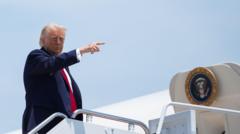
This sharp decline is a wake-up call, highlighting just how vulnerable big tech stocks have become. With a handful of tech companies making up a significant chunk of the stock market, any shift in investor sentiment can send the entire market tumbling down. Responding to Friday’s market drop, U.S. President Donald Trump weighed in, criticizing the negative reaction to the jobs report. He remarked that “too much emphasis is placed on inflation” and expressed hope that the market would recognize good numbers as a reason for upward movement rather than downward.

Looking ahead to next week, tech and politics will be front and center. President Trump has invited top AI executives to the White House to discuss a new proposal: the U.S. government acquiring public stakes in their companies. Trump believes this move would help reshape public perception of new technology, aiming to ensure that everyday Americans could “benefit from the success of AI.”

Görünüşe göre, yatırımcılar ve devlet yetkilileri arasında sıcak bir tartışma var. Bakalım bu durumdan sonra piyasalar ne yönde şekillenecek?

Kaynak: Orijinal Haber
Trump to Meet AI Giants: A New Era of U.S. Investment Ahead?

U.S. President Donald Trump is gearing up for a significant meeting with the heads of some of the country’s leading artificial intelligence (AI) f

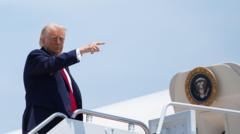
U.S. President Donald Trump is gearing up for a significant meeting with the heads of some of the country’s leading artificial intelligence (AI) firms to discuss potential government investment in their companies. Speaking aboard Air Force One, Trump emphasized that the aim of this government investment is to “create almost a partnership with the American public.” This meeting is expected to take place at the White House next week, although specific companies have yet to be named. However, it’s widely believed that the major players involved are Google, Microsoft, OpenAI, SpaceX, and Anthropic, with Anthropic and OpenAI poised to go public soon.

Interestingly, a spokesperson for Microsoft declined to comment on the upcoming discussions, while representatives from the other four companies have not responded to inquiries. Trump likened this prospective investment in AI to the government’s previous decision to take a 10% stake in Intel, a well-known computer chip manufacturer. He confidently claimed that the U.S. has already profited from that investment, hinting at a similar outcome with AI firms.

Now here’s the twist: part of the motivation behind this direct investment is to shift Americans’ perceptions of AI technology, which have been increasingly negative. “We’re talking about it,” Trump said, referring to ongoing conversations with AI leaders. He believes that if the American people can benefit from the success of AI, they will view it more favorably. This is a bold statement, considering the mixed feelings many citizens have about AI’s rapid advancements.

Recently, Sam Altman, the CEO of OpenAI, visited Washington, D.C. to chat with Senator Bernie Sanders, who has proposed a sovereign wealth fund allowing the U.S. to take a 50% stake in AI companies. Trump, when asked about Sanders’ plan, maintained that he has been contemplating government investment in AI for a year, but he did not outright dismiss the senator’s proposal. “Where economics are concerned, we have things that aren’t that far apart,” Trump noted, hinting at potential collaboration.

Moreover, Dario Amodei, CEO of Anthropic, recently held talks with senior White House officials. Despite the company being embroiled in a lawsuit with the U.S. Department of Defense over contract terms, the meeting signaled a thawing in relations. In a surprising turn, Anthropic publicly praised Trump’s Executive Order on AI this week, indicating a willingness to cooperate. Jack Clark, a co-founder of Anthropic, stated on BBC’s Newsnight that they’re “in daily conversations with the U.S. government and we’re finding ways to be helpful to national security.”

Meanwhile, despite concerns regarding the Iran war, inflation, and rising debt, U.S. markets continue to soar to record highs, with AI playing a substantial role in that growth. So, what’s next? Well, starting next week, individual investors will have the opportunity to take a stake in Elon Musk’s ventures from rockets to AI. Clark also mentioned that AI could eventually evolve independently of human input. Quite the thought, isn’t it?

As we look into the implications of deepfakes and other AI-related issues, it’s clear that the conversation around artificial intelligence is just heating up. Scientists at Cambridge have even tested a vaccine designed by AI for the first time. With all these developments, one can’t help but wonder: where will this all lead us?

Kaynak: Orijinal Haber

Trump to Engage with AI Leaders for Future Investments

US President Donald Trump is gearing up to meet with the heads of some of the most prominent artificial intelligence (AI) companies in the country to

US President Donald Trump is gearing up to meet with the heads of some of the most prominent artificial intelligence (AI) companies in the country to discuss a potential financial investment from the government. While aboard Air Force One, Trump emphasized that the aim of this investment is to “create almost a partnership with the American public”. The meeting is expected to take place at the White House, possibly as early as next week. Although he refrained from naming specific companies, it’s no secret that major players in the AI sector include Google, Microsoft, OpenAI, SpaceX, and Anthropic. Notably, both OpenAI and Anthropic are anticipated to go public in the coming weeks.

Interestingly, a spokesperson from Microsoft opted not to comment on the upcoming discussions, while representatives from the other four companies have also remained silent. Trump drew a parallel between this potential investment and last year’s government acquisition of a 10% stake in Intel, a giant in computer chip manufacturing. He even claimed that the US has already profited from that investment. However, a key aspect of investing directly in AI companies is to shift the public’s increasingly negative perception of the technology. “We’re talking about it,” Trump stated, hinting at discussions with AI leaders, “where the American people can benefit from the success of AI, the American people will like it better”.

In a twist, Sam Altman, the CEO of OpenAI, recently visited Washington DC and met with Senator Bernie Sanders, who has proposed the idea of a sovereign wealth fund that would see the US taking a 50% stake in AI firms. When asked about Sanders’ proposal, Trump maintained that he had been contemplating investments in AI for about a year, but he did not outright reject the senator’s suggestion. “Where economics are concerned, we have things that aren’t that far apart,” Trump remarked.

Dario Amodei, the CEO of Anthropic, also met with senior officials from the White House a few weeks back. Despite Anthropic being entangled in a lawsuit with the US Department of Defense over contract disputes, this meeting has been seen as a sign of improving relations. This week, Anthropic publicly commended Trump’s Executive Order on AI. Jack Clark, a co-founder of Anthropic, mentioned on BBC’s Newsnight that they are “in daily conversations with the US government and we’re finding ways to be helpful to national security”.

Meanwhile, despite the ongoing tensions from the Iran war, inflation, and rising debt concerns, US markets continue to soar to record highs, largely fueled by the AI sector. BBC’s Samira Hussain is examining whether this AI-driven bubble will eventually burst. Starting next week, individual investors will have the opportunity to invest in Musk’s ambitious rockets-to-AI venture. Clark also revealed that AI could evolve to a stage where it develops independently, without human intervention.

In a separate but related concern, Jess Asato is taking a stand against deepfakes that have been made of her, raising questions about the severity of this issue. On another front, Cambridge scientists have announced that they have, for the first time, tested a vaccine designed by AI, showcasing the technology’s potential in diverse fields. The developments keep coming, and the landscape of AI and its intersection with the government is one to watch closely.

Kaynak: Orijinal Haber

Is the AI Stock Market Bubble About to Burst?

US stock markets are hitting all-time highs this year, and believe it or not, it’s happening despite the ongoing Iran war, rising inflation, and conc

US stock markets are hitting all-time highs this year, and believe it or not, it’s happening despite the ongoing Iran war, rising inflation, and concerns over increasing government debt. This remarkable surge is largely fueled by an overwhelming rush of investments into Artificial Intelligence. But hold on, there’s a catch! Investors are starting to feel that something’s off—the astronomical stock market valuations just don’t seem to match the reality of the economy. Alarm bells are ringing, and Wall Street is buzzing with speculation.

According to BBC’s Samira Hussain, this disconnect is raising eyebrows among seasoned investors. The stock market, which typically reflects economic health, appears to be soaring high while real economic indicators tell a different story. Investors are wondering if this is a bubble waiting to burst.

Now, let’s dig into what’s really happening here. Strong winds, intense rain, and hailstones as big as golf balls battered New York and New Jersey, creating chaos. Meanwhile, some fans have reportedly felt “misled” regarding ticket sales and seat locations for a massive upcoming cage fight celebrating the 250th anniversary of the US Declaration of Independence. Just imagine that! While the markets are flying high, the people are dealing with real-world issues.

The situation is further complicated by the Department of Homeland Security’s statement about the medical services available to detainees, and a father’s heroic attempt to cross a flooded road after heavy rains—thankfully, neither he nor his baby was hurt. It’s a wild juxtaposition of highs and lows, isn’t it?

And in the backdrop of this financial frenzy, pop culture isn’t left behind. Cristo Fernández, famously known for his role in “Ted Lasso,” shared his excitement about signing with a US pro football team, calling it a “dream come true.” Meanwhile, a new era of sports is on the horizon with the inaugural Enhanced Games that will showcase elite athletes using performance-enhancing drugs. Seems like there’s never a dull moment, right?

As if that weren’t enough, Elon Musk’s SpaceX made headlines by successfully launching its Starship V3 rocket, which landed in a planned fiery explosion. Quite a spectacle, I must say!

But let’s bring it back to the economic front—Mayor Zohran Mamdani mentioned that the recent intense rainfall has overwhelmed the city’s sewer system, causing flooding in some homes. Amidst all this, a late-night host is set to make his final appearance behind his CBS desk, marking the end of an era after 11 seasons. Can you believe it?

Now, as we wrap this up, the question remains—are we on the brink of an AI stock market bubble bursting? With all these developments and the apparent disconnect between market values and the economy, it’s hard not to wonder what the future holds. Will investors take a step back, or are we in for more surprises?

Kaynak: Orijinal Haber

Eurozone Economy Faces Setback: 0.2% Contraction in Q1 2026

The eurozone economy took a hit in the first quarter of 2026, contracting by 0.2%, as revealed in a final estimate published by Eurostat on Friday. M

The eurozone economy took a hit in the first quarter of 2026, contracting by 0.2%, as revealed in a final estimate published by Eurostat on Friday. Meanwhile, the overall EU economy grew by just 0.3% during this period, a significant decline from the 1.2% growth seen last year. This slowdown can largely be attributed to the ongoing Iran war, which has wreaked havoc on European energy supplies and shaken both business and consumer confidence.

One of the most eye-catching figures from the Eurostat report is that Ireland’s GDP appears to be heavily influenced by the activities of large multinational corporations, particularly in the pharmaceutical sector. This makes Ireland’s economic performance seem less dire compared to other countries in the eurozone. But when we look at Germany, which is the largest economy in the bloc, the story is quite different. The biggest drag on growth for Germany came from net trade, which sliced off 0.3 percentage points from its economic output. Additionally, weaker investments contributed to a further decline of 0.1 percentage points.

Now, let’s not forget about the Iran war, which kicked off back in February 2026 after a series of joint strikes by the US and Israel. This conflict has been pivotal in driving the eurozone’s economy down a slippery slope. According to the European Central Bank’s (ECB) central risk scenario, consumer price inflation in the eurozone surged from 1.9% in February to 2.5% in March, and then hit 3% in April. The primary culprit? You guessed it—energy costs.

In response, the ECB opted to keep interest rates steady during its April meeting but made it clear that they’re closely watching these inflationary pressures. Looking ahead, the next policy decision is set for June 11, and market trackers are predicting a near-certain 25 basis point rate hike to 2.25%. A Bloomberg survey of economists released in May suggested that we could see two rate hikes this year, one in June and another in September. However, this newly released contraction data complicates that outlook.

On the employment side, things are looking a bit mixed. The number of workers in the euro area saw a slight increase of 0.1% in the first quarter, but the total hours worked dipped by 0.2%. This paints a picture where the unemployment rate rose to 6.3% in April, up from 6.2% in March. It’s a small change, but it hints at a softening demand for labor, suggesting that while the market is holding up for now, it’s beginning to show signs of strain.

So, what does all this mean for the future? Will the eurozone manage to rebound from this economic slump or will the pressures continue to mount? Only time will tell…

Kaynak: Orijinal Haber

Who Can Jump on the SpaceX Bandwagon? Here’s What You Need to Know!

Next week, shares in Elon Musk’s Texas-based SpaceX will hit the market, marking a historic moment as it’s set to be the largest public sale of shar

Next week, shares in Elon Musk’s Texas-based SpaceX will hit the market, marking a historic moment as it’s set to be the largest public sale of shares ever. The company, which has ambitious plans to colonise Mars and establish AI data centers in space, will go public on June 12, allowing millions of new shares to start trading for the very first time. This Initial Public Offering (IPO) is not just another stock sale; it aims to raise a staggering $75 billion and catapult SpaceX into the ranks of the top ten largest listed firms in the US. But hold up, what does this mean for potential investors?

So, who gets to buy these shares? Well, the good news is that it’s not just institutional investors. Regular folks, even those in the UK, can apply to snag some shares through various investment platforms and brokers. There are over 550 million shares up for grabs, with SpaceX eyeing a price of $135 each. Investors will need to ask themselves—are these shares worth that amount? The market will decide once trading kicks off, and prices could swing wildly based on demand.

Now, let’s break it down a bit. SpaceX, currently controlled by Musk and a handful of private investors, is looking to expand its operations and venture into new frontiers—literally. Musk has grand plans, from asteroid mining to setting up AI data centers in orbit. The IPO prospectus, which reads like something out of a sci-fi novel, warns that humanity must avoid “the same fate as dinosaurs” and gear up for an “age of abundance” beyond Earth. Quite a lofty vision, right? But skepticism looms over the feasibility of these grand dreams. Still, Musk’s supporters claim he has a knack for defying the odds.

The shares will be traded on the Nasdaq, a tech-focused market in New York, and big investment firms are expected to be in the mix. But remember, if your pension fund or savings manager buys shares, you might have an indirect stake in this venture without even realizing it. The valuation? A whopping $1.75 trillion, which would put it ahead of rivals like Anthropic and OpenAI, yet still trailing behind giants like Google and Amazon. Analysts are scratching their heads, unsure if the stock price will soar or plummet when trading begins.

In the past, Musk has faced his share of hurdles—failed rocket launches and production delays—but the AI race is particularly costly and riddled with uncertainties. There are concerns that the current share prices might be over-inflated, creating fears of a bubble ready to burst. Last year, the company brought in $18.6 billion, but they also reported a net loss of $4.9 billion. Ouch! The IPO’s own prospectus admits to “a history of net losses” and warns that profitability might not be in the cards for the future.

Experts weigh in: Ruth Foxe-Blader from Citrine Venture Partners sees potential in the diversity of SpaceX’s projects, while Michael Hewson at iForex argues that the numbers defy belief and amount to a gamble on Musk’s track record. The upcoming share sale is just the first of three mega-listings linked to AI this year, with Anthropic and OpenAI set to follow suit. It’s a risky game; lots of cash is being put on the table without any guarantees of returns.

It’s worth noting that after the share sale, Musk will still hold over 80% of the voting power, giving him significant control over the company’s direction. This has raised eyebrows, especially considering his unpredictable management style. Yet, paradoxically, some investors are drawn to Musk’s reputation as a catalyst for interest in this venture. The IPO’s push to open up to the public appears to be riding heavily on Musk’s persona rather than the company’s fundamentals.

And just to add a side note, Musk has been vocal about various issues on X, the social media platform he owns, including police treatment of individuals. Meanwhile, Jess Asato, a UK MP, is making headlines of her own, battling deepfakes made using the company’s AI tool, Grok. Talk about a tangled web!

So, as we look towards June 12, the question remains: will investors jump on the SpaceX bandwagon, or will the dreams of colonizing Mars and beyond prove to be just that—dreams? Keep your eyes peeled for what’s coming next in this space race!

Kaynak: Orijinal Haber

Anthropic Co-Founder Calls for AI ‘Brake Pedal’ Amid Rapid Advancements

Jack Clark, co-founder of Anthropic, has raised alarms about the rapid advancement of artificial intelligence (AI), warning that we are approaching a

Jack Clark, co-founder of Anthropic, has raised alarms about the rapid advancement of artificial intelligence (AI), warning that we are approaching a point where AI could evolve without human guidance. In a recent interview on BBC Newsnight, Clark stated, “You want the option to be able to take your foot off the gas and put your foot on the brake.” He emphasized that the AI industry currently operates like a car with a gas pedal but no brake.

Clark urged that it’s crucial for society to maintain control over AI systems as they become increasingly powerful and influential. He noted, “The world needs to do some thinking and we need to eventually develop some new regulations that allow us to be confident in these systems.” Alarmingly, Anthropic’s chatbot, Claude, is already functioning with 80% of its code generated autonomously. Clark believes reaching 100% could happen in just two years, which he claims would carry significant implications for society.

Now, while he didn’t provide a clear blueprint for creating this proverbial “brake pedal,” he likened the current AI landscape to the oil boom of the early 20th century. Clark argued that society’s response back then was to establish sensible policies that instilled confidence in oil production and utilization, thus minimizing concerns about the individuals running those companies. “That’s clearly where we end up here,” he remarked.

On a related note, Anthropic recently welcomed an executive order on AI from President Donald Trump, which was notably lenient and didn’t require mandatory safety testing for AI technologies. This raises eyebrows, especially since major players in the AI space—including Anthropic, OpenAI, and Google—have shown no signs of pausing their research efforts.

In just five years, Anthropic has experienced rapid growth and is gearing up for a public stock market debut, potentially marking one of the first public listings of a newer AI firm and aiming for a valuation that could skyrocket to nearly $1 trillion (£745 billion). Clark clarified that their goal in discussing these advancements isn’t merely to polish their image for clients but to inform the public about the extraordinary developments happening within these companies.

Clark, alongside CEO Dario Amodei and other executives, has positioned Anthropic as a vocal advocate for addressing the risks associated with AI. They even found themselves in a public disagreement with the U.S. Department of Defense, voicing concerns about the potential use of their AI technologies for mass surveillance and autonomous warfare.

“I am worried for my kids if we as a society don’t have a serious conversation about what the implications of AI’s continued advances mean,” Clark expressed during the interview. “There are potentially great benefits. There are also risks.” Among those risks is economic disruption, with fears that AI bots, or “agents,” could take over jobs traditionally held by humans, especially in the tech sector.

The last year has seen major tech companies undergoing large layoffs, with many citing the growing capabilities of AI tools as a reason. Clark believes that individuals who are more creative and can come up with better ideas may actually hold an edge over AI in this evolving landscape. “There are open questions about whether AI systems can be truly creative… there is not really evidence for that yet,” he added.

For those feeling marginalized in an AI-dominated economy, Clark advises developing hobbies and exploring liberal arts education. “People that are creative and can think broadly, people that read a lot, people that have interests are the ones most benefited by this,” he said. “Indulge in curiosity and it pays back in how you can use this technology.”

As the debate continues, one must wonder how far AI will advance before we find that necessary “brake pedal.” Are we prepared for the consequences?

Kaynak: Orijinal Haber

Hong Kong Aims to Connect Central Asia with Chinese Businesses

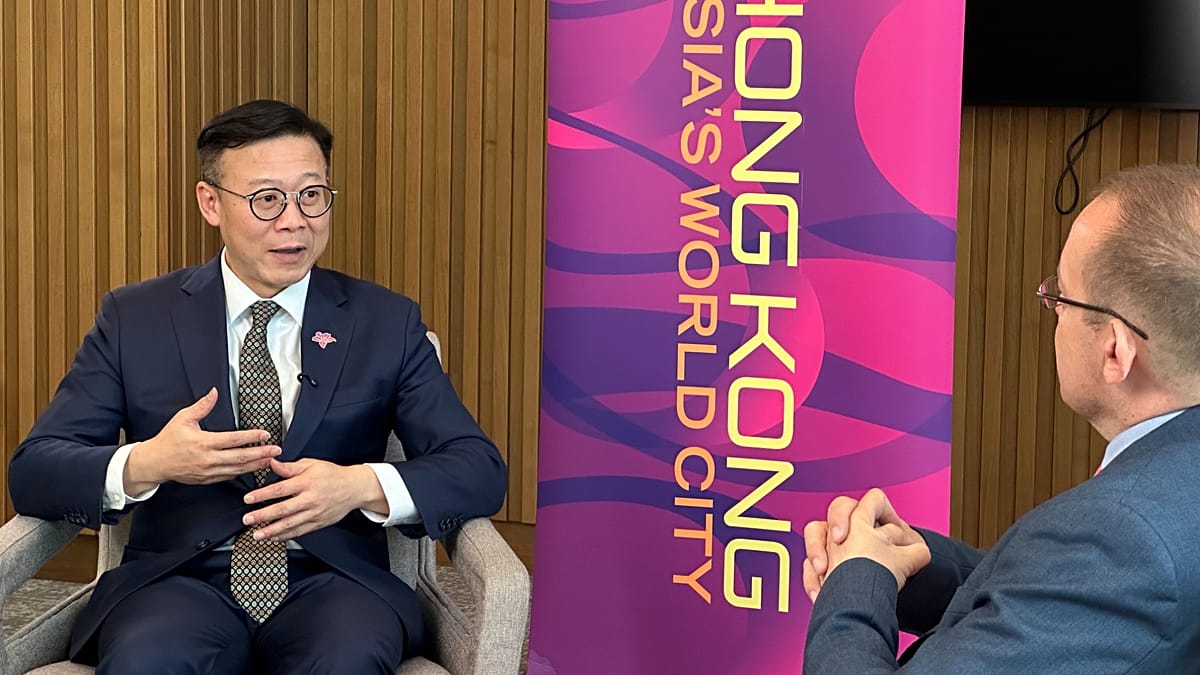
Hong Kong is making significant strides in its quest to become a pivotal bridge between Central Asia and Chinese businesses. Recent statistics reveal

Hong Kong is making significant strides in its quest to become a pivotal bridge between Central Asia and Chinese businesses. Recent statistics reveal that trade between Hong Kong and Central Asia has surged by an impressive 12% year on year. This growing economic connection is particularly evident in Kazakhstan, where President Tokayev highlighted that this event will undoubtedly bolster cooperation between Kazakhstan and Hong Kong, and even further with China, which has a long-standing strategic partnership with Kazakhstan.

Tokayev emphasized that Central Asia is emerging as a promising market for Chinese enterprises, showcasing the region’s potential for growth. Dr. Cheung, who oversees an online platform aimed at facilitating this cooperation, explained that the platform serves as a comprehensive database of professional service providers. This database is tailored for companies from Hong Kong and mainland China looking to break into foreign markets, making it a key resource in expanding their reach.

During his recent visit, Dr. Cheung stopped at the Astana International Financial Centre, which operates under English common law, similar to Hong Kong’s legal framework. This shared legal foundation opens the door for Hong Kong lawyers and financial professionals to act as intermediaries for Chinese mainland businesses operating in Kazakhstan and throughout Central Asia. Such collaborations are becoming increasingly vital as trade between China and the five Central Asian states soared to $106.3 billion (€91.3 billion) in just the first ten months of 2025, marking a significant six percentage point growth rate for China.

It’s clear that Hong Kong sees Central Asia not just as a market but as a strategic partner in the broader context of Chinese economic engagement. The region’s potential is being tapped into, and both sides are keen on exploring opportunities that can arise from this partnership. A lot is happening behind the scenes, and the future looks promising.

So, what’s next for Hong Kong and Central Asia? Will this partnership lead to even more significant trade agreements and opportunities? Only time will tell, but one thing is for sure: the momentum is building, and it’s worth keeping an eye on these developments…

Kaynak: Orijinal Haber

Anthropic Co-Founder Jack Clark Warns: AI Needs a ‘Brake Pedal’!

Anthropic co-founder Jack Clark has raised an alarm about the rapid progression of artificial intelligence (AI). He believes we’re approaching a c

Anthropic co-founder Jack Clark has raised an alarm about the rapid progression of artificial intelligence (AI). He believes we’re approaching a critical point where AI could evolve without human oversight. “You want the option to be able to take your foot off the gas and put your foot on the brake,” Clark emphasized during an interview with BBC Newsnight. Right now, he argues, the AI industry operates with a gas pedal but lacks a brake pedal. This is a serious concern, as the potential power of AI systems grows and their impact on society broadens.

In his discussion, Clark highlighted the urgent need for government policies to maintain control over AI systems. “The world needs to do some thinking, and we need to eventually develop some new regulations that allow us to be confident in these systems,” he stated. It’s a call to action, urging society to pause and reflect on the implications of unchecked AI development. Currently, Anthropic’s chatbot Claude has already written 80% of its own code, and Clark predicts that reaching 100% self-generated code could be possible within two years, which would have profound implications.

He drew an interesting analogy between the AI boom and the oil boom of the early 20th century, suggesting that society’s response to rapid technological advancements needs to be just as thoughtful. “Society’s response was to come up with a sensible policy and regulatory framework that gave people confidence in oil and the benefits that oil could provide to the world,” Clark explained. “That’s clearly where we end up here.” However, despite these warnings, Anthropic welcomed a new executive order on AI from President Donald Trump that seemed to be relatively lenient, not requiring AI companies to undergo mandatory safety testing. This raises eyebrows, considering the urgency for regulation in a field that is evolving so quickly.

Clark’s concerns don’t stop there. The rapid advancement of AI technology has led to fears of job displacement. Major tech companies have conducted mass layoffs over the past year, often citing the efficiency of AI tools. “I am worried for my kids if we as a society don’t have a serious conversation about what the implications of AI’s continued advances mean,” he said, stressing that while there are significant benefits, risks lurk around the corner. He pointed out that AI could disrupt the economy and take over jobs currently done by humans, especially in roles that involve routine tasks.

Interestingly, he believes that individuals who are more creative might hold an advantage in this new landscape. “There are open questions about whether AI systems can be truly creative… there is not really evidence for that yet,” he noted. At Anthropic, they feel more constrained by the need for innovative ideas than by the technical ability to realize those ideas. This suggests a shift in what skills might be valuable in the future job market.

For those feeling anxious about an AI-dominated economy, Clark has some advice: “Develop a hobby” and consider pursuing a liberal arts education. “People that are creative and can think broadly, people that read a lot, people that have interests are the ones most benefited by this,” he advised. He encourages curiosity, stating that it pays off in how individuals can leverage technology like AI.

Meanwhile, Canada is crafting a roadmap to adopt AI over the next decade, including plans for large-scale data centers and massive funding initiatives. In the UK, a Suffolk MP has raised concerns about AI tools being misused to create fake images, highlighting the ethical dilemmas surrounding AI technology. As the landscape shifts, AI is being touted as a tool that can enhance productivity without sacrificing quality, but vigilance is key.

So, what does the future hold for AI? Will society successfully implement the necessary regulations, or will we find ourselves in a situation where AI operates unchecked? Only time will tell…

Kaynak: Orijinal Haber

Elon Musk’s SpaceX IPO: What Investors Need to Know

Next week, shares will go on sale in Musk’s Texas-based SpaceX, a firm with ambitions to colonize Mars and establish artificial intelligence (AI) dat

Next week, shares will go on sale in Musk’s Texas-based SpaceX, a firm with ambitions to colonize Mars and establish artificial intelligence (AI) data centers in space. This event is shaping up to be the largest ever public sale of shares, potentially catapulting SpaceX into the ranks of the top ten largest listed firms in the United States. But for those looking to invest, what exactly are they getting into, and what risks are involved?

SpaceX, currently under the ownership of Musk and other private investors, will release millions of new shares on June 12. This Initial Public Offering (IPO) is targeting to raise a staggering $75 billion, offering investors a chance to buy into a business that spans from space exploration and satellite communications to the social media platform X and the controversial AI service, Grok. Now, it’s important to note that while SpaceX operates independently from Musk’s more famous company, Tesla, there are whispers that the two might merge as early as next year.

Musk is on a mission to use the funds raised to not only expand SpaceX’s current operations but also to embark on futuristic projects, including asteroid mining, Mars colonization, and placing AI data centers in the cosmos. The sales prospectus reads like a sci-fi novel, urging humans to avoid “the same fate as dinosaurs” and to prepare for an “age of abundance” in space. However, there’s no shortage of skepticism surrounding the viability of these ambitious plans. Critics are quick to point out the ocean of uncertainty that lies ahead, despite Musk’s history of overcoming doubts.

If the IPO proceeds as planned, Musk could find himself on the path to becoming a trillionaire. The shares will be traded on the New York Nasdaq market, a hub for tech-focused investments, and it’s expected that major global investment institutions will snap up shares. Yet, individual investors, including those in the UK, will also have a shot at purchasing shares through specific investment platforms and brokers. SpaceX has put more than 550 million shares on the table, aiming to sell them at a price of $135 each. Investors must weigh whether they believe this valuation holds water. Once trading begins, the share price could fluctuate wildly based on market perceptions—was that initial price too low or too high?

Even if someone doesn’t dive into investing in SpaceX directly, they might have an indirect stake if their pension or savings fund manager decides to buy shares as part of their investment strategy, or if they hold an index-tracking fund that automatically invests in major firms. SpaceX is projected to be valued around $1.75 trillion, positioning it above competitors like Anthropic and OpenAI but still smaller than tech behemoths like Alphabet (Google), Apple, Microsoft, and Amazon.

As analysts keep tabs on the performance of companies like SpaceX, even they are left scratching their heads about whether the stock price will rise or fall once trading kicks off. Musk has faced his fair share of hurdles in the past—failed rocket launches, production slowdowns, and political controversies—but the escalating costs tied to the AI race add another layer of uncertainty, leading to widespread concern that share prices might already be inflated and on the verge of bursting.

Last year, Space Exploration Technologies, the official name of SpaceX, reported an impressive revenue of $18.6 billion, but it also recorded a net loss of $4.9 billion. The IPO prospectus candidly states that the company has “a history of net losses” and cautions that it “may not achieve profitability in the future.” Ruth Foxe-Blader from Citrine Venture Partners believes the sheer number and variety of SpaceX’s projects provide numerous selling points. However, Michael Hewson at iForex argues that the figures are hard to believe, essentially amounting to a gamble on Musk’s “ability to deliver” on grand ambitions.

This IPO is just the first of three AI-related mega-listings anticipated this year. When Anthropic and OpenAI launch their shares, the same principle will apply: substantial investments without guaranteed future profits. After the share sale, Musk will still retain over 80% of the voting power, which is slightly less than he currently holds. He will continue to decide who runs the company and its overarching strategy, a factor that raises eyebrows due to Musk’s unpredictable management style and multiple ventures. Yet, for some investors, it may precisely be Musk’s reputation that fuels interest in this venture.

Musk has been vocal on his platform X, often criticizing various issues, including police treatment in certain cases. He remains the richest person globally, utilizing his platform to share his perspectives across a wide range of topics. Interestingly, his space exploration company has set a target share price for buyers earlier than initially anticipated. And remember, the largest and most powerful rocket in history recently blasted off after a postponed first launch.

Gelişmeleri takip ediyoruz…

Kaynak: Orijinal Haber