
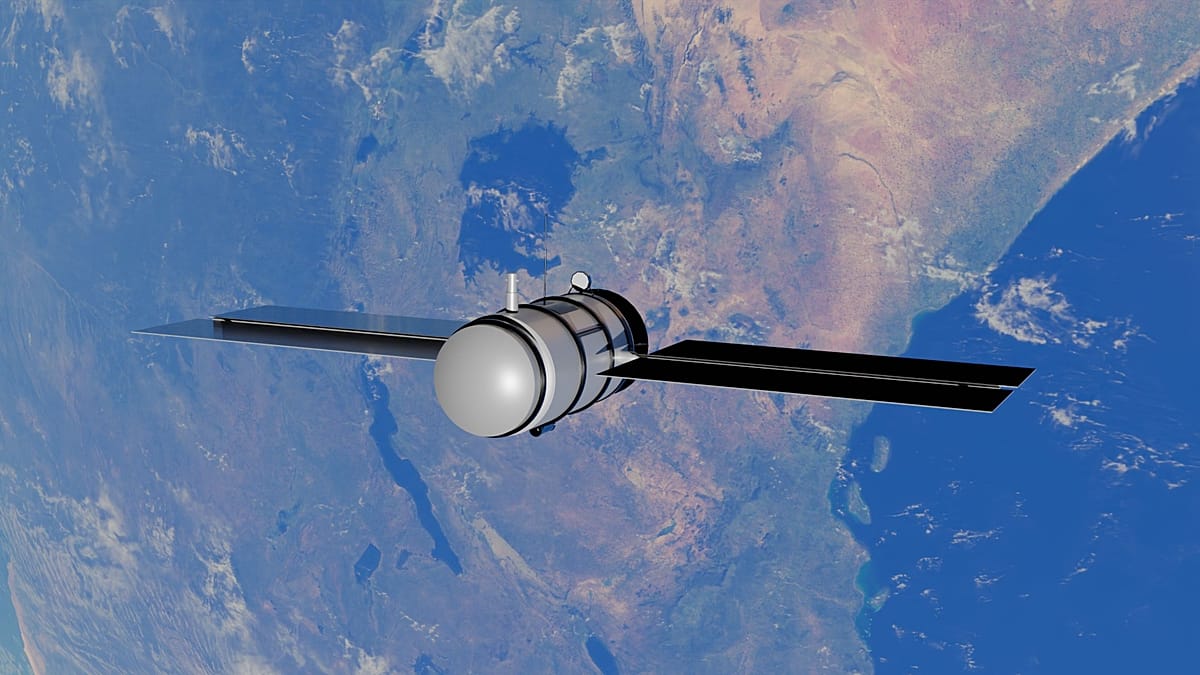
China is sounding the alarm—if the technological gap continues to widen, Europe could be left in the dust when it comes to computing its own space data. We’re talking about crucial orbital information that could slip through Europe’s fingers, forcing the continent to rely on third-party services. Right now, European efforts are on the table but they’re limited in scale. The EU-funded project ASCEND, which kicked off under Horizon Europe in 2023, highlights the potential of orbital data centres to bolster European digital sovereignty. However, is that enough?
The European Space Agency (ESA) is doing its part, collaborating with UK firm Open Cosmos on the Φ-sat-2 satellite that’s equipped with AI for Earth observation. Meanwhile, French startup ALATYR has ambitious plans to manufacture robotically assembled orbital data centres. But let’s be real—the pace of development in Europe is starting to lag behind the rapid strides being made in China and the US.
China isn’t just dabbling in space-based computing; it’s treating it as a national strategic priority. This has led to a flurry of state-backed initiatives and policies aimed at making it happen. The state-owned China Aerospace Science and Technology Corporation (CASC) is at the forefront of this effort, formalizing orbital data centres as part of a new strategy alongside the Beijing Municipal Government and the Zhongguancun Science Park. They’ve created a framework that combines top-down policy creation with private and state-owned industry adaptation, and they’ve thrown in municipal and provincial government incentives as well. That’s a recipe for success if I’ve ever seen one!
High-profile prototypes are already making waves. The Three-Body Constellation launched by ADAspace in May 2025 is the first operational example of space-based computing, and it’s just the tip of the iceberg. In partnership with Shanghai Jiao Tong University, ADAspace is pushing the boundaries further. The municipal government is even getting involved, issuing calls for project proposals for orbital data centres as recently as June 2026. They’re also bringing rival companies, like GalaxySpace and Landspace, together to form a space computing innovation center. Talk about collaboration!
Despite the excitement, there’s a bit of a cloud hanging over all this. Reports from state broadcaster CGTN suggest plans for building gigawatt-level space digital infrastructure that combines cloud, edge, and terminal technologies, but the official policy documents are nowhere to be found. Euronews couldn’t verify these claims independently, which leaves us all wondering what’s really going on behind the scenes.
The brief suggests that the European Union needs to step up its game. Coordinated political guidance, investment support, and a solid regulatory framework for orbital data centre development are crucial to keeping pace. A flagship initiative is recommended to be integrated into the Horizon Europe Moonshot Projects for the 2028-2034 Multiannual Financial Framework. Plus, it seems like a good idea for European space actors to start convening with their international counterparts to discuss standards and data sovereignty.
So, what does the future hold for Europe? Will it rise to the challenge, or will it continue to watch from the sidelines as China accelerates ahead? Only time will tell…
Kaynak: Orijinal Haber