
The European Space Agency ESA has just hit a major milestone in the realm of Earth observation and meteorological science, and it couldn’t come at a better time given the climate crisis and increasing weather disasters. The recent launch of the MTG-I2, also known as the Meteosat Third Generation Imager-2, is set to revolutionize weather tracking and forecasting across Europe. This satellite is equipped with the Flexible Combined Imager, an advanced tool that will provide rapid-scan services, delivering high-resolution observations every 2.5 minutes. This quick refresh rate marks a significant shift in how we approach nowcasting, which is crucial for improving short-term weather forecasts and monitoring disasters like floods and wildfires more effectively.
But wait, it gets even better! This new tech allows for real-time tracking of atmospheric fronts, helping to anticipate severe storms or DANA events. And, it’s particularly focused on the Mediterranean region and North Africa—areas that are often hit hard by extreme weather. Plus, there’s the Lightning Imager onboard, a sensor that detects individual lightning strikes both day and night. Imagine being able to visualize lightning, winds, cloud dynamics, and greenhouse gases in a “weather cube”—a 3D representation that brings meteorological data to life!
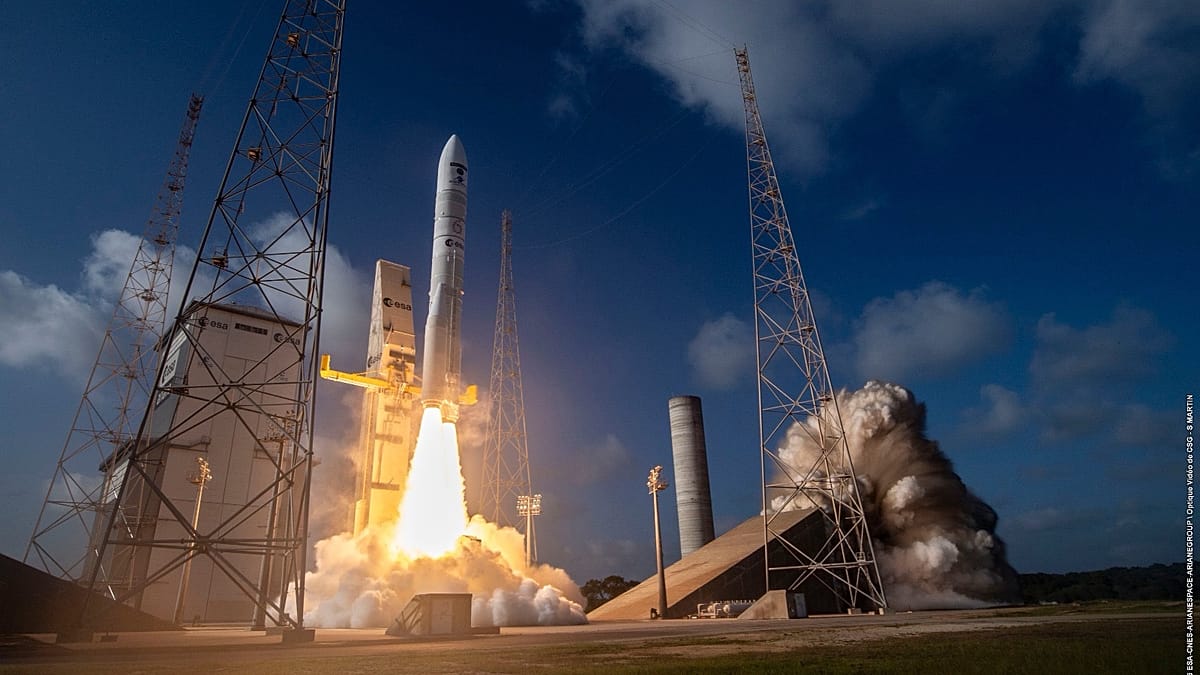
Now, let’s talk about the launch itself. This was the ninth mission for the Ariane 6 rocket, and it’s significant because it’s the first time this European heavy-lift rocket has successfully carried a satellite to a Geostationary Transfer Orbit (GTO). The rocket reached impressive heights using a setup that included two P120C solid-fuel boosters. After the satellite separated, communication with the spacecraft was established smoothly, and ground teams are now busy overseeing the deployment of solar panels and initiating the propulsion system to adjust its orbit. In fact, they’re fine-tuning its trajectory to reach the final geostationary orbit.
Once it’s aimed correctly towards Earth, the Launch and Early Orbit Phase (LEOP) will come to an end, paving the way for scientific calibration to kick off. The development of the MTG family was spearheaded by ESA in collaboration with a European industrial consortium led by Thales Alenia Space, with additional support from OHB System and Leonardo. Once the calibration phase wraps up, the responsibility for operating the satellites and distributing data to the international scientific community will shift to Eumetsat. This new fleet ensures that the observations started by the Meteosat Second Generation series, which operated between 2002 and 2015, will continue seamlessly.
Looking ahead, from 2033, we can expect to see a second family of MTG satellites launched in stages, ensuring that this critical service continues beyond 2040. So, what does this mean for the future of weather forecasting? Will we finally get the accurate predictions we need to prepare for Mother Nature’s surprises?
Kaynak: Orijinal Haber