
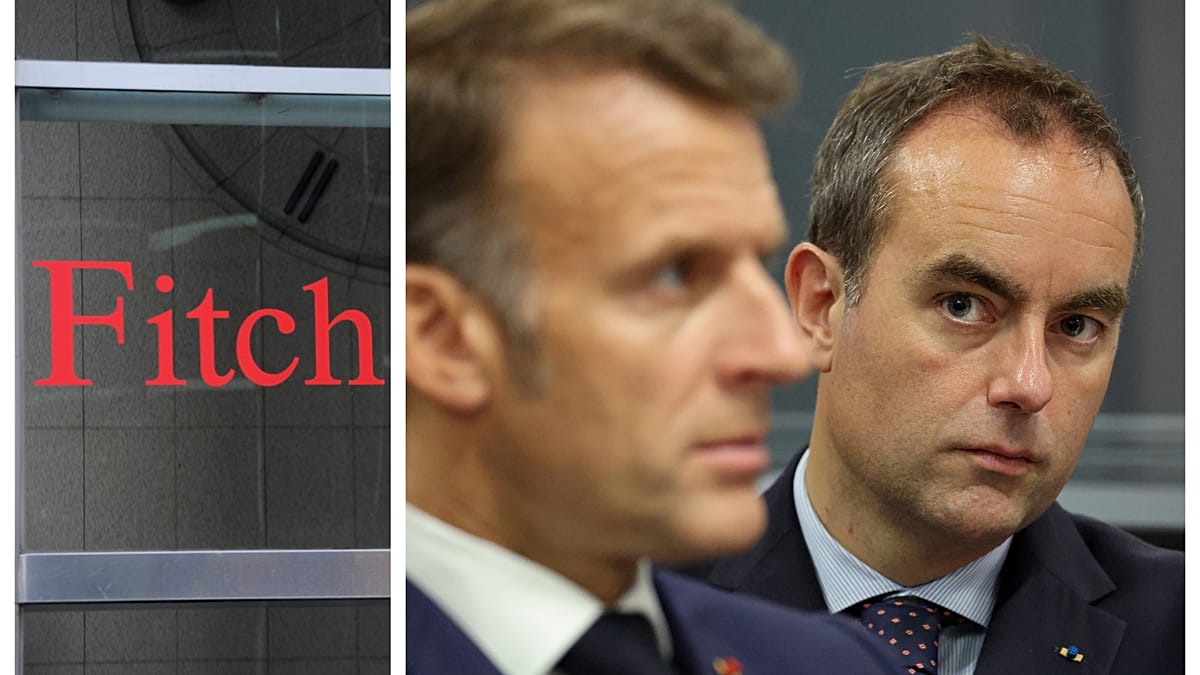
This Friday, Fitch Ratings is set to announce its verdict on France, the second-largest economy in the Eurozone, a crucial step ahead of the 2027 budget submission to the National Assembly. The outlook is expected to remain stable, but it comes in the shadow of France losing its coveted double A rating back in September 2025. This downgrade was primarily due to the political instability that emerged from a post-dissolution situation, characterized by the fleeting governments of Barnier and Bayrou, which lasted just 99 and 270 days, respectively. This assessment was reaffirmed in March 2026, solidifying concerns about the nation’s fiscal landscape.
Speaking with Euronews, Hadrien Camatte, a senior economist at Natixis CIB for France, Belgium, and the eurozone, suggests that maintaining the status quo is the most likely scenario. However, he warns that a shift towards a negative outlook could be on the horizon, especially given the escalating tensions from the war in the Middle East and the recent severe decline in agricultural productivity, which has worsened compared to data from late July. The impact of repeated heatwaves and droughts on the economy has been significant, affecting the agricultural sector, which is a vital component of the French economy.
Now, when it comes to the deficit, Fitch’s forecast points to a staggering 4.9% of GDP, a figure that closely aligns with the government’s current fiscal stance, leaving little to no room for maneuver over the coming years. Analysts have flagged that this is a critical issue for the ratings agency. They foresee a sustained increase in the public debt-to-GDP ratio in the medium term, largely due to an inability to implement necessary fiscal consolidation measures or a persistent rise in financing costs, as highlighted by Natixis CIB.
Despite these challenges, there’s a sense among analysts that Fitch might exhibit some patience. Prime Minister Sébastien Lecornu is gearing up to present the 2027 budget on September 30, with parliamentary discussions slated to kick off in October. On the political front, Jean-Luc Mélenchon has already signaled that his party, France Unbowed (LFI), intends to censure the new budget, suggesting that the upcoming months could be tumultuous.
So, as the clock ticks down to Fitch’s announcement, all eyes will be on how these economic challenges are addressed. Will France manage to hold its ground, or are we looking at a potential downgrade? This is something that will definitely keep both analysts and the public on edge.
Kaynak: Orijinal Haber