
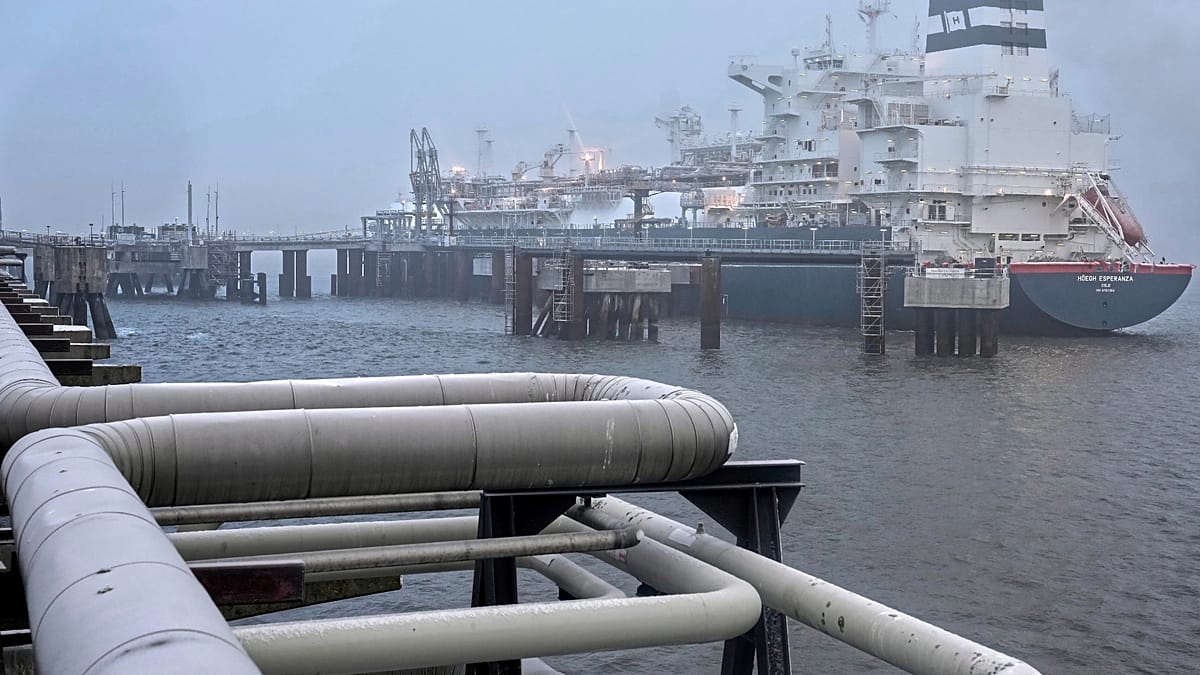
Germany is lagging in the crucial race to refill its gas storage facilities ahead of the cold winter months, raising alarms about potential shortages. As of August 25, the country’s gas storage facilities were only around 51.5% full, a stark contrast to the approximately 69% recorded the previous year. If the current pace of storage injections continues, experts warn that Germany will not meet the statutory requirement of 70% capacity by November 1. Sebastian Heinermann, managing director of the gas-storage association INES, laid it out clearly: “If storage injections continue at their current pace, Germany will not meet the statutory storage filling requirements by 1 November.”
Now, you might be wondering why this is such a big deal. Germany boasts the largest gas-storage capacity in Europe, so any slowdown in its refilling efforts significantly impacts the continent’s overall supply. In fact, Germany currently holds about 45 TWh less gas than it did a year ago—equivalent to the entire gas-storage capacity of the Czech Republic! But it gets even trickier; around 78% of the available storage capacity has already been booked, yet this doesn’t guarantee that it will actually be filled. “Booking gives traders the right to use the space, while the amount of gas injected depends on market conditions,” Heinermann explains.
High prices in the market are making it tough for companies to buy and store gas. Typically, suppliers buy gas at lower prices in the summer, store it up, and sell it at a profit during the winter months. But with the ongoing war in Iran pushing global market prices up, things are changing. Just last Friday, the benchmark European gas price was trading at around €69 per megawatt-hour, a big jump from about €29 at the start of the year. Uniper, a major gas trading company in Germany, echoed these concerns, stating that market conditions are hampering the push for more injections. “Storage spreads have improved recently, but they have not improved to an extent that would make additional storage injections economically viable,” a spokesperson said.
Despite these challenges, there’s still hope. Uniper mentioned that Germany could hit its target of 70% or more by November 1 if market conditions change to create stronger incentives for injections. The German Economy Ministry reiterated that while storage levels currently look low compared to previous years, they don’t foresee an immediate gas shortage this winter. They highlighted that Germany has multiple options for gas supply, including Norwegian pipeline gas, LNG terminals, and imports from neighboring countries.
The stakes are high, though. Heinermann cautioned that if gas storage facilities remain inadequately filled during a particularly cold winter, Germany may struggle to meet its normal gas demand. “If gas prices then rise above the level that industrial consumers can afford, companies will be forced to cut production,” he warned, suggesting that this could lead to significant economic fallout.
It’s not just the energy sector that’s worried; manufacturers and other industries are feeling the heat too. The German Pharmaceutical Industry Association BPI pointed out that many production processes depend heavily on gas and can’t easily be adjusted or shut down on short notice. The mechanical engineering sector has also raised alarms, with VDMA’s Thilo Brodtmann stating, “A physical gas shortage or skyrocketing prices would pose a significant threat to the industry.”
To tackle these challenges, the focus has shifted to enhancing financial incentives for companies to store gas. Heinermann proposed that removing network charges for storage and the gas conversion levy could lower storage costs and make injections more appealing. If companies fail to utilize their booked storage capacity, there’s a risk Germany will miss its filling target. In that case, the unused capacity could be made available to Trading Hub Europe, allowing for public tenders to secure additional gas for storage.
Moreover, looking ahead, Germany has plans to introduce a state-controlled strategic gas reserve by the 2027-28 storage year to shield against major import disruptions, although this initiative has yet to be passed into law. It’s clear that while immediate threats may not seem dire, the situation is fluid and could change with a harsh winter on the horizon. Will Germany manage to fill its gas storage in time, or are we facing a winter of uncertainty?
Kaynak: Orijinal Haber