
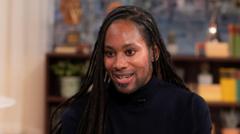
Jason Arday, the former University of Cambridge professor embroiled in a plagiarism controversy, has been found dead. Emergency services reported finding a man unresponsive at a residence in Battersea on Friday. The family, in a statement, expressed their deep sorrow over his passing. Earlier that day, police were called to the scene by the London Ambulance Service. The Metropolitan Police confirmed the situation, leaving many in shock.
Prof. Deborah Prentice, the vice-chancellor of Cambridge University, shared her condolences, saying, “Our heartfelt sympathies go to Jason Arday.” Education Secretary Lucy Powell also expressed her sadness, stating she was “deeply shocked and saddened” to learn of his death, calling for understanding during this difficult time. Arday, 41, had consistently denied accusations of plagiarism but admitted to errors in his work. Just last week, he mentioned that the ongoing scrutiny related to his academic contributions had led to significant personal distress.
The plagiarism row initially erupted after another academic, self-defined as a “race realist,” scrutinized Arday’s work. In his defense, Arday noted that some of the mistakes in his earlier academic projects stemmed from his autism, claiming he often relied on mimicry to process information. “We’re talking about academia here. I didn’t murder somebody,” he told the Times newspaper earlier this month, expressing the emotional toll the accusations had taken on him.
A former colleague revealed they spoke with Arday on the morning of his death, highlighting how the scrutiny had become “too great” for him to bear. The relentless speculation and public commentary had taken a profound toll not just on him but also on his loved ones. He emphasized that his resignation from Cambridge should not be seen as an admission of guilt.
Cambridge University initially acknowledged the concerns surrounding Arday’s appointment, stating, “I fully understand the concerns being raised across the university and well beyond it.” They later expressed their grief over his death, calling it “a tragedy.” Speaking on BBC Newsnight, Kehinde Andrews, a professor of Black Studies and friend of Arday, described him as “very down” after resigning. He noted that Arday had lost a considerable amount of weight and had been reluctant to leave the house.
Arday, a former physical education teacher, had earned his doctorate at Liverpool John Moores University and went on to become an associate professor at Durham University before being appointed as a professor of sociology of education at the University of Glasgow. Both Glasgow and Durham Universities expressed their shock and sadness at the loss of their former colleague.
Just last weekend, Arday had to cancel an event promoting his memoir titled “Great And Unfortunate Things,” which had been set for release in the UK. The book, which shares his incredible journey from being non-verbal until age 11 and unable to read or write until 18, has been described as a tale of “improbable triumphs and heartbreaking setbacks.”
With Arday’s passing, many are left wondering about the implications for academic scrutiny and how it affects individuals in the field. The tragic end of Jason Arday raises questions about the balance between accountability and compassion in academia.
Kaynak: Orijinal Haber