US Imposes Import Ban on Canadian Products Amid Tariff Dispute

The US is moving forward with a significant import ban on a range of Canadian products, and this includes alcohol, dairy, and motor vehicles. This de

The US is moving forward with a significant import ban on a range of Canadian products, and this includes alcohol, dairy, and motor vehicles. This decision comes as Canadian retaliatory tariffs on American goods are set to take effect. In a series of executive orders issued on Tuesday, US President Donald Trump made it clear that the ban is officially ordered and will be enforced starting 29 September.

Earlier the same day, Canadian Prime Minister Mark Carney addressed the nation via video, warning that this escalating trade conflict “will come at a cost” for both sides. It’s a tough situation, folks. While both US and Canadian officials have expressed a desire to strike a deal and ease the tensions, the unfortunate reality is that no new talks have been scheduled since negotiations hit a wall back in late August.

As you can imagine, this ban is expected to affect not just the economy but also the everyday lives of many people on both sides of the border. Imagine walking into your favorite bar and not being able to get that cold Canadian beer you love. That’s the reality that might be facing many Americans soon.

This breaking news is still developing, and updates are likely to roll in as the situation unfolds. Keep your eyes peeled for more information. You can also receive breaking news alerts directly on your smartphone or tablet through the BBC News App. You can follow @BBCBreaking on X for the latest updates as well.

So, what’s next in this trade saga? Will both sides come back to the negotiating table, or are we in for a prolonged battle? Only time will tell…

Kaynak: Orijinal Haber

Iran Strikes Back: Four Killed in US Airstrike Amid Wedding Celebration

Iran has launched a series of retaliatory attacks against US military bases in Iraq and Jordan following a recent US airstrike that reportedly kille

Iran has launched a series of retaliatory attacks against US military bases in Iraq and Jordan following a recent US airstrike that reportedly killed four people during a wedding celebration in Sirik, southern Iran. Local state media and the Jordanian Armed Forces confirmed these developments, painting a dire picture of escalating tensions in the region. The Iranian Red Crescent reported that the US missile attack not only claimed four lives, including a child, but also left over 50 individuals injured, as shrapnel hit homes during what should have been a joyous occasion.

The conflict erupted after American forces resumed strikes against Iran on Tuesday, leading to a swift response from Tehran. US Central Command noted that these strikes were in retaliation for “recent attempted attacks” aimed at Aqaba. Amid the chaos, Iran’s national security center issued warnings to residents in the Aqaba and Mafraq governorates about falling debris, which has since been lifted. Meanwhile, early Wednesday, Kuwait’s army reported that its air defenses were actively engaging Iranian missile attacks, while several explosions shook Bahrain in the aftermath of Iran’s actions.

In a pointed message, former President Donald Trump warned that Iran would face more significant strikes, emphasizing that the US military never targets civilians, unlike the Islamic Revolutionary Guard Corps (IRGC). It’s a stark reminder of the ongoing military failures in the region. On the other hand, Iranian President Masoud Pezeshkian expressed through state media that if the US returned to the nuclear deal, Iran would reciprocate, hinting at the possibility of diplomatic resolutions amidst the chaos.

As the situation unfolds, one can’t help but wonder how far this tit-for-tat escalation will go. The region is on edge, and the repercussions of these attacks could ripple far beyond the borders of Iran and the US. What’s next for these nations caught in this dangerous game of retaliation? Time will tell…

Kaynak: Orijinal Haber

US Launches Unprecedented Financial Assault on Iran Amid Rising Tensions

The United States has just rolled out a wave of sanctions against Iran, something US Treasury Secretary Scott Bessent is calling “the single greates

The United States has just rolled out a wave of sanctions against Iran, something US Treasury Secretary Scott Bessent is calling “the single greatest financial offensive ever.” This isn’t just a mere announcement; it’s a powerful declaration aimed at crippling Iran’s economic connections globally in what Bessent labeled an “economic D-Day.” The sanctions come in light of the ongoing conflict that erupted in February, which has effectively blocked oil and gas exports through crucial waterways south of Iran, resulting in a surge in oil prices worldwide.

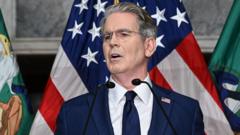
During a press conference on Monday, Bessent outlined what is now referred to as “Operation Economic Outcast.” He emphasized that the US is launching an “economic onslaught against Iran’s financial connections around the globe.” The treasury secretary went on to mention that America is taking decisive action against networks, facilitators, and financial channels Iran uses to evade sanctions and continue trading oil. This is serious business, folks. The Treasury Department has targeted five key sectors: digital assets, technology, gold, aviation, and shipping. Nearly 60 entities, individuals, and vessels are now on the sanctions list, which is no small feat.

Bessent made it clear that those who support Iran should be on high alert. He stated, “They should know that this will move very quickly and that we are serious.” With the renewed US naval blockade tightening its grip on Iran’s oil exports, the immediate consequences of this “economic D-Day” for Iran are looming large. It’s essential to note that around 90% of Iran’s oil exports go to China, which complicates the situation even further.

As the conflict drags on, previous threats have echoed in the air, with Trump having warned in April that “a whole civilization will die.” The stakes are incredibly high, and the implications of these sanctions could be monumental. As the Biden administration continues to impose strict measures, the question remains: how will Iran respond to this unprecedented financial pressure? Will they find a way to navigate these treacherous waters, or will this be the tipping point? One thing is for sure; the world will be watching closely as this economic battle unfolds.

Kaynak: Orijinal Haber

US Treasury Secretary Declares Economic War on Iran: The Stakes Skyrocket!

The US Treasury Secretary has issued a stark warning to Iran, stating that the country faces “the single greatest financial offensive ever.” This al

The US Treasury Secretary has issued a stark warning to Iran, stating that the country faces “the single greatest financial offensive ever.” This alarming declaration comes as the ongoing US-Israel war with Iran appears to be reaching a critical juncture. The urgency of the situation is underscored by the Treasurer’s comments that suggest an impending economic “D-Day” for the Iranian regime, following a series of policy reversals and extended deadlines from former President Donald Trump.

In a compelling opinion piece published in the Financial Times, the Secretary emphasized that if the conflict escalates, the US would take drastic measures, including shutting down all oil exports from the region. Oil and gas typically flow through strategic waterways south of Iran, but since the hostilities began in late February, these routes have effectively been blocked by Iranian forces. The Secretary hinted at the specifics of this economic pressure, though he has not gone into detail yet; a press conference is expected to shed more light on the situation on Monday at 1:00 PM local time (6:00 PM BST).

So, what does this mean for the Iranian economy? Well, it’s pretty serious. The US has been issuing various threats over the course of this conflict, with Trump even stating back in April that “a whole civilization will die” if Iran doesn’t comply. The stakes couldn’t be higher, especially as the US reimposes sanctions that could cripple the Iranian economy further.

As tensions mount, many are left wondering what the future holds for Iran, and whether the regime can withstand the looming financial storm. Will they find a way out of this mess or will the pressure force a major shift? It’s a waiting game now, and developments are bound to unfold rapidly.

Kaynak: Orijinal Haber

China Imposes Export Controls on U.S. Firms Before Xi’s Visit to Washington!

Recent developments have emerged as China announced new export controls targeting U.S. firms just ahead of President Xi Jinping’s highly anticipated

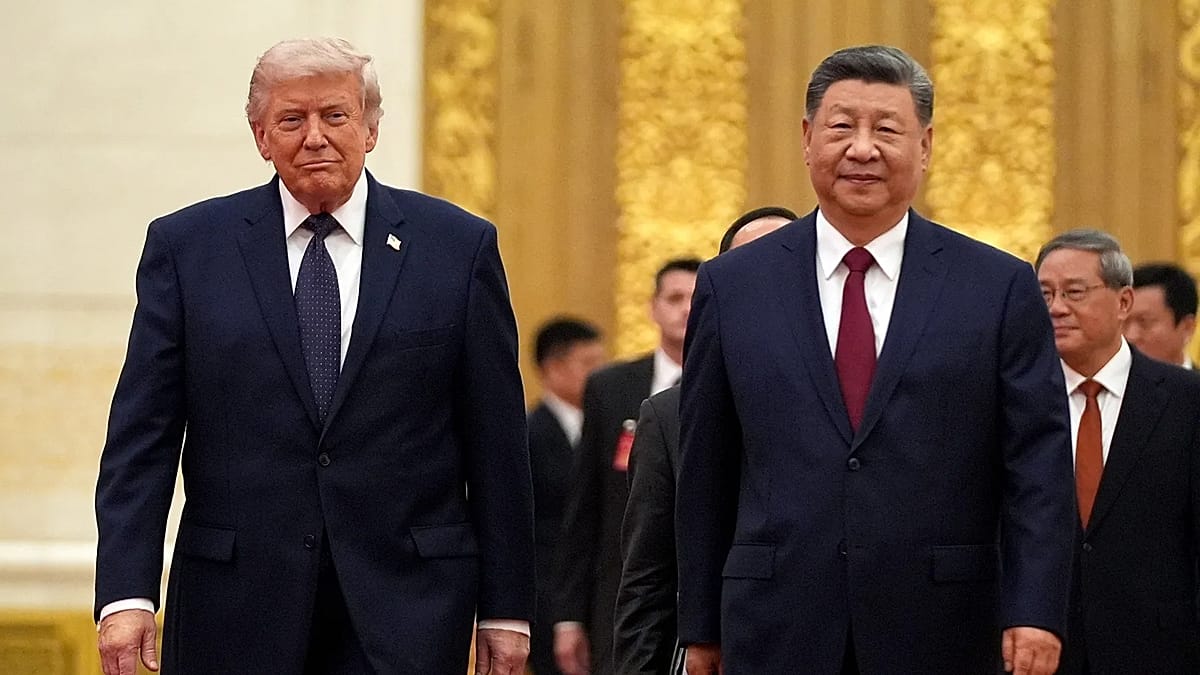
Recent developments have emerged as China announced new export controls targeting U.S. firms just ahead of President Xi Jinping’s highly anticipated visit to Washington. This move, which is being closely watched by international observers, raises questions about the impact on U.S.-China relations and global trade dynamics.

The Chinese government has specified that the restrictions will primarily affect key technologies and materials that are essential for various industries. The timing of this announcement is particularly striking, as Xi’s visit is expected to focus on enhancing economic ties and addressing ongoing trade tensions. Speculations are rife about whether these controls are a strategic maneuver to assert China’s stance on trade negotiations.

The export controls are seen as part of a broader trend of increasing competition and tensions between the two countries. Analysts point out that this could complicate discussions during Xi’s visit, which was initially aimed at fostering cooperation on issues like climate change and economic growth. The controls may also affect U.S. companies operating in China, potentially leading to disruptions in supply chains.

Citizens and businesses alike are left wondering how these developments will unfold. Yahu, these restrictions could mean higher costs for consumers and difficulties for companies that rely on Chinese imports. The ripple effects of such decisions might not only affect the U.S. but also have implications for global markets.

As the news continues to develop, many are curious about how the U.S. government will respond. Will there be retaliatory measures, or will both nations find a way to navigate these challenges? The stakes are high, and the world is watching closely.

Bakalım, Xi’nin ziyareti sonrası bu durum nasıl şekillenecek? Gelişmeleri takip ediyoruz…

Kaynak: Orijinal Haber

US Economic Growth Hits a Snag: Just 1.5% in Q2!

The US economy’s growth has hit a bump in the road, folks. According to official figures from the Commerce Department, the economy grew at an annual

The US economy’s growth has hit a bump in the road, folks. According to official figures from the Commerce Department, the economy grew at an annual rate of just 1.5% in the second quarter, a noticeable dip from the 2.1% growth seen in the first three months of this year. This slowdown is happening as the world’s largest economy grapples with the financial repercussions of the ongoing war with Iran, while US businesses try to navigate the choppy waters of tariffs.

Now, let’s break it down a bit more. The numbers, they tell a story. Analysts had actually estimated a better performance than what we’re seeing, but lower government spending, investment, and exports have really put a damper on things. It’s like the brakes have been hit hard, and the momentum just isn’t there anymore. But, wait—there’s a silver lining! Consumer spending has given the economy a bit of a boost. Can you believe that? Despite the challenges, people are still out there spending money.

It’s a mixed bag, really. You got one side showing caution with businesses tightening their belts, and on the other, consumers are still willing to open their wallets. It’s a tug-of-war we’re witnessing. The impact of global events, especially the situation with Iran, adds another layer of complexity to the economic landscape. It’s a lot to unpack and not easy to navigate.

As we look ahead, the big question on everyone’s mind is: where do we go from here? Will consumer spending continue to carry the weight, or will the government and businesses need to step up their game? Only time will tell, but one thing’s for sure—the economy is in a delicate balance, and we’re all watching closely.

Kaynak: Orijinal Haber

US Strikes Iran: A Powerful Response to Middle East Tensions

The US military has officially launched strikes against Iran as a direct retaliation for an attempted surprise attack on American forces stationed i

The US military has officially launched strikes against Iran as a direct retaliation for an attempted surprise attack on American forces stationed in the Middle East. Centcom, in a post on X, labeled these strikes as “a powerful response” to what transpired on Tuesday. They made it clear: “We’re going to be hitting them very hard because it’s our turn to hit them. They know it’s coming. They asked us not to do it.” These words echo with a sense of impending action, a feeling that the situation is about to escalate significantly.

In response, Iran has condemned the US strikes, describing the actions of the “American child-killing army” as aggressive and unprovoked. They claimed to have “ignored warnings” and proceeded along what they termed an “unsafe and illegal route” while targeting multiple terrorist logistics and weapon sites across eastern Iraq. This comes after over 30 drone attacks directed by the IRGC in the last 72 hours, suggesting a high-stakes back-and-forth that’s been brewing for quite some time. Iran’s actions have raised eyebrows, leading to a tense atmosphere in the region, particularly as they assert their right to defend themselves against what they see as blatant acts of aggression.

Interestingly, former President Trump, while speaking to Fox News, stated that the strikes had been “coordinated with the Iraqi government”, which adds another layer to an already complex situation. Iraq, caught in the middle, has termed the attacks unacceptable and a clear violation of its sovereignty. This sentiment reflects the ongoing struggle for regional dominance between Saudi Arabia, the leading Sunni Muslim power, and Iran, the largest Shia Muslim country. For decades, this rivalry has shaped the geopolitics of the area, and now, with the US’s involvement, it seems the tensions are only heating up.

So, what’s next? How will Iran respond to this powerful offensive? Will the Iraqi government be able to mediate and bring about a ceasefire, or are we on the brink of a larger confrontation? The events of the coming days will be crucial in shaping the future of US-Iran relations and the stability of the Middle East.

Kaynak: Orijinal Haber

US Strikes Against Iran Continue for Seventh Night in a Row!

The situation in the Middle East is heating up as US strikes on Iran have entered their seventh consecutive night. The airstrikes have reportedly tar

The situation in the Middle East is heating up as US strikes on Iran have entered their seventh consecutive night. The airstrikes have reportedly targeted various sites, including military logistics infrastructure, underground weapons storage, and maritime capabilities. Images shared on Friday depict a damaged bridge in Iran, indicating the intensity of the bombardments.

Iran’s armed forces claimed they intercepted ten Iranian missiles that were fired into its airspace overnight, thankfully resulting in no casualties or significant damage. Centcom, the US Central Command, confirmed that their strikes wrapped up around 21:30 ET (02:30 BST) after several hours of action. Interestingly, during this chaotic time, Iran’s state-run Fars agency reported that two oil tankers were involved in the fracas, although details remain murky.

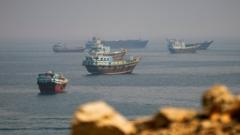
The situation escalated further when explosions were heard in the central city of Yazd, Qeshm Island, and the port of Bandar Abbas, right next to the strategic Strait of Hormuz. Reports suggest that commercial vessels have largely halted their passage through this critical waterway, raising concerns about international shipping and oil supplies.

Adding to the tension, US partner CBS News reported that several American service members sustained injuries during Iranian attacks on two Jordanian bases over the past week. However, Washington has firmly denied Tehran’s claims that the strikes were aimed at anything other than military targets. As Friday marks a full week since peace talks with Iran collapsed, the stakes have never been higher.

So, what’s next in this unfolding drama? Will the US and Iran find a way to de-escalate, or are we in for more sleepless nights filled with airstrikes? Only time will tell…

Kaynak: Orijinal Haber

US Military Strikes Iran Following Cargo Ship Attack: Tensions Rise in the Gulf

The US military has launched strikes on Iranian targets, escalating tensions in the Gulf region after President Donald Trump accused Iran of a “fooli

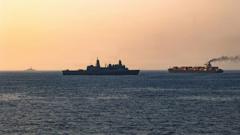
The US military has launched strikes on Iranian targets, escalating tensions in the Gulf region after President Donald Trump accused Iran of a “foolish violation.” This comes on the heels of a drone attack attributed to Iran on a cargo ship. Just moments before the strikes were announced, Trump warned that “you’ll see a powerful response” to the ongoing provocations. The nature of these military actions remains unclear—are they isolated incidents, or part of a broader strategy?

In a statement, the Islamic Revolutionary Guard Corps (IRGC), which has been heavily involved in the tensions, blamed the US and Israel for the rising conflict. They declared that they would respond to any violence with violence, emphasizing the volatile situation. Hours after the attacks, the IRGC accused the “Zionist regime” of complicating efforts for the safe passage of commercial vessels, which they claim has been free of charge for 60 days.

Meanwhile, the US Central Command (Centcom) stated that they would continue to monitor the situation closely. Trump, speaking to reporters at the White House, was tight-lipped about the specifics of the military response but hinted that actions would be forthcoming. “You’ll find out,” he said, adding that the situation is “a little bit different” this time around.

On the ground, the situation is becoming increasingly complex. Reports have surfaced suggesting that Iran is charging fees to tankers navigating through the Strait of Hormuz, a move that many experts believe violates international maritime law. The US has condemned these actions as unacceptable. Just days ago, Iranian and Omani officials held discussions in Muscat regarding the future management of navigation in the strait, emphasizing a commitment to toll-free safe passage. However, Iranian officials have warned that the administration of the Strait can never revert to its pre-war state.

On a related note, the UN’s International Maritime Organization (IMO) has paused plans to evacuate over 11,000 sailors stranded in the critical shipping lane since the conflict escalated. The stakes are high, and with Trump requesting billions for military operations against Iran, the situation only seems to be spiraling further into chaos.

As the tension rises, Trump has also accused Iran of breaching the ceasefire established earlier, further complicating diplomatic efforts. It’s clear that the region is on edge, and many are wondering what the next steps will be. Will there be a de-escalation, or are we on the brink of a larger conflict?

Kaynak: Orijinal Haber

New US-Iran Agreement: Key Points You Need to Know!

A US-Iran agreement to extend the ceasefire between the two countries has been signed and is now in effect, a White House official has confirmed to t

A US-Iran agreement to extend the ceasefire between the two countries has been signed and is now in effect, a White House official has confirmed to the BBC. President Donald Trump formally signed the deal while attending the G7 summit in Evian-les-Bains, France. This 14-point agreement, known as a Memorandum of Understanding (MoU), stipulates that Iran will never possess a nuclear weapon and allocates a whopping $300 billion fund for the country’s “reconstruction and economic development,” although it’s important to note that the US is not required to contribute financially.

This deal comes four months after tensions escalated between the nations and Israel. The Trump administration has labeled the agreement as “performance-based,” meaning that Iran will only see benefits if it adheres to its commitments. However, the text of the deal leaves many questions unanswered and some critical issues unresolved.

The opening paragraph of the agreement indicates that the US, Iran, and their allies will declare an “immediate and permanent” end to military operations on “all fronts,” including Lebanon. Trump has voiced concerns that Israeli military actions against Hezbollah could jeopardize the agreement with Iran. On the flip side, Tehran has made it clear that it expects Lebanon to be included in the truce. If Israeli military operations persist in Lebanon, it would be considered a “violation of the understanding,” and the Iranian Ministry of Foreign Affairs has warned that “necessary measures will be taken.”

The agreement specifies that both parties are to refrain from initiating military operations or threats against each other, ensuring the “territorial integrity and sovereignty” of Lebanon. This is a significant point, and it remains to be seen how Israel will respond. The document also emphasizes the need for the US and Iran to “respect each other’s sovereignty” and refrain from meddling in internal affairs, which might not sit well with Iranian dissident groups. Earlier this year, Trump had promised support to Iranian protesters during widespread anti-government demonstrations in various cities.

The MoU also states that the US and Iran commit to negotiating a final deal within a “maximum” of 60 days, although this timeline could be extended if both parties agree. That countdown has officially begun since the leaders signed the MoU. Trump inked the agreement at a post-G7 dinner at the Palace of Versailles, and Iranian President Masoud Pezeshkian also put his signature on it. A formal signing ceremony in Geneva was hinted at, but its status remains uncertain.

Once the MoU is signed, the US will begin to lift its naval blockade and remove “any disturbances or impediments” affecting Iranian ports. The blockade is set to be fully lifted within 30 days, aligning with the agreement and statements from the Iranian Ministry of Foreign Affairs. During this period, the number of vessels allowed through Iranian ports by the US will be proportional to the traffic being restored by Iran in the crucial Strait of Hormuz.

Within 30 days of a final deal being signed, the US has pledged to withdraw American forces from the “proximity of Iran,” reverting to the military posture and assets in place before hostilities began on February 28. The agreement highlights that Iran will “make arrangements using its best efforts” to facilitate the safe passage of commercial vessels through the Strait of Hormuz, free of charge. This has been a significant objective for the US since the conflict began, as the closure of the Strait sent global oil prices soaring.

The document points out that traffic will resume “immediately,” accounting for the removal of technical and military “obstacles” and conducting de-mining operations. Officials have stressed that vessels will not be charged for transit through the Strait of Hormuz. Looking further ahead, the agreement mentions that Iran will collaborate with Oman and other Gulf states to create a “broader” framework for managing the Strait of Hormuz.

An American official expressed that while the US believes Iran will assert its rights “aggressively,” Gulf states would “never” accept a toll system in the region. The MoU also states that the US and regional partners will develop a “definitive, mutually agreed plan” valued at least $300 billion for Iran’s reconstruction and economic development. However, the US will not be financially involved, as it is not obligated to pay anything to Iran.

Trump has made it clear that the agreement contrasts sharply with the 2015 nuclear deal made by the Obama administration. The US will terminate all economic sanctions against Iran, including those from UN Security Council resolutions and unilaterally imposed sanctions. However, timelines remain unclear, and both sides have expressed intentions to address this issue promptly in future negotiations.

Iran has agreed not to procure or develop nuclear weapons and both nations will work on how to manage Iran’s existing enriched uranium. Although the method remains uncertain, it is noted that the material will be “downblended” under the supervision of the International Atomic Energy Agency (IAEA). A senior US official regarded this as a “minimum standard” and a “major win” for the US.

The agreement also maintains a “status quo” on Iran’s nuclear program until the enriched uranium can be resolved, meaning the US will not impose new sanctions during this period. Additionally, waivers for oil exports and banking transactions will be issued. Iran has long demanded the release of its frozen assets for economic relief, and the document promises that the US will make available these funds once the MoU is signed.

The last sections of the document outline how the deal will be implemented. Both countries will create a “mechanism” to monitor compliance with the MoU and future agreements, although specifics are still vague. Once the MoU is enacted, negotiations for a final deal will commence, ultimately endorsed by a binding UN Security Council resolution.

Trump has asserted that this deal guarantees Iran will never develop or acquire nuclear weapons, although the agreement’s text may not fully reflect this assurance. With these developments unfolding, the question lingers—what comes next for US-Iran relations?

Kaynak: Orijinal Haber