
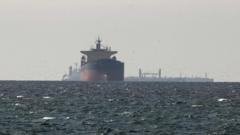
US Military Strikes Iran Following Cargo Ship Attack: Tensions Rise in the Gulf

The US military has launched strikes on Iranian targets, escalating tensions in the Gulf region after President Donald Trump accused Iran of a “fooli

US Military

The US military has launched strikes on Iranian targets, escalating tensions in the Gulf region after President Donald Trump accused Iran of a “foolish violation.” This comes on the heels of a drone attack attributed to Iran on a cargo ship. Just moments before the strikes were announced, Trump warned that “you’ll see a powerful response” to the ongoing provocations. The nature of these military actions remains unclear—are they isolated incidents, or part of a broader strategy?

In a statement, the Islamic Revolutionary Guard Corps (IRGC), which has been heavily involved in the tensions, blamed the US and Israel for the rising conflict. They declared that they would respond to any violence with violence, emphasizing the volatile situation. Hours after the attacks, the IRGC accused the “Zionist regime” of complicating efforts for the safe passage of commercial vessels, which they claim has been free of charge for 60 days.

Meanwhile, the US Central Command (Centcom) stated that they would continue to monitor the situation closely. Trump, speaking to reporters at the White House, was tight-lipped about the specifics of the military response but hinted that actions would be forthcoming. “You’ll find out,” he said, adding that the situation is “a little bit different” this time around.

On the ground, the situation is becoming increasingly complex. Reports have surfaced suggesting that Iran is charging fees to tankers navigating through the Strait of Hormuz, a move that many experts believe violates international maritime law. The US has condemned these actions as unacceptable. Just days ago, Iranian and Omani officials held discussions in Muscat regarding the future management of navigation in the strait, emphasizing a commitment to toll-free safe passage. However, Iranian officials have warned that the administration of the Strait can never revert to its pre-war state.

On a related note, the UN’s International Maritime Organization (IMO) has paused plans to evacuate over 11,000 sailors stranded in the critical shipping lane since the conflict escalated. The stakes are high, and with Trump requesting billions for military operations against Iran, the situation only seems to be spiraling further into chaos.

As the tension rises, Trump has also accused Iran of breaching the ceasefire established earlier, further complicating diplomatic efforts. It’s clear that the region is on edge, and many are wondering what the next steps will be. Will there be a de-escalation, or are we on the brink of a larger conflict?

Kaynak: Orijinal Haber

Bir yanıt yazın

E-posta adresiniz yayınlanmayacak. Gerekli alanlar * ile işaretlenmişlerdir

US Military Strikes Iran: Tensions Escalate in the Region

The US military has confirmed that it has launched new strikes on southern Iran, specifically targeting Iranian missile sites and boats that were rep

US Military

The US military has confirmed that it has launched new strikes on southern Iran, specifically targeting Iranian missile sites and boats that were reportedly laying mines. This action was described by US Central Command as a move taken in “self-defense” aimed at safeguarding American troops from perceived threats posed by Iranian forces. According to Central Command spokesperson Capt. Tim Hawkins, the military is committed to defending its personnel while exercising restraint during the ongoing ceasefire.

These strikes occurred near Bandar Abbas, a critical southern port city that hosts an Iranian naval base and overlooks the vital Strait of Hormuz. This area has been a focal point of tension and strategic importance, especially given its role in global oil shipping. Local officials in Bandar Abbas have noted reports of explosions, and investigations are currently underway, as Iranian state media has also picked up on the incidents. As of now, Iran has not issued any response to these latest military actions.

It’s a bit murky what these strikes mean for the broader peace negotiations that have been ongoing between the US and Iran. Just after the attacks, US Secretary of State Marco Rubio expressed that a deal could still be on the table. He highlighted that talks were scheduled for Tuesday involving Iran’s top negotiator and foreign minister in discussions with Qatar’s prime minister. Rubio mentioned, “We’ll see if we can make progress. There is a lot of back and forth regarding specific language in the initial document, so it’ll take a few days…”

Interestingly, President Donald Trump has reportedly signaled his desire for a strong deal, stating that he was either aiming for a good agreement or none at all. Over the weekend, he suggested that the two sides were on the verge of a deal but later advised negotiators not to rush things. Rubio added that they could potentially reach an agreement by Monday, but Iranian foreign ministry spokesman Esmail Baqai set the record straight, saying, “It is correct to say that we have reached a conclusion on a large portion of the issues under discussion… But to say that this means the signing of an agreement is imminent – no one can make such a claim.”

The ongoing discussions reportedly include a proposed 60-day extension of the ceasefire, reopening the Strait of Hormuz, and plans for further negotiations regarding Iran’s nuclear program. Meanwhile, US intelligence suggests that Iran’s Supreme Leader, Mojtaba Khamenei, is currently in an undisclosed location, complicating communications with his representatives and potentially slowing down the negotiation process.

As tensions remain high, it’s noted that the conflict has significantly impacted oil prices around the world. The US and Israel’s extensive strikes on Iran, which began back in February, have further escalated the situation, leading to Iran retaliating against Israel and US-aligned nations in the Gulf. The Strait of Hormuz remains a contentious area, with Iran maintaining control over shipping routes while the US Navy attempts to blockade Iranian ports.

In a twist, Mexico’s President Claudia Sheinbaum has even agreed to allow Iran to remain in the country during the World Cup, as the United States is not willing to host them. This deal includes the proposed ceasefire and reopening of the Strait of Hormuz, suggesting some progress in diplomatic discussions, although the nuclear weapons issue remains contentious and not part of the initial framework being discussed.

As we watch these developments unfold, one has to wonder how these military actions will affect the already fragile peace talks and whether a resolution can indeed be reached. Will there be a breakthrough, or will tensions continue to flare?

Kaynak: Orijinal Haber

Bir yanıt yazın

E-posta adresiniz yayınlanmayacak. Gerekli alanlar * ile işaretlenmişlerdir