
Can Europe Compete in the Global Battery Industry Race?

Europe is facing a critical juncture in its quest to establish a robust battery industry, especially as Chinese firms continue to dominate global pro

Europe is facing a critical juncture in its quest to establish a robust battery industry, especially as Chinese firms continue to dominate global production. The continent has made significant strides in recent years, but not without a few notable misses along the way. Companies like Sweden’s Northvolt and various Norwegian ventures are at the forefront of this ambitious push, but the road ahead is paved with challenges.

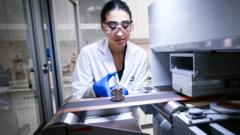
Christian Rood, a key figure at LeydenJar, emphasizes the risks involved, especially with the innovative technologies being explored. “Where normally a pure silicon anode would fall apart, this remains stable. It was a very wonderful invention,” Rood says, pointing out that they’ve managed to address some of the biggest bottlenecks in battery production. LeydenJar’s approach to technology showcases a unique competitive edge, and they’re not just theorizing; they’re implementing these principles in the lab, though taking it to industrial scale remains a complex task.

Roderik Colen, CEO of Powall, shares insights into how they are revolutionizing battery components. Their method involves a precise process known as atomic layer deposition that allows for significant adjustments to be made to current battery performance. “We’re utilizing a coating,” Colen explains, but he also warns that without the right industrial backing, these innovations might never see the light of day. The combination of powders and coatings in a chemical reaction is delicate yet flexible, enabling continual adaptations to their products.

Interestingly, both LeydenJar and Powall are not aiming to create complete batteries but rather to strengthen Europe’s position within the broader global contest. Rood asserts that there’s a fierce competition for advanced chip technology in the battery sector, and their ambition is to create such a unique battery anode that it secures a vital place in the supply chain.

Brown, another industry expert, chimes in on the potential of Europe’s battery supply chain. “Having part of the supply chain based in Europe is fantastic, especially if it’s a technologically advanced segment that offers high margins,” he states. However, he warns that Europe must keep an eye on China, which is tirelessly working to reduce its reliance on other regions.

Despite having the resources and expertise to produce high-quality products, Rood highlights a significant difference in risk attitude between Europe and regions like Asia and the US. He mentions the various funding avenues available, including government grants and support from the European Investment Bank, but insists that a proactive risk appetite is essential for success in this industry.

The quest for innovation in battery technology is ongoing. As Europe searches for the right tech to bolster its battery capabilities, the potential for small changes to lead to significant advancements looms large. The stakes are high, and the competition fierce, prompting questions about how Europe will navigate this challenging landscape.

Bakalım, bu yarışta Avrupa nasıl bir yol çizecek?

Kaynak: Orijinal Haber

Spanish and Portuguese Companies Race to Secure Battery Backup After Devastating Blackout

On April 28, 2025, chaos erupted across the Iberian Peninsula as both Portugal and Spain were plunged into darkness for several hours due to a massiv

On April 28, 2025, chaos erupted across the Iberian Peninsula as both Portugal and Spain were plunged into darkness for several hours due to a massive power failure. This unexpected blackout sent shockwaves through businesses as they scrambled to maintain production, digging out old radios and lanterns to navigate the sudden crisis. In Binéfar, a town in northeastern Spain’s Aragon province, the Spanish meat processing company Fribin found its production lines ground to a halt mid-morning. Andrés Altabás, a representative from Fribin, shared the dire consequences: “Many tonnes of meat in the processing stage had to be discarded.”

The power cut forced Fribin’s management to reevaluate their backup plans, recognizing the significant energy needs of their operations. Altabás emphasized how the blackout catalyzed much-needed investment into backup systems. Many firms across Europe, under pressure to shift from fossil fuels to electricity, were exposed to the risks of sudden power outages. This was particularly evident for businesses in Spain and Portugal, where the threat of blackouts was laid bare.

With production grinding to a halt, companies on both sides of the border are desperately searching for solutions to avoid disruptions in the future. Just a few hours or even minutes of backup power can prevent costly damages to machinery. The Institute for the Diversification and Saving of Energy recently allocated €827 million in EU funds to 133 energy storage projects aiming for a total capacity of 2,400 megawatts, with about 80% of this coming from battery storage. This new capacity is set to be nearly ten times the current total on the Spanish grid, creating a boom for battery suppliers.

Alberto Bodegas from battery storage company Sungrow explained how the demand for backup solutions has transformed. Where once clients sought basic support, now they require advanced capabilities that ensure an instantaneous switch from grid power to backup systems, especially critical in sensitive settings like hospitals and data centers. Delivery times are also crucial, as battery suppliers face tight deadlines linked to EU funding programs, pushing them to accelerate their production timelines.

Take, for instance, Vista Alegre, the oldest and largest porcelain manufacturer in Portugal, which decided to invest in energy storage systems in 2022, taking advantage of EU Recovery and Resilience Plan funds. Emília Encarnação, a representative from Vista Alegre, noted the severe losses incurred during the blackout, particularly in facilities that operate continuously. Their roller kilns, integral for transporting materials through various production phases, depend on electric motors. Thanks to a generator during the power cut, they managed to keep production rolling, minimizing losses for that day. This unfortunate experience led to an expedited installation of solar panels, providing some reassurance for future power instability.

The underlying sentiment among businesses is clear: they can’t afford to gamble on power returning in time. Waiting for the lights to come back on is no longer an option, and as the landscape of energy needs continues to evolve, the question remains: what will be the next step in securing energy independence in Spain and Portugal?

Kaynak: Orijinal Haber