

Burnham Hints at Possible Tax Hikes in Upcoming Autumn Budget!

Andy Burnham has made it clear that he isn’t ruling out tax increases in the upcoming autumn Budget. The new Prime Minister stated he “won’t be unre

Andy Burnham has made it clear that he isn’t ruling out tax increases in the upcoming autumn Budget. The new Prime Minister stated he “won’t be unrealistic” about the financial challenges ahead, emphasizing the need for a careful approach as he steps into this pivotal role.

Burnham acknowledged the tough economic landscape, saying, “We are in a challenging position, whatever I do will be carefully thought through.” He mentioned that the cost of employing people has skyrocketed, which is holding back growth and opportunities for the government to increase tax receipts. This raises the question: will taxpayers need to foot the bill to cover the budgetary gaps?

He highlighted that as he transitions into his new position, he plans to prioritize funds to tackle immediate issues rather than jumping into less critical projects, like digital ID initiatives. “I took the decision early on that digital ID wasn’t the top priority for now,” he noted.

In light of the current cost of living crisis, Burnham admitted that the assistance provided so far is insufficient and hinted at additional support to come. He stated, “I will try to help them in whatever way I can,” showing a commitment to the welfare of the citizens.

Moreover, Burnham raised concerns about the potential impacts of international conflicts, like the situation in Iran, saying it could adversely affect UK growth next year. “Nothing will change as I come into this role as prime minister,” he assured, but the reality is that tough decisions lie ahead.

As we move closer to the autumn, all eyes will be on Burnham’s decisions. Will he raise taxes to bridge the financial gaps? And what other measures might he propose to ensure that the citizens are supported in these trying times? The answers are still unfolding, and it seems the journey has just begun…

Kaynak: Orijinal Haber
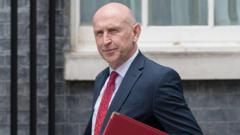
UK Government’s Borrowing Surges: What Does It Mean for Healey’s Budget?

The UK government has borrowed more than anticipated in July, as Chancellor John Healey prepares to unveil his first Budget. According to figures re

The UK government has borrowed more than anticipated in July, as Chancellor John Healey prepares to unveil his first Budget. According to figures released by the Office for National Statistics (ONS), borrowing reached a staggering £1.8 billion during the month. This is quite a shocker, considering official forecasters had actually expected a surplus of £500 million. So, in essence, the government ended up borrowing £2.3 billion more than previously predicted. Can you believe it?

Economists are sounding alarms, warning that this borrowing spree might limit Healey and Prime Minister Andy Burnham’s ability to maintain strong fiscal discipline. These fiscal rules commit the government to funding all day-to-day spending solely through tax receipts by the decade’s end. Healey himself commented on the borrowing figures, noting that July’s £16 billion borrowing, aided by a spike in self-assessed income tax receipts, has brought the fiscal year’s total to £56.7 billion. While that’s lower than last year, it still overshoots forecasts from the Office for Budget Responsibility (OBR) by £2.3 billion, which is the number-crunching body the government relies on for its spending plans.

Ashley Webb, a senior economist at Capital Economics, has labeled this figure as part of a “run of bad news” for the economy. He pointed out that this borrowing overshoot is likely to widen, complicating the tough decisions that Healey will have to face in the upcoming October Budget. It’s a tightrope walk for Healey as he strives to balance the books while adhering to the government’s fiscal rules. And let’s not forget, the ONS also revealed that Britain’s spending is leaving “ordinary families” feeling the pinch. Just imagine, we’re spending more on the interest of our soaring debt than we do on our defense, police, and prisons combined. That’s a tough pill to swallow, isn’t it?

Daisy Cooper, a Treasury spokesperson, has emphasized that in their autumn Budget, the Chancellor really needs to take the handbrake off Britain’s economy. Meanwhile, retail sales figures for July were lackluster as well, showing a 0.5% decline from June. Analysts speculate this drop is due to a combination of blistering hot weather and a surge in sales during the World Cup in June. The clothing and footwear sectors are particularly struggling, showing the slowest growth since May of last year.

And let’s not forget about Prime Minister Burnham, who recently admitted that the cost of living help provided so far is simply not enough. He hinted at the possibility of further support, while also warning that ongoing conflicts, like the one in Iran, could impact UK growth next year. The pressure is on, and both the PM and Chancellor have urged ministers to stick to spending limits in a joint memo. It’s a real balancing act, folks…

So, what does all this mean for the future? Will Healey be able to navigate these choppy waters and deliver a Budget that resonates with the needs of the public? The stakes are high, and we’ll just have to wait and see how things unfold.

Kaynak: Orijinal Haber

Starmer Unveils £15bn Defence Boost Amid Budget Cuts!

Prime Minister Sir Keir Starmer has made a bold move, announcing a £15 billion increase in military spending that will be financed by slashing inves

Prime Minister Sir Keir Starmer has made a bold move, announcing a £15 billion increase in military spending that will be financed by slashing investment budgets across various sectors. This decision comes as the UK prepares to enhance its military capabilities, including plans for new submarines and F-35A fighter jets designed to carry nuclear bombs. Starmer aims to allocate £5 billion specifically for a “drone transformation” initiative and to advance a hybrid navy that incorporates uncrewed electronic warfare drone systems… It’s a significant shift in the UK’s defence strategy, driven by the need for increased “warfighting readiness.”

Now, the Prime Minister set a core defence spending target of 3.5% of GDP by 2035. He mentioned that the UK is on track to spend 3% of GDP on defence in the next five-year Parliament. However, he didn’t specify a precise date for reaching this target, which had been a point of contention for some, including Shadow Defence Secretary, Rachel Healey. The Defence Investment Plan (DIP) aims to outline how the government plans to hit that 3% target at the next spending review, which is slated for next year.

In the wake of the Strategic Defence Review (SDR) published back in June 2025, which promised billions in extra spending, Starmer acknowledged that while the current plan might be a step toward progress, it wouldn’t fully address the pressing issues surrounding the UK’s military readiness. “It’s a legacy of failure,” Starmer said, criticizing the previous underfunded defence investment plan that he claims has “dangerously short-changed our armed forces.” This has raised alarms among defence chiefs who are increasingly concerned about the capability of the military to respond effectively and swiftly to emerging threats.

NATO General Secretary Mark Rutte has previously urged member states to present clear and concrete plans at the upcoming summit in Turkey next week. He welcomed the DIP as a positive step towards the 3.5% target, stating, “A stronger UK defence makes us all safer.” The stakes are high, and many are watching to see how these proposed changes will unfold in the coming months…

So, will these budget cuts truly lead to the military advancements that the UK desperately needs? Or are we just witnessing another cycle of promises with little substance? Gelişmeleri takip ediyoruz…

Kaynak: Orijinal Haber