
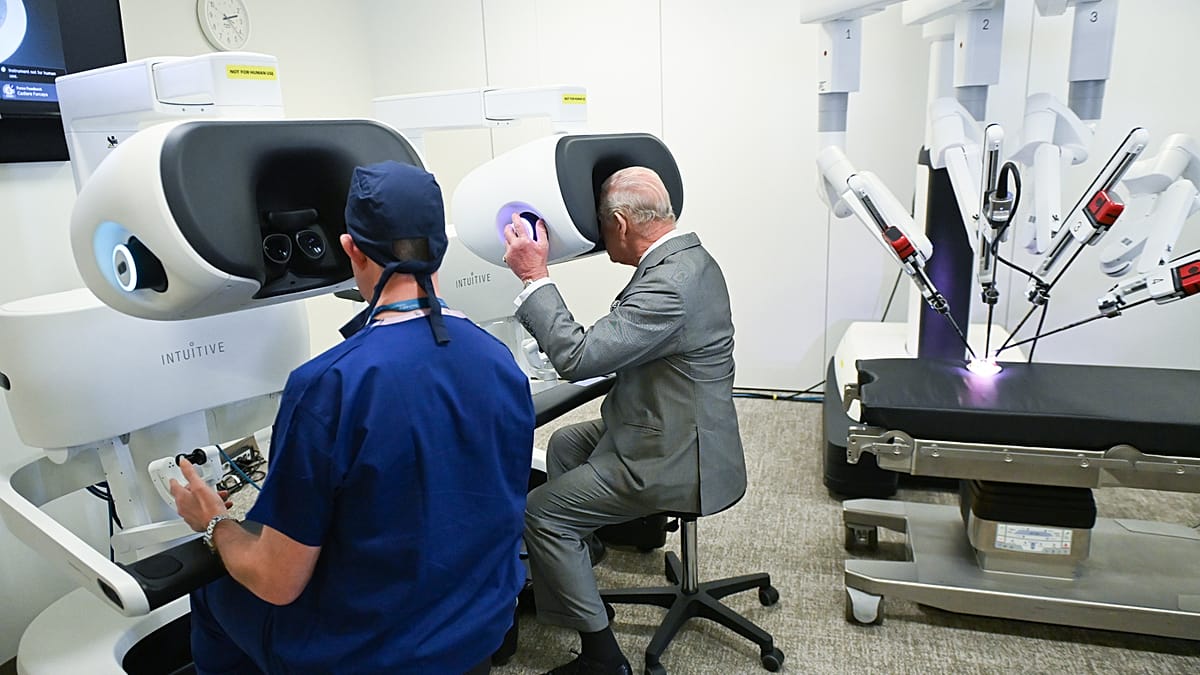
In a cutting-edge surgical theater in the UK, a 60-year-old consultant thoracic surgeon is passionately demonstrating the power of robotics in medicine. With a 3D headset pulled away from his face, he’s just finished a complex procedure and confidently declares, “We’ve saved a lot of lung.” This surgeon, Stamenković, is not just operating; he’s paving the way for the future of surgery, and his audience—three surgeons from another English hospital—are keenly observing as he utilizes the impressive da Vinci 5 robotic-assisted surgical system, crafted by the US company Intuitive. This advanced equipment is set to arrive in their operating theater later this year, marking a significant step towards integrating robotic technology in keyhole surgeries across the UK.
Instructions are relayed through a microphone to his surgical team, which includes nurses who have undergone specialized training as robotic surgical first assistants. As the director of robotic surgery and research at Barts Health NHS Trust, Stamenković is at the forefront of this technological revolution, running fellowships at St Bartholomew’s Hospital. “The biggest challenge,” he notes, “is embedding robotics into training programs.” He argues that despite the futuristic nature of robotic surgery, it has actually brought keyhole procedures closer to the traditional open surgeries that surgeons have long valued. “Robotic surgery has returned us to what surgeons always wanted: an art form that allows us to create something with our hands,” he explains passionately.
The excitement in the room is palpable as Stamenković’s hands deftly maneuver the robotic arms, showcasing the precision and control that these machines offer. “You can’t just throw anyone into this; they need to be more adept than their older counterparts,” he emphasizes. The commitment to training the next generation of surgeons is evident. It’s not just about saving lives—it’s about enhancing the craft of surgery itself. “We need to ensure that the future surgeons are not only knowledgeable but also skilled in using these robotic systems,” he insists.
As the conversation shifts back to the technology, Stamenković highlights the extraordinary potential that robotic systems hold for the future of surgery. “It’s not just a trend; it’s a fundamental shift in how we approach these procedures.” This dedication to embracing innovation reflects a broader trend within the NHS, as the healthcare system seeks to adapt and evolve with the times. The idea of standardized, consistent funding models for such advanced technologies is on the table, which could revolutionize the way surgeries are conducted across the nation.
So, what does this mean for the future? As robotic surgery becomes more prevalent, the implications for patient care and surgical outcomes could be monumental. With the equipment arriving soon and training programs in full swing, one can’t help but wonder: how will this change the landscape of surgery as we know it? The possibilities seem endless, and Stamenković and his team are ready to lead the charge into this brave new world of surgical excellence.
Kaynak: Orijinal Haber