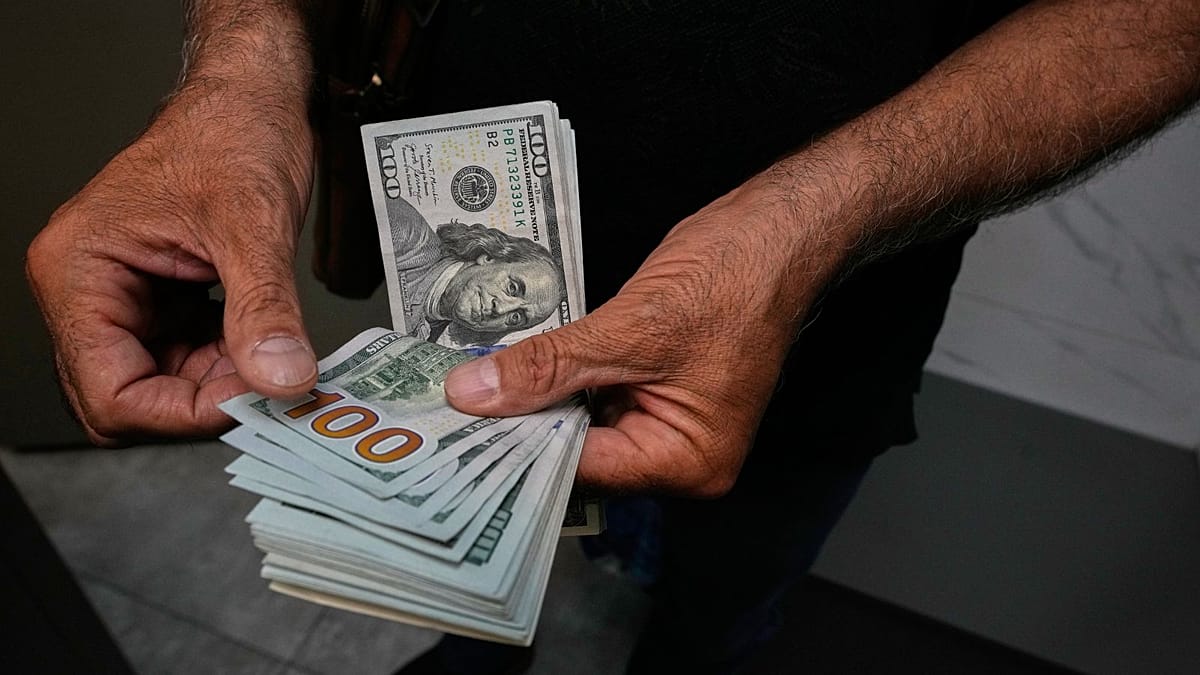
The US dollar has now broken above the staggering 2.1 million Iranian rials, sending shockwaves through the Iranian economy. This rapid decline in the rial’s value has been exacerbated since the US reimposed a naval blockade on Iranian ports this past July, right after a fragile ceasefire came crashing down. The euro has also hit an all-time high of 2.55 million rials, while the UK pound surged to a jaw-dropping 2,976,000 rials. And if you can believe it, the UAE dirham—often used as a benchmark for pricing the rial in regional markets—has reached 600,000 rials for the first time ever! To put things into perspective, just one gram of 18-carat gold now costs an astonishing 225.7 million rials, and the Imami gold coin, a traditional unit of value in Iran, is changing hands at a staggering 2.26 billion rials.
Iran’s economy is really in a tight spot, especially with its dual exchange rate system. The official rate, which is set by the Central Bank for state transactions and essential imports, is significantly higher than what ordinary Iranians and businesses can access in the free market. And get this—the gap between the two rates has widened dramatically since the conflict began, with the free market rate now more than double the official one. The rial has been in freefall ever since the US-Israeli strikes against Iran kicked off the ongoing war back on February 28. Now, as we are seven months into this conflict, Washington’s tightening economic pressure is only making things worse.
The US Treasury has effectively cut off Iran’s main channels for accessing foreign currency and clearing import payments. And let’s not forget the naval blockade of Iranian ports, which has only added to the economic pressure by restricting trade routes and limiting Iran’s ability to operate effectively. One expert even noted that the dust stirring up in the foreign exchange market will eventually settle, and that the recent spike in exchange rates is more psychological than grounded in real economic conditions. However, he acknowledged that inflation and rising prices are placing a heavy burden on the people.
Interestingly, he disputed claims from the US that Tehran has no access to official reserves. He stated that over $18 billion in foreign currency has been allocated for imports of vital goods, medicines, animal feed, and raw materials since March—but without providing any supporting details for that claim.
As the rial continues to lose value, the prices of all imported goods, raw materials, and energy inputs have skyrocketed. Iranians who were hoping to save in rials are now witnessing their purchasing power nearly halved in less than six months! It’s no wonder that gold and hard currency have become the go-to stores of value for those lucky enough to access them. In the free market, the US dollar is now trading at around 220,000 tomans, and to add to the chaos, the government’s plans announced back in 2020 to replace the rial with the toman and remove four zeros from the currency still haven’t been fully implemented.
So, what’s next for the Iranian economy? Can it recover from this tumultuous period, or are we in for more of the same? Only time will tell…
Kaynak: Orijinal Haber