
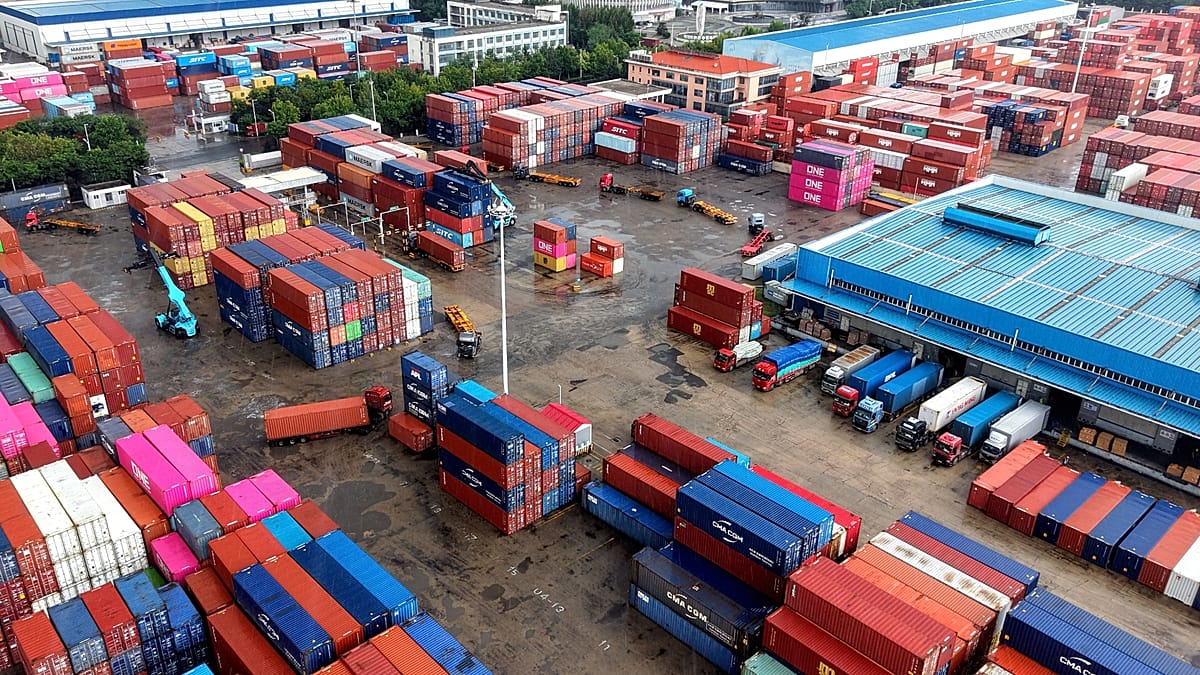
China’s exports accelerated in August, soaring by a staggering 25% compared to the same month last year, thanks to a robust demand for automobiles and high-tech products, as reported by the customs agency on Tuesday. This impressive growth comes just ahead of a highly anticipated meeting between US President Donald Trump and Chinese leader Xi Jinping, which is set for late September, although Beijing has yet to confirm the exact date.
Just to put things in perspective, exports had already seen a notable increase of 23.9% year-on-year in July. Meanwhile, imports climbed by 28.2% in August from a year earlier, showing a rise from July’s 27.5% increase. This all contributed to a whopping $119.1 billion (€102.4 billion) trade surplus for China, marking an increase from July’s $112.5 billion (€96.8 billion). “China is very competitive in its tech goods exports,” remarked Chi Lo, a senior market strategist for Asia Pacific at BNP Paribas Asset Management, emphasizing the nation’s strong position in the global market.
In recent times, rising exports of electric vehicles, industrial machinery, and semiconductors have significantly fueled China’s robust shipments worldwide. “China has moved aggressively up the value chain and has become a major player in AI infrastructure and industrial automation,” Lo added, highlighting the country’s strategic advancements.
What’s more, China has been weathering the disruptions from the ongoing conflict in Iran better than many other nations. The country has also ramped up its exports to Southeast Asia, Latin America, and Africa, effectively shielding itself from the adverse impacts of elevated US tariffs on its overall export figures.
However, it’s not all smooth sailing. Policymakers in the US and Europe are increasingly concerned about China’s ballooning trade surplus, which shot up to a record $1.2 trillion (€1.0 trillion) last year. Trade is expected to be a hot topic during the upcoming discussions between Trump and Xi. Yet, Lo warns that the strategic stalemate between the two nations is likely to persist. “Both sides hold each other hostage in some strategic products, with the US withholding high-end tech goods from being sold to China and China withholding rare-earth exports to the US,” he explained.
In addition, China and the EU are gearing up for ministerial-level trade talks this fall, as the EU wrestles with its daily trade deficit of around 1 billion euros with China. The EU already took measures back in July to protect its steel industry and has limited tax-exempt imports of small parcels from Chinese e-commerce.
Back at home, China continues to grapple with its economic growth, as both consumption and investment remain sluggish following a prolonged downturn in the real estate sector. Just this past Sunday, reports indicated that China was injecting around $54 billion (€46 billion) into state banks and insurers to help revive its economy.
So, what’s next for China on the global trade stage? Will these impressive export figures continue, or will internal struggles hinder progress? We’ll be keeping a close eye on how this all unfolds.
Kaynak: Orijinal Haber