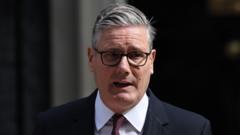
Sir Keir Starmer Biterken: ‘Siyasi Yolculuğumun Sonu’ Dedi!

Sir Keir Starmer, son Başbakanlık Soru-Cevap oturumunda, “siyasi yolculuğumun sonu” dedi. Bu sözler, birçok MP’nin gözleri dolarken, Starmer’

Sir Keir Starmer, son Başbakanlık Soru-Cevap oturumunda, “siyasi yolculuğumun sonu” dedi. Bu sözler, birçok MP’nin gözleri dolarken, Starmer’ın başarıları üzerine gurur duyduğunu belirttiği anlarla dolu bir atmosferde geldi. Starmer, “Benim için her zaman yanımda olan ekip üyelerime teşekkür ediyorum; ateşten geçmeyi göze alan insanlar bunlar” diyerek, ayrılışının duygusallığını artırdı. Oturum, Starmer’a ayakta alkışlar ve duygusal anlarla sona ererken, Şansölye Rachel Reeves, özellikle Starmer’ın Ukrayna’ya olan desteği ve dostluğuna vurgu yaptı.

Her şeyin ötesinde, Starmer, “Bu Labour hükümeti sayesinde hayatı değişen, ya da iyileşen herkese sesleniyorum; sizler benim politikaya girmemin nedenisiniz” dedi. Son soru-cevap seansı, alışılmışın dışında daha hafif ve esprili bir tonla ilerledi. Starmer’ın “kötü bir mizah anlayışı” ile “yüksek ilkeler” vurgusu, salondaki insanların yüzünde tebessüm bırakmayı başardı.

Bakanların, Starmer’ın politikalarına katılımı ile beraber, Starmer’ın “Kuralları olan bir adam” olarak bilindiğini hatırlatmakta fayda var. Bu oturumda, Starmer, karşıt partilere yönelik esprili bir dille “seçimlerinizi çöpe atın” derken, bazıları için bu sözler yürekten geldi. Liberal Demokrat lideri Sir Ed ise, Starmer’ın karşısında “saçma politikalarla” mücadele etmekten bahsetti.

Starmer’ın kaybı, sadece bir liderin değil, birçok insanın hayatını etkileyen bir dönüm noktası olarak kaydedildi. “Değişim vaadi, değişim mücadelesi ve değişim gerçekleştirilmiştir” diyerek, Starmer, kendi döneminin sonunda veda etti. Oturum boyunca duygu dolu anlar yaşanırken, Starmer’ın kendi kardeşinin kaybı sonrası Badenoch’a teşekkür etmesi ise salondaki duygusal yoğunluğu artırdı.

Gelecekte neler olacağını hep birlikte göreceğiz, bakalım bu değişim gerçekten de halkın hayatına nasıl yansıyacak?

Kaynak: Orijinal Haber

Sir Keir Starmer Resigns: A New Era for Labour and the UK

Sir Keir Starmer has announced he will step down as the leader of the Labour Party, a move that clears the path for a leadership contest to determine

Sir Keir Starmer has announced he will step down as the leader of the Labour Party, a move that clears the path for a leadership contest to determine who will take over as prime minister. Speaking from Downing Street, Starmer acknowledged that he was not the ideal candidate to lead Labour into the next general election, and he has already informed the King about his decision to resign. He has requested Labour’s governing body to establish a timetable for his replacement, with nominations set to open on July 9 and close by the summer recess on July 16. If a contest is necessary, he expects a new leader to be appointed before Parliament reconvenes in September. Starmer emphasized he would remain in office as prime minister until the leadership election concludes, vowing to ensure a smooth transition of power.

Now, many are looking at Andy Burnham as the frontrunner to take over after his decisive victory against his Reform UK opponent in last week’s Makerfield by-election. Just as he boarded a train to London to take his parliamentary seat, Burnham declared his candidacy for the leadership contest. His prospects were significantly bolstered when former Health Secretary Wes Streeting, once seen as a potential rival, threw his support behind him. Meanwhile, former Armed Forces Minister Al Carns, who has also been suggested as a leadership contender, stated to ITV that he is “not ready to make a decision.”

Arriving at Euston station, Burnham took a moment to praise Starmer’s commitment and service. When asked about the potential for a general election should he become prime minister, he cleverly sidestepped, saying, “You’re jumping several hurdles ahead. My priority is to be sworn in as the MP for Makerfield.” Upon being officially sworn in as an MP in the House of Commons, Burnham was met with enthusiastic cheers from Labour benches while facing a few heckles from the opposition, with one MP exclaiming, “He’s not the messiah.” Afterward, he joined around 200 Labour MPs in Westminster Hall to snap a group selfie.

Next week, Burnham is expected to deliver a speech outlining his vision for economic growth if he ascends to the role of PM, all while adhering to the government’s fiscal guidelines. His allies mentioned that he has yet to select a chancellor, with one source saying, “No jobs have been given and no deals made.” Starmer, who took the reins of the Labour Party in April 2020 and became prime minister on July 5, 2024, following a sweeping electoral victory, will exit Downing Street as the shortest-serving Labour prime minister in history. His tenure, though longer than that of Rishi Sunak and Liz Truss, trails behind all six previous Labour prime ministers. His resignation further indicates that the UK is on the brink of its seventh prime minister since 2016.

In a heartfelt address at the lectern, Starmer reflected on whether he was the right person to lead Labour into the next general election, saying, “I have heard the answer of my parliamentary party to that question, and I accept that answer with good grace.” Accompanied by his wife Victoria, Starmer spoke emotionally about his next focus after leaving the high-profile role, stating, “When I leave the biggest job in the country, I shall spend more time on the most important job: being the best husband I can to my fantastic wife Vic, who has been a rock by my side through good times and bad; and being the best dad I can to my beautiful children, who are my pride and my joy.”

As he delivered his resignation speech, the sound of Beethoven’s Ode to Joy played in the background, an EU anthem that a protester had brought along. Starmer previously described this symphony as embodying his party’s spirit, calling it a piece that conveys a “sense of destiny” and optimism. Chancellor Rachel Reeves praised Starmer for his efforts to create “a stronger, more secure Britain,” while former Labour deputy leader Angela Rayner highlighted that “history will remember not just the challenges he faced but the achievements he oversaw,” particularly in reforms related to employment and leasehold legislation.

Burnham expressed gratitude to Starmer for his leadership, affirming that the public now seeks “stability, seriousness, and a continued focus on the issues that matter most.” In his announcement on X about entering the leadership contest, he stated, “People want to see progress on economic growth, cost of living, public services, housing, and opportunities for the next generation.” Streeting, who had previously indicated his intention to join the leadership race, later voiced his support for Burnham, believing he is committed to building an inclusive party.

Starmer spent the weekend contemplating his future at Chequers, the prime minister’s country residence, amid growing pressure from within Labour to clarify his departure schedule especially after Burnham’s by-election win. There was rising discontent towards Starmer’s leadership before a disappointing set of election results in England, Wales, and Scotland back in May. This was compounded by his quick shifts in policy direction under pressure from party members. His decision to appoint Lord Mandelson as the UK ambassador to the US sparked further scrutiny over his judgement, especially after new revelations about Mandelson’s ties to convicted sex offender Jeffrey Epstein.

In his resignation speech, Starmer staunchly defended his record, touching on employment rights, immigration, and child poverty, arguing that he transformed Labour from a state of being “politically, financially, and morally bankrupt.” Deputy Prime Minister David Lammy paid tribute to Starmer’s foreign policy achievements, stating that he had been “principled, courageous, and on the right side of history.” Reactions to Starmer’s resignation varied widely; U.S. President Donald Trump remarked that he found Starmer to be a “very nice man” but criticized his stance on the Iran war and drilling in the North Sea. On the other hand, Conservative Party leader Kemi Badenoch labeled him a “terrible prime minister,” critiquing his policies such as increased employer National Insurance contributions.

Liberal Democrat leader Sir Ed Davey voiced discontent with the political status quo, declaring that the British people are “sick of being let down by an endless merry-go-round of prime ministers.” He emphasized that simply swapping leaders at Number 10 isn’t enough; there must be a genuine shift in the political landscape. Reform leader Nigel Farage called for a general election, stating, “If Labour thinks it can shove another professional politician into No 10, it has another thing coming.” Meanwhile, Zack Polanski, leader of the Green Party, expressed cautious optimism about Burnham’s potential for “meaningful change,” but emphasized that the proof will be in the pudding.

Kaynak: Orijinal Haber

Keir Starmer Resigns: A Turning Point for the Labour Party

Sir Keir Starmer has officially announced that he is stepping down as Prime Minister and the leader of the Labour Party. In an emotional speech deliv

Sir Keir Starmer has officially announced that he is stepping down as Prime Minister and the leader of the Labour Party. In an emotional speech delivered outside 10 Downing Street, he reflected on his journey and the achievements of his government over the past two years. He recalled the pride he felt when he first walked up that street after winning a significant majority—a moment he described as the proudest of his life. This was the first Labour government in 14 years, marking a pivotal moment in the country’s history, following years filled with disappointment and despair.

Starmer emphasized the mission that brought him into politics: to change the lives of millions for the better. However, the road to success wasn’t an easy one. When he took over the leadership of the Labour Party six years ago, it was in a dire state—politically, financially, and morally bankrupt. Many had written off the party, declaring it finished and doomed to become a footnote in history. But against all odds, he turned the tide and led the party to a new dawn, purging the poison of antisemitism and restoring trust in crucial areas like the economy, defense, and national security.

He proudly stated that the Labour Party now stands with the national flag, not against it. Starmer’s vision was clear—not to seek power for its own sake, but to create a fairer Britain filled with dignity and respect where everyone is valued. In just two years, he pointed to significant accomplishments: a growing economy, rising wages, secured investments, infrastructure being developed, and an end to austerity with the fastest drop in NHS waiting lists for 17 years. He highlighted improvements in workers’ rights and defense spending, and noted that small boat crossings and asylum hotels were closing, while half a million children were lifted out of poverty due to the decisions made by his administration.

Starmer acknowledged that while the change was promised and fought for by a Labour government, the question now was whether he was the right person to lead the party into the next general election. After hearing the concerns and opinions of his parliamentary party, he concluded that it was time for him to step aside. “Every decision I’ve taken has been about putting the country I love first,” he stated, signifying his intent to resign as leader of the Labour Party.

He has already informed His Majesty the King of his decision and requested the National Executive Committee to establish a nomination timetable, opening on July 9 and concluding by the summer recess. He assured that he would remain in office as Prime Minister until a new leader is chosen, pledging to ensure a smooth transition of power. Starmer expressed his gratitude to his colleagues, the dedicated staff at No. 10, and the civil service, acknowledging their unwavering commitment to public service.

Now, as he prepares to leave behind the highest office in the country, he expressed a desire to focus on his most important roles—being a supportive husband to his wife, Vic, and a loving father to his children, who bring him immense joy. The political landscape is shifting once again, as the outgoing Greater Manchester mayor, Andy Burnham, eyes a third attempt at the Labour leadership following his return to Westminster.

Less than two years after a resounding victory in the 2024 general election, Starmer’s resignation raises questions about the future of the Labour Party and its direction. What lies ahead for the party and its next leader?

Kaynak: Orijinal Haber

Keir Starmer Ne Yapacak? Andy Burnham’ın Makerfield Zaferi Sonrası Harekete Geçti!

Andy Burnham, bu sabah erken saatlerde yapılan Makerfield ara seçiminde zafer kazanarak dikkatleri yeniden üzerine çekti. Bu sonuç, Keir Starmer

Andy Burnham, bu sabah erken saatlerde yapılan Makerfield ara seçiminde zafer kazanarak dikkatleri yeniden üzerine çekti. Bu sonuç, Keir Starmer için düşünülmesi gereken ciddi bir dönüm noktası anlamına geliyor. Zira, Starmer, iki yıl önce işçi partisini 14 yıl boyunca iktidardan uzak kaldıktan sonra hükümete geri getiren adam. Ama şimdi, parti içindeki çatlaklar ve Burnham’ın yükselişi ile birlikte, Starmer’ın liderliği sorgulanmaya başlandı.

Labour milletvekilleri arasında, Starmer’ın “son oyunu” oynadığına dair bir fikir birliği var. Starmer ve destekçileri ise, onu değiştirmek isteyenlerin yanıldığını savunuyor. Onlara göre, hükümetin iç çatışmalarla boğuşması, halkın Labour’dan beklediği bir durum değil. Bir belge, Tory’lerin son seçimde kaybetmesinin nedenleri arasında, halkın onları “yalnızca kendileriyle ilgilenen”, “dürüst olmayan” ve “bölünmüş” olarak görmesinin yer aldığını belirtiyor. Starmer ve ekibi, bu şekilde lekeleneceklerini asla kabul edemezler.

Ama bakın, ilginç bir durum var. Bugün birçok Labour milletvekili arasında, Burnham’ın Downing Street’e ulaşacağında bir birleşim var. Tek sorun, oraya nasıl ulaşacakları. Artık “taç giyme” kelimesi, liderlik yarışmasını tanımlamak için daha sık kullanılmaya başlandı. Yani, milletvekilleri, bir liderlik seçiminde parti üyelerinin söz sahibi olacağına inanmıyor. Burnham’ın, 81 milletvekilinin desteğini alarak tek aday olacağı düşünülüyor. Hatta bu durumda, onun destekçisi olacağına inananlar, bunun çok daha fazlasını da alacağını düşünüyor.

Ama işin içine Wes Streeting de girdi. Geçtiğimiz ay Starmer’ın liderliğine karşı çıkarak sağlık bakanlığından istifa eden Streeting, son günlerde 81 milletvekilinin desteğine sahip olduğuna dair kararlılığını sürdürüyor. Önümüzdeki günlerde gelişmeleri göreceğiz ama kendisi, arkadaşlarından Burnham’ın arkasında durması için ciddi bir baskı ile karşılaşacak gibi görünüyor.

Elbette, en büyük karmaşa Starmer’dan kaynaklanıyor. Bu sabah yaptığı açıklamada, bir liderlik seçiminde aday olacağını yineledi. Labour kurallarına göre, Starmer’ın, 81 destekçisine ihtiyaç duymadan otomatik olarak parti üyelerinin oy pusulasında yer alacağını vurgulamakta fayda var. Yani, bu açıdan bir taç giyme mümkün değil. Starmer’ın devam etme kararlılığı, Labour üyelerinin oy kullanacağı bir oylama garantisi anlamına geliyor. Ancak bu, onun başbakan olduğu gerçeğini göz ardı edemez. Bizim sistemimizde, başbakan, milletvekillerinin çoğunluğunun güvenini kazanmadan liderlik yapamaz.

Starmer’ın hala hükümeti yönetme yetkisine sahip olması için yeterli destek bulup bulamayacağı, önümüzdeki günlerde yanıtını bulacağımız temel soru. Bugün öğle saatlerinde Labour Partisi personeline konuşan Starmer, bir liderlik seçiminde “partimizi ve hareketimizi parçalayacağı” uyarısında bulundu. Ama eğer -veya ne zaman- bir seçim tetiklenirse, Starmer’ın bu karmaşanın arkasında kendi hayatta kalma isteğinin olup olmadığını kanıtlaması gerekecek.

Sonuç olarak, Andy Burnham’ın Makerfield zaferi ile birlikte Labour Partisi içinde bir şeylerin değişeceği kesin gibi. Peki, Starmer bu durumu nasıl yönetecek? Gelişmeleri takip ediyoruz…

Kaynak: Orijinal Haber

UK’s Social Media Ban for Under-16s: A Bold Move with Uncertain Outcomes

When I arrived at 10 Downing Street this morning to hear Prime Minister Sir Keir Starmer announce the UK’s social media ban for under-16s, I had to h

When I arrived at 10 Downing Street this morning to hear Prime Minister Sir Keir Starmer announce the UK’s social media ban for under-16s, I had to hand in my phone for security reasons. The temporary anxiety it gave me was perhaps a small insight into how many of the nation’s 13 to 15-year-olds were feeling, as they too waited to hear the outcome of months of discussions and speculation about their online lives. Sir Keir Starmer’s news was bold and blunt: yes, there will be a ban, yes, it will follow Australia’s model, and yes, there will be additional curbs that will impact older children aged 16 and 17 as well. A night-time curfew is expected to be part of this.

The UK’s plan had been dubbed “Australia Plus,” and now we know why. But here’s the kicker: Australia’s ban has faced well-documented problems. Yani, çoğu çocuk, Aralık ayında yasak uygulanmadan önce sosyal medya hesaplarına sahipti ve hala o hesapları kullanıyor. The response from the UK government is the same answer I hear every time there’s an online safety intervention. There is talk that the ban will not be a “silver bullet” but will still make some difference. Sir Keir made several comparisons to laws about drinking alcohol: we know some teens under the age of 18 still drink, but we also know there are plenty of times when the law prevents it.

Ama işin aslı, 16 yaşındaki gençler yasal olarak evlenebiliyor, cinsel ilişkiye girebiliyor, silahlı kuvvetlere katılabiliyor ve bazı yerlerde oy kullanabiliyorlar. Peki, Instagram’da gece vakti takılmaları da bu kadar zor mu? Given how many horror stories I have heard during my career about children coming to harm on gaming platforms and forums, it was surprising to learn that they will be exempt. Ancak, canlı yayın yapma özelliğini devre dışı bırakmaları gerekecek, çünkü bu da yasak kapsamına alınıyor.

Bakalım bu iş nasıl çalışacak? I did ask the PM, but he didn’t directly tell me. Australia’s failing is believed to be in weak age verification methods adopted by the tech companies. I’ve heard from several fuming industry contacts today that they were under the impression that it would be up to Apple and Google to gatekeep devices, since most people own either an Apple or Android phone. This would mean when anyone under 16 sets up a device, they can’t download banned apps from the app stores. However, those I spoke to are blindsided that this no longer appears to be the case, and it will be down to individual platforms.

Ve bu platformların daha iyi bir alternatif bulması için süre oldukça kısa: gelecek baharda uygulanması planlanan yasak için bir yıl bile yok. Other experts argue that toxic online behavior is a societal rather than a technology problem, and blocking the tech altogether isn’t a solution. “Right diagnosis, wrong cure,” was the headline of one email that popped up in my inbox earlier today.

Facebook UK’de 21 yıl önce başladı ve diğer sosyal medya ağları da onu takip etti. Bu, gençlerin büyüdüğü bir dünya – her türlü zorluklarla birlikte. Bir gazeteci, okulda YouTube’un kendileri için vazgeçilmez bir kaynak olduğunu itiraf edince kendimi bir anda çok yaşlı hissettim. Bir süre önce genç birinden aldığım bir mesaj hâlâ aklımda: sosyal medya olmasa, hayatlarının bir anlamı kalmayacağını ve online topluluğun onlara yaşama sebebi verdiğini söylediler. Ancak, bu durumun tam tersine birçok trajik örnekte var.

Kampanyacılar ve hükümet yetkilileri, teknoloji şirketlerinin çocukları korumak için yıllardır daha fazlasını yapma fırsatının olduğunu, fakat bunları yapmadıklarını söylüyor. Şirketler, pek çok ebeveyn kontrolü getirdiklerini ve zararlı olduğunu bildikleri özelliklere erişimi engellediklerini savunuyor. Ama Sir Nick Clegg, eski Meta yöneticisi, o kadar çok ebeveyn kontrolü olduğunu söyledi ki, ebeveynler bunları kullanmaktan bunalmış durumda. Yani, pek çok ebeveyn bununla ne kadar ilgili olduğunu biliyor.

Kaynaklarım, teknoloji şirketlerinin yasakla savaşmayacaklarını, yeterince adil olduklarını düşündükleri sürece söylüyor, ama ben bunun her birinin bugün böyle hissettiğinden pek emin değilim. Ayrıca, büyük ana akım uygulamaların yasaklanmasının çocukları daha karanlık, daha az düzenlenmiş internet köşelerine iteceği ve burada koruma olmadan kalacakları endişesi de var. Tüm bu durumun, hızla uygulamaya konulduğu için yargı incelemesine takılma ihtimali de var; bu da muhtemelen geciktirecek.

İşin siyasi boyutuna geldiğimizde, bu yasağın “başbakanın mirası” havası taşıdığı kesin. Bir de Donald Trump meselesi var; Sir Keir, bu konuda henüz onunla konuşmadı ama bugün G7 zirvesinde onu görecek. Trump, ABD merkezli teknoloji şirketlerini korumaya çalışıyor ve daha önce diğer ülkelerin bunları düzenleme girişimlerine karşı çıktı. ABD hükümeti de kamu danışmanlığına yanıt olarak, yasaklamanın çözüm olmadığını savundu.

Buna ek olarak, Starmer’ın kontrol altına almak istediği bu ABD şirketleri, aynı zamanda İngiltere’deki operasyonlarına ve altyapısına milyonlarca dolar yatırım yapıyor. Teknoloji ve yapay zeka, hükümetin ekonomik büyüme planlarının kilit öncelikleri arasında. Bir eski hükümet danışmanının da dediği gibi, “B planı yok.” Başbakan, onları sıkı bir şekilde kontrol etmek ve İngiltere’yi iyi bir yer olarak satmak arasında çok ince bir ipte yürümek zorunda. Bakalım, önümüzdeki aylarda bu şirketlerden herhangi biri, burada kalmak istemeyecek mi?

Kaynak: Orijinal Haber

Sir Tony Blair Criticizes Labour’s Lack of a Clear Plan for the Future

Sir Tony Blair has come out swinging, accusing Sir Keir Starmer’s government of lacking a “coherent plan” for the country. In a sharp, critical essay

Sir Tony Blair has come out swinging, accusing Sir Keir Starmer’s government of lacking a “coherent plan” for the country. In a sharp, critical essay, the former Labour Prime Minister highlighted several policies that he believes are hindering business growth, including new workers’ rights laws and the gradual phasing out of the British oil and gas industry. He didn’t hold back, saying that the above-inflation increases to the minimum wage are also problematic. Blair’s main point? A change in leadership won’t matter if there isn’t a serious policy discussion first.

While Downing Street opted not to comment directly on the essay, they did emphasize that Sir Keir is “fully focused on delivering change for working people.” A spokesperson pointed out that there are measures in place aimed at easing the cost of living, mentioning that the economy was growing before the chaos surrounding the Iran conflict erupted. They also noted the falling NHS waiting lists and issues related to migration and serious violent crime, but acknowledged that “there’s obviously much more to do.”

This essay, which stretches over 5,600 words, marks Blair’s first comprehensive critique of Starmer’s government. It comes at a particularly challenging time for the Prime Minister, following poor election results earlier this month that led to five ministerial resignations, creating an environment ripe for a leadership challenge. Blair suggested that the government’s “principal problem” is not merely “Keir’s personality” or “communication failures,” which have been cited as weaknesses. Instead, he believes the real issue is the absence of a well-thought-out plan to navigate a rapidly changing world, stating, “We don’t have a worked-out coherent plan for the country.”

He cautioned against trying to oust the Prime Minister without a clear idea of the policy direction they want to take. While he agreed with some policies—like investment in infrastructure and reforming the planning system—he expressed that moving forward with certain commitments under the current economic circumstances is unwise. For instance, he pointed to the new workers’ rights laws that some business groups argue will discourage hiring and stifle economic growth. Blair also took a swipe at the decision to hike National Insurance for employers, saying it has undermined business confidence.

“Then, in the last Budget, it appeared as if we were increasing tax to fund additional welfare spending, when the public already thinks welfare bills are too high,” he mentioned. “These measures have created headwinds for British businesses despite the macroeconomic gains for which the Chancellor is rightly praised.” He urged the government to mitigate the impact of these changes and reconsider aspects of the net-zero agenda that prioritize clean energy over more affordable options.

On the issue of Brexit, Blair made it clear that “Britain has lost from Brexit” and hinted that it might soon be time to discuss “going back.” Wes Streeting, who recently resigned as health secretary in protest of Starmer’s leadership, has already suggested that the UK should consider rejoining the EU. However, Blair cautioned, “Just as Brexit was never the answer to Britain’s challenges back in 2016, reversing it isn’t the answer to the country’s far worse situation in 2026.” He stressed that any future relationship with Europe should come from a position of economic strength.

In laying out his vision for change, Blair said Labour must evolve into the “Radical Centre,” prioritizing “policy first and politics last.” This approach could involve eliminating barriers to business growth, welfare reform, tackling illegal immigration, and leveraging artificial intelligence to improve services. Labour MP Chris Curtis found Blair’s essay “refreshing,” noting it addresses “the very big issues we’re facing.” In contrast, Labour MP Rachael Maskell dismissed Blair’s analysis, saying, “Tony Blair won an election nearly three decades ago and it seems he’s continuing the argument from back then rather than looking at the situation today.” She also deemed the timing of his intervention “incredibly unhelpful,” especially with crucial parliamentary by-elections approaching.

As Labour faces increasing pressure from Reform UK, which performed well in recent council elections, the stakes are high. The party’s candidate in the upcoming Makerfield by-election, Greater Manchester mayor Andy Burnham, is expected to challenge Sir Keir for leadership if he wins. With the political landscape shifting, one has to wonder: What’s next for Labour and how will it navigate these turbulent waters?

Kaynak: Orijinal Haber