
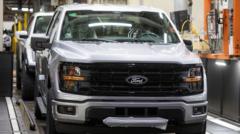
Ford has made a notable shift by rehiring over 300 human engineers after its artificial intelligence systems fell short in quality checks. The US automaker, which had eagerly incorporated AI into various operations to cut costs and enhance productivity, has now realized that the tech can’t quite match the skills and experience of seasoned professionals. This revelation comes amidst a backdrop of excitement surrounding AI’s potential, especially with Wall Street buzzing about its ability to improve profit margins.
Charles Poon, the vice president of vehicle hardware engineering at Ford, emphasized the importance of human expertise in a recent statement. He pointed out that while AI is a “fantastic tool,” it simply doesn’t have the training and depth of knowledge that veteran technicians possess. Many of these skilled workers had left the company before their invaluable insights could be harnessed to refine Ford’s technology. Now, these experienced individuals are being reintroduced to not only guide the AI systems but also mentor younger employees. Poon stated that to achieve top-notch quality, the company needed a significant refresh of talent — the kind that carries years of hard-earned wisdom and practical know-how.
In the past, Ford executives, including the company’s CEO Jim Farley, had been enthusiastic about AI’s promise. Just last June, Farley spoke about the transformative potential of AI in an interview with author Walter Isaacson. However, as it turns out, the AI-driven checks failed to meet expectations in identifying quality issues. During an October earnings call, Chief Operating Officer Kumar Galhotra highlighted the company’s strategy to deploy AI across its entire industrial system to pinpoint quality issues at their source and mitigate supply disruptions.
The realization that AI-driven quality checks were inadequate has led Ford to rethink its approach. External sources indicate that Poon underscored how automated tools lacked the nuance and expertise that come from years of hands-on experience. With the reintroduction of these veteran engineers, Ford aims to ensure that its systems are trained effectively while also providing guidance to the next generation of workers.
This development not only reflects Ford’s commitment to maintaining high standards in manufacturing but also serves as a reminder that while technology can enhance operations, the human touch remains irreplaceable. As the automotive industry continues to explore the balance between automation and human expertise, one has to wonder — what will be the next step for Ford and other companies grappling with the same challenges?
Kaynak: Orijinal Haber