Spain Cruises Past Austria as Portugal Edges Croatia to Secure Last-16 Spot

Spain’s football team cruised past Austria while Portugal narrowly edged Croatia on Wednesday, both securing their spots in the last-16 of the tourna

Spain’s football team cruised past Austria while Portugal narrowly edged Croatia on Wednesday, both securing their spots in the last-16 of the tournament. The matches unfolded with thrilling moments and incredible displays of skill, leaving fans on the edge of their seats.

In the first match, Spain showcased their dominance, defeating Austria with a resounding scoreline. The players were in fine form, executing precise passes and displaying excellent teamwork. It was clear early on that Spain had the upper hand, as they controlled possession and created numerous scoring opportunities. By the time the final whistle blew, the scoreboard told the tale of a confident Spanish side that looked poised for deeper runs in the competition.

Meanwhile, Portugal faced a tougher challenge against Croatia. The match was a nail-biter, with both teams exchanging blows like heavyweight fighters in the ring. Portugal eventually managed to find the net just when it seemed like the game would end in a stalemate. The crucial goal came late in the game, sending the Portuguese fans into a frenzy. It was a tense affair, but they held on to secure their place in the next round.

Fans were treated to high-octane football, with Spain and Portugal both displaying why they are among the favorites in this tournament. The atmosphere in the stadiums was electric, with supporters chanting and cheering their teams on.

As both teams prepare for the next stage, questions loom large: Can Spain maintain their momentum? Will Portugal’s late-game heroics continue to propel them forward? The excitement is palpable, and the stage is set for an exhilarating knockout phase.

Kaynak: Orijinal Haber

Portugal’s Allure: Why 725 Ultra-Wealthy Residents Chose to Settle in Five Years

Portugal today has 725 more ultra-wealthy residents than it did five years ago. But who are these people? Where does their wealth come from? And why

Portugal today has 725 more ultra-wealthy residents than it did five years ago. But who are these people? Where does their wealth come from? And why do they keep choosing Portugal as a place to live and invest? According to a recent study by British firm Knight Frank, the Prime International Residential Index (PIRI) reveals that the number of ultra-wealthy individuals — folks with a net worth of at least €25 million, known as ultra-high-net-worth individuals (UHNWIs) — has surged in Portugal by almost 50% over the last five years. Back in 2021, the country had 1,462 ultra-wealthy individuals, and by 2026, that number is projected to rise significantly. It’s no surprise that many of these new residents are Portuguese, particularly entrepreneurs.

Now, let’s break it down. Helena Seruca, co-ordinating director of private banking at Banco Carregosa, told Euronews that individuals with this level of wealth are primarily focused on asset protection, tax planning, and succession. Banco Carregosa specializes in wealth management for high-net-worth clients, mainly serving Portuguese entrepreneurs from northern and central regions. These business owners are often tied to industrial sectors like footwear, textiles, glass, plastics, and wood, but they are also branching into new technologies and services.

The increase in UHNWIs over the past five years doesn’t shock Seruca. She points to the post-pandemic era as a critical turning point in wealth creation. “Especially since the post-COVID period, we’ve seen these clients’ assets grow following the sale of companies,” she explains. There’s been a massive influx of private equity into companies lately, resulting in many entrepreneurs sitting on substantial cash reserves. Private equity funds, which invest in unlisted companies to boost their value over the medium to long term, have gained a solid foothold in Portugal, paving the way for a fresh wave of ultra-wealthy entrepreneurs.

But wait, it gets even more interesting! Many business owners are selling stakes in their companies to fund expansion or break into new markets without dipping into their own capital. “A private equity deal basically means taking a position in a company via a venture capital fund, which might or might not engage in management. It all depends on the acquired stake and the investor’s ambitions,” Seruca adds. And let’s not forget about lifestyle choices here! Wealthy individuals often jet to Portugal just for the weekend — especially to hit the golf courses in places like Cascais, Comporta, and the Algarve. Some land in their private jets, spend a few days soaking it all in, and guess what? They end up buying homes!

Take the Terras da Comporta development, for instance, centered around a championship golf course that opened in 2023. This project has been a magnet for international buyers looking for luxury homes and development plots. According to a global study from Christie’s International Real Estate, the international luxury housing market is booming, and affluent buyers are increasingly on the lookout for primary residences, second homes, and portfolio diversification. Entry-level high-end homes are priced around €6,500 per square meter, while luxury properties can go for about €11,000 per square meter. The ultra-luxury market is heavily concentrated in prime locations like Cascais, central Lisbon, Comporta, and the Algarve, which leads the market in branded residences, boasting around 1,200 units representing 30% to 50% of the country’s offerings.

Now, here’s the kicker! This option allows wealthy buyers to arrive and enjoy all the amenities of a hotel linked to their flat. When they leave, they can put the property into hotel management, generating income with zero effort on their part. Lisbon and Cascais have emerged as Europe’s second most represented market, even ahead of London and Madrid. Cília mentions that property prices in these areas are now competing with Europe’s current price ceiling.

And guess where the new buyers are coming from? The Middle East, particularly Qatar, has emerged as one of the fastest-growing sources of new buyers, driven by recent geopolitical tensions that have left investors looking for safer havens. “Right now, they are hunting for safer investment alternatives. The greater the global instability, the more appealing this market becomes, as it’s a euro-denominated market, politically stable, and part of the European Union, making it an excellent alternative to more volatile markets,” Cília explains.

However, Cília does caution that limited supply might hamper future growth. “These individuals want a completely different style of construction in highly privileged areas, and let’s face it, Portugal isn’t exactly a vast country.” Knight Frank predicts that the ultra-high-net-worth population will keep expanding, potentially reaching 2,452 by 2031. The report indicates that increasingly mobile wealthy individuals are following a so-called “dip-in, dip-out” lifestyle, making Portugal one of the leading destinations for international wealth and luxury property investment.

Bakalım, bu durum nereye varacak? Gelişmeleri takip ediyoruz…

Kaynak: Orijinal Haber

Portugal Set to Test Self-Driving Cars on Public Roads Next July!

Vehicles equipped with self-driving systems will soon be allowed to be tested on public roads in Portugal. That’s right, folks! After a decree-law w

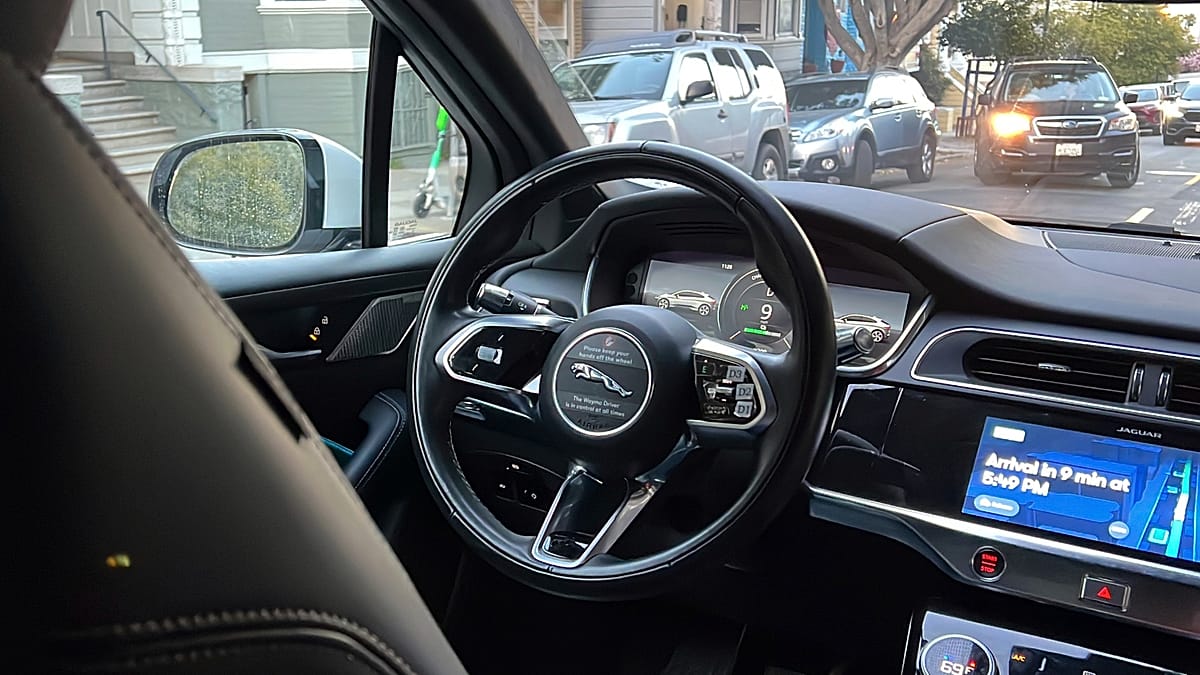
Vehicles equipped with self-driving systems will soon be allowed to be tested on public roads in Portugal. That’s right, folks! After a decree-law was approved by the Council of Ministers at the end of April, the green light has been given for these autonomous vehicles to hit the streets. This new legislation has officially made its way into the Official Gazette, and it will come into effect starting next July.

So, what does this mean? Well, the government is optimistic that autonomous driving will pave the way for innovation in transportation while ensuring safety on the roads. In practical terms, this decree establishes a legal framework that allows public roads to be utilized for testing autonomous driving tech, but there are strings attached. Testing organizations need to secure a license and comply with a set of technical, operational, and safety requirements—no cutting corners here!

The trials are set to be conducted by research laboratories, higher education institutions, and companies in the automotive, infrastructure, and transport sectors. One major requirement is that the insurance coverage for these vehicles must be four times the usual amount. That’s right, folks, a hefty minimum cover is in place to ensure compensation for any bodily injury or material damage that autonomous vehicles might cause to third parties.

And that’s not all! Organizations will also have to submit a risk mitigation plan, showing they’ve got cybersecurity measures in place to fend off any unauthorized access to vehicle systems. Can you believe it? The tests must be notified in advance, and when they’re over, a detailed report must be submitted. Talk about thorough! Additionally, both the driver and the operator responsible for these highly automated or fully automated systems must have held a driving license for at least six years and should have no road traffic offenses in the past five years. That’s a strict check on safety and responsibility!

During the tests, speed limits outlined in the Highway Code will be exceeded by 20 kilometers per hour. Yes, you heard that right! Blood alcohol limits will align with those for professional drivers. Moreover, neither the driver nor the operator can perform their duties for more than three consecutive hours without taking a break of at least one hour. Safety first, always!

Now, here’s where it gets interesting: during these autonomous driving trials, the vehicles will need to be equipped with systems that can record detailed information. This includes characteristics of the automated system, the identity of whoever is in control of the car, and indicators like speed, steering, braking performance, and a history of any interventions by the driver or operator. Pretty impressive, huh? These vehicles will also need to store information on remote commands and communications established with other vehicles, road infrastructure, and various digital connection points.

Oh, and here’s a little tidbit for those with foreign licenses: they’ll be valid in Portugal too! As long as an application for recognition is submitted to the chair of the board of the Institute for Mobility and Transport (IMT), you’re good to go.

So, as we gear up for this technological leap in transportation, what are your thoughts? Will these self-driving cars revolutionize the way we travel, or are we jumping the gun? Gelişmeleri takip ediyoruz…

Kaynak: Orijinal Haber