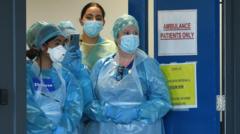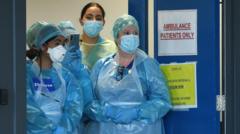
The National Health Service (NHS) staff and patients faced grave dangers during the pandemic due to a shocking lack of adequate personal protective equipment (PPE). In fact, nearly £10 billion of taxpayers’ money was wasted as the emergency stockpile of PPE, designed to last for at least 15 weeks, was running dry by the end of March 2020. Hospitals were in desperate need of these supplies, yet only a third of the masks available in England were fit for purpose. The report highlighted a major failure in planning and execution, revealing that officials and ministers had never stress-tested their contingency plans.
As hospitals ramped up their demands, the government found itself caught off guard. The so-called “VIP lane,” which was intended to prioritize suppliers, turned out to be a misguided attempt that embedded unfairness in emergency procurement. This lack of fairness undermined public trust at a crucial moment when it was needed the most. The inquiry report concluded that it could have been much better if the supply of PPE had been aligned more closely with the actual demand.
Baroness Hallett, leading the inquiry, stated that while she did not find evidence of cronyism or corruption among ministers and officials during the awarding of PPE contracts, the public sentiment remained skeptical. Former cabinet office minister Michael Gove took to social media to dismiss allegations of corruption as “unfounded nonsense,” but he also accepted full responsibility for what he termed “honest mistakes.”
Despite the gravity of the situation, no criminal charges have been filed to date. The National Crime Agency (NCA) has indicated that investigations are ongoing, but the public is left wondering about accountability. A total of 48 witnesses provided oral evidence for this segment of the inquiry, including former health secretary Matt Hancock and Gove himself.
The inquiry’s recommendations call for a radical overhaul of the domestic industry strategy to ensure that such a catastrophic failure does not happen again. A spokesperson for the government acknowledged that the report made for difficult reading, emphasizing that they would carefully consider the findings moving forward.
As the dust settles on this inquiry, one can’t help but ask: what steps will be taken to prevent such a monumental waste of resources in future emergencies? Will the lessons learned from this report translate into real change, or will history repeat itself?
Kaynak: Orijinal Haber